
How to Create an "Elevated Command Prompt" Shortcut in Windows 7 and Windows 8
Information
This tutorial will show you how to create a shortcut that will open an elevated command prompt with administrator rights in Windows 7 and Windows 8.
Note
Warning
You must be logged in as an administrator to be able to use this shortcut.
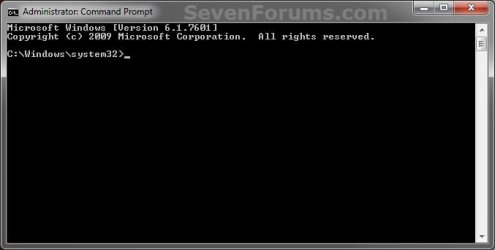
EXAMPLE: Elevated Command Prompt
NOTE: Notice how the elevated command prompt opens to C:\Windows\System32 and not C:\Users\(user name) as the default command prompt without administrator rights.
OPTION ONE
To Download an "Elevated Command Prompt" Shortcut
1. Click/tap on the Download button below to download the file below.
Elevated_Command_Prompt.zip
Download
2. Save the ZIP file to your desktop.
3. Open the zip file, and extract (drag and drop) the Elevated Command Prompt shortcut to your desktop.
4. Unblock the Elevated Command Prompt shortcut.
NOTE: If there is not a Unblock button there, then the shortcut is already unblocked. Continue on to step 7.
5. In Windows 7, you can now Pin to Taskbar or Pin to Start Menu, add to Quick Launch, assign a keyboard shortcut to it, or move this shortcut to where you like for easy use.
6. In Windows 8 and 8.1, you can Pin to Taskbar on desktop, Pin to Start screen, add to Quick Launch, assign a keyboard shortcut to it, or move this shortcut to where you like for easy use.
7. When finished, you can delete the downloaded zip file if you like.
OPTION TWO
To Manually Create an "Elevated Command Prompt" Shortcut
1. Right click or press and hold on an empty space on your desktop, and click/tap on New and Shortcut.
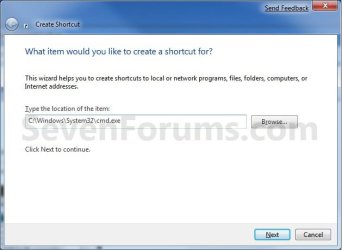
2. Copy and paste either location below into the location area, and click/tap on Next. (see screenshot below)
%ComSpec%
OR
%windir%\System32\cmd.exe
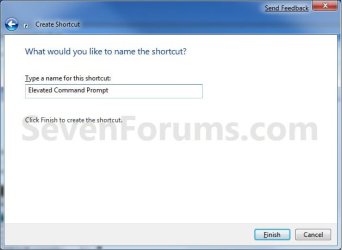
3. Type in the name Elevated Command Prompt, and click/tap on Finish. (see screenshot below)
NOTE: You can type in any name that you would like to use for the shortcut though.
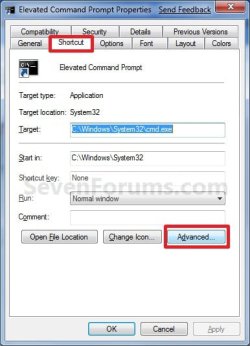
4. Right click or press and hold on the Elevated Command Prompt shortcut, and click/tap on Properties.
5. Click/tap on the Shortcut tab, and click/tap on the Advanced button. (see screenshot below).
6. Check the Run as administrator box, and click/tap on OK. (See screenshot below)
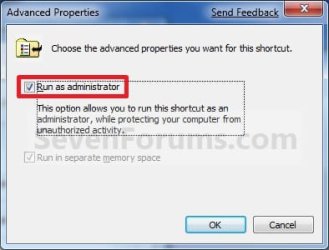
7. Click/tap on OK. (see screenshot below step 5)
8. In Windows 7, you can now Pin to Taskbar or Pin to Start Menu, add to Quick Launch, assign a keyboard shortcut to it, or move this shortcut to where you like for easy use.
9. In Windows 8 and 8.1, you can Pin to Taskbar on desktop, Pin to Start screen, add to Quick Launch, assign a keyboard shortcut to it, or move this shortcut to where you like for easy use.
That's it,
Shawn
Related Tutorials
Attachments
Last edited:


