Hi there welcome.
A question though, why is it you can't follow the BSOD posting instructions exactly?
We can't help you with little to no data I'm afraid.
With that said, 0x101 and 0x124 are 99.5% of the time hardware fault related, now you've
said that your USB ports are occasionally unresponsive, I would assume that you it means that your
motherboard is on its last legs.
0x101, unfortunately this bug check code doesn't contain enough
information in the minidump file be analyzed fully.
Please upload the Kernel dump file using Dropbox or Skydrive, the file is located in the Windows directory
and is usually a few hundred Megabytes in size.
---------
Follow the steps detailed below with extra caution since I have no data to work with.
A "stop 0x124" is fundamentally different to many other types of bluescreens because it stems from a hardware complaint. Stop 0x124 minidumps contain very little practical information, and it is therefore necessary to approach the problem as a case of hardware in an unknown state of distress. -
H2SO4
The generic nature of the
0x124 (Arg1=0) stop code means we would have to take
the trail & error approach.
Do you have any spare parts (or another PC) to test with?
The usual suspect of this kind of BCCode is the CPU but it's often not the the case which is why we need
to test other components to rule them out as the cause.
How old are your components?
What is the make, model and age of your PSU?
Fill out this form and post back the result:
Good practice, open up the case and re-seat all types of connection.
- SATA Cables (HDD/SSD/ODD).
- SATA-Power.
- Motherboard 24-pin.
- Motherboard 4/8-pin (CPU).
- Re-seat the RAM.
- Re-seat the GPU.
Make sure that every slot / cable head is free of dust or other obstruction.
Make sure that every connection is seating properly and firmly in-place.
Also have a look at the
motherboard and the GPU, search for any "bad caps", bulky, leaking bloated capacitors.
i.e
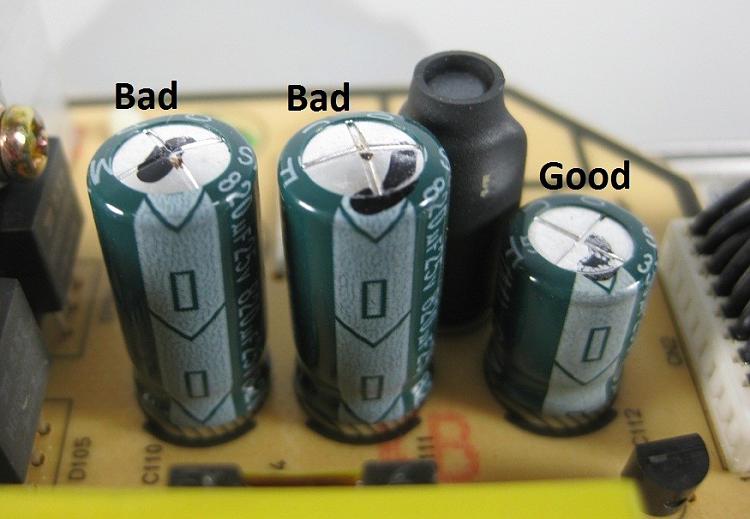
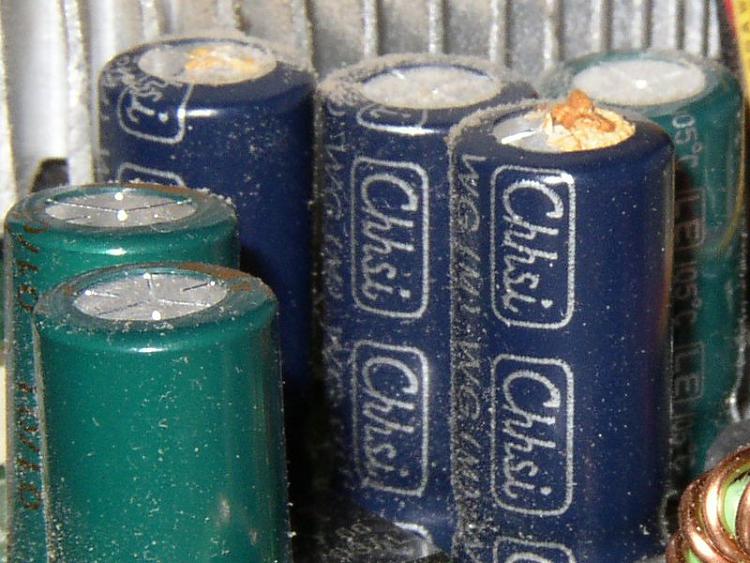
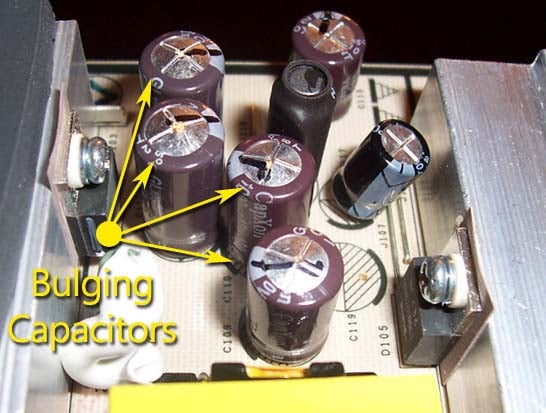
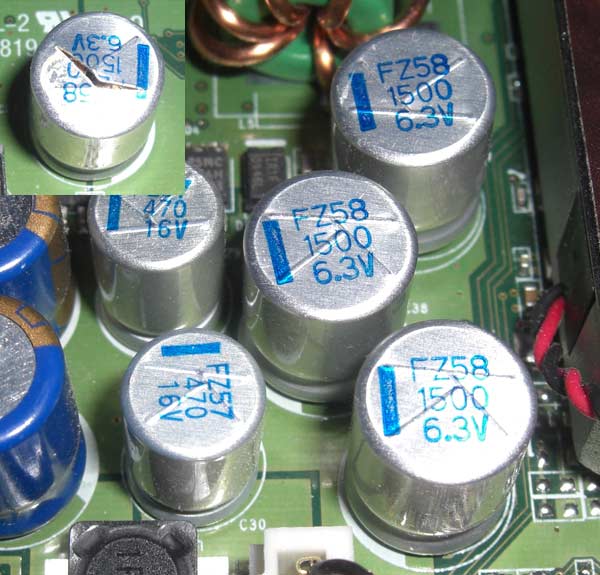
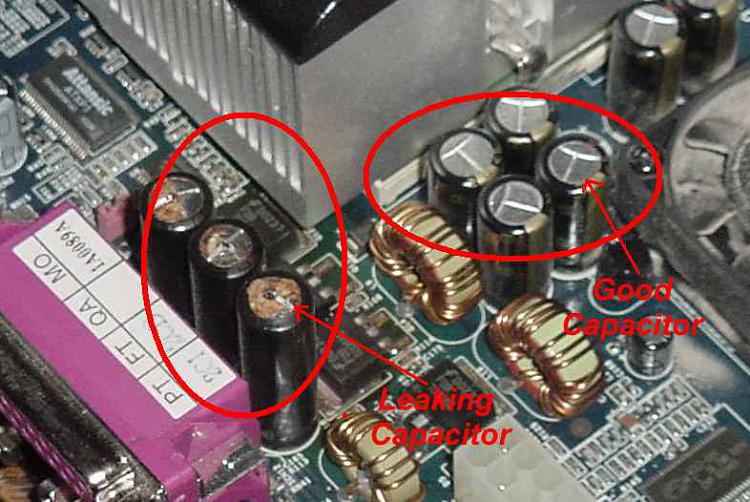
:ar:
Test for thermals and stability:
- Download HWinfo and post a Screenshot of the sensors window, one at idle and another while putting load on the PC using Prime95 for the CPU side and Furmark for the GPU.
- Before running Prime95 make sure to enable Round-off checking (see 1st post under the tutorial).
Note
It is not mandatory to run both tests simultaneously, although possible as long as the temperatures are under constant monitoring.
:ar:
Reset the BIOS back to default:
Note
Write down the current value of the SATA Mode!
Its either AHCI or IDE.
After resetting the CMOS go back and verify the value for SATA Mode is what it was
when the OS was installed.
If any component is overclocked reset it back to stock speeds!



