

- Local time
- 6:06 PM
- Messages
- 4,527
Another fascinating, little known bit of history...
First there was seat-of-the-pants flying, then dead-reckoning. Then along comes Jimmy Doolittle and the invention of the artificial horizon. We have had dual-inertial navigation systems and finally ground positioning satellites. Before all of that we had HELP from the government. Many have heard of the air mail beacons that were set up for the 1920s air mail pilots but few had heard about these arrows. I must wonder how many are still left.
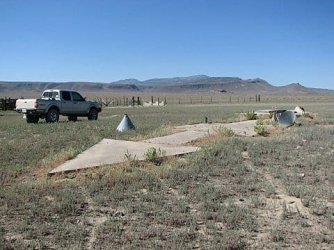
This Really Exists: Giant Concrete Arrows That Point a Way Across America
Courtesy of Aviation Archaeological Investigation & Research
Every so often, usually in the vast deserts of the American Southwest, a hiker or a backpacker will run across something puzzling: a ginormous concrete arrow, as much as seventy feet in length, just sitting in the middle of scrub-covered nowhere. What are these giant arrows? Some kind of surveying mark? Landing beacons for flying saucers? Earth’s turn signals? No, it's…
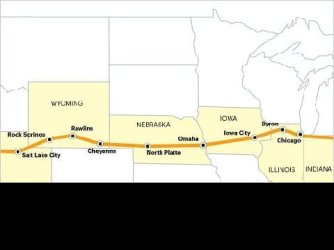
The Transcontinental Air Mail Route
http://www.cntraveler.com/dam/daily-traveler/2013/06/transcontinental-air-mail-route2.pngExpand
A re-creation of a 1920s map showing the route of airmail planes; the dots are intermediate stops along the course.
•On August 20, 1920, the United States opened its first coast-to-coast airmail delivery route, just 60 years after the Pony Express closed up shop. There were no good aviation charts in those days, so pilots had to eyeball their way across the country using landmarks. This meant that flying in bad weather was difficult, and night flying was just about impossible.
•The Postal Service solved the problem with the world’s first ground-based civilian navigation system: a series of lit beacons that would extend from New York to San Francisco . Every ten miles, pilots would pass a bright yellow concrete arrow. Each arrow would be surmounted by a 51-foot steel tower and lit by a million-candlepower rotating beacon. (A generator shed at the tail of each arrow powered the beacon). Now mail could get from the Atlantic to the Pacific not in a matter of weeks, but in just 30 hours or so.
•Even the dumbest of air mail pilots, it seems, could follow a series of bright yellow arrows straight out of a Tex Avery cartoon. By 1924, just a year after Congress funded it, the line of giant concrete markers stretched from Rock Springs , Wyoming to Cleveland , Ohio . The next summer, it reached all the way to New York , and by 1929 it spanned the continent uninterrupted, the envy of postal systems worldwide.
•Radio and radar are, of course, infinitely less cool than a concrete Yellow Brick Road from sea to shining sea, but I think we all know how this story ends. New advances in communication and navigation technology made the big arrows obsolete, and the Commerce Department decommissioned the beacons in the 1940s. The steel towers were torn down and went to the war effort. But the hundreds of arrows remain. Their yellow paint is gone, their concrete cracks a little more with every winter frost, and no one crosses their path much, except for coyotes and tumbleweeds. But they’re still out there.
First there was seat-of-the-pants flying, then dead-reckoning. Then along comes Jimmy Doolittle and the invention of the artificial horizon. We have had dual-inertial navigation systems and finally ground positioning satellites. Before all of that we had HELP from the government. Many have heard of the air mail beacons that were set up for the 1920s air mail pilots but few had heard about these arrows. I must wonder how many are still left.
This Really Exists: Giant Concrete Arrows That Point a Way Across America
Courtesy of Aviation Archaeological Investigation & Research
Every so often, usually in the vast deserts of the American Southwest, a hiker or a backpacker will run across something puzzling: a ginormous concrete arrow, as much as seventy feet in length, just sitting in the middle of scrub-covered nowhere. What are these giant arrows? Some kind of surveying mark? Landing beacons for flying saucers? Earth’s turn signals? No, it's…
The Transcontinental Air Mail Route
http://www.cntraveler.com/dam/daily-traveler/2013/06/transcontinental-air-mail-route2.pngExpand
A re-creation of a 1920s map showing the route of airmail planes; the dots are intermediate stops along the course.
•On August 20, 1920, the United States opened its first coast-to-coast airmail delivery route, just 60 years after the Pony Express closed up shop. There were no good aviation charts in those days, so pilots had to eyeball their way across the country using landmarks. This meant that flying in bad weather was difficult, and night flying was just about impossible.
•The Postal Service solved the problem with the world’s first ground-based civilian navigation system: a series of lit beacons that would extend from New York to San Francisco . Every ten miles, pilots would pass a bright yellow concrete arrow. Each arrow would be surmounted by a 51-foot steel tower and lit by a million-candlepower rotating beacon. (A generator shed at the tail of each arrow powered the beacon). Now mail could get from the Atlantic to the Pacific not in a matter of weeks, but in just 30 hours or so.
•Even the dumbest of air mail pilots, it seems, could follow a series of bright yellow arrows straight out of a Tex Avery cartoon. By 1924, just a year after Congress funded it, the line of giant concrete markers stretched from Rock Springs , Wyoming to Cleveland , Ohio . The next summer, it reached all the way to New York , and by 1929 it spanned the continent uninterrupted, the envy of postal systems worldwide.
•Radio and radar are, of course, infinitely less cool than a concrete Yellow Brick Road from sea to shining sea, but I think we all know how this story ends. New advances in communication and navigation technology made the big arrows obsolete, and the Commerce Department decommissioned the beacons in the 1940s. The steel towers were torn down and went to the war effort. But the hundreds of arrows remain. Their yellow paint is gone, their concrete cracks a little more with every winter frost, and no one crosses their path much, except for coyotes and tumbleweeds. But they’re still out there.
My Computer
At a glance
Windows 8 - 64-bit2.2GHz Intel Pentium dual-core B960 processor...8GB DDR3Intel HD Graphics with 128MB of dedicated sys...
- Computer type
- Laptop
- Computer Manufacturer/Model Number
- Gateway 17.3" LCD Intel Dual-Core, 8GB RAM 1TB HDD Windows 8 Laptop
- OS
- Windows 8 - 64-bit
- CPU
- 2.2GHz Intel Pentium dual-core B960 processor with 2MB L3 ca
- Memory
- 8GB DDR3
- Graphics Card(s)
- Intel HD Graphics with 128MB of dedicated system memory
- Monitor(s) Displays
- 17.3" Ultrabright HD widescreen LED-backlit LCD
- Screen Resolution
- 1280 X 1024
- Hard Drives
- 1TB hard drive-1000 GB HDD
DVD-Super Multi DL drive
- PSU
- Intel B960 processor
- Case
- XXXXX
- Cooling
- XXXXX
- Keyboard
- Multi Gesture Touchpad
- Mouse
- USB - portable mouse... I added this
- Antivirus
- Avast
- Browser
- I E 10
- Other Info
- I see nothing about Motherboard info.
I'm not sure about Sound Card
Ports :(3) USB 2.0, (1) HDMI, (1) VGA, (1) Headphone out, (1) Microphone in, (1) Ethernet LAN
•Fast Wi-Fi wireless and wired Gigabit Ethernet networking
•HDMI output
•Kensington lock slot
I have no idea what all this actually means