BSOD and computer freezes

hirshy

New member
Local time
3:25 PM
Messages
5
Hi all,
I built my own PC and have a mid level of tech knowledge (I can get around on Windows, but don't do much with the command prompt or in the bios). Ever since I built my computer, I have been experiencing two issues: BSOD and computer freezes accompanied by a weird machine-like noise. These can happen when browsing teh internet, watching movies, or even when I am not around. I have changed the BSOD timeout to wait for me to come back before restarting, so usually I just take note of the error message and then force restart. I have WhoCrashed running and also have saved my dump files as per the instructions on the forums. I have Hard Disk Sentinel running and it has not detected any bad sectors or hot temperatures (usually runs between 34-36 dg C). I have already updated my drivers (I suspected my video card at first) and am currently halfway through a 24-hr run using verifier.exe. Basically on verifier, I unchecked all of the non-Microsoft drivers and did a restart. So far, no freezes. However, these freezes occur irregularly, so I am not surprised. Sometimes the freeze occurs once a month or as often as twice a week. I have noticed that it also tends to happen more often (or maybe I am unlucky) when I wake up my computer from sleep or a restart. I basically log on, open up a few tabs, and *POOF* - freeze. Any help would be appreciated. I have the dump files attached to this post. Let me know if any further information is required.

Here is the information about my PC build:


OS: Windows 7 Professional 64bit
CPU: Intel Core 2 Quad Q6600 @ 2.40 GHz
MOBO: Gigabyte EP45-UD3R
RAM: 8 GB DDR2 (4 x 2GB) [OCZ sticks: OCZ2P10662G]
GPU: NVIDIA GeForce GTX 550 Ti
HDD: Seagate Barracuda Green 1.5TB 5900RPM (ST1500DL003-9VT16L)
AV: Microsoft Security Essentials
PSU: ModX Stream Pro 600W
 

My Computer

Computer type
PC/Desktop
Computer Manufacturer/Model Number
custom build
OS
Windows 7 Professional 64bit
CPU
Intel Core 2 Quad Q6600 @ 2.40 GHz
Motherboard
Gigabyte EP45-UD3R
Memory
8 GB DDR2 (4 x 2GB) [OCZ sticks: OCZ2P10662G]
Graphics Card(s)
NVIDIA GeForce GTX 550 Ti
Hard Drives
Seagate Barracuda Green 1.5TB 5900RPM
(ST1500DL003-9VT16L)
Antivirus
Microsoft Security Essentials
Browser
Chrome
Hi hirshy.

The very recent crash dumps are not showing any finite probable cause. In such a situation, it is better to enable Driver Verifier to monitor the drivers.
Driver Verifier - Enable and Disable
Run Driver Verifier for 24 hours or the occurrence of the next crash, whichever is earlier.

   Information
Why Driver Verifier:
It puts a stress on the drivers, ans so it makes the unstable drivers crash. Hopefully the driver that crashes is recorded in the memory dump.

How Can we know that DV is enabled:
It will make the system bit of slow, laggy.

   Warning
Before enabling DV, make it sure that you have earlier System restore points made in your computer. You can check it easily by using CCleaner looking at Tools > System Restore.

If there is no points, make a System Restore Point manually before enabling DV.

   Tip


Let us know the results, with the subsequent crash dumps, if any. AND, only crash dumps are not enough. Post it following the Blue Screen of Death (BSOD) Posting Instructions.
________________________________________________________________________________________-
Code:
BugCheck 3B, {c0000005, fffff8000308bafe, fffff8800a4a8d20, 0}

Probably caused by : ntkrnlmp.exe ( nt!ExAcquireResourceSharedLite+4e )

Followup: MachineOwner
---------------------------------------------------------------------------------
BugCheck A, {fffff80803308c38, c, 0, fffff800030ef749}

Probably caused by : ntkrnlmp.exe ( nt!KiIpiSendRequest+1d9 )

Followup: MachineOwner
---------
 

My Computer

Computer type
PC/Desktop
Computer Manufacturer/Model Number
Self Assembled
OS
Microsoft Windows 10 Pro Insider Preview 64-bit
CPU
Intel(R) Core(TM) i3-4130 CPU @ 3.40GHz
Motherboard
Gigabyte Technology Co., Ltd. B85M-D3H
Memory
Corsair Vengence 4GB x2 (8.00GB Dual-Channel DDR3 @ 798MHz)
Graphics Card(s)
2047MB GeForce GTS 450 (ZOTAC International)
Sound Card
Onboard (Realtek High Definition Audio)
Monitor(s) Displays
LG Flatron E2040T
Screen Resolution
1600x900
Hard Drives
Western Digital 1 TB
Seagate 500 GB
PSU
Corsair VS550
Case
Cooler Master K380
Cooling
Cooler Master Seidon 120V Plus
Keyboard
Logitech MK260r
Mouse
Logitech MK260r
Internet Speed
PMPL Broadband
Antivirus
Windows Defender + MBAM
Browser
Firefox
Other Info
Dell Studio 15" Laptop
ok so I let verifier run over night but apparently I forgot to change the computer's sleep settings. But I did get a blue screen when I woke the computer. I have attached the dumps and associated files with this post.
 

My Computer

Computer type
PC/Desktop
Computer Manufacturer/Model Number
custom build
OS
Windows 7 Professional 64bit
CPU
Intel Core 2 Quad Q6600 @ 2.40 GHz
Motherboard
Gigabyte EP45-UD3R
Memory
8 GB DDR2 (4 x 2GB) [OCZ sticks: OCZ2P10662G]
Graphics Card(s)
NVIDIA GeForce GTX 550 Ti
Hard Drives
Seagate Barracuda Green 1.5TB 5900RPM
(ST1500DL003-9VT16L)
Antivirus
Microsoft Security Essentials
Browser
Chrome
Unfortunately it is not a verifier enabled BSOD.
Code:
0: kd> !verifier
fffff80003296b20: Unable to get verifier list.
Though it is pointing to some HDD /file system misbehavior.

Do some Disc checks.

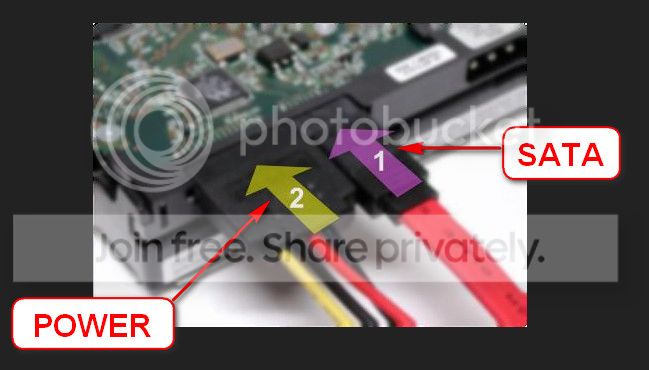
  1. Reseat the sata and power.
    72974453_zps85c47d93.jpg
  2. Run chkdsk /f/r, following the option two of the tutorial Disk Check
  3. Seatool for dos: SeaTools | Seagate download
    Burn it in a blank cd. boot from the CD, click on "Accept", wait for it to finish detecting the drives, then in the upper left corner select "Basic Tests", then select "Long Test" and let it run.
About DV, you need to run the computer at its normal use within DV enabled. Not to leave it idle without any action. Hopefully it gives the output very soon, it it has to.

On another note, Test your RAM modules for possible errors.
How to Test and Diagnose RAM Issues with Memtest86+
Run memtest for at least 8 passes, preferably overnight.

If it start showing errors/red lines, stop testing. A single error is enough to determine that something is going bad there.
_________________________________________________________
Code:
*******************************************************************************
*                                                                             *
*                        Bugcheck Analysis                                    *
*                                                                             *
*******************************************************************************

Use !analyze -v to get detailed debugging information.

BugCheck 24, {1904fb, fffff88008658d78, fffff880086585d0, fffff800030dba1f}

Probably caused by : ntkrnlmp.exe ( nt!FsRtlAcquireFileForCcFlushEx+3c )

Followup: MachineOwner
---------

0: kd> !analyze -v
*******************************************************************************
*                                                                             *
*                        Bugcheck Analysis                                    *
*                                                                             *
*******************************************************************************

NTFS_FILE_SYSTEM (24)
    If you see NtfsExceptionFilter on the stack then the 2nd and 3rd
    parameters are the exception record and context record. Do a .cxr
    on the 3rd parameter and then kb to obtain a more informative stack
    trace.
Arguments:
Arg1: 00000000001904fb
Arg2: fffff88008658d78
Arg3: fffff880086585d0
Arg4: fffff800030dba1f
 

My Computer

Computer type
PC/Desktop
Computer Manufacturer/Model Number
Self Assembled
OS
Microsoft Windows 10 Pro Insider Preview 64-bit
CPU
Intel(R) Core(TM) i3-4130 CPU @ 3.40GHz
Motherboard
Gigabyte Technology Co., Ltd. B85M-D3H
Memory
Corsair Vengence 4GB x2 (8.00GB Dual-Channel DDR3 @ 798MHz)
Graphics Card(s)
2047MB GeForce GTS 450 (ZOTAC International)
Sound Card
Onboard (Realtek High Definition Audio)
Monitor(s) Displays
LG Flatron E2040T
Screen Resolution
1600x900
Hard Drives
Western Digital 1 TB
Seagate 500 GB
PSU
Corsair VS550
Case
Cooler Master K380
Cooling
Cooler Master Seidon 120V Plus
Keyboard
Logitech MK260r
Mouse
Logitech MK260r
Internet Speed
PMPL Broadband
Antivirus
Windows Defender + MBAM
Browser
Firefox
Other Info
Dell Studio 15" Laptop
=== delete ===
 

My Computer

Computer type
PC/Desktop
Computer Manufacturer/Model Number
custom build
OS
Windows 7 Professional 64bit
CPU
Intel Core 2 Quad Q6600 @ 2.40 GHz
Motherboard
Gigabyte EP45-UD3R
Memory
8 GB DDR2 (4 x 2GB) [OCZ sticks: OCZ2P10662G]
Graphics Card(s)
NVIDIA GeForce GTX 550 Ti
Hard Drives
Seagate Barracuda Green 1.5TB 5900RPM
(ST1500DL003-9VT16L)
Antivirus
Microsoft Security Essentials
Browser
Chrome
Unfortunately it is not a verifier enabled BSOD.
Code:
0: kd> !verifier
fffff80003296b20: Unable to get verifier list.
Though it is pointing to some HDD /file system misbehavior.

Do some Disc checks.

  1. Reseat the sata and power.
    72974453_zps85c47d93.jpg
  2. Run chkdsk /f/r, following the option two of the tutorial Disk Check
  3. Seatool for dos: SeaTools | Seagate download
    Burn it in a blank cd. boot from the CD, click on "Accept", wait for it to finish detecting the drives, then in the upper left corner select "Basic Tests", then select "Long Test" and let it run.
About DV, you need to run the computer at its normal use within DV enabled. Not to leave it idle without any action. Hopefully it gives the output very soon, it it has to.

On another note, Test your RAM modules for possible errors.
How to Test and Diagnose RAM Issues with Memtest86+
Run memtest for at least 8 passes, preferably overnight.

If it start showing errors/red lines, stop testing. A single error is enough to determine that something is going bad there.
_________________________________________________________
Code:
*******************************************************************************
*                                                                             *
*                        Bugcheck Analysis                                    *
*                                                                             *
*******************************************************************************

Use !analyze -v to get detailed debugging information.

BugCheck 24, {1904fb, fffff88008658d78, fffff880086585d0, fffff800030dba1f}

Probably caused by : ntkrnlmp.exe ( nt!FsRtlAcquireFileForCcFlushEx+3c )

Followup: MachineOwner
---------

0: kd> !analyze -v
*******************************************************************************
*                                                                             *
*                        Bugcheck Analysis                                    *
*                                                                             *
*******************************************************************************

NTFS_FILE_SYSTEM (24)
    If you see NtfsExceptionFilter on the stack then the 2nd and 3rd
    parameters are the exception record and context record. Do a .cxr
    on the 3rd parameter and then kb to obtain a more informative stack
    trace.
Arguments:
Arg1: 00000000001904fb
Arg2: fffff88008658d78
Arg3: fffff880086585d0
Arg4: fffff800030dba1f

so you think it is hardware related, and not software?
 

My Computer

Computer type
PC/Desktop
Computer Manufacturer/Model Number
custom build
OS
Windows 7 Professional 64bit
CPU
Intel Core 2 Quad Q6600 @ 2.40 GHz
Motherboard
Gigabyte EP45-UD3R
Memory
8 GB DDR2 (4 x 2GB) [OCZ sticks: OCZ2P10662G]
Graphics Card(s)
NVIDIA GeForce GTX 550 Ti
Hard Drives
Seagate Barracuda Green 1.5TB 5900RPM
(ST1500DL003-9VT16L)
Antivirus
Microsoft Security Essentials
Browser
Chrome
It is not the time to say that much .... before obtaining the results.
 

My Computer

Computer type
PC/Desktop
Computer Manufacturer/Model Number
Self Assembled
OS
Microsoft Windows 10 Pro Insider Preview 64-bit
CPU
Intel(R) Core(TM) i3-4130 CPU @ 3.40GHz
Motherboard
Gigabyte Technology Co., Ltd. B85M-D3H
Memory
Corsair Vengence 4GB x2 (8.00GB Dual-Channel DDR3 @ 798MHz)
Graphics Card(s)
2047MB GeForce GTS 450 (ZOTAC International)
Sound Card
Onboard (Realtek High Definition Audio)
Monitor(s) Displays
LG Flatron E2040T
Screen Resolution
1600x900
Hard Drives
Western Digital 1 TB
Seagate 500 GB
PSU
Corsair VS550
Case
Cooler Master K380
Cooling
Cooler Master Seidon 120V Plus
Keyboard
Logitech MK260r
Mouse
Logitech MK260r
Internet Speed
PMPL Broadband
Antivirus
Windows Defender + MBAM
Browser
Firefox
Other Info
Dell Studio 15" Laptop
Back
Top