BSOD Unable to determine origin

bickas

New member
Local time
5:59 AM
Messages
3
Heya!

I seem to be getting the BSOD when playing games, most recently during a game of Dota2.

When the BSOD does occur my computer hangs and a weird, electronic - it's hard to describe - whining sound comes through the speakers.

I've run the SF_Diagnostic_Tool.exe as per the instructions. Any help would be appreciated.

Cheers
 

My Computer

Computer type
PC/Desktop
Computer Manufacturer/Model Number
Custom
OS
Windows 7 Ultimate x64
CPU
Intel Core i7-3770K 3.50GHz
Motherboard
ASUS Maximus V Gene
Memory
G Skill 2 x 4gb
Graphics Card(s)
AMD Radeon HD 7970
Hard Drives
Sandisk SSD 240gb
Antivirus
Microsoft Security Essentials
Browser
Chrome
Hi bickas.

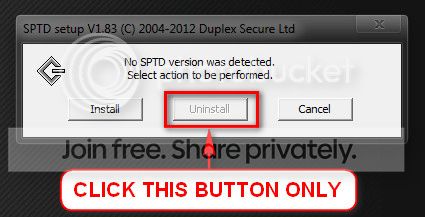
Daemon Tools, Alcohol 120% and Power Archiver Pro uses SCSI Pass Through Direct (SPTD), which is a well known BSOD causer. Uninstall the program at first. Then download SPTD standalone installer from Disk-Tools.com, and execute the downloaded file as guided below :

  • Double click to open it.
  • Click this button only:
  • 2012-12-13_224441.jpg
  • If it is grayed out, as in the picture, there is no more SPTD in your system, and you just close the window.
Free up the startup. Windows does not need any other program to auto start with it, but the auto start programs often conflicts and causes various problems including BSODs.

  1. Click on the Start button
  2. Type “msconfig (without quotes), click the resulting link. It will open the System Configuration window.
  3. Select the “Startup” tab.
  4. Deselect all items other than the antivirus.
  5. Apply > OK
  6. Accept then restart.
I would suggest you to uninstall Viscosity Virtual Adapter V9.1, at least as a test.
Code:
Unloaded modules:
[COLOR=Red]fffff880`058b5000 fffff880`058c2000   visctap0901[/COLOR].
fffff880`0a13a000 fffff880`0a170000   WUDFRd.sys
fffff880`015d7000 fffff880`015e5000   crashdmp.sys
fffff880`015e5000 fffff880`015f1000   dump_pciidex
fffff880`015f1000 fffff880`015fc000   dump_msahci.
fffff880`010d0000 fffff880`010e3000   dump_dumpfve
Now let us know the results. Please be aware that a Stop 0x101 causes due to a wide range of possible causes, from hardware to software. So the entire troubleshooting may take a time and a lot of alternative tests. ________________________________________________________________________
BSOD ANALYSIS:
Code:
*******************************************************************************
*                                                                             *
*                        Bugcheck Analysis                                    *
*                                                                             *
*******************************************************************************

Use !analyze -v to get detailed debugging information.

[URL="http://www.carrona.org/bsodindx.html#0x00000101"]BugCheck 101[/URL], {19, 0, fffff88003302180, 6}

Probably caused by : Unknown_Image ( ANALYSIS_INCONCLUSIVE )

Followup: MachineOwner
---------

0: kd> !analyze -v
*******************************************************************************
*                                                                             *
*                        Bugcheck Analysis                                    *
*                                                                             *
*******************************************************************************

[URL="http://www.carrona.org/bsodindx.html#0x00000101"]CLOCK_WATCHDOG_TIMEOUT (101)[/URL]
An expected clock interrupt was not received on a secondary processor in an
MP system within the allocated interval. This indicates that the specified
processor is hung and not processing interrupts.
Arguments:
Arg1: 0000000000000019, Clock interrupt time out interval in nominal clock ticks.
Arg2: 0000000000000000, 0.
Arg3: fffff88003302180, The PRCB address of the hung processor.
Arg4: 0000000000000006, 0.

Debugging Details:
------------------


BUGCHECK_STR:  CLOCK_WATCHDOG_TIMEOUT_8_PROC

CUSTOMER_CRASH_COUNT:  1

DEFAULT_BUCKET_ID:  WIN7_DRIVER_FAULT

PROCESS_NAME:  System

CURRENT_IRQL:  d

STACK_TEXT:  
fffff880`035e7438 fffff800`02f29a3a : 00000000`00000101 00000000`00000019 00000000`00000000 fffff880`03302180 : nt!KeBugCheckEx
fffff880`035e7440 fffff800`02edc6e7 : 00000000`00000000 fffff800`00000006 00000000`00002710 fffff800`02f063f8 : nt! ?? ::FNODOBFM::`string'+0x4e3e
fffff880`035e74d0 fffff800`02e1e895 : fffff800`02e44460 fffff880`035e7680 fffff800`02e44460 00000000`00000000 : nt!KeUpdateSystemTime+0x377
fffff880`035e75d0 fffff800`02ecf153 : 00000000`5f12cf27 fffff800`0304de80 fffff680`0004cf50 fffff800`02ebaf6a : hal!HalpHpetClockInterrupt+0x8d
fffff880`035e7600 fffff800`02f08469 : fffff800`0304de80 fffff880`00000001 00000000`00000000 00000000`00000000 : nt!KiInterruptDispatchNoLock+0x163
fffff880`035e7790 fffff800`02ed7a0c : 00000000`00000000 fffff880`035e78d8 fffff880`00000000 00000000`00004399 : nt!KxFlushEntireTb+0x79
fffff880`035e77d0 fffff800`02f08963 : fffff880`0000202f 00002ff2`00002ff1 fffff800`02e5d000 00002ff6`00002ff5 : nt!KeFlushMultipleRangeTb+0x28c
fffff880`035e78a0 fffff800`02ed7c24 : 00000000`00000000 fffff800`03087f60 00000000`00000000 fffffa80`00000000 : nt!MiReplenishBitMap+0x468
fffff880`035e79b0 fffff800`02ebd47f : fffffa80`066f26f0 00000000`00000400 000110eb`0006e2b0 00000000`00000001 : nt!MiEmptyPteBins+0x10d
fffff880`035e7a00 fffff800`02ebcae8 : 00000000`00000008 00000000`00000001 fffffa80`066f26f0 fffff800`02ebca70 : nt!MiAdjustPteBins+0xbf
fffff880`035e7a40 fffff800`02ebcfc3 : 00000000`00000008 fffff880`035e7ad0 00000000`00000001 fffffa80`00000000 : nt!MmWorkingSetManager+0x40
fffff880`035e7a90 fffff800`03170ede : fffffa80`06708b50 00000000`00000080 fffffa80`066f26f0 00000000`00000001 : nt!KeBalanceSetManager+0x1c3
fffff880`035e7c00 fffff800`02ec3906 : fffff880`009b3180 fffffa80`06708b50 fffff880`009be0c0 00000000`00000000 : nt!PspSystemThreadStartup+0x5a
fffff880`035e7c40 00000000`00000000 : 00000000`00000000 00000000`00000000 00000000`00000000 00000000`00000000 : nt!KiStartSystemThread+0x16


STACK_COMMAND:  kb

SYMBOL_NAME:  ANALYSIS_INCONCLUSIVE

FOLLOWUP_NAME:  MachineOwner

MODULE_NAME: Unknown_Module

IMAGE_NAME:  Unknown_Image

DEBUG_FLR_IMAGE_TIMESTAMP:  0

FAILURE_BUCKET_ID:  X64_CLOCK_WATCHDOG_TIMEOUT_8_PROC_ANALYSIS_INCONCLUSIVE

BUCKET_ID:  X64_CLOCK_WATCHDOG_TIMEOUT_8_PROC_ANALYSIS_INCONCLUSIVE

Followup: MachineOwner
---------

 

My Computer

Computer type
PC/Desktop
Computer Manufacturer/Model Number
Self Assembled
OS
Microsoft Windows 10 Pro Insider Preview 64-bit
CPU
Intel(R) Core(TM) i3-4130 CPU @ 3.40GHz
Motherboard
Gigabyte Technology Co., Ltd. B85M-D3H
Memory
Corsair Vengence 4GB x2 (8.00GB Dual-Channel DDR3 @ 798MHz)
Graphics Card(s)
2047MB GeForce GTS 450 (ZOTAC International)
Sound Card
Onboard (Realtek High Definition Audio)
Monitor(s) Displays
LG Flatron E2040T
Screen Resolution
1600x900
Hard Drives
Western Digital 1 TB
Seagate 500 GB
PSU
Corsair VS550
Case
Cooler Master K380
Cooling
Cooler Master Seidon 120V Plus
Keyboard
Logitech MK260r
Mouse
Logitech MK260r
Internet Speed
PMPL Broadband
Antivirus
Windows Defender + MBAM
Browser
Firefox
Other Info
Dell Studio 15" Laptop
Hi Arc, thanks for the response.

1. I have attempted to uninstall SCSI Pass Through Direct (SPTD) directly, but couldn't find it in the installed programs list (I currently use CCleaner). Instead, I have just uninstalled Daemon Tools which you said used it. I also ran the SPTD standalone installer and found, as your picture indicates, that there was nothing left to uninstall.

2. I have removed all other startup programs as you suggested.

3. I'm not sure how to uninstall Viscosity Virtual Adapter V9.1. How would I go about doing this?

Cheers
 

My Computer

Computer type
PC/Desktop
Computer Manufacturer/Model Number
Custom
OS
Windows 7 Ultimate x64
CPU
Intel Core i7-3770K 3.50GHz
Motherboard
ASUS Maximus V Gene
Memory
G Skill 2 x 4gb
Graphics Card(s)
AMD Radeon HD 7970
Hard Drives
Sandisk SSD 240gb
Antivirus
Microsoft Security Essentials
Browser
Chrome
I'm not sure how to uninstall Viscosity Virtual Adapter V9.1. How would I go about doing this?

Cheers
You may do it .....

  1. Click the Start Button, type "devmgmt.msc" (without quotation marks) in the Start Menu Search box and press Enter.
  2. Double click to expand "Network adaptors".
  3. Search for Viscosity Virtual Adapter V9.1 in the list.
  4. Right click on it and uninstall.
Let us know the results.
 

My Computer

Computer type
PC/Desktop
Computer Manufacturer/Model Number
Self Assembled
OS
Microsoft Windows 10 Pro Insider Preview 64-bit
CPU
Intel(R) Core(TM) i3-4130 CPU @ 3.40GHz
Motherboard
Gigabyte Technology Co., Ltd. B85M-D3H
Memory
Corsair Vengence 4GB x2 (8.00GB Dual-Channel DDR3 @ 798MHz)
Graphics Card(s)
2047MB GeForce GTS 450 (ZOTAC International)
Sound Card
Onboard (Realtek High Definition Audio)
Monitor(s) Displays
LG Flatron E2040T
Screen Resolution
1600x900
Hard Drives
Western Digital 1 TB
Seagate 500 GB
PSU
Corsair VS550
Case
Cooler Master K380
Cooling
Cooler Master Seidon 120V Plus
Keyboard
Logitech MK260r
Mouse
Logitech MK260r
Internet Speed
PMPL Broadband
Antivirus
Windows Defender + MBAM
Browser
Firefox
Other Info
Dell Studio 15" Laptop
Great thanks, I've managed to uninstall it.

I'll let you if anything changes!
 

My Computer

Computer type
PC/Desktop
Computer Manufacturer/Model Number
Custom
OS
Windows 7 Ultimate x64
CPU
Intel Core i7-3770K 3.50GHz
Motherboard
ASUS Maximus V Gene
Memory
G Skill 2 x 4gb
Graphics Card(s)
AMD Radeon HD 7970
Hard Drives
Sandisk SSD 240gb
Antivirus
Microsoft Security Essentials
Browser
Chrome
Back
Top