Solved BSOD While Gaming - Black Ops 2 & BF3

RadioMatic

New member
Local time
7:32 PM
Messages
17
Hi there...

Been getting these random BSODs for a few weeks now, mostly with Black Ops 2...only once or twice with BF3.

I've tried just about everything...updating the BIOS and various drivers, unplugging keyboards and mice, running memcheck and chkdsk...

The main processes are: ntoskrnl.exe, ntkrnlmp.exe and partmgr.sys

Thanks for any help you can give...The DMP files are attached to this post

--RadioMatic


windows version: Windows 7 Service Pack 1, 6.1, build: 7601
windows dir: C:\Windows
CPU: GenuineIntel Intel(R) Core(TM) i7-2600K CPU @ 3.40GHz Intel586, level: 6

Nvidia GTX 660ti
8 logical processors, active mask: 255
RAM: 8553107456 total
VM: 2147352576, free: 1961836544
 

My Computer

OS
Windows 7 Home Premium 64 bit
CPU
Intel(R) Core(TM) i7-2600K
Motherboard
ASUS P8P67-M
Memory
8 gigs DDR3
Graphics Card(s)
Nvidia GTX 660ti
Sound Card
Lexicon Omega (External)
Monitor(s) Displays
Hannspree HF22 Widescreen 22"
Hard Drives
Western Digital ATA 1 TB
PSU
800 Watt
Hello RadioMatic.

There were four crashes on 21/01/2013; and none of them is a gaming related crash. All them are Stop 0xF4, which is a storage related crash.
Code:
*******************************************************************************
*                                                                             *
*                        Bugcheck Analysis                                    *
*                                                                             *
*******************************************************************************

Use !analyze -v to get detailed debugging information.

[COLOR=Red][B]BugCheck F4[/B][/COLOR], {3, fffffa8008bec060, fffffa8008bec340, fffff80003397460}

----- ETW minidump data unavailable-----
Probably caused by : csrss.exe

Followup: MachineOwner
---------
A Stop 0xF4 may occur if the storage device is not functioning properly. It may occur to various reasons. It may be a failing HDD; or an antivirus's file protection mechanism, or a virus, or a backup tool, etc everything impacting on the storage system.

Do some disc checks.

  1. Update your SSD's Firmware (Skip it, if it is not a SSD)
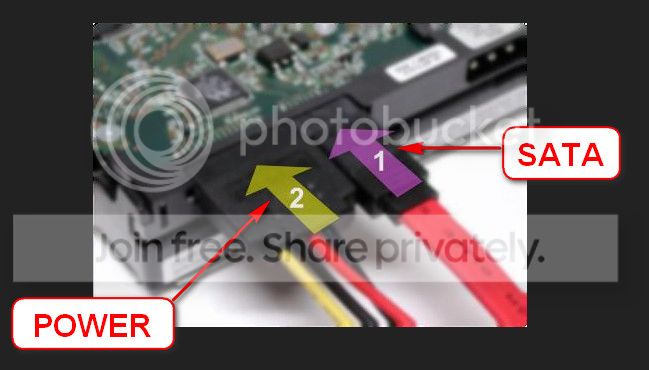
  2. Reseat the sata and power.
    72974453_zps85c47d93.jpg
  3. Run chkdsk /f/r, following the option two of the tutorial Disk Check
  4. Seatool for dos: SeaTools | Seagate download
    Burn it in a blank cd. boot from the CD, click on "Accept", wait for it to finish detecting the drives, then in the upper left corner select "Basic Tests", then select "Long Test" and let it run. Also, you need WD Data Lifeguard.
Uninstall This program:
Code:
Start Menu\Programs\Ad-Aware Antivirus
Use Microsoft Security Essentials as your antivirus with windows inbuilt firewall, and free MBAM as the on demand scanner.
Download, install and update those, and then run full system scans with both of them, one by one.

Scan the system for possible virus infection.

Update the Asmedia and JMicron drivers.

Let us know the results.
 

My Computer

Computer type
PC/Desktop
Computer Manufacturer/Model Number
Self Assembled
OS
Microsoft Windows 10 Pro Insider Preview 64-bit
CPU
Intel(R) Core(TM) i3-4130 CPU @ 3.40GHz
Motherboard
Gigabyte Technology Co., Ltd. B85M-D3H
Memory
Corsair Vengence 4GB x2 (8.00GB Dual-Channel DDR3 @ 798MHz)
Graphics Card(s)
2047MB GeForce GTS 450 (ZOTAC International)
Sound Card
Onboard (Realtek High Definition Audio)
Monitor(s) Displays
LG Flatron E2040T
Screen Resolution
1600x900
Hard Drives
Western Digital 1 TB
Seagate 500 GB
PSU
Corsair VS550
Case
Cooler Master K380
Cooling
Cooler Master Seidon 120V Plus
Keyboard
Logitech MK260r
Mouse
Logitech MK260r
Internet Speed
PMPL Broadband
Antivirus
Windows Defender + MBAM
Browser
Firefox
Other Info
Dell Studio 15" Laptop
Hey there...Appreciate the help. So far, I've done everything except re-seat the HDD and run Seatools. Chkdsk is all clear and no rootkits, viruses, etc. A couple of questions...Why does the BSOD happen more often with Ops 2 than BF3? Also, here is another BSOD event that happens, but far less often...don't know if it's connected. Wonder if my HDD is just going down the tubes....?

Thanks again...

crash dump file: C:\Windows\Minidump\012013-16380-01.dmp
This was probably caused by the following module: partmgr.sys (partmgr+0xE630)
Bugcheck code: 0x7A (0xFFFFF6FC40007C38, 0xFFFFFFFFC000000E, 0x855D4860, 0xFFFFF88000F87630)
Error: KERNEL_DATA_INPAGE_ERROR
file path: C:\Windows\system32\drivers\partmgr.sys
product: Microsoft® Windows® Operating System
company: Microsoft Corporation
description: Partition Management Driver
Bug check description: This bug check indicates that the requested page of kernel data from the paging file could not be read into memory.
The crash took place in a standard Microsoft module. Your system configuration may be incorrect. Possibly this problem is caused by another driver on your system that cannot be identified at this time.
 

My Computer

OS
Windows 7 Home Premium 64 bit
CPU
Intel(R) Core(TM) i7-2600K
Motherboard
ASUS P8P67-M
Memory
8 gigs DDR3
Graphics Card(s)
Nvidia GTX 660ti
Sound Card
Lexicon Omega (External)
Monitor(s) Displays
Hannspree HF22 Widescreen 22"
Hard Drives
Western Digital ATA 1 TB
PSU
800 Watt
Black OPs 2 is a system resource hungry game. If the GPU is old, if the power supply is inadequate, if there are dust accumulation around the air vents and fan grills, if the game causes a high temperature, if the RAM modules are seated near the CPU fans, etc a lot of causes may make the system crash during gaming. You may check all those.
 

My Computer

Computer type
PC/Desktop
Computer Manufacturer/Model Number
Self Assembled
OS
Microsoft Windows 10 Pro Insider Preview 64-bit
CPU
Intel(R) Core(TM) i3-4130 CPU @ 3.40GHz
Motherboard
Gigabyte Technology Co., Ltd. B85M-D3H
Memory
Corsair Vengence 4GB x2 (8.00GB Dual-Channel DDR3 @ 798MHz)
Graphics Card(s)
2047MB GeForce GTS 450 (ZOTAC International)
Sound Card
Onboard (Realtek High Definition Audio)
Monitor(s) Displays
LG Flatron E2040T
Screen Resolution
1600x900
Hard Drives
Western Digital 1 TB
Seagate 500 GB
PSU
Corsair VS550
Case
Cooler Master K380
Cooling
Cooler Master Seidon 120V Plus
Keyboard
Logitech MK260r
Mouse
Logitech MK260r
Internet Speed
PMPL Broadband
Antivirus
Windows Defender + MBAM
Browser
Firefox
Other Info
Dell Studio 15" Laptop
OK..Will do on all of that. Does this "Bugcheck code: 0x7A" still indicate storage?
 

My Computer

OS
Windows 7 Home Premium 64 bit
CPU
Intel(R) Core(TM) i7-2600K
Motherboard
ASUS P8P67-M
Memory
8 gigs DDR3
Graphics Card(s)
Nvidia GTX 660ti
Sound Card
Lexicon Omega (External)
Monitor(s) Displays
Hannspree HF22 Widescreen 22"
Hard Drives
Western Digital ATA 1 TB
PSU
800 Watt
No, that's a different one. But, the last day everything was a Stop 0xF4.

After doing the steps, if you get a new crash dump, upload it.
 

My Computer

Computer type
PC/Desktop
Computer Manufacturer/Model Number
Self Assembled
OS
Microsoft Windows 10 Pro Insider Preview 64-bit
CPU
Intel(R) Core(TM) i3-4130 CPU @ 3.40GHz
Motherboard
Gigabyte Technology Co., Ltd. B85M-D3H
Memory
Corsair Vengence 4GB x2 (8.00GB Dual-Channel DDR3 @ 798MHz)
Graphics Card(s)
2047MB GeForce GTS 450 (ZOTAC International)
Sound Card
Onboard (Realtek High Definition Audio)
Monitor(s) Displays
LG Flatron E2040T
Screen Resolution
1600x900
Hard Drives
Western Digital 1 TB
Seagate 500 GB
PSU
Corsair VS550
Case
Cooler Master K380
Cooling
Cooler Master Seidon 120V Plus
Keyboard
Logitech MK260r
Mouse
Logitech MK260r
Internet Speed
PMPL Broadband
Antivirus
Windows Defender + MBAM
Browser
Firefox
Other Info
Dell Studio 15" Laptop
Hey there...

I've done everything and still getting these when I play THAT game...I attached the latest .dmp file.
 

My Computer

OS
Windows 7 Home Premium 64 bit
CPU
Intel(R) Core(TM) i7-2600K
Motherboard
ASUS P8P67-M
Memory
8 gigs DDR3
Graphics Card(s)
Nvidia GTX 660ti
Sound Card
Lexicon Omega (External)
Monitor(s) Displays
Hannspree HF22 Widescreen 22"
Hard Drives
Western Digital ATA 1 TB
PSU
800 Watt
Hey there...

I've done everything and still getting these when I play THAT game...I attached the latest .dmp file.
This dump files dates 21/01/2013; i.e. the date we were troubleshooting initially. Have you got any more crashes within these days in between?
 

My Computer

Computer type
PC/Desktop
Computer Manufacturer/Model Number
Self Assembled
OS
Microsoft Windows 10 Pro Insider Preview 64-bit
CPU
Intel(R) Core(TM) i3-4130 CPU @ 3.40GHz
Motherboard
Gigabyte Technology Co., Ltd. B85M-D3H
Memory
Corsair Vengence 4GB x2 (8.00GB Dual-Channel DDR3 @ 798MHz)
Graphics Card(s)
2047MB GeForce GTS 450 (ZOTAC International)
Sound Card
Onboard (Realtek High Definition Audio)
Monitor(s) Displays
LG Flatron E2040T
Screen Resolution
1600x900
Hard Drives
Western Digital 1 TB
Seagate 500 GB
PSU
Corsair VS550
Case
Cooler Master K380
Cooling
Cooler Master Seidon 120V Plus
Keyboard
Logitech MK260r
Mouse
Logitech MK260r
Internet Speed
PMPL Broadband
Antivirus
Windows Defender + MBAM
Browser
Firefox
Other Info
Dell Studio 15" Laptop
Sorry about that...Yes, I have had more crashes (one is attached), but the dates are screwy. The dump file that's attached happened THIS (Friday) morning just minutes ago. At first, I couldn't find it (and several others)...Then I noticed the name/number of the file I was looking for with a modification date of TODAY, but a creation date of 4/12/2011. Also, the last 5 or 6 crashes all have the creation date of 4/12/2011 at 2:55 pm and a present day modification date.

Again, thanks for your time...

--RadioMatic
 

My Computer

OS
Windows 7 Home Premium 64 bit
CPU
Intel(R) Core(TM) i7-2600K
Motherboard
ASUS P8P67-M
Memory
8 gigs DDR3
Graphics Card(s)
Nvidia GTX 660ti
Sound Card
Lexicon Omega (External)
Monitor(s) Displays
Hannspree HF22 Widescreen 22"
Hard Drives
Western Digital ATA 1 TB
PSU
800 Watt
Exactly the same crash as earlier. I hope you have followed the instructions ?
Code:
*******************************************************************************
*                                                                             *
*                        Bugcheck Analysis                                    *
*                                                                             *
*******************************************************************************

Use !analyze -v to get detailed debugging information.

BugCheck F4, {3, fffffa8008ce9710, fffffa8008ce99f0, fffff800033de460}

----- ETW minidump data unavailable-----
Probably caused by : csrss.exe

Followup: MachineOwner
I am asking for some help here.
 

My Computer

Computer type
PC/Desktop
Computer Manufacturer/Model Number
Self Assembled
OS
Microsoft Windows 10 Pro Insider Preview 64-bit
CPU
Intel(R) Core(TM) i3-4130 CPU @ 3.40GHz
Motherboard
Gigabyte Technology Co., Ltd. B85M-D3H
Memory
Corsair Vengence 4GB x2 (8.00GB Dual-Channel DDR3 @ 798MHz)
Graphics Card(s)
2047MB GeForce GTS 450 (ZOTAC International)
Sound Card
Onboard (Realtek High Definition Audio)
Monitor(s) Displays
LG Flatron E2040T
Screen Resolution
1600x900
Hard Drives
Western Digital 1 TB
Seagate 500 GB
PSU
Corsair VS550
Case
Cooler Master K380
Cooling
Cooler Master Seidon 120V Plus
Keyboard
Logitech MK260r
Mouse
Logitech MK260r
Internet Speed
PMPL Broadband
Antivirus
Windows Defender + MBAM
Browser
Firefox
Other Info
Dell Studio 15" Laptop
I've done everything...spent hours/days trying to figure this out. I've had a friend (who knows Windows far better than I do) look at the files and he is stumped as well...
 

My Computer

OS
Windows 7 Home Premium 64 bit
CPU
Intel(R) Core(TM) i7-2600K
Motherboard
ASUS P8P67-M
Memory
8 gigs DDR3
Graphics Card(s)
Nvidia GTX 660ti
Sound Card
Lexicon Omega (External)
Monitor(s) Displays
Hannspree HF22 Widescreen 22"
Hard Drives
Western Digital ATA 1 TB
PSU
800 Watt
I agree with Arc's initial diagnosis. The 0xF4 bugchecks are being caused because a device that was used (most likely a storage device) to transfer data to/from RAM disappeared, as in it was no longer responding. Almost always this is due to a bad storage device, or some problem in the storage controller on the mobo.

I noticed you said you've yet to reconnect the HDD and run Seatools. Please do those two, running Short DST, SMART (if available) and Short Generic tests on the drive. Also you will want to open up CrystalDiskInfo and provide us a screenshot of the results.

Analysts:

0xF4 with C0000006 (problem with memory-to-disk I/O). Raw stack shows C000000e (device not found) errors.
 

My Computer

OS
Windows 7 64-bit
  • Like
Reactions: Arc
I've reconnected the HDD already and ran the long test on Seatools...I'll run those other tests and let you know. I'll post the Crystal Disk info later today...

Thanks...
 

My Computer

OS
Windows 7 Home Premium 64 bit
CPU
Intel(R) Core(TM) i7-2600K
Motherboard
ASUS P8P67-M
Memory
8 gigs DDR3
Graphics Card(s)
Nvidia GTX 660ti
Sound Card
Lexicon Omega (External)
Monitor(s) Displays
Hannspree HF22 Widescreen 22"
Hard Drives
Western Digital ATA 1 TB
PSU
800 Watt
Question: So the "dates created" all being the same on these errors with the modification date being in the present doesn't mean much? Also, while I've uninstalled/reinstalled the game, Black Ops 2 is now the only program involved in these crashes. Also had an "Unhandled Exception" last night...

AND, at one point during attempted play, the screen just went black and I heard the computer beep...
 

My Computer

OS
Windows 7 Home Premium 64 bit
CPU
Intel(R) Core(TM) i7-2600K
Motherboard
ASUS P8P67-M
Memory
8 gigs DDR3
Graphics Card(s)
Nvidia GTX 660ti
Sound Card
Lexicon Omega (External)
Monitor(s) Displays
Hannspree HF22 Widescreen 22"
Hard Drives
Western Digital ATA 1 TB
PSU
800 Watt
Crystal Disk screenshot is attached. All other tests were completed and passed...
 

My Computer

OS
Windows 7 Home Premium 64 bit
CPU
Intel(R) Core(TM) i7-2600K
Motherboard
ASUS P8P67-M
Memory
8 gigs DDR3
Graphics Card(s)
Nvidia GTX 660ti
Sound Card
Lexicon Omega (External)
Monitor(s) Displays
Hannspree HF22 Widescreen 22"
Hard Drives
Western Digital ATA 1 TB
PSU
800 Watt
Had another crash this AM...This one was a stop 0x0000007a with ntfs.sys failure? Again, same creation date in 2011 but modified this morning...
 

My Computer

OS
Windows 7 Home Premium 64 bit
CPU
Intel(R) Core(TM) i7-2600K
Motherboard
ASUS P8P67-M
Memory
8 gigs DDR3
Graphics Card(s)
Nvidia GTX 660ti
Sound Card
Lexicon Omega (External)
Monitor(s) Displays
Hannspree HF22 Widescreen 22"
Hard Drives
Western Digital ATA 1 TB
PSU
800 Watt
So the system beeped? Do you remember how it beeped? As in was it a single long beep, 3 consecutive short beeps, 1 long, 2 short, etc.? POST beep codes like that alert to hardware failure and kinda like morse code it will inform you by the beep what it is. However every system's POST beep code is different, which means you will need to consult your system manual for the list of POST beep codes and compare with what you heard.

Something tells me it actually may be the video card at fault here, given the screen going black prior to the beeping. I have yet to understand the mechanics behind it thoroughly (it may involve DMA from RAM-to-Video) but I think the 0xF4 bugchecks may also be involved. I however would need a kernel dump from one of those crashes to verify further. But that doesn't seem to coincide with the NTFS errors you're getting recently. No matter, the beep code is our best evidence right now to determine which hardware is failing, so grab your system manual, look it up and get back with us on it.
 

My Computer

OS
Windows 7 64-bit
Back
Top