VIA High Definition Audio Function Driver is the problem here.
Code:
*******************************************************************************
*                                                                             *
*                        Bugcheck Analysis                                    *
*                                                                             *
*******************************************************************************

Use !analyze -v to get detailed debugging information.

BugCheck 50, {fffff88006ca17c8, 0, fffff8800665e52f, 0}

*** WARNING: Unable to verify timestamp for [URL="http://www.carrona.org/drivers/driver.php?id=viahduaa.sys"]viahduaa.sys[/URL]
*** ERROR: Module load completed but symbols could not be loaded for [URL="http://www.carrona.org/drivers/driver.php?id=viahduaa.sys"]viahduaa.sys[/URL]

Could not read faulting driver name
Probably caused by : memory_corruption

Followup: memory_corruption
---------
And the driver is kinda old.
Code:
fffff880`0961d000 fffff880`097de000   viahduaa T (no symbols)
    Loaded symbol image file: viahduaa.sys
    Image path: \SystemRoot\system32\drivers\viahduaa.sys
[COLOR=Red]    Image name: viahduaa.sys
    Timestamp:        Wed Aug 04 13:21:53 2010[/COLOR] (4C591C19)
    CheckSum:         00153722
    ImageSize:        001C1000
    Translations:     0000.04b0 0000.04e4 0409.04b0 0409.04e4
Update it from
VIA Drivers Download - VIA Technologies, Inc.
And Realtek RTL8168D/8111D Family PCI-E Gigabit Ethernet NIC driver, too.
Code:
*******************************************************************************
*                                                                             *
*                        Bugcheck Analysis                                    *
*                                                                             *
*******************************************************************************

Use !analyze -v to get detailed debugging information.

BugCheck D1, {ffffffffe3850fff, 2, 0, fffff880018d9970}

*** WARNING: Unable to verify timestamp for [URL="http://www.carrona.org/drivers/driver.php?id=Rt64win7.sys"]Rt64win7.sys[/URL]
*** ERROR: Module load completed but symbols could not be loaded for [URL="http://www.carrona.org/drivers/driver.php?id=Rt64win7.sys"]Rt64win7.sys[/URL]
Probably caused by : memory_corruption

Followup: memory_corruption
---------
And that is also very old.
Code:
fffff880`0548e000 fffff880`05513000   Rt64win7 T (no symbols)
    Loaded symbol image file: Rt64win7.sys
    Image path: \SystemRoot\system32\DRIVERS\Rt64win7.sys
[COLOR=Red]    Image name: Rt64win7.sys
    Timestamp:        Fri Jun 10 12:03:15 2011[/COLOR] (4DF1BAAB)
    CheckSum:         0008B67F
    ImageSize:        00085000
    Translations:     0000.04b0 0000.04e4 0409.04b0 0409.04e4
Get the updates from
Realtek
Daemon Tools, Alcohol 120% and Power Archiver Pro uses
SCSI Pass Through Direct (
SPTD), which is a well known BSOD causer. Uninstall
Daemon Tools at first. Then download SPTD standalone installer from
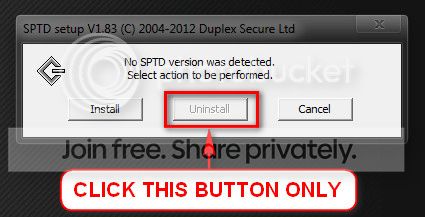
Disk-Tools.com, and execute the downloaded file as guided below :
- Double click to open it.
- Click this button only:
-
- If it is grayed out, as in the picture, there is no more SPTD in your system, and you just close the window.
Free up the startup. Dont worry, it will not loss any functionality. But, the startup programs often clash, and causes various issues including BSODs.
- Click on the Start button
- Type “msconfig (without quotes), click the resulting link. It will open the System Configuration window.
- Select the “Startup” tab.
- Deselect all items other than the antivirus.
- Apply > OK
- Accept then restart.
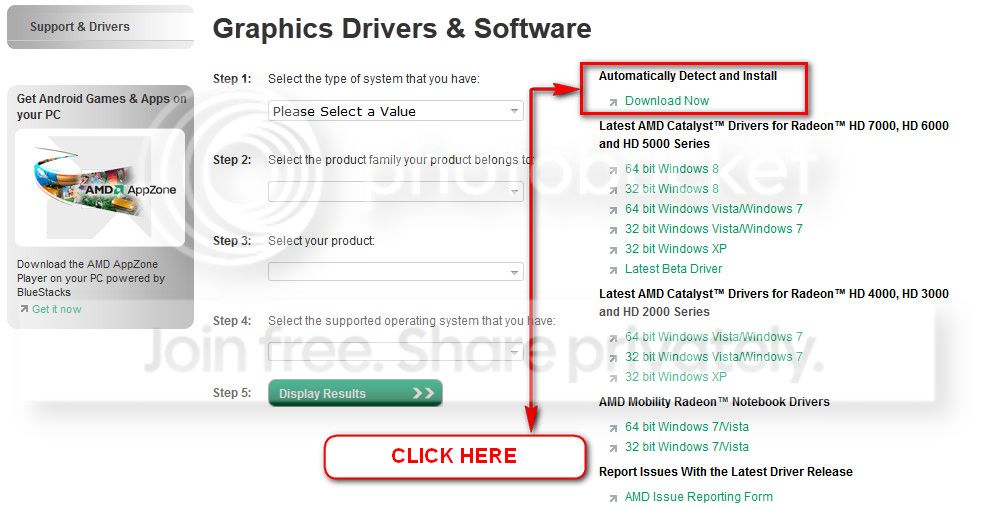
Update your ATI/AMD display driver.
You can get it from the link in our forum,
http://www.sevenforums.com/graphic-...alyst-video-driver-windows-7-a.html#post17671, or you may go to
AMD Graphics Driver and Software and opt for Automatically Detect and Install the appropriate driver for your card.
During installation, you may opt for advanced installation, and install the display driver only, not the Catalyst Control Center.
Test your RAM modules for possible errors.
How to Test and Diagnose RAM Issues with Memtest86+
Run memtest for at least 8 passes, preferably overnight.
Finally, as a test, Uninstall Norton and all Symentec products using
Norton Removal tool. Norton is a huge source of BSODs; though in your case I haven't found any evidence that norton is causing it.
Use
Microsoft Security Essentials as your antivirus with windows inbuilt firewall, and
free MBAM as the on demand scanner.
Download, install and update those, and then run full system scans with both of them, one by one.
Let us know the results.




 ) was missing. Reinstalled it with a hotfix from microsoft, don't know if this caused the BSOD.