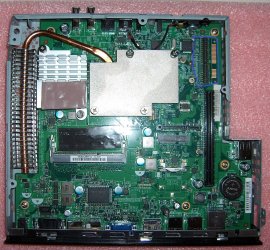
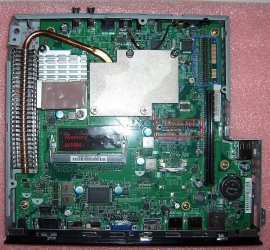
A thin client terminal (previously known as a Dumb Terminal), is usually fitted with a network adaptor, a small amount of local storage to hold settings, and a ROM chip that contains the Boot code. It is designed to connect to a server that supplies all the code it needs to do the tasks the user wishes to perform.
There is no way to install an OS as the system does not have the space, or sufficient memory or processor to run standalone.
They were the office system of choice until the rise of windows (and other Smart terminal devices), back in the 1980s, and they did have a small resurgence a few years ago until the boom in mobile computing, again sent them into obscurity. They did have the cost advantage, when Windows based computing was in it's infancy, but this soon disappeared when the clone systems arrived and lowered the costs of Smart devices dramatically.
Without a suitable Server, and this would normally be a Mainframe computer, a Thin Client terminal is, these days, totally redundant