Crashes while the system is not in use - causing corrupted files

soundnstyle

New member
Local time
1:00 AM
Messages
5
I am stumped and am need of some assistance please.

I have a custom built system that is primarily a media PC, running Win7 Ultimate x64. I routinely will use the system to watch some netflix/hulu/etc, surf the web, play a game all with no trouble. I'll shut down the TV, and the computer will go to standby mode. When I come back to it the next day/night or even later the same day, it will have crashed, BSOD, etc.

This system previously corrupted and I was forced to rebuild it 2 days ago. Again today when I logged onto it, it showed me that it had 'recovered from a crash'.

I have previously run memtest and the HDD's show SMART as healthy.

I am at a loss as to what to do next and need some advice -
 

My Computer My Computer

Computer type
PC/Desktop
Computer Manufacturer/Model Number
Custom
OS
Windows 7 Ultimate x64
CPU
AMD A6-3650
Motherboard
A75M-ITX
Memory
8 GB
Graphics Card(s)
None
Hard Drives
64 & 128 GB M4 SSD
Antivirus
avast
Browser
Chrome/Firefox
Welcome to Seven Forums.
Code:
*******************************************************************************
*                                                                             *
*                        Bugcheck Analysis                                    *
*                                                                             *
*******************************************************************************

Use !analyze -v to get detailed debugging information.

BugCheck 19, {3, fffffa80069640e0, ffbdfa80069640e0, fffffa80069640e0}

*** WARNING: Unable to verify timestamp for aswFsBlk.SYS
*** ERROR: Module load completed but symbols could not be loaded for aswFsBlk.SYS
Probably caused by : Pool_Corruption ( nt!ExDeferredFreePool+a53 )

Followup: Pool_corruption
---------
Your BSOD's were caused by Avast! Internet Security. Please remove it using its removal tool from here: Uninstallers (removal tools) for common antivirus software - ESET Knowledgebase

We recommended Microsoft Security Essentials from a strict BSOD perspective. Is most compatible & provides most stability compared to other antivirus app/Internet Security Software.
   Warning
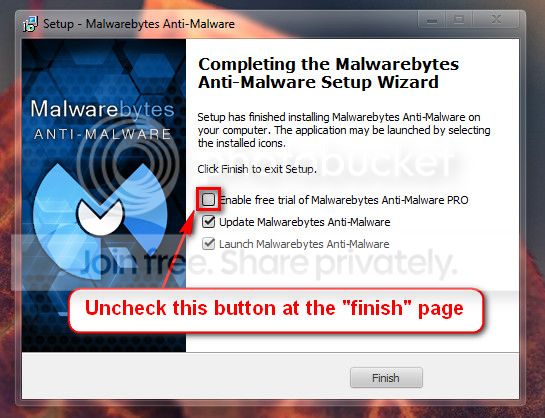
Do not start the free trial of Malware Bytes; remember to deselect that option when prompted.

2013-03-09_224312_zps62dc7c23.jpg

Run a full scan with both (separately) once downloaded, installed and updated.

Follow this:
If you have an SSD, make sure the following are up to date:
  • SSD firmware
  • BIOS Version
  • Chipset Drivers
  • Hard disk controller drivers/SATA drivers
  • If you have a Marvell IDE ATA/ATAPI device, make sure the drivers are up to date from the Intel site or Marvell site and not from your motherboard/vendor support site.

Perform a System File Check to check the integrity of all protected Windows 7 :
  1. Click on the start :orb:
  2. Type CMD on Search
  3. Left click and Run as Administrator
  4. Type
    Code:
    SFC /scannow
Full tutorial here:
Check your hard drive(s) for errors by running chkdsk
Let us know the results and further BSOD reports.
 

My Computer My Computer

Computer type
PC/Desktop
Computer Manufacturer/Model Number
Self assembled
OS
Windows 10 Home 64Bit
CPU
Intel Core i5 10400 @ 2.90GHz
Motherboard
Intel Corporation DG41WV (PROCESSOR)
Memory
8.00GB Single-Channel Unknown @ 1329MHz (16-20-20-38)
Sound Card
Realtek High Definition Audio
Monitor(s) Displays
DELL E170S
Screen Resolution
1280x1024 pixels
Hard Drives
931GB TOSHIBA DT01ACA100 (SATA)
238GB TEAM TM8PS7256G (SATA SSD)
Case
Nothing Fancy
Cooling
Fans
Keyboard
A4 Tech Co LTD
Mouse
A4 Tech Co Ltd/Logitech
Internet Speed
25 Mbps
Uninstalled Avast, installed MSE and Malewarebytes. Scanned clean.

Bios was updated from 1.5 to 1.6. Drivers had been updated on the most recent rebuild.

One of the SSD's firmware is out of date, which when I tried to update it wouldn't work so I contacted Crucial for support with that.

In the meantime I continued working: Ran chkdsk /r /f and no issues.

Ran sfc /scannow - got to 90% and BSOD. Rebooted and tried sfc /scannow - system said repair was pending. Rebooted to windows. Shut down and rebooted to my Windows install with the /Offbootdir=xxx /offwindir=xxx and got the same repair pending message. Rebooted to Windows and tried sfc /scannow again and it said there was a repair pending.

At this point should I just wait till Crucial and I get the ssd updated?
 

My Computer My Computer

Computer type
PC/Desktop
Computer Manufacturer/Model Number
Custom
OS
Windows 7 Ultimate x64
CPU
AMD A6-3650
Motherboard
A75M-ITX
Memory
8 GB
Graphics Card(s)
None
Hard Drives
64 & 128 GB M4 SSD
Antivirus
avast
Browser
Chrome/Firefox
Umm..can you upload the new reports.
 

My Computer My Computer

Computer type
PC/Desktop
Computer Manufacturer/Model Number
Self assembled
OS
Windows 10 Home 64Bit
CPU
Intel Core i5 10400 @ 2.90GHz
Motherboard
Intel Corporation DG41WV (PROCESSOR)
Memory
8.00GB Single-Channel Unknown @ 1329MHz (16-20-20-38)
Sound Card
Realtek High Definition Audio
Monitor(s) Displays
DELL E170S
Screen Resolution
1280x1024 pixels
Hard Drives
931GB TOSHIBA DT01ACA100 (SATA)
238GB TEAM TM8PS7256G (SATA SSD)
Case
Nothing Fancy
Cooling
Fans
Keyboard
A4 Tech Co LTD
Mouse
A4 Tech Co Ltd/Logitech
Internet Speed
25 Mbps
New scan is attached.
 

My Computer My Computer

Computer type
PC/Desktop
Computer Manufacturer/Model Number
Custom
OS
Windows 7 Ultimate x64
CPU
AMD A6-3650
Motherboard
A75M-ITX
Memory
8 GB
Graphics Card(s)
None
Hard Drives
64 & 128 GB M4 SSD
Antivirus
avast
Browser
Chrome/Firefox
Sometimes drivers remain, not completely uninstalled. Follow this tutorial for complete removal of drivers of the particular program:
Code:
lmvm atikmdag
start             end                 module name
fffff880`04838000 fffff880`052ec000   atikmdag T (no symbols)           
    Loaded symbol image file: atikmdag.sys
    Image path: \SystemRoot\system32\DRIVERS\atikmdag.sys
    Image name: atikmdag.sys
    Timestamp:        Fri Jan 27 05:30:33 2012 (4F21E219)
    CheckSum:         00A584C2
    ImageSize:        00AB4000
    Translations:     0000.04b0 0000.04e4 0409.04b0 0409.04e4
 

My Computer My Computer

Computer type
PC/Desktop
Computer Manufacturer/Model Number
Self assembled
OS
Windows 10 Home 64Bit
CPU
Intel Core i5 10400 @ 2.90GHz
Motherboard
Intel Corporation DG41WV (PROCESSOR)
Memory
8.00GB Single-Channel Unknown @ 1329MHz (16-20-20-38)
Sound Card
Realtek High Definition Audio
Monitor(s) Displays
DELL E170S
Screen Resolution
1280x1024 pixels
Hard Drives
931GB TOSHIBA DT01ACA100 (SATA)
238GB TEAM TM8PS7256G (SATA SSD)
Case
Nothing Fancy
Cooling
Fans
Keyboard
A4 Tech Co LTD
Mouse
A4 Tech Co Ltd/Logitech
Internet Speed
25 Mbps
BSOD during the Catalyst re-install.
 

My Computer My Computer

Computer type
PC/Desktop
Computer Manufacturer/Model Number
Custom
OS
Windows 7 Ultimate x64
CPU
AMD A6-3650
Motherboard
A75M-ITX
Memory
8 GB
Graphics Card(s)
None
Hard Drives
64 & 128 GB M4 SSD
Antivirus
avast
Browser
Chrome/Firefox
Take memtest. Run for 8 passes and test each stick in a know good slot for an additional 6 passes.

The goal is to test all the RAM sticks and all the motherboard slots.

Check your motherboard manual to ensure the RAM sticks are in the recommended motherboard slots. Some motherboards have very specific slots required for the number of RAM sticks installed.

If you get errors, stop the test and continue with the next step.

1. Remove all but one stick of RAM from your computer (this will be RAM stick #1), and run Memtest86 again, for 7 passes.
*Be sure to note the RAM stick, use a piece of tape with a number, and note the motherboard slot.
If this stick passes the test then go to step #3.

2. If RAM stick #1 has errors, repeat the test with RAM stick #2 in the same motherboard slot.
*If RAM stick #2 passes, this indicates that RAM stick #1 may be bad. If you want to be absolutely sure, re-test RAM stick #1 in another known good slot.
*If RAM stick #2 has errors, this indicates another possible bad RAM stick, a possible motherboard slot failure or inadequate settings.
3. Test the next stick of RAM (stick #2) in the next motherboard slot.
*If this RAM stick has errors repeat step #2 using a known good stick if possible, or another stick.
*If this RAM stick has no errors and both sticks failed in slot#1, test RAM stick #1 in this slot.
4. If you find a stick that passes the test, test it in all the other motherboard slots.

If Part 2 testing shows errors, and all tests in Part 3 show errors, you will need to test the RAM sticks in another computer and/or test other RAM in your computer to identify the problem.

In this way, you can identify whether it is a bad stick of RAM, a bad motherboard, or incompatibility between the sticks.
   Information
Errors are sometimes found after 8 passes.

   Tip
Do this test overnight, before going to bed.
 

My Computer My Computer

Computer type
PC/Desktop
Computer Manufacturer/Model Number
Self assembled
OS
Windows 10 Home 64Bit
CPU
Intel Core i5 10400 @ 2.90GHz
Motherboard
Intel Corporation DG41WV (PROCESSOR)
Memory
8.00GB Single-Channel Unknown @ 1329MHz (16-20-20-38)
Sound Card
Realtek High Definition Audio
Monitor(s) Displays
DELL E170S
Screen Resolution
1280x1024 pixels
Hard Drives
931GB TOSHIBA DT01ACA100 (SATA)
238GB TEAM TM8PS7256G (SATA SSD)
Case
Nothing Fancy
Cooling
Fans
Keyboard
A4 Tech Co LTD
Mouse
A4 Tech Co Ltd/Logitech
Internet Speed
25 Mbps
Sorry for the delayed reply. Work took over my nights and days...

I ran the memory diagnostic 8 times and it reported no errors. Could it just be a bad motherboard?
 

My Computer My Computer

Computer type
PC/Desktop
Computer Manufacturer/Model Number
Custom
OS
Windows 7 Ultimate x64
CPU
AMD A6-3650
Motherboard
A75M-ITX
Memory
8 GB
Graphics Card(s)
None
Hard Drives
64 & 128 GB M4 SSD
Antivirus
avast
Browser
Chrome/Firefox
There are no new dumps after 15th of this month.

First, we want to make sure the computer is saving your dump files. Go to Control Panel -> System -> Advanced System Settings -> Startup and Recovery [Settings] Make sure that "Write Debugging Information" is set to Small Memory Dump (256kb) if it is not already.
Next, make sure that the folder C:\Windows\Minidump exists. If not, create it (allow permission if asked). Make sure any dumps you want to analyze, whether yours or others', are in this folder. You can ZIP/RAR the files and send them to someone else to analyze as well.
 

My Computer My Computer

Computer type
PC/Desktop
Computer Manufacturer/Model Number
Self assembled
OS
Windows 10 Home 64Bit
CPU
Intel Core i5 10400 @ 2.90GHz
Motherboard
Intel Corporation DG41WV (PROCESSOR)
Memory
8.00GB Single-Channel Unknown @ 1329MHz (16-20-20-38)
Sound Card
Realtek High Definition Audio
Monitor(s) Displays
DELL E170S
Screen Resolution
1280x1024 pixels
Hard Drives
931GB TOSHIBA DT01ACA100 (SATA)
238GB TEAM TM8PS7256G (SATA SSD)
Case
Nothing Fancy
Cooling
Fans
Keyboard
A4 Tech Co LTD
Mouse
A4 Tech Co Ltd/Logitech
Internet Speed
25 Mbps
Back
Top