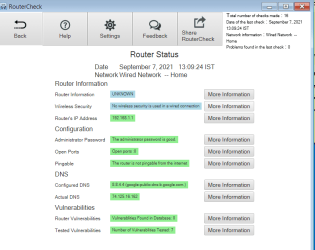
There is a basic issue with the way that DNS works - The DNS Server eg 1.1.1.1 provides the information internally as to which route should be used, the actual DNS server could be located in multiple locations. as can any secondary DNS servers
Where that server is located is not relevant to the system due to the way that the internet is designed it was originally designed to provide communications for the US military, including during a nuclear conflict, so is a
redundant system - if any node (server) is not available along the planned route, when the data is in transit it will automatically be routed to the best available alternative. Also to provide a redundant system of DNS servers the same IP address is used for multiple servers all around the planet you may be able to check the actual route.
The servers on the internet are connected to multiple other servers which are connected to multiple other servers Etc this creates a redundant network
This mesh connection method is the core of the names used - the words Net and Web we use to describe the internet are because the system resembles a fishing Net or a Spiderweb which has multiple possible ways to get from any point to any other point on the system .
When you enter an address into your browser like
www.sevenforums.com the browser asks your assigned DNS how to get there. This will be the address you chose but will be the
closest available DNS server
with that address
There is a security factor that has to be taken into account, in the case of war attacking the dns servers used could be a way to break communications this is prevented by use of a mesh of servers and by not advertising their physical location
Any of the items on the list I provided above, or search online for
Visual Tracert, will give you an
historical route used to contact a particular online location but eg ten applications, could give ten different routes, the DNS server locations shown will also likely be a generic location for a master DNS that is actually located at multiple locations
To give you an example of the DNS server for Cloudflare 1.1.1.1 has locations at many locations these are shown here ...
The Cloudflare Global Network | Data Center Locations | Cloudflare UK
everytime you make a request for DNS route by entering an address into a browser you will connect to the closest available server itn this network of servers, the system will also favour the fastest available route
This check and routing will be repeated in every server in the chain so you can imagine the number of variations possible for a request from yourself in India trying to connect to Microsoft in the USA. (of course Microsoft has multiple servers in many locations so you may connect to one of them also, possibly in India or any location that has the data you want
The whole of the internet is a huge, complicated, and amazing achievement, and can be considered as the greatest and largest ever construction in human history
Edit
Looking at Google's servers, for india they may not be the best option, they tend to go for a smaller number of larger server farms and they are not well represented in Asia
Discover our data center locations
I may be an idea to try cloudflare or even an India based DNS provider, ( a local provider will still use google, Cloudflare, or other servers when they have not got access to an area directly due to the rules of the DNS service - try any alternative for a week or two to see if you get an improvement to what
You want to see