Solved Keep Getting Stop Error Codes 0x0000007a and 0x000000f4

Crysis01

New member
Local time
4:15 AM
Messages
12
Hi guys,

I was wondering if anyone can help me with these BSOD's I've been getting. They've been happening about 4 or 5 times a day and they're almost always these 2 error codes but mostly the 7a one.

I've tried uninstalling and updating pretty much every single driver and changed ram sticks and the slots they're in. I'm still fairly confident it's a driver issue though because it will run fine for hours in safe mode and safe mode with networking. Some of the drivers the BSOD's tell me are responsible are ntoskrnl.exe, ataport.sys and more recently asyncmac.sys, HTTP.sys and nusb3xhc.sys. Also, sometimes the computer will kind of freeze up where nothing responds except the mouse and I have to hold the power button to turn off the computer.

This problem has been going on for a couple of months where it will have its good days where it won't BSOD at all and then a really bad couple of days where it's virtually unusable because it keeps crashing.

I would really appreciate if you guys could help me solve this problem or give me some suggestions as to what the problem is. :)
 

My Computer

Computer type
PC/Desktop
Computer Manufacturer/Model Number
Custom Build
OS
Windows 7 Home Premium x64
CPU
Intel Core i3 540
Motherboard
Gigabyte H55M-USB3
Memory
2x2GB DDR3 1600Mhz
Graphics Card(s)
NVIDIA GeForce 9800 GT
Hard Drives
Samsung HD753LJ 750GB
Antivirus
Norton 360 Premier Edition
Browser
Internet Explorer 11
Welcome to the forum,

Additional information is required.

1. Download this .BAT file to your desktop

Download


2. Right-click the .BAT file and 'Run as Administrator'
3. Locate the .ZIP file created on your desktop, and upload it here in your next reply.

picture.php
 

My Computer

Computer type
PC/Desktop
Computer Manufacturer/Model Number
Self Built
OS
Win 10 Pro x64
CPU
Intel I5-2500K @3.3GHz
Motherboard
Asrock P67 Extreme4
Memory
16GB G.Skill Ripjaws X (4x4GB)
Graphics Card(s)
EVGA GeForce 750 Ti SC 2GB
Sound Card
ASUS Xonar DG 5.1 Channels 24-bit 96KHz PCI Interface Sound
Monitor(s) Displays
auria eq2367
Screen Resolution
1920 x 1080
Hard Drives
250GB Samsung 850 EVO SSD
1TB WD Blue
1TB Hitachi
PSU
SeaSonic X 650W 80 Plus Gold
Case
Corsair Obsidian 750D
Cooling
Corsair H60, Three 140mm case fans
Keyboard
Logitech Wireless Keyboard K520
Mouse
Logitech Wireless Mouse M310
Internet Speed
Wave Broadband ~ 100 dn 5 up
Antivirus
Windows Defender, Malwarebytes Premium
Browser
Edge, IE11, Chrome
Other Info
Laptop specs: HP g7-1365dx /
CPU: AMD A6-3420M APU with Radeon(tm) HD Graphics /
RAM: Crucial 8Gb (2x4Gb) /
SSD: Crucial M4-CT128M4SSD2 ATA Device/ FW 000F /
GFX: AMD Radeon HD 6520G /
OS: Windows 10 Pro x64
Hi derekimo,

I've attached the ZIP file your after.
 

My Computer

Computer type
PC/Desktop
Computer Manufacturer/Model Number
Custom Build
OS
Windows 7 Home Premium x64
CPU
Intel Core i3 540
Motherboard
Gigabyte H55M-USB3
Memory
2x2GB DDR3 1600Mhz
Graphics Card(s)
NVIDIA GeForce 9800 GT
Hard Drives
Samsung HD753LJ 750GB
Antivirus
Norton 360 Premier Edition
Browser
Internet Explorer 11
I just got another BSOD with the f4 error code. This time it's saying srv.sys caused it.

Can someone please help. I'm ready to throw the computer out the window.
 

My Computer

Computer type
PC/Desktop
Computer Manufacturer/Model Number
Custom Build
OS
Windows 7 Home Premium x64
CPU
Intel Core i3 540
Motherboard
Gigabyte H55M-USB3
Memory
2x2GB DDR3 1600Mhz
Graphics Card(s)
NVIDIA GeForce 9800 GT
Hard Drives
Samsung HD753LJ 750GB
Antivirus
Norton 360 Premier Edition
Browser
Internet Explorer 11
Code:
KERNEL_DATA_INPAGE_ERROR (7a)
The requested page of kernel data could not be read in. [COLOR=Red] [U]Typically caused by[/U]
a bad block in the paging file or [U]disk controller error[/U][/COLOR]. Also see
KERNEL_STACK_INPAGE_ERROR.
[COLOR=DarkGreen]If the error status is[/COLOR] 0xC000000E, 0xC000009C, 0xC000009D or [COLOR=DarkGreen]0xC0000185[/COLOR],
[COLOR=DarkGreen]it means the disk subsystem has experienced a failure[/COLOR].
If the error status is 0xC000009A, then it means the request failed because
a filesystem failed to make forward progress.
Arguments:
Arg1: fffff6fc40008920, lock type that was held (value 1,2,3, or PTE address)
Arg2: ffffffffc0000185, error status (normally i/o status code)
Arg3: 000000010e894860, current process (virtual address for lock type 3, or PTE)
Arg4: fffff8800112493c, virtual address that could not be in-paged (or PTE contents if arg1 is a PTE address)

Debugging Details:
------------------


[COLOR=Red][COLOR=DarkGreen]ERROR_CODE: (NTSTATUS) 0xc0000185[/COLOR] - The I/O device reported an I/O error.[/COLOR]

[B][COLOR=Red]DISK_HARDWARE_ERROR: There was error with disk hardware[/COLOR][/B]

BUGCHECK_STR:  0x7a_c0000185

CUSTOMER_CRASH_COUNT:  1

DEFAULT_BUCKET_ID:  WIN7_DRIVER_FAULT
Code:
BugCheck 7A, {fffff6fc40008920, ffffffffc0000185, 10e894860, fffff8800112493c}

[COLOR=Red]Probably caused by : ataport.SYS[/COLOR] ( ataport!IdePortDispatchPnp+22 )

Followup: MachineOwner
---------
ataport.sys is the system native IDE ATA/ATAPI controller (alongwith atapi.sys). It should not fail at its own. But it is highly vulnerable to a special type of malware, called rootkit. So scan the system for possible virus infection with the following programs.

If anything found, delete those all. If nothing is found, it may be that the physical port is failing itself.
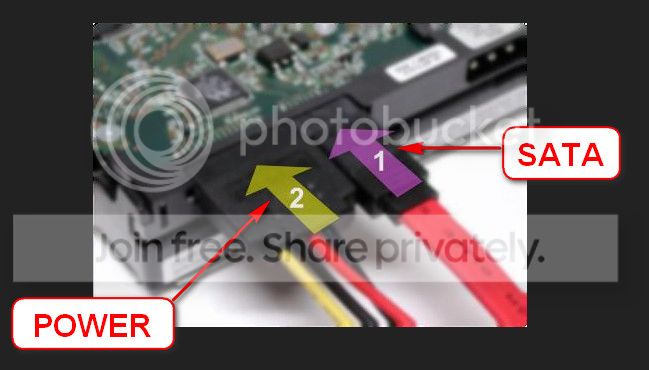
Re-seat the sata and power.


  • 72974453_zps85c47d93.jpg
Change the SATA cable to a new one. Apply the cable to another unused port on the motherboard.

Also test your HDD using Seatools for DOS.

Let us know the results.
 

My Computer

Computer type
PC/Desktop
Computer Manufacturer/Model Number
Self Assembled
OS
Microsoft Windows 10 Pro Insider Preview 64-bit
CPU
Intel(R) Core(TM) i3-4130 CPU @ 3.40GHz
Motherboard
Gigabyte Technology Co., Ltd. B85M-D3H
Memory
Corsair Vengence 4GB x2 (8.00GB Dual-Channel DDR3 @ 798MHz)
Graphics Card(s)
2047MB GeForce GTS 450 (ZOTAC International)
Sound Card
Onboard (Realtek High Definition Audio)
Monitor(s) Displays
LG Flatron E2040T
Screen Resolution
1600x900
Hard Drives
Western Digital 1 TB
Seagate 500 GB
PSU
Corsair VS550
Case
Cooler Master K380
Cooling
Cooler Master Seidon 120V Plus
Keyboard
Logitech MK260r
Mouse
Logitech MK260r
Internet Speed
PMPL Broadband
Antivirus
Windows Defender + MBAM
Browser
Firefox
Other Info
Dell Studio 15" Laptop
Thanks for the assistance Arc. I've just done a scan with TDSSKiller and it didn't find anything although when I tick verify file digital signatures and detect TDLFS file system in the settings it picks up a medium risk threat Device/HardDisk0/DRO. I'm not sure if that's a real threat or not seeing as it doesn't get picked up in the scan with default settings. :confused:

I'll test my Hard Drive with Seatools and change my SATA cable and the port it's in and I'll let you know how it goes.
 

My Computer

Computer type
PC/Desktop
Computer Manufacturer/Model Number
Custom Build
OS
Windows 7 Home Premium x64
CPU
Intel Core i3 540
Motherboard
Gigabyte H55M-USB3
Memory
2x2GB DDR3 1600Mhz
Graphics Card(s)
NVIDIA GeForce 9800 GT
Hard Drives
Samsung HD753LJ 750GB
Antivirus
Norton 360 Premier Edition
Browser
Internet Explorer 11
a medium risk threat Device/HardDisk0/DRO.
That is a bootkit (boot malware), situated at the root of Hard Disc 0. It may be enough reason for the stop 0xF4 and 0x7A BSODs.

I suggest you to run Windows Defender Offline, linked in my earlier post. When the scan is finished, run Startup Repair, for three times, with restarts after every run.

Do the other two things as you planned, too.

Let us know.
 

My Computer

Computer type
PC/Desktop
Computer Manufacturer/Model Number
Self Assembled
OS
Microsoft Windows 10 Pro Insider Preview 64-bit
CPU
Intel(R) Core(TM) i3-4130 CPU @ 3.40GHz
Motherboard
Gigabyte Technology Co., Ltd. B85M-D3H
Memory
Corsair Vengence 4GB x2 (8.00GB Dual-Channel DDR3 @ 798MHz)
Graphics Card(s)
2047MB GeForce GTS 450 (ZOTAC International)
Sound Card
Onboard (Realtek High Definition Audio)
Monitor(s) Displays
LG Flatron E2040T
Screen Resolution
1600x900
Hard Drives
Western Digital 1 TB
Seagate 500 GB
PSU
Corsair VS550
Case
Cooler Master K380
Cooling
Cooler Master Seidon 120V Plus
Keyboard
Logitech MK260r
Mouse
Logitech MK260r
Internet Speed
PMPL Broadband
Antivirus
Windows Defender + MBAM
Browser
Firefox
Other Info
Dell Studio 15" Laptop
This doesn't sound good. I just ran a Short Drive Self Test on Seatools and it says it failed. The test code is 6C9AC2A4. It passed the S.M.A.R.T Check and the Short Generic test though and I haven't had a chance to run the Long Generic test yet.

Does this mean that there's something wrong with my Hard Drive?
 

My Computer

Computer type
PC/Desktop
Computer Manufacturer/Model Number
Custom Build
OS
Windows 7 Home Premium x64
CPU
Intel Core i3 540
Motherboard
Gigabyte H55M-USB3
Memory
2x2GB DDR3 1600Mhz
Graphics Card(s)
NVIDIA GeForce 9800 GT
Hard Drives
Samsung HD753LJ 750GB
Antivirus
Norton 360 Premier Edition
Browser
Internet Explorer 11
Overall, the situation is not good.

Take the two bootable scans ... WDO and Long Generic test.
Dont back up the data off the HDD before completing the WDO scan.
 

My Computer

Computer type
PC/Desktop
Computer Manufacturer/Model Number
Self Assembled
OS
Microsoft Windows 10 Pro Insider Preview 64-bit
CPU
Intel(R) Core(TM) i3-4130 CPU @ 3.40GHz
Motherboard
Gigabyte Technology Co., Ltd. B85M-D3H
Memory
Corsair Vengence 4GB x2 (8.00GB Dual-Channel DDR3 @ 798MHz)
Graphics Card(s)
2047MB GeForce GTS 450 (ZOTAC International)
Sound Card
Onboard (Realtek High Definition Audio)
Monitor(s) Displays
LG Flatron E2040T
Screen Resolution
1600x900
Hard Drives
Western Digital 1 TB
Seagate 500 GB
PSU
Corsair VS550
Case
Cooler Master K380
Cooling
Cooler Master Seidon 120V Plus
Keyboard
Logitech MK260r
Mouse
Logitech MK260r
Internet Speed
PMPL Broadband
Antivirus
Windows Defender + MBAM
Browser
Firefox
Other Info
Dell Studio 15" Laptop
I just realised you wanted me to use the bootable version of Seatools. I accidently scanned with the Windows version. :doh:
Anyway I followed the instructions on how to get Seatools to boot from a USB and I had no trouble doing that. The problem I'm having now though is when I boot from the USB I get this message: InitDiskBad or missing command interpreter: command.com/P /E:256 Enter the full shell Command Line.

Do you know what this means?
 

My Computer

Computer type
PC/Desktop
Computer Manufacturer/Model Number
Custom Build
OS
Windows 7 Home Premium x64
CPU
Intel Core i3 540
Motherboard
Gigabyte H55M-USB3
Memory
2x2GB DDR3 1600Mhz
Graphics Card(s)
NVIDIA GeForce 9800 GT
Hard Drives
Samsung HD753LJ 750GB
Antivirus
Norton 360 Premier Edition
Browser
Internet Explorer 11
The device is not burned as bootable, as it appears.

Better you try a bootable CD.
 

My Computer

Computer type
PC/Desktop
Computer Manufacturer/Model Number
Self Assembled
OS
Microsoft Windows 10 Pro Insider Preview 64-bit
CPU
Intel(R) Core(TM) i3-4130 CPU @ 3.40GHz
Motherboard
Gigabyte Technology Co., Ltd. B85M-D3H
Memory
Corsair Vengence 4GB x2 (8.00GB Dual-Channel DDR3 @ 798MHz)
Graphics Card(s)
2047MB GeForce GTS 450 (ZOTAC International)
Sound Card
Onboard (Realtek High Definition Audio)
Monitor(s) Displays
LG Flatron E2040T
Screen Resolution
1600x900
Hard Drives
Western Digital 1 TB
Seagate 500 GB
PSU
Corsair VS550
Case
Cooler Master K380
Cooling
Cooler Master Seidon 120V Plus
Keyboard
Logitech MK260r
Mouse
Logitech MK260r
Internet Speed
PMPL Broadband
Antivirus
Windows Defender + MBAM
Browser
Firefox
Other Info
Dell Studio 15" Laptop
I don't have a spare blank cd to put it onto yet. Would it be ok if I just did the long generic scan in Windows for the meantime? What's the difference between scanning it in Windows and scanning it on a bootable disk?
 

My Computer

Computer type
PC/Desktop
Computer Manufacturer/Model Number
Custom Build
OS
Windows 7 Home Premium x64
CPU
Intel Core i3 540
Motherboard
Gigabyte H55M-USB3
Memory
2x2GB DDR3 1600Mhz
Graphics Card(s)
NVIDIA GeForce 9800 GT
Hard Drives
Samsung HD753LJ 750GB
Antivirus
Norton 360 Premier Edition
Browser
Internet Explorer 11
I just did a Long Generic scan in Windows and it only took like 10 minutes to fail. Does this mean it's certain that my Hard Drive is failing and is the cause of all my BSOD's?
 

My Computer

Computer type
PC/Desktop
Computer Manufacturer/Model Number
Custom Build
OS
Windows 7 Home Premium x64
CPU
Intel Core i3 540
Motherboard
Gigabyte H55M-USB3
Memory
2x2GB DDR3 1600Mhz
Graphics Card(s)
NVIDIA GeForce 9800 GT
Hard Drives
Samsung HD753LJ 750GB
Antivirus
Norton 360 Premier Edition
Browser
Internet Explorer 11
I just did a Long Generic scan in Windows and it only took like 10 minutes to fail. Does this mean it's certain that my Hard Drive is failing and is the cause of all my BSOD's?
Now it can be confirmed. We always had this notion, but the test results are worthy to decide.

You need to replace the HDD.
 

My Computer

Computer type
PC/Desktop
Computer Manufacturer/Model Number
Self Assembled
OS
Microsoft Windows 10 Pro Insider Preview 64-bit
CPU
Intel(R) Core(TM) i3-4130 CPU @ 3.40GHz
Motherboard
Gigabyte Technology Co., Ltd. B85M-D3H
Memory
Corsair Vengence 4GB x2 (8.00GB Dual-Channel DDR3 @ 798MHz)
Graphics Card(s)
2047MB GeForce GTS 450 (ZOTAC International)
Sound Card
Onboard (Realtek High Definition Audio)
Monitor(s) Displays
LG Flatron E2040T
Screen Resolution
1600x900
Hard Drives
Western Digital 1 TB
Seagate 500 GB
PSU
Corsair VS550
Case
Cooler Master K380
Cooling
Cooler Master Seidon 120V Plus
Keyboard
Logitech MK260r
Mouse
Logitech MK260r
Internet Speed
PMPL Broadband
Antivirus
Windows Defender + MBAM
Browser
Firefox
Other Info
Dell Studio 15" Laptop
Damn, that's the last thing in my computer I wanted to fail. Oh well, looks like I've got to get a new Hard Drive then.

Thanks very much for the assistance Arc. I really appreciate it. I wouldn't have found out the problem if it wasn't for you helping me. :)

I'll mark this thread as solved.
 

My Computer

Computer type
PC/Desktop
Computer Manufacturer/Model Number
Custom Build
OS
Windows 7 Home Premium x64
CPU
Intel Core i3 540
Motherboard
Gigabyte H55M-USB3
Memory
2x2GB DDR3 1600Mhz
Graphics Card(s)
NVIDIA GeForce 9800 GT
Hard Drives
Samsung HD753LJ 750GB
Antivirus
Norton 360 Premier Edition
Browser
Internet Explorer 11
Oh, one more thing. If the Hard Drive is the problem how come it never crashes or has any problems in safe mode?
 

My Computer

Computer type
PC/Desktop
Computer Manufacturer/Model Number
Custom Build
OS
Windows 7 Home Premium x64
CPU
Intel Core i3 540
Motherboard
Gigabyte H55M-USB3
Memory
2x2GB DDR3 1600Mhz
Graphics Card(s)
NVIDIA GeForce 9800 GT
Hard Drives
Samsung HD753LJ 750GB
Antivirus
Norton 360 Premier Edition
Browser
Internet Explorer 11
Your BSODs are always stop 0xF4 and ox7A, with the visible evidence of hard drive failure. Moreover the hard drive failed the tests too.

More than enough reason to blame the hard drive itself.

Why it does not crash in safe mode? The nature of BSOD is that they are random. It is difficult to say anything more in a remote assistance.
 

My Computer

Computer type
PC/Desktop
Computer Manufacturer/Model Number
Self Assembled
OS
Microsoft Windows 10 Pro Insider Preview 64-bit
CPU
Intel(R) Core(TM) i3-4130 CPU @ 3.40GHz
Motherboard
Gigabyte Technology Co., Ltd. B85M-D3H
Memory
Corsair Vengence 4GB x2 (8.00GB Dual-Channel DDR3 @ 798MHz)
Graphics Card(s)
2047MB GeForce GTS 450 (ZOTAC International)
Sound Card
Onboard (Realtek High Definition Audio)
Monitor(s) Displays
LG Flatron E2040T
Screen Resolution
1600x900
Hard Drives
Western Digital 1 TB
Seagate 500 GB
PSU
Corsair VS550
Case
Cooler Master K380
Cooling
Cooler Master Seidon 120V Plus
Keyboard
Logitech MK260r
Mouse
Logitech MK260r
Internet Speed
PMPL Broadband
Antivirus
Windows Defender + MBAM
Browser
Firefox
Other Info
Dell Studio 15" Laptop
Back
Top