BSoD: KERNEL_DATA_INPAGE_ERROR running some programs after reinstall

Satori

New member
Local time
5:14 AM
Messages
6
I've reinstalled Windows 7 on this machine several times, and even on a new hard drive in it, without these problems happening. A few weeks ago, someone grabbed my Latitude e4300 out of my hands and broke part of its case and one of my front teeth against each other. Since the part that broke was where the power adapter plugs in and I didn't want it coming away from the motherboard, I got a new case and transferred the innards over to the new one. In the process, the internal clock battery was disconnected and it not only forgot the time, but also the BIOS settings and couldn't come back from Hibernate (due to the e4300's notable SATA AHCI/IRRT quirk). Before I found out the cause, I ended up just reinstalling Windows 7 again.

My User data, including about 5 gigs of downloads, was in my Windows.old structure and I copied the files in it over. Now, when I try running programs that are particularly hard drive-intensive (a fresh install of uTorrent, an install of the same copy of PowerPoint I'd used before, and ditto with BlueStacks) uTorrent BSoDs while it's rushing to scan my downloads folder, and the other two halt midway through installation. PowerPoint complains the install file has been corrupted.

The uTorrent BSoD throws a KERNEL_DATA_INPAGE_ERROR, so I ran CHKDSK and got this interesting error (Error Code: 2000-0142) during the DST Short Test. The hard drive was working fine for weeks after the attack with the old Windows install, so I have to think something's off in the driver, firmware, lost BIOS settings or controller.
 

My Computer

Computer type
Laptop
Computer Manufacturer/Model Number
Dell
OS
Windows 7 Ultimate x64
CPU
Intel Core 2 Duo 2.4GHz
Memory
4GB
Hard Drives
Seagate 500G ST9500424AS
Browser
Firefox
Stop 0xF4 alongwith Stop 0x7A.
Code:
[COLOR=Red]BugCheck F4[/COLOR], {3, fffffa80064c29e0, fffffa80064c2cc0, fffff80002d7f260}

----- ETW minidump data unavailable-----
Probably caused by : wininit.exe

Followup: MachineOwner
---------
Code:
[COLOR=Red]BugCheck 7A[/COLOR], {fffff6fc50021f08, ffffffffc000009d, a2e80820, fffff8a0043e1d0e}

Probably caused by : ntkrnlmp.exe ( nt! ?? ::FNODOBFM::`string'+3423e )

Followup: MachineOwner
---------
Code:
KERNEL_DATA_INPAGE_ERROR (7a)
The requested page of kernel data could not be read in.  [COLOR=Red]Typically caused by
a bad block in the paging file or disk controller error.[/COLOR] Also see
KERNEL_STACK_INPAGE_ERROR.
[COLOR=Red]If the error status is[/COLOR] 0xC000000E, 0xC000009C, [COLOR=Red]0xC000009D[/COLOR] or 0xC0000185,
[COLOR=Red]it means the disk subsystem has experienced a failure.[/COLOR]
If the error status is 0xC000009A, then it means the request failed because
a filesystem failed to make forward progress.
Arguments:
Arg1: fffff6fc50021f08, lock type that was held (value 1,2,3, or PTE address)
Arg2: ffffffffc000009d, error status (normally i/o status code)
Arg3: 00000000a2e80820, current process (virtual address for lock type 3, or PTE)
Arg4: fffff8a0043e1d0e, virtual address that could not be in-paged (or PTE contents if arg1 is a PTE address)
Code:
ERROR_CODE: (NTSTATUS)[COLOR=Red] 0xc000009d - STATUS_DEVICE_NOT_CONNECTED[/COLOR]

[COLOR=Red][B]DISK_HARDWARE_ERROR: There was error with disk hardware[/B][/COLOR]
So it is some issue with the HDD. Seagate ST9500424AS 500GB SATA 7.2K RPM 16MB 2.5IN DISC.

Test the HDD: http://www.sevenforums.com/tutorials/313457-seatools-dos-windows-how-use.html

Also
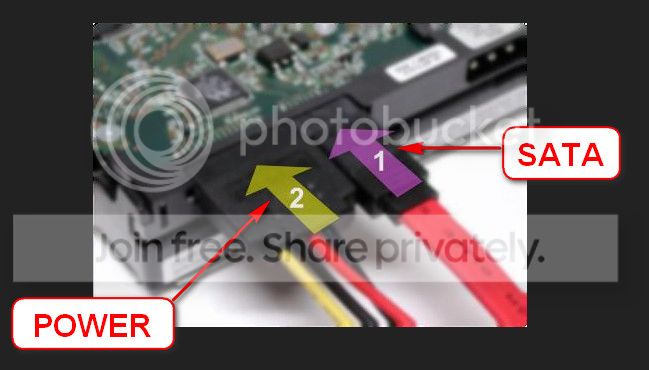
reseat the sata and power. Change the SATA cable if possible, and apply it to an unused SATA port on the motherboard.

  • 72974453_zps85c47d93.jpg
Let us know the results.
 

My Computer

Computer type
PC/Desktop
Computer Manufacturer/Model Number
Self Assembled
OS
Microsoft Windows 10 Pro Insider Preview 64-bit
CPU
Intel(R) Core(TM) i3-4130 CPU @ 3.40GHz
Motherboard
Gigabyte Technology Co., Ltd. B85M-D3H
Memory
Corsair Vengence 4GB x2 (8.00GB Dual-Channel DDR3 @ 798MHz)
Graphics Card(s)
2047MB GeForce GTS 450 (ZOTAC International)
Sound Card
Onboard (Realtek High Definition Audio)
Monitor(s) Displays
LG Flatron E2040T
Screen Resolution
1600x900
Hard Drives
Western Digital 1 TB
Seagate 500 GB
PSU
Corsair VS550
Case
Cooler Master K380
Cooling
Cooler Master Seidon 120V Plus
Keyboard
Logitech MK260r
Mouse
Logitech MK260r
Internet Speed
PMPL Broadband
Antivirus
Windows Defender + MBAM
Browser
Firefox
Other Info
Dell Studio 15" Laptop
Firstly, thank you kindly for the assistance.

Installing SeaTools for Windows halted, requiring dotNet 4 to be installed.
Installing dotNet 4 halted, complaining that it couldn't find one of the files specified.
I went to the AppData's Temp directory to delete the folder dotNet was using and try redownloading the files, but the problem recurred.

Installing SeaTools for DOS per the directions caused the system to boot to a screen which read only, "FREEDOS" in the upper-left corner, accompanied by a cursor which accepted no commands. After several keypresses, the system would beep at each new keypress. The file written to my USB drive was SeaTools.img, renamed from SeaTools.ima, which I'd extracted from the FreeDOS image.
 

My Computer

Computer type
Laptop
Computer Manufacturer/Model Number
Dell
OS
Windows 7 Ultimate x64
CPU
Intel Core 2 Duo 2.4GHz
Memory
4GB
Hard Drives
Seagate 500G ST9500424AS
Browser
Firefox

My Computer

Computer type
PC/Desktop
Computer Manufacturer/Model Number
Self Assembled
OS
Microsoft Windows 10 Pro Insider Preview 64-bit
CPU
Intel(R) Core(TM) i3-4130 CPU @ 3.40GHz
Motherboard
Gigabyte Technology Co., Ltd. B85M-D3H
Memory
Corsair Vengence 4GB x2 (8.00GB Dual-Channel DDR3 @ 798MHz)
Graphics Card(s)
2047MB GeForce GTS 450 (ZOTAC International)
Sound Card
Onboard (Realtek High Definition Audio)
Monitor(s) Displays
LG Flatron E2040T
Screen Resolution
1600x900
Hard Drives
Western Digital 1 TB
Seagate 500 GB
PSU
Corsair VS550
Case
Cooler Master K380
Cooling
Cooler Master Seidon 120V Plus
Keyboard
Logitech MK260r
Mouse
Logitech MK260r
Internet Speed
PMPL Broadband
Antivirus
Windows Defender + MBAM
Browser
Firefox
Other Info
Dell Studio 15" Laptop
Thank you. The standalone also threw a fatal error, logged here. I do not have a CD to burn.

As my laptop wasn't doing any of this before the reinstall, even after the attack, a physical problem seems likely anyway but I can't open it at present.
 

My Computer

Computer type
Laptop
Computer Manufacturer/Model Number
Dell
OS
Windows 7 Ultimate x64
CPU
Intel Core 2 Duo 2.4GHz
Memory
4GB
Hard Drives
Seagate 500G ST9500424AS
Browser
Firefox
A bland disc is not too tough to obtain. Get the seatools image burned on a blank CD and test the HDD.

If the HDD is corrupt beyond a level, it will not be able to write the data on it.
 

My Computer

Computer type
PC/Desktop
Computer Manufacturer/Model Number
Self Assembled
OS
Microsoft Windows 10 Pro Insider Preview 64-bit
CPU
Intel(R) Core(TM) i3-4130 CPU @ 3.40GHz
Motherboard
Gigabyte Technology Co., Ltd. B85M-D3H
Memory
Corsair Vengence 4GB x2 (8.00GB Dual-Channel DDR3 @ 798MHz)
Graphics Card(s)
2047MB GeForce GTS 450 (ZOTAC International)
Sound Card
Onboard (Realtek High Definition Audio)
Monitor(s) Displays
LG Flatron E2040T
Screen Resolution
1600x900
Hard Drives
Western Digital 1 TB
Seagate 500 GB
PSU
Corsair VS550
Case
Cooler Master K380
Cooling
Cooler Master Seidon 120V Plus
Keyboard
Logitech MK260r
Mouse
Logitech MK260r
Internet Speed
PMPL Broadband
Antivirus
Windows Defender + MBAM
Browser
Firefox
Other Info
Dell Studio 15" Laptop
It's a little tough, as I'm living on the street with a laptop and have no income. It may be a while before I can continue this case. Will the thread close automatically after a certain period?
 

My Computer

Computer type
Laptop
Computer Manufacturer/Model Number
Dell
OS
Windows 7 Ultimate x64
CPU
Intel Core 2 Duo 2.4GHz
Memory
4GB
Hard Drives
Seagate 500G ST9500424AS
Browser
Firefox
No, it will remain open forever, even after you mark it as solved.
 

My Computer

Computer type
PC/Desktop
Computer Manufacturer/Model Number
Self Assembled
OS
Microsoft Windows 10 Pro Insider Preview 64-bit
CPU
Intel(R) Core(TM) i3-4130 CPU @ 3.40GHz
Motherboard
Gigabyte Technology Co., Ltd. B85M-D3H
Memory
Corsair Vengence 4GB x2 (8.00GB Dual-Channel DDR3 @ 798MHz)
Graphics Card(s)
2047MB GeForce GTS 450 (ZOTAC International)
Sound Card
Onboard (Realtek High Definition Audio)
Monitor(s) Displays
LG Flatron E2040T
Screen Resolution
1600x900
Hard Drives
Western Digital 1 TB
Seagate 500 GB
PSU
Corsair VS550
Case
Cooler Master K380
Cooling
Cooler Master Seidon 120V Plus
Keyboard
Logitech MK260r
Mouse
Logitech MK260r
Internet Speed
PMPL Broadband
Antivirus
Windows Defender + MBAM
Browser
Firefox
Other Info
Dell Studio 15" Laptop
Managed to get the SeaTools log file, attached.

It repaired a few errors, but the problem continues. Every so often Windows will check the drive when I start up, fix a whole host of things, and then continue. Seems like data isn't being written correctly sometimes, particularly when there's a lot of drive activity. This suggests an IRRT problem.
 

My Computer

Computer type
Laptop
Computer Manufacturer/Model Number
Dell
OS
Windows 7 Ultimate x64
CPU
Intel Core 2 Duo 2.4GHz
Memory
4GB
Hard Drives
Seagate 500G ST9500424AS
Browser
Firefox
Satori, can you tell me if you are meaning IRST? Intel Rapid Storage Technology? If so, can you tell me why you think that? I believe your Hard Drive is on it's way out. If you have a way to do it, I would suggest you back up your personal files to another location. Your drive was found to have errors during the Long Drive Self Test and repairs were done. Yet, if I understand correctly, Windows keeps finding errors and scanning the drive. What that indicates is your drive had errors during the test and those errors were fixed. More correctly, it is most probable that your hard drive controller was instructed where not to place data. Yet, Windows keeps finding more errors. That means the errors are growing and will keep increasing until the drive no longer is functional and you will lost everything on it. From my experience, that is what I see happening. You are being warned that the drive is going to fail.

I really don't think IRST has anything to do with a failing hard drive. But, if you would, please click the start button, and type device manager in the search box, click on the device manager entry that appears. Click the arrow next to IDE ATA/ATAPI controllers and post a screenshot of the page. http://www.sevenforums.com/tutorials/9733-screenshots-files-upload-post-seven-forums.html .
 

My Computers

System One System Two

  • Computer type
    PC/Desktop
    Computer Manufacturer/Model Number
    ALWAYS UNDER CONSTRUCTION
    OS
    Windows 11 Pro
    CPU
    Ryzen 9 5900X
    Motherboard
    Asus X570 Crosshair Viii Hero
    Memory
    32GB G Skill DDR4-3600
    Graphics Card(s)
    EVGA RTX 3080 FTW 3 Ultra
    Sound Card
    On Board/Sennheiser PC37X Headset
    Monitor(s) Displays
    3 X Asus 27"
    Screen Resolution
    2560x1440
    Hard Drives
    2 X 1 TB NVME drives
    PSU
    EVGA 850
    Case
    Phanteks Eclipse P400A
    Cooling
    EVGA 280 AIO
    Keyboard
    Logitech G510s/ Logitech G13
    Mouse
    Logitech G502
    Internet Speed
    24/1
    Antivirus
    ESET/MBAM Pro/SAS Pro
    Browser
    Chrome/ Firefox/ Edge
  • Computer type
    Laptop
    System Manufacturer/Model Number
    Dell 16 Plus
    OS
    Windows 11 Pro
    CPU
    Intel Ultra 9 288V
    Memory
    32 GB LPDDR5X 8533
    Monitor(s) Displays
    16" Mini-LED HDR600 Touch 90 Hz
    Screen Resolution
    2560X1600
    Hard Drives
    1 TB NVME
Hi essenbe. Thanks for your assistance. You're correct, I'd meant IRST. After the incident I'd used my laptop with the same installation of Windows 7 for about a month, with no such problems. I'd swapped all the components to a new laptop case, and during the transition briefly disconnected something that was keeping all the BIOS settings in memory. When I rebooted everything was physically there, but suddenly my installation of Windows 7 was unable to recover from Hibernate. I'm thinking it's because the Hibernate data had been written, but with the IRST information in the BIOS lost, it wasn't able to read it correctly. This model has two hard drive modes, IRST and AHCI. IRST uses the Rapid Storage Technology and needs a driver not only within Windows, but preinstalled for the BIOS. When that was lost, it could explain the sudden inability to read the Hibernate data correctly. I had to do a clean install of Windows 7 since the old one wouldn't recover from Hibernate, and since then there have been a lot of mystery errors trying to install software. Again, a failing hard drive would be the normal inferrence but for the sudden problems not after the incident itself, but rather a month afterwards when I went to swap the components out and the BIOS information - including the pre-OS IRRT driver - was forgotten. I've searched online and, ages ago now, encountered pages where other users of the model have had similar difficulties. Additionally, the KERNAL_DATA_INPAGE_ERRORs are showing up only during moments in which there's quite a lot of drive activity, which suggests to me that the OS is relying on Dell's Rapid Storage technology without the pre-OS driver present to actually read and write data correctly, which would also result in sloppy writing all over the file system and the errors I've been encountering.
 

My Computer

Computer type
Laptop
Computer Manufacturer/Model Number
Dell
OS
Windows 7 Ultimate x64
CPU
Intel Core 2 Duo 2.4GHz
Memory
4GB
Hard Drives
Seagate 500G ST9500424AS
Browser
Firefox
According to what I am seeing, you do not have IRST installed. I use it. It is Intel's raid driver, but is the only way to get the Intel AHCI driver. I do no use raid, at the moment and do not recommend raid in most situations. I think, from what you have said, that there is simply a difference in term that your computer uses that differs from most others. What they call IRST mode, is what most computers I have ever seen call Raid mode. That is my only explanation and I assume you are using raid. That is the only time I have ever seen where you have to load a driver to install Windows. Windows has to have the raid driver to be able to 'see' a raid array because it is formatted differently. Unless you are running raid, IRST does nothing, it is just there. In fact you can go to services.MSC and find it, select properties and disable it. However, if you are running raid, your system will not boot and most likely crash when you do it. Unless you are in fact running raid, there is no reason to have your sata controller set to raid (or IRST as yours calls it). I am installed in AHCI mode but have IRST installed and have always had it installed for years, and never had any problem. I don't even disable it. Here s my device manager and you will notice what I have outlined is the Intel AHCI driver, iaStor.
View attachment 323553

I've noticed recently some laptops that the manufacturers ships in raid mode, which I really don't understand. There's very little reason for a personal computer to be set up that at except in specific cases.
 

My Computers

System One System Two

  • Computer type
    PC/Desktop
    Computer Manufacturer/Model Number
    ALWAYS UNDER CONSTRUCTION
    OS
    Windows 11 Pro
    CPU
    Ryzen 9 5900X
    Motherboard
    Asus X570 Crosshair Viii Hero
    Memory
    32GB G Skill DDR4-3600
    Graphics Card(s)
    EVGA RTX 3080 FTW 3 Ultra
    Sound Card
    On Board/Sennheiser PC37X Headset
    Monitor(s) Displays
    3 X Asus 27"
    Screen Resolution
    2560x1440
    Hard Drives
    2 X 1 TB NVME drives
    PSU
    EVGA 850
    Case
    Phanteks Eclipse P400A
    Cooling
    EVGA 280 AIO
    Keyboard
    Logitech G510s/ Logitech G13
    Mouse
    Logitech G502
    Internet Speed
    24/1
    Antivirus
    ESET/MBAM Pro/SAS Pro
    Browser
    Chrome/ Firefox/ Edge
  • Computer type
    Laptop
    System Manufacturer/Model Number
    Dell 16 Plus
    OS
    Windows 11 Pro
    CPU
    Intel Ultra 9 288V
    Memory
    32 GB LPDDR5X 8533
    Monitor(s) Displays
    16" Mini-LED HDR600 Touch 90 Hz
    Screen Resolution
    2560X1600
    Hard Drives
    1 TB NVME
Back
Top