BSOD Occurring Randomly in Windows 7, Suspect Hardware...

speaker717

New member
Local time
10:33 AM
Messages
12
I built a new system from scratch (I hadn't done that since the 90's, but I'm capable and everything went together just fine). i5 Processor, Gigabyte Motherboard, 8gb ram, Raedeon 6750 vid card (the one piece of hardware I already have).

But I've had nothing but trouble over the last 2 months since I put it together. I get constant and RANDOM BSODs. Some have occurred during games, others web browsing, others while I'm afk (I just come back to the user select screen and a new mini-dump..)

I have:

Replaced the RAM, sent the motherboard back to Gigabyte and gotten a replacement, installed on my SSHD (current) but also used my 1TB drive just to test if it was the SSHD--no fix there. I've taken out my video card and ran on the onboard--no fix. I uninstalled and reinstalled windows three times. The latest with a different fresh copy--and so far the errors seem to have become MORE frequent.

I am currently running fully updated Windows 7 64bit Professional... and I'm going to cut this short so I don't get a BSOD that makes me lose all this...

I NEED help, direction, sympathy, etc. Any direction on potential fixes and helping me narrow down the culprit (hardware or software) is greatly appreciated.
 

My Computer My Computer

Computer type
PC/Desktop
Computer Manufacturer/Model Number
Custom Build
OS
Windows 7 Ultimate X64
CPU
i5
Motherboard
Gigabyte
MSINFO32:
Please go to Start and type in "msinfo32.exe" (without the quotes) and press Enter
Save the report as an .nfo file, then zip up the .nfo file and upload/attach the .zip file with your next post.
Also, save a copy as a .txt file and include it also (it's much more difficult to read, but we have greater success in getting the info from it).

systeminfo:
Please open an elevated (Run as administrator) Command Prompt and type (or copy/paste) "systeminfo.exe >%USERPROFILE%\Desktop\systeminfo.txt" (without the quotes) and press Enter. Then navigate to Desktop to retrieve the syteminfo.txt file. If you have difficulties with making this work, please post back. Then zip up the .txt file and upload/attach the .zip file with your next post.
 

My Computer My Computer

Computer type
PC/Desktop
Computer Manufacturer/Model Number
Self assembled
OS
Windows 10 Home 64Bit
CPU
Intel Core i5 10400 @ 2.90GHz
Motherboard
Intel Corporation DG41WV (PROCESSOR)
Memory
8.00GB Single-Channel Unknown @ 1329MHz (16-20-20-38)
Sound Card
Realtek High Definition Audio
Monitor(s) Displays
DELL E170S
Screen Resolution
1280x1024 pixels
Hard Drives
931GB TOSHIBA DT01ACA100 (SATA)
238GB TEAM TM8PS7256G (SATA SSD)
Case
Nothing Fancy
Cooling
Fans
Keyboard
A4 Tech Co LTD
Mouse
A4 Tech Co Ltd/Logitech
Internet Speed
25 Mbps
Last edited:

My Computer My Computer

Computer type
PC/Desktop
Computer Manufacturer/Model Number
Custom Build
OS
Windows 7 Ultimate X64
CPU
i5
Motherboard
Gigabyte
The BSODs are caused by Edimax 802.11g Wireless PCI Card driver.
fffff800`00b9cac8 fffff880`05858a0dUnable to load image \SystemRoot\system32\DRIVERS\netr6164.sys, Win32 error 0n2
*** WARNING: Unable to verify timestamp for netr6164.sys
*** ERROR: Module load completed but symbols could not be loaded for netr6164.sys
netr6164+0x2a0d
And the driver is old.
Code:
fffff880`05856000 fffff880`058c9000   netr6164 T (no symbols)           
    Loaded symbol image file: netr6164.sys
    Image path: \SystemRoot\system32\DRIVERS\netr6164.sys
[COLOR=Red]    Image name: netr6164.sys
    Timestamp:        Fri Oct 16 08:45:23 2009[/COLOR] (4AD7E54B)
    CheckSum:         0006D6BF
    ImageSize:        00073000
    Translations:     0000.04b0 0000.04e4 0409.04b0 0409.04e4
Get the download from ::: EDIMAX Technology :::

Let us know the results.
 

My Computer My Computer

Computer type
PC/Desktop
Computer Manufacturer/Model Number
Self Assembled
OS
Microsoft Windows 10 Pro Insider Preview 64-bit
CPU
Intel(R) Core(TM) i3-4130 CPU @ 3.40GHz
Motherboard
Gigabyte Technology Co., Ltd. B85M-D3H
Memory
Corsair Vengence 4GB x2 (8.00GB Dual-Channel DDR3 @ 798MHz)
Graphics Card(s)
2047MB GeForce GTS 450 (ZOTAC International)
Sound Card
Onboard (Realtek High Definition Audio)
Monitor(s) Displays
LG Flatron E2040T
Screen Resolution
1600x900
Hard Drives
Western Digital 1 TB
Seagate 500 GB
PSU
Corsair VS550
Case
Cooler Master K380
Cooling
Cooler Master Seidon 120V Plus
Keyboard
Logitech MK260r
Mouse
Logitech MK260r
Internet Speed
PMPL Broadband
Antivirus
Windows Defender + MBAM
Browser
Firefox
Other Info
Dell Studio 15" Laptop
Interesting. I will update it.

I say "interesting" because I've actually tried two different Wireless cards and had errors with both (previously since my most recent re-install). I will update these drivers as suggested and see if I still get more errors on it. It could be that it was still there mucking up the business..
 

My Computer My Computer

Computer type
PC/Desktop
Computer Manufacturer/Model Number
Custom Build
OS
Windows 7 Ultimate X64
CPU
i5
Motherboard
Gigabyte
Amending the last, i DID have the most recent driver, but it was from 2009 and an end of life system. I'm going to load up my other (newer) NIC card (Tenda).

What is the best way to make sure the Edimax drivers are completely removed from my system?
 

My Computer My Computer

Computer type
PC/Desktop
Computer Manufacturer/Model Number
Custom Build
OS
Windows 7 Ultimate X64
CPU
i5
Motherboard
Gigabyte
As we are seeing it for the first time, we cannot draw a reasoning there. We need to see the results of the update.

If what you are saying is the fact, remove NIS and all Symentec products using Norton Removal tool. Use Microsoft Security Essentials as your antivirus with windows inbuilt firewall, and free MBAM as the on demand scanner.
Download, install and update those, and then run full system scans with both of them, one by one. Let us know if the BSODs are still occurring there.
 

My Computer My Computer

Computer type
PC/Desktop
Computer Manufacturer/Model Number
Self Assembled
OS
Microsoft Windows 10 Pro Insider Preview 64-bit
CPU
Intel(R) Core(TM) i3-4130 CPU @ 3.40GHz
Motherboard
Gigabyte Technology Co., Ltd. B85M-D3H
Memory
Corsair Vengence 4GB x2 (8.00GB Dual-Channel DDR3 @ 798MHz)
Graphics Card(s)
2047MB GeForce GTS 450 (ZOTAC International)
Sound Card
Onboard (Realtek High Definition Audio)
Monitor(s) Displays
LG Flatron E2040T
Screen Resolution
1600x900
Hard Drives
Western Digital 1 TB
Seagate 500 GB
PSU
Corsair VS550
Case
Cooler Master K380
Cooling
Cooler Master Seidon 120V Plus
Keyboard
Logitech MK260r
Mouse
Logitech MK260r
Internet Speed
PMPL Broadband
Antivirus
Windows Defender + MBAM
Browser
Firefox
Other Info
Dell Studio 15" Laptop
Another host of BSODs. I:

1. swapped out for my newer NIC card and installed off the CD. I'm currently downloading the most recent drivers from Tenda (on my work laptop), but for some reason their site is slow as all hell and i've been 30 minutes and gotten 28mbs. When i get it downloaded i'll make sure the driver is updated.

2. I followed the instructions, removed NIS, etc., and installed the suggested MSE and Malware bytes. First run Malware Bytes BSOD'd before I got it to run. Second time I got in and found two minor files (old files from my downloads folder) that it cleaned up.

3. I was just running a complete scan from MSE but it didn't make it all the way through (BSOD).

Updated diagnostic dump attached.
 

My Computer My Computer

Computer type
PC/Desktop
Computer Manufacturer/Model Number
Custom Build
OS
Windows 7 Ultimate X64
CPU
i5
Motherboard
Gigabyte
One crash right after I posted that one for good measure :)
 

My Computer My Computer

Computer type
PC/Desktop
Computer Manufacturer/Model Number
Custom Build
OS
Windows 7 Ultimate X64
CPU
i5
Motherboard
Gigabyte
Your crash dumps are not showing any finite probable cause.

Test your RAM modules for possible errors.
How to Test and Diagnose RAM Issues with Memtest86+
Run memtest for at least 8 passes, preferably overnight.

Stress test the Graphics Card using Furmark.
Video Card - Stress Test with Furmark

If both the testc comes free from errors, enable Driver Verifier to monitor the drivers.
Driver Verifier - Enable and Disable
Run Driver Verifier for 24 hours or the occurrence of the next crash, whichever is earlier.

   Information
Why Driver Verifier:
It puts a stress on the drivers, ans so it makes the unstable drivers crash. Hopefully the driver that crashes is recorded in the memory dump.

How Can we know that DV is enabled:
It will make the system bit of slow, laggy.

   Warning
Before enabling DV, make it sure that you have earlier System restore points made in your computer. You can check it easily by using CCleaner looking at Tools > System Restore.

If there is no points, make a System Restore Point manually before enabling DV.

   Tip


Let us know the results, with the subsequent crash dumps, if any.
Code:
*******************************************************************************
*                                                                             *
*                        Bugcheck Analysis                                    *
*                                                                             *
*******************************************************************************

Use !analyze -v to get detailed debugging information.

BugCheck 1000007E, {ffffffffc0000005, fffff8000307407c, fffff8800335c788, fffff8800335bfe0}

Probably caused by : memory_corruption ( nt!MiProcessWorkingSets+c0 )

Followup: MachineOwner
---------

0: kd> !analyze -v
*******************************************************************************
*                                                                             *
*                        Bugcheck Analysis                                    *
*                                                                             *
*******************************************************************************

SYSTEM_THREAD_EXCEPTION_NOT_HANDLED_M (1000007e)
This is a very common bugcheck.  Usually the exception address pinpoints
the driver/function that caused the problem.  Always note this address
as well as the link date of the driver/image that contains this address.
Some common problems are exception code 0x80000003.  This means a hard
coded breakpoint or assertion was hit, but this system was booted
/NODEBUG.  This is not supposed to happen as developers should never have
hardcoded breakpoints in retail code, but ...
If this happens, make sure a debugger gets connected, and the
system is booted /DEBUG.  This will let us see why this breakpoint is
happening.
Arguments:
Arg1: ffffffffc0000005, The exception code that was not handled
Arg2: fffff8000307407c, The address that the exception occurred at
Arg3: fffff8800335c788, Exception Record Address
Arg4: fffff8800335bfe0, Context Record Address

Debugging Details:
------------------


EXCEPTION_CODE: (NTSTATUS) 0xc0000005 - The instruction at 0x%08lx referenced memory at 0x%08lx. The memory could not be %s.

FAULTING_IP: 
nt!MiProcessWorkingSets+c0
fffff800`0307407c 48895008        mov     qword ptr [rax+8],rdx

EXCEPTION_RECORD:  fffff8800335c788 -- (.exr 0xfffff8800335c788)
ExceptionAddress: fffff8000307407c (nt!MiProcessWorkingSets+0x00000000000000c0)
   ExceptionCode: c0000005 (Access violation)
  ExceptionFlags: 00000000
NumberParameters: 2
   Parameter[0]: 0000000000000000
   Parameter[1]: ffffffffffffffff
Attempt to read from address ffffffffffffffff

CONTEXT:  fffff8800335bfe0 -- (.cxr 0xfffff8800335bfe0)
rax=7ffefa800984c410 rbx=0000000000000000 rcx=fffffa8009a3019e
rdx=fffff80003257de0 rsi=fffff800032054f0 rdi=fffff800032c4b00
rip=fffff8000307407c rsp=fffff8800335c9c0 rbp=0000000000000002
 r8=fffff80003205500  r9=0000000000000000 r10=fffff8000328a360
r11=fffffa8006cfc8a0 r12=0000000000000001 r13=fffff8800335ca60
r14=0000000000000000 r15=0000000000000000
iopl=0         nv up ei ng nz ac po cy
cs=0010  ss=0018  ds=002b  es=002b  fs=0053  gs=002b             efl=00010297
nt!MiProcessWorkingSets+0xc0:
fffff800`0307407c 48895008        mov     qword ptr [rax+8],rdx ds:002b:7ffefa80`0984c418=????????????????
Resetting default scope

CUSTOMER_CRASH_COUNT:  1

DEFAULT_BUCKET_ID:  WIN7_DRIVER_FAULT

PROCESS_NAME:  System

CURRENT_IRQL:  2

ERROR_CODE: (NTSTATUS) 0xc0000005 - The instruction at 0x%08lx referenced memory at 0x%08lx. The memory could not be %s.

EXCEPTION_PARAMETER1:  0000000000000000

EXCEPTION_PARAMETER2:  ffffffffffffffff

READ_ADDRESS: GetPointerFromAddress: unable to read from fffff800032c1100
GetUlongFromAddress: unable to read from fffff800032c11c0
 ffffffffffffffff 

FOLLOWUP_IP: 
nt!MiProcessWorkingSets+c0
fffff800`0307407c 48895008        mov     qword ptr [rax+8],rdx

BUGCHECK_STR:  0x7E

LAST_CONTROL_TRANSFER:  from fffff80003073ad6 to fffff8000307407c

STACK_TEXT:  
fffff880`0335c9c0 fffff800`03073ad6 : 00000000`0000019e 00000000`00000000 fffffa80`00000000 00000000`00000005 : nt!MiProcessWorkingSets+0xc0
fffff880`0335ca40 fffff800`03073f83 : 00000000`00000008 fffff880`0335cad0 00000000`00000001 fffffa80`00000000 : nt!MmWorkingSetManager+0x6e
fffff880`0335ca90 fffff800`03327bae : fffffa80`06cfc660 00000000`00000080 fffffa80`06cd99e0 00000000`00000001 : nt!KeBalanceSetManager+0x1c3
fffff880`0335cc00 fffff800`0307a8c6 : fffff880`02f65180 fffffa80`06cfc660 fffff880`02f6ffc0 00000000`00000000 : nt!PspSystemThreadStartup+0x5a
fffff880`0335cc40 00000000`00000000 : fffff880`0335d000 fffff880`03357000 fffff880`0335c5c0 00000000`00000000 : nt!KxStartSystemThread+0x16


SYMBOL_STACK_INDEX:  0

SYMBOL_NAME:  nt!MiProcessWorkingSets+c0

FOLLOWUP_NAME:  MachineOwner

MODULE_NAME: nt

DEBUG_FLR_IMAGE_TIMESTAMP:  51db806a

STACK_COMMAND:  .cxr 0xfffff8800335bfe0 ; kb

IMAGE_NAME:  memory_corruption

FAILURE_BUCKET_ID:  X64_0x7E_nt!MiProcessWorkingSets+c0

BUCKET_ID:  X64_0x7E_nt!MiProcessWorkingSets+c0

Followup: MachineOwner
---------
 

My Computer My Computer

Computer type
PC/Desktop
Computer Manufacturer/Model Number
Self Assembled
OS
Microsoft Windows 10 Pro Insider Preview 64-bit
CPU
Intel(R) Core(TM) i3-4130 CPU @ 3.40GHz
Motherboard
Gigabyte Technology Co., Ltd. B85M-D3H
Memory
Corsair Vengence 4GB x2 (8.00GB Dual-Channel DDR3 @ 798MHz)
Graphics Card(s)
2047MB GeForce GTS 450 (ZOTAC International)
Sound Card
Onboard (Realtek High Definition Audio)
Monitor(s) Displays
LG Flatron E2040T
Screen Resolution
1600x900
Hard Drives
Western Digital 1 TB
Seagate 500 GB
PSU
Corsair VS550
Case
Cooler Master K380
Cooling
Cooler Master Seidon 120V Plus
Keyboard
Logitech MK260r
Mouse
Logitech MK260r
Internet Speed
PMPL Broadband
Antivirus
Windows Defender + MBAM
Browser
Firefox
Other Info
Dell Studio 15" Laptop
1. I ran Memtest previously for 10 passes with no errors. I will run it again though to be sure (does it test on-board system memory as well as the RAM?)

2. I ran the benchmark stress tests, no problems at all.

3. I loaded up DV--as I rebooted I selected my user and it began to load windows. Within 2-3 seconds my screen went haywire. (Black with varied lines throughout--propper frozen and locked up). I had a mouse cursor but i was completely frozen out and had to hard restart. Did it a second time, same effect. I had to go back through Safe Mode and restore from my safe point. I checked and (obviously because It didn't BSOD) I had no minidumps. Is there anything else I can grab to show the processes leading up to the crash(es)? to isolate it?

I was running DV on 'all drivers', should I have changed that selection to be more specific?
 

My Computer My Computer

Computer type
PC/Desktop
Computer Manufacturer/Model Number
Custom Build
OS
Windows 7 Ultimate X64
CPU
i5
Motherboard
Gigabyte
I was running DV on 'all drivers', should I have changed that selection to be more specific?
Run DV on all drivers those are not supplied by either "microsoft" or "unknown".
 

My Computer My Computer

Computer type
PC/Desktop
Computer Manufacturer/Model Number
Self Assembled
OS
Microsoft Windows 10 Pro Insider Preview 64-bit
CPU
Intel(R) Core(TM) i3-4130 CPU @ 3.40GHz
Motherboard
Gigabyte Technology Co., Ltd. B85M-D3H
Memory
Corsair Vengence 4GB x2 (8.00GB Dual-Channel DDR3 @ 798MHz)
Graphics Card(s)
2047MB GeForce GTS 450 (ZOTAC International)
Sound Card
Onboard (Realtek High Definition Audio)
Monitor(s) Displays
LG Flatron E2040T
Screen Resolution
1600x900
Hard Drives
Western Digital 1 TB
Seagate 500 GB
PSU
Corsair VS550
Case
Cooler Master K380
Cooling
Cooler Master Seidon 120V Plus
Keyboard
Logitech MK260r
Mouse
Logitech MK260r
Internet Speed
PMPL Broadband
Antivirus
Windows Defender + MBAM
Browser
Firefox
Other Info
Dell Studio 15" Laptop
I've had two more non-BSOD crashes with DV running. Narrowed it down to only verifying half of the non-MS/Unknown drivers to see if that would help narrow it down at all.
 

My Computer My Computer

Computer type
PC/Desktop
Computer Manufacturer/Model Number
Custom Build
OS
Windows 7 Ultimate X64
CPU
i5
Motherboard
Gigabyte
I've crashed a few times, but most don't give me a dump, I restarted in Safe Mode (after a freeze up after I got back from walking the dog) and immediately had a BSOD, latest dump included.

View attachment 282900
 

My Computer My Computer

Computer type
PC/Desktop
Computer Manufacturer/Model Number
Custom Build
OS
Windows 7 Ultimate X64
CPU
i5
Motherboard
Gigabyte
Do some Disc checks.

  1. Update your SSD's Firmware: Download SV300S3Toolboxv1, for SV300S3 | Kingston Technology
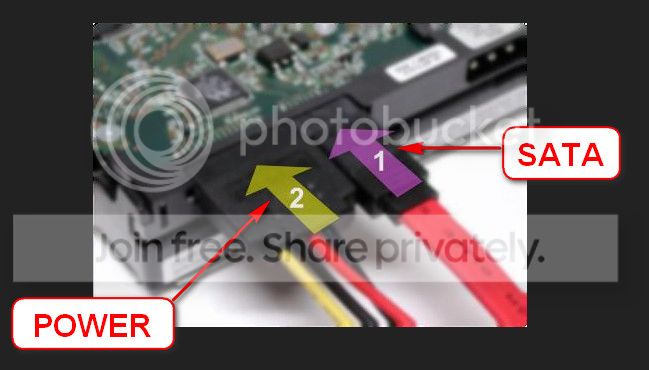
  2. Reeat the sata and power.
    72974453_zps85c47d93.jpg
  3. Run chkdsk /f/r, following the option two of the tutorial Disk Check
  4. Seatool for dos: SeaTools | Seagate download
    Burn it in a blank cd. boot from the CD, click on "Accept", wait for it to finish detecting the drives, then in the upper left corner select "Basic Tests", then select "Long Test" and let it run.
    (Steps 3 and 4 are for the TOSHIBA 1 TB HDD only)
Let us know the results.
________________________________________________________________________
BSOD ANALYSIS:
Code:
*******************************************************************************
*                                                                             *
*                        Bugcheck Analysis                                    *
*                                                                             *
*******************************************************************************

Use !analyze -v to get detailed debugging information.

BugCheck 34, {50853, fffff88001f953a8, fffff88001f94c00, fffff8000247ae86}

Probably caused by : ntkrnlmp.exe ( nt!KiInsertQueue+2a6 )

Followup: MachineOwner
---------

3: kd> !analyze -v
*******************************************************************************
*                                                                             *
*                        Bugcheck Analysis                                    *
*                                                                             *
*******************************************************************************

CACHE_MANAGER (34)
    See the comment for FAT_FILE_SYSTEM (0x23)
Arguments:
Arg1: 0000000000050853
Arg2: fffff88001f953a8
Arg3: fffff88001f94c00
Arg4: fffff8000247ae86
Code:
*******************************************************************************
*                                                                             *
*                        Bugcheck Analysis                                    *
*                                                                             *
*******************************************************************************

Use !analyze -v to get detailed debugging information.

BugCheck 24, {1904fb, fffff88001f9c578, fffff88001f9bdd0, fffff880012b2a53}

Probably caused by : Ntfs.sys ( Ntfs!NtfsFcbTableCompare+3 )

Followup: MachineOwner
---------

3: kd> !analyze -v
*******************************************************************************
*                                                                             *
*                        Bugcheck Analysis                                    *
*                                                                             *
*******************************************************************************

NTFS_FILE_SYSTEM (24)
    If you see NtfsExceptionFilter on the stack then the 2nd and 3rd
    parameters are the exception record and context record. Do a .cxr
    on the 3rd parameter and then kb to obtain a more informative stack
    trace.
 

My Computer My Computer

Computer type
PC/Desktop
Computer Manufacturer/Model Number
Self Assembled
OS
Microsoft Windows 10 Pro Insider Preview 64-bit
CPU
Intel(R) Core(TM) i3-4130 CPU @ 3.40GHz
Motherboard
Gigabyte Technology Co., Ltd. B85M-D3H
Memory
Corsair Vengence 4GB x2 (8.00GB Dual-Channel DDR3 @ 798MHz)
Graphics Card(s)
2047MB GeForce GTS 450 (ZOTAC International)
Sound Card
Onboard (Realtek High Definition Audio)
Monitor(s) Displays
LG Flatron E2040T
Screen Resolution
1600x900
Hard Drives
Western Digital 1 TB
Seagate 500 GB
PSU
Corsair VS550
Case
Cooler Master K380
Cooling
Cooler Master Seidon 120V Plus
Keyboard
Logitech MK260r
Mouse
Logitech MK260r
Internet Speed
PMPL Broadband
Antivirus
Windows Defender + MBAM
Browser
Firefox
Other Info
Dell Studio 15" Laptop
From looking at the site I don't see any firmware upgrades for my SSHD available. The Kingston toolbox brings up the serial number, firmware version, etc., but I don't have any options for upgrading the firmware. I looked further on their site, and unless I'm missing something (quite possible), I don't see any available firmware upgrades for my particular SSHD.

products

I'm working through the other steps now on the Toshiba Drive.
 

My Computer My Computer

Computer type
PC/Desktop
Computer Manufacturer/Model Number
Custom Build
OS
Windows 7 Ultimate X64
CPU
i5
Motherboard
Gigabyte
Arc-

I didn't come up with any errors on the Toshiba drive (and didn't have any non-backed up data on it)--so I decided to do a little troubleshooting..

I disconnected the SSHD and installed a fresh copy of windows on the Toshiba HD. Shortly after getting it up and running.. I hit a BSOD! - View attachment 283028

I also had 1-2 more while running off my SSHD: View attachment 283029

I thought the extra data (from the dump when it crashed on the Toshiba) may be useful at this point.

My gut all along has told me that there is a problem with the motherboard (defect?) I'd sent it back to Gigabyte a month ago and 2.5 weeks later they sent it (or one?) back with no note about what they had done, if anything (Not happy with their customer support, but that's not here nor there at this point).

After this last test (testing booting off two completely different HDs with fresh installs and still getting BSOD), and having swapped my RAM with other DIMMS and run memtest, I'm getting close to just thinking that either my processor and/or the motherboard is fuggered up. Thoughts? (Or maybe the most recent dumps will provide some info?)
 

My Computer My Computer

Computer type
PC/Desktop
Computer Manufacturer/Model Number
Custom Build
OS
Windows 7 Ultimate X64
CPU
i5
Motherboard
Gigabyte
What you have said about the motherboard is all possible. As it is generating versatile error/stopcodes, it is an indication of some drastic error, but we have no way to check a motherboard other than replacing it ... so we cannot say a board as corrupt so easily.

I can say that there is fair possibility, but the final decision is your :(
 

My Computer My Computer

Computer type
PC/Desktop
Computer Manufacturer/Model Number
Self Assembled
OS
Microsoft Windows 10 Pro Insider Preview 64-bit
CPU
Intel(R) Core(TM) i3-4130 CPU @ 3.40GHz
Motherboard
Gigabyte Technology Co., Ltd. B85M-D3H
Memory
Corsair Vengence 4GB x2 (8.00GB Dual-Channel DDR3 @ 798MHz)
Graphics Card(s)
2047MB GeForce GTS 450 (ZOTAC International)
Sound Card
Onboard (Realtek High Definition Audio)
Monitor(s) Displays
LG Flatron E2040T
Screen Resolution
1600x900
Hard Drives
Western Digital 1 TB
Seagate 500 GB
PSU
Corsair VS550
Case
Cooler Master K380
Cooling
Cooler Master Seidon 120V Plus
Keyboard
Logitech MK260r
Mouse
Logitech MK260r
Internet Speed
PMPL Broadband
Antivirus
Windows Defender + MBAM
Browser
Firefox
Other Info
Dell Studio 15" Laptop
Yeah, I agree. Not the optimal option! But then I'm running out of any other logical option.

From what we're seeing, would you put it as more likely that the mother's messed up? or the processor? (I know it's an impossible to know, best guess?)
 

My Computer My Computer

Computer type
PC/Desktop
Computer Manufacturer/Model Number
Custom Build
OS
Windows 7 Ultimate X64
CPU
i5
Motherboard
Gigabyte
I dont think that it is the processor. For a failing processor, the indications would have been different. It is either a failing storage, or RAM, or motherboard.

You may test the processor .....
Hardware - Stress Test With Prime95
 

My Computer My Computer

Computer type
PC/Desktop
Computer Manufacturer/Model Number
Self Assembled
OS
Microsoft Windows 10 Pro Insider Preview 64-bit
CPU
Intel(R) Core(TM) i3-4130 CPU @ 3.40GHz
Motherboard
Gigabyte Technology Co., Ltd. B85M-D3H
Memory
Corsair Vengence 4GB x2 (8.00GB Dual-Channel DDR3 @ 798MHz)
Graphics Card(s)
2047MB GeForce GTS 450 (ZOTAC International)
Sound Card
Onboard (Realtek High Definition Audio)
Monitor(s) Displays
LG Flatron E2040T
Screen Resolution
1600x900
Hard Drives
Western Digital 1 TB
Seagate 500 GB
PSU
Corsair VS550
Case
Cooler Master K380
Cooling
Cooler Master Seidon 120V Plus
Keyboard
Logitech MK260r
Mouse
Logitech MK260r
Internet Speed
PMPL Broadband
Antivirus
Windows Defender + MBAM
Browser
Firefox
Other Info
Dell Studio 15" Laptop
Back
Top