Hi Cratecruncher.
This is a very rare bugcheck code. I never encountered with such a code earlier.
Code:
[COLOR=Red]BugCheck C00002E3[/COLOR], {fffff8a00116c090, ffffffffc0000189, 0, 0}

Probably caused by : ntkrnlmp.exe ( nt!ExpSystemErrorHandler2+5e1 )

Followup: MachineOwner
---------
The crash dumps are very much clueless, too.
Code:
*******************************************************************************
*                                                                             *
*                        Bugcheck Analysis                                    *
*                                                                             *
*******************************************************************************

[COLOR=Red]Unknown bugcheck code (c00002e3)
Unknown bugcheck description[/COLOR]
Arguments:
Arg1: fffff8a00116c090
Arg2: ffffffffc0000189
Arg3: 0000000000000000
Arg4: 0000000000000000

Debugging Details:
------------------
So in this case It will not be very possible to pinpoint the exact cause of the BSOD. The other files might have helped, but the zip you uploaded is incomplete, a lot of necessary files are missing there.
Let us try some conventional approach to find some issue out.
Test your RAM modules for possible errors.
Run memtest86+ for at least 8 consecutive passes.
If it start showing errors/red lines, stop testing. A single error is enough to determine that something is going bad there.
If it does not show any error, enable Driver Verifier to monitor the drivers.
Run Driver Verifier for 24 hours or the occurrence of the next crash, whichever is earlier.
Information
Why Driver Verifier:
It puts a stress on the drivers, ans so it makes the unstable drivers crash. Hopefully the driver that crashes is recorded in the memory dump.
How Can we know that DV is enabled:
It will make the system bit of slow, laggy.
Warning
Before enabling DV, make it sure that you have earlier System restore points made in your computer. You can check it easily by using
CCleaner looking at Tools > System Restore.
If there is no points,
make a System Restore Point manually before enabling DV.
Let us know the results, with the subsequent crash dumps, if any.
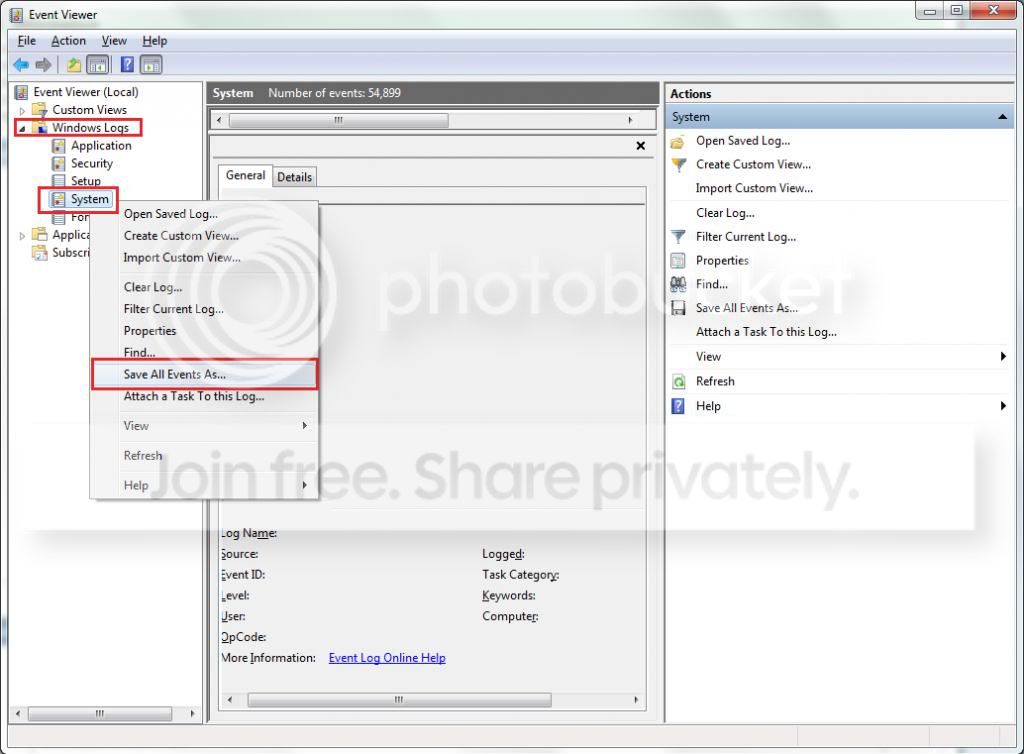
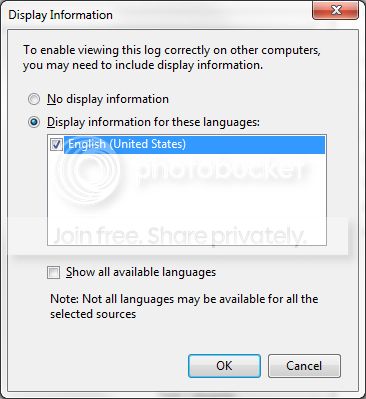
While uploading the data for the next time, follow both the methods of the
Blue Screen of Death (BSOD) Posting Instructions. Let us expect that either of them will give us the exhaustive set of data.



 .
. rb: Start → type eventvwr → hit Enter.