Video Hardware Error/Power Supply

Yefo

New member
Member
Local time
3:18 AM
Messages
30
Quick question: does a "Video Hardware Error" always mean the video card is at fault?

Sometimes I get BSOD and "Video Hardware Errors" when playing video games. However, my computer often struggles to cold boot also, which I learned is often related to the power supply (it usually requires being turned off after a failed boot, then quickly turned back on in order to boot properly).

Is it possible for a video card to be mechanically fine, but a power supply starts to fail, resulting in the video card failing, which finally results in "Video Hardware Error", even though the true root of the problem was the PSU?
 

My Computer

Computer type
PC/Desktop
OS
Microsoft Windows 7 Professional 64-bit 7601 Multiprocessor Free Service Pack 1
CPU
Intel(R) Core(TM) i7 CPU 980 @ 3.33GHz
Motherboard
Gigabyte Technology Co., Ltd. X58A-UD3R
Memory
12.00 GB
Graphics Card(s)
(1) NVIDIA GeForce GTX 590 (2) NVIDIA GeForce GTX 590
Sound Card
(1) NVIDIA High Definition Audio (2) NVIDIA High Definitio
Screen Resolution
1920 x 1080 x 32 bits (4294967296 colors) @ 60 Hz
Hard Drives
(1) Corsair Force 3 SSD ATA Device (2) WDC WD7500AALX-009BA0 ATA Device (3) HP External HDD USB Device
PSU
1200 Watt Corsair AX1200i
Yes, I understand the instructions you linked. However, I'm not necessarily asking for a direct diagnosis. I'm simply asking for a more detailed definition of "Video Hardware Error" blue screens, in general.

Do they always mean "your video card is fried or your video drivers are messed up", or can they also mean a PSU issue caused your video card to fail?
 

My Computer

Computer type
PC/Desktop
OS
Microsoft Windows 7 Professional 64-bit 7601 Multiprocessor Free Service Pack 1
CPU
Intel(R) Core(TM) i7 CPU 980 @ 3.33GHz
Motherboard
Gigabyte Technology Co., Ltd. X58A-UD3R
Memory
12.00 GB
Graphics Card(s)
(1) NVIDIA GeForce GTX 590 (2) NVIDIA GeForce GTX 590
Sound Card
(1) NVIDIA High Definition Audio (2) NVIDIA High Definitio
Screen Resolution
1920 x 1080 x 32 bits (4294967296 colors) @ 60 Hz
Hard Drives
(1) Corsair Force 3 SSD ATA Device (2) WDC WD7500AALX-009BA0 ATA Device (3) HP External HDD USB Device
PSU
1200 Watt Corsair AX1200i

My Computer

Computer type
PC/Desktop
Computer Manufacturer/Model Number
Home made Desktop
OS
Windows 10 Pro. 64/ version 1709 Windows 7 Pro/64
CPU
Intel i7-6800K @ 4.3
Motherboard
ASUS X-99 Deluxe II
Memory
Corsair Platinum 16 gig @2400
Graphics Card(s)
EVGA GTX 1070 OC
Monitor(s) Displays
Asus 27" LED LCD/VE278Q
Screen Resolution
1920-1080 or 1280-720 HDMI
Hard Drives
INTEL SSD 730-240 Gb Sata 3.0/
PSU
EVGA Platium 1200W
Case
Phanteks Luxe Tempered Glass 8 fans/ one radiator
Cooling
XSPC/ Water Cooled CPU
Keyboard
Das 4 Professional
Mouse
Logitech M705/MX Anywhere 2-S
Internet Speed
100 mbits
Antivirus
Microsoft Security Essentials/ Malwarebytes Premium 3.0/ SAS
Browser
I.E. 11 default/Firefox/ ISP Time Warner Cable/Spectrum
Other Info
LG BluRay Burner/
Sound system-KLipsch-THX/
Icy Dock ssd Hot Swap bays.
The three main bugchecks which are graphics related are: Stop 0x116; Stop 0x117 and Stop 0x119.

Stop 0x116 (VIDEO_TDR_ERROR) - Timeout Detection and Recovery (TDR) (Windows Drivers)

Stop 0x117 (VIDEO_TDR_TIMEOUT_DETECTED) - Same as above (more driver related)

Stop 0x119 (VIDEO_SCHEDULER_INTERNAL_ERROR) - Invalid Fence ID's, and the operating system believing that the GPU had invalid DMA. More here - 0x119 VIDEO_SCHEDULER_INTERNAL_ERROR & Fence IDs - Sysnative Forums

Overclocking and overheating can also be issues.
 

My Computer

Computer type
Laptop
Uploading my dump file and updated my system specs in my profile. (I accidentally did this once already before it was done dumping the files, this one is the final version however).

Sure wish I had a verified working GPU and/or PSU to plug in to see what happens...
 

My Computer

Computer type
PC/Desktop
OS
Microsoft Windows 7 Professional 64-bit 7601 Multiprocessor Free Service Pack 1
CPU
Intel(R) Core(TM) i7 CPU 980 @ 3.33GHz
Motherboard
Gigabyte Technology Co., Ltd. X58A-UD3R
Memory
12.00 GB
Graphics Card(s)
(1) NVIDIA GeForce GTX 590 (2) NVIDIA GeForce GTX 590
Sound Card
(1) NVIDIA High Definition Audio (2) NVIDIA High Definitio
Screen Resolution
1920 x 1080 x 32 bits (4294967296 colors) @ 60 Hz
Hard Drives
(1) Corsair Force 3 SSD ATA Device (2) WDC WD7500AALX-009BA0 ATA Device (3) HP External HDD USB Device
PSU
1200 Watt Corsair AX1200i
Code:
[COLOR="Red"]BugCheck 116[/COLOR], {fffffa8007aeb4e0, fffff8800fb3d630, [COLOR="SeaGreen"]ffffffffc000009a[/COLOR], 4}

Unable to load image \SystemRoot\system32\DRIVERS\nvlddmkm.sys, Win32 error 0n2
*** WARNING: Unable to verify timestamp for nvlddmkm.sys
*** ERROR: Module load completed but symbols could not be loaded for nvlddmkm.sys
Probably caused by : [COLOR="red"]nvlddmkm.sys[/COLOR] ( nvlddmkm+ade630 )

Code:
Usual causes:  Video driver, overheating, bad video card, BIOS, Power to card

In general terms, the graphics card driver has become "hung" and was unable to recover within the assigned recovery period.

Code:
11: kd> [COLOR="seagreen"]lmvm nvlddmkm[/COLOR]
start             end                 module name
fffff880`0f05f000 fffff880`0fd53000   nvlddmkm T (no symbols)           
    Loaded symbol image file: nvlddmkm.sys
    Image path: \SystemRoot\system32\DRIVERS\nvlddmkm.sys
    Image name: nvlddmkm.sys
    Timestamp:        [COLOR="Red"]Tue Oct 02 19:21:13 2012 [/COLOR](506B3099)
    CheckSum:         00CD4613
    ImageSize:        00CF4000
    Translations:     0000.04b0 0000.04e4 0409.04b0 0409.04e4

Your graphics card driver is rather outdated and causing some problems, please update to this version:

Version: 314.22
Release Date for Desktops and Notebooks : March 25th 2013
In Device Manager: 9.18.13.1422
  1. Download Driver
  2. Start :orb: Type: Device Manager
  3. Expand Display Adapters
  4. Right-Click Driver Name, Uninstall
  5. Reboot
  6. Run Driver Sweeper
  7. Reboot
  8. Install Downloaded Driver
Driver Sweeper will scan for any left over files from the old driver, old driver files can cause conflicts with new driver installations. Create a System Restore point beforehand, in case any problems or issues arise.

Driver Sweeper:
Remove:

Code:
Start Menu\Programs\DAEMON Tools Lite

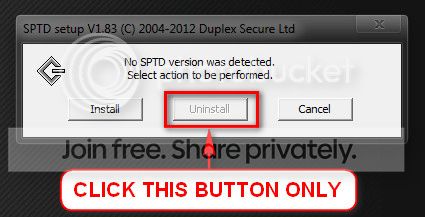
Download SPTD standalone installer from Disk-Tools.com, and execute the downloaded file as guided below :

  • Double click to open it.
  • Click this button only:
  • 2012-12-13_224441.jpg
  • If it is grayed out, as in the picture, there is no more SPTD in your system, and you just close the window.

Daemon Tools uses a driver called sptd.sys, which is known to cause BSODs with Windows 7. It is recommend you remove this program, and use Windows own in-built features or ImgBurn.

Update:

Code:
Start Menu\Programs\Renesas Electronics\USB 3.0 Host Controller Driver
Start Menu\Programs\Renesas Electronics

These USB 3.0 drivers are known to cause BSODs with versions dated 2010 and earlier, check Gigabyte for any updates or then check this website for updates: RENESAS/NEC Drivers & Firmwares

Install and perform full scans with:
   Information
Remember to install the free version of Malwarebytes not the free trail; untick the free trial box during installation. MSE is the most lightweight and compatible with the Windows 7 operating system

You can also view this thread for a complete free and lightweight security protection combination:
 

My Computer

Computer type
Laptop
You ask about power supplies and don't even put them in your specs.
 

My Computer

Computer type
PC/Desktop
Computer Manufacturer/Model Number
Home made Desktop
OS
Windows 10 Pro. 64/ version 1709 Windows 7 Pro/64
CPU
Intel i7-6800K @ 4.3
Motherboard
ASUS X-99 Deluxe II
Memory
Corsair Platinum 16 gig @2400
Graphics Card(s)
EVGA GTX 1070 OC
Monitor(s) Displays
Asus 27" LED LCD/VE278Q
Screen Resolution
1920-1080 or 1280-720 HDMI
Hard Drives
INTEL SSD 730-240 Gb Sata 3.0/
PSU
EVGA Platium 1200W
Case
Phanteks Luxe Tempered Glass 8 fans/ one radiator
Cooling
XSPC/ Water Cooled CPU
Keyboard
Das 4 Professional
Mouse
Logitech M705/MX Anywhere 2-S
Internet Speed
100 mbits
Antivirus
Microsoft Security Essentials/ Malwarebytes Premium 3.0/ SAS
Browser
I.E. 11 default/Firefox/ ISP Time Warner Cable/Spectrum
Other Info
LG BluRay Burner/
Sound system-KLipsch-THX/
Icy Dock ssd Hot Swap bays.
Oops, updated PSU in specs, I thought it was done automagically, my bad.

I also performed the requested video card driver update, Daemon Tools removal, USB 3.0 update, and virus scanning (I was and still am virus/malware free).

A couple notes about the requested changes:

1. I had actually already installed the newest Nvidia drivers a couple days ago before posting here and had encountered a BSOD since then. However, this time, I made sure to use the driver sweeper utility, and follow your instructions exactly, so hopefully it will help.

2. Daemon Tools hasn't been used in over a year and does not boot up on start-up, so I don't think it had anything to do with the BSODs. Regardless, since I don't use it, it is uninstalled now.

3. The USB 3.0 driver upgrade was definitely something I had not done or thought of before, so hopefully it will help.

4. I already had MalwareBytes and actively monitor my computer for viruses. However, I updated MalwareBytes and scanned anyway. I am virus/malware free and, to my knowledge, my system has never had either in it's 1.5 year lifetime.

So in other words... I have high hopes that a full removal/reinstall of the newest NVIDIA drivers will help and that the USB 3.0 driver upgrade will help, but it is not a virus issue and Deamon Tools likely was not playing a part.

Also, I'm still skeptical of the PSU because of the "cold boot" problems... will update thread as needed. Thanks for help so far.
 

My Computer

Computer type
PC/Desktop
OS
Microsoft Windows 7 Professional 64-bit 7601 Multiprocessor Free Service Pack 1
CPU
Intel(R) Core(TM) i7 CPU 980 @ 3.33GHz
Motherboard
Gigabyte Technology Co., Ltd. X58A-UD3R
Memory
12.00 GB
Graphics Card(s)
(1) NVIDIA GeForce GTX 590 (2) NVIDIA GeForce GTX 590
Sound Card
(1) NVIDIA High Definition Audio (2) NVIDIA High Definitio
Screen Resolution
1920 x 1080 x 32 bits (4294967296 colors) @ 60 Hz
Hard Drives
(1) Corsair Force 3 SSD ATA Device (2) WDC WD7500AALX-009BA0 ATA Device (3) HP External HDD USB Device
PSU
1200 Watt Corsair AX1200i

My Computer

Computer type
Laptop
Unfortunately, I'm back. Had another BSOD today. I re-ran the SF Diagnostic Tool to capture the report from the most recent BSOD.

Also, I ran the stress test. After about 3 minutes in, the GPU temp appeared to level out at 86 degrees C. It did not change after another minute, so I stopped the test, as the instructions suggested to do if the temperature levels out. All other temperatures, as monitored via HWMonitor, remained at very safe levels.

I have attached the newest SF Diagnostic report. Please direct your attention to the BSOD on April 26, thank you very much for your assistance.
 

My Computer

Computer type
PC/Desktop
OS
Microsoft Windows 7 Professional 64-bit 7601 Multiprocessor Free Service Pack 1
CPU
Intel(R) Core(TM) i7 CPU 980 @ 3.33GHz
Motherboard
Gigabyte Technology Co., Ltd. X58A-UD3R
Memory
12.00 GB
Graphics Card(s)
(1) NVIDIA GeForce GTX 590 (2) NVIDIA GeForce GTX 590
Sound Card
(1) NVIDIA High Definition Audio (2) NVIDIA High Definitio
Screen Resolution
1920 x 1080 x 32 bits (4294967296 colors) @ 60 Hz
Hard Drives
(1) Corsair Force 3 SSD ATA Device (2) WDC WD7500AALX-009BA0 ATA Device (3) HP External HDD USB Device
PSU
1200 Watt Corsair AX1200i
Code:
[COLOR="Red"]BugCheck 116[/COLOR], {fffffa800a234010, fffff880051c16ac, ffffffffc000009a, 4}

Unable to load image \SystemRoot\system32\DRIVERS\nvlddmkm.sys, Win32 error 0n2
*** WARNING: Unable to verify timestamp for nvlddmkm.sys
*** ERROR: Module load completed but symbols could not be loaded for nvlddmkm.sys
Probably caused by : [COLOR="red"]nvlddmkm.sys[/COLOR] ( nvlddmkm+9336ac )

Code:
Usual causes:  Video driver, [B]overheating[/B], bad video card, BIOS, Power to card

There seems to be a overheating issue, which can contribute to Stop 0x116's, remove all the cards (RAM, Graphics Card(s), Network Card etc.) and clean all the motherboard slots very carefully and clean all the fans using either a can of compressed air or using your own breath if powerful enough.
 

My Computer

Computer type
Laptop
Code:
Usual causes:  Video driver, [B]overheating[/B], bad video card, BIOS, Power to card

I'm more likely to think this is an issue with power going to the card. This has been an off an on issue ever since acquiring the computer 1.5 years ago (when it was dust-free). Also, it leveled out during the super intense GPU test at 86 degrees. Safe temperature for the GTX 590 is all the way up to 97, which is well above the recorded 86.

However, that said... Is there a program like CPUID Hardware Monitor that, instead of outputting the temperature information to the screen, it logs temperature to a file ever minute or so? That way, on BSOD, I could check the logs and see what the most recent recorded temperature was before the crash...
 

My Computer

Computer type
PC/Desktop
OS
Microsoft Windows 7 Professional 64-bit 7601 Multiprocessor Free Service Pack 1
CPU
Intel(R) Core(TM) i7 CPU 980 @ 3.33GHz
Motherboard
Gigabyte Technology Co., Ltd. X58A-UD3R
Memory
12.00 GB
Graphics Card(s)
(1) NVIDIA GeForce GTX 590 (2) NVIDIA GeForce GTX 590
Sound Card
(1) NVIDIA High Definition Audio (2) NVIDIA High Definitio
Screen Resolution
1920 x 1080 x 32 bits (4294967296 colors) @ 60 Hz
Hard Drives
(1) Corsair Force 3 SSD ATA Device (2) WDC WD7500AALX-009BA0 ATA Device (3) HP External HDD USB Device
PSU
1200 Watt Corsair AX1200i
You could use CoreTemp which has a Temperature Logging option, see the attached screenshot:

View attachment 265851

Once that has been configured, a log file should be created within the folder which you installed .exe of CoreTemp.
Here is the download link, CoreTemp (like many programs now) has become bundled with bloatware with the installation wizard, remove any tick boxes for any additional programs if able, or simply remove these programs after installation of CoreTemp.
Please enter the BIOS, and then post the current settings for the 3V, 5V and 12V voltages, and use this free PSU wattage calculator to check for sufficient power - eXtreme Power Supply Calculator Lite
 

My Computer

Computer type
Laptop
The PS Calc puts my minimum power at 800 Watts and suggested at 850, so I should be in good shape. Also, I was generally pretty conservative when answering questions I was unsure about and selected something that would consume the most power. That said, 850 is quite a bit higher than I would have guessed...

CoreTemp only appears capable of logging the CPU temp, unfortunately. I'm looking out for other options that are capable of logging GPU temps, including rolling my own: windows - How to read GPU (graphic card) temperature? - Stack Overflow
 

My Computer

Computer type
PC/Desktop
OS
Microsoft Windows 7 Professional 64-bit 7601 Multiprocessor Free Service Pack 1
CPU
Intel(R) Core(TM) i7 CPU 980 @ 3.33GHz
Motherboard
Gigabyte Technology Co., Ltd. X58A-UD3R
Memory
12.00 GB
Graphics Card(s)
(1) NVIDIA GeForce GTX 590 (2) NVIDIA GeForce GTX 590
Sound Card
(1) NVIDIA High Definition Audio (2) NVIDIA High Definitio
Screen Resolution
1920 x 1080 x 32 bits (4294967296 colors) @ 60 Hz
Hard Drives
(1) Corsair Force 3 SSD ATA Device (2) WDC WD7500AALX-009BA0 ATA Device (3) HP External HDD USB Device
PSU
1200 Watt Corsair AX1200i
I'll ask for some suggestions :)

Your PSU is 1050 watts, as seen in your system specifications, so you should be fine in terms of wattage, what were the settings for the voltages?
 

My Computer

Computer type
Laptop
You can download and install GPU z. On your desktop, create a new folder and name it logs or whatever you want. Open GPUz, click the sensor tab, at the bottom checl log. When you do, a serch box will come up. Navigate to th new folder you created and select it. GPUz will log almost everything about your card, including temp, mem usage, power info in that folder. As usual, be careful about the unwanted programs they want to install with GPUz.
 

My Computers

System One System Two

  • Computer type
    PC/Desktop
    Computer Manufacturer/Model Number
    ALWAYS UNDER CONSTRUCTION
    OS
    Windows 11 Pro
    CPU
    Ryzen 9 5900X
    Motherboard
    Asus X570 Crosshair Viii Hero
    Memory
    32GB G Skill DDR4-3600
    Graphics Card(s)
    EVGA RTX 3080 FTW 3 Ultra
    Sound Card
    On Board/Sennheiser PC37X Headset
    Monitor(s) Displays
    3 X Asus 27"
    Screen Resolution
    2560x1440
    Hard Drives
    2 X 1 TB NVME drives
    PSU
    EVGA 850
    Case
    Phanteks Eclipse P400A
    Cooling
    EVGA 280 AIO
    Keyboard
    Logitech G510s/ Logitech G13
    Mouse
    Logitech G502
    Internet Speed
    24/1
    Antivirus
    ESET/MBAM Pro/SAS Pro
    Browser
    Chrome/ Firefox/ Edge
  • Computer type
    Laptop
    System Manufacturer/Model Number
    Dell 16 Plus
    OS
    Windows 11 Pro
    CPU
    Intel Ultra 9 288V
    Memory
    32 GB LPDDR5X 8533
    Monitor(s) Displays
    16" Mini-LED HDR600 Touch 90 Hz
    Screen Resolution
    2560X1600
    Hard Drives
    1 TB NVME
I'll ask for some suggestions :)

Your PSU is 1050 watts, as seen in your system specifications, so you should be fine in terms of wattage, what were the settings for the voltages?

2.976, 4.972, and 12.175 for the three settings. (I think this was the information you wanted?)

You can download and install GPU z. On your desktop, create a new folder and name it logs or whatever you want. Open GPUz, click the sensor tab, at the bottom checl log. When you do, a serch box will come up. Navigate to th new folder you created and select it. GPUz will log almost everything about your card, including temp, mem usage, power info in that folder. As usual, be careful about the unwanted programs they want to install with GPUz.

Nice, I'll give that a shot, thanks!
 

My Computer

Computer type
PC/Desktop
OS
Microsoft Windows 7 Professional 64-bit 7601 Multiprocessor Free Service Pack 1
CPU
Intel(R) Core(TM) i7 CPU 980 @ 3.33GHz
Motherboard
Gigabyte Technology Co., Ltd. X58A-UD3R
Memory
12.00 GB
Graphics Card(s)
(1) NVIDIA GeForce GTX 590 (2) NVIDIA GeForce GTX 590
Sound Card
(1) NVIDIA High Definition Audio (2) NVIDIA High Definitio
Screen Resolution
1920 x 1080 x 32 bits (4294967296 colors) @ 60 Hz
Hard Drives
(1) Corsair Force 3 SSD ATA Device (2) WDC WD7500AALX-009BA0 ATA Device (3) HP External HDD USB Device
PSU
1200 Watt Corsair AX1200i
They seem to be okay, and post the log of your temperatures after a few hours of normal usage.
 

My Computer

Computer type
Laptop
Will do. Tbh, I'm hoping to get a BSOD in the near future while logging... the one and only time I will ask for a BSOD haha.
 

My Computer

Computer type
PC/Desktop
OS
Microsoft Windows 7 Professional 64-bit 7601 Multiprocessor Free Service Pack 1
CPU
Intel(R) Core(TM) i7 CPU 980 @ 3.33GHz
Motherboard
Gigabyte Technology Co., Ltd. X58A-UD3R
Memory
12.00 GB
Graphics Card(s)
(1) NVIDIA GeForce GTX 590 (2) NVIDIA GeForce GTX 590
Sound Card
(1) NVIDIA High Definition Audio (2) NVIDIA High Definitio
Screen Resolution
1920 x 1080 x 32 bits (4294967296 colors) @ 60 Hz
Hard Drives
(1) Corsair Force 3 SSD ATA Device (2) WDC WD7500AALX-009BA0 ATA Device (3) HP External HDD USB Device
PSU
1200 Watt Corsair AX1200i
Back
Top