
You are using an out of date browser. It may not display this or other websites correctly.
You should upgrade or use an alternative browser.
You should upgrade or use an alternative browser.
Recent Bsods happening at random
- Thread starter robertju1
- Start date

- Local time
- 10:16 AM
- Messages
- 14,164
Take memtest. Run for 8 passes and test each stick in a know good slot for an additional 6 passes.
If Memtest86+ does not find any errors with ram run Windows Memory Diagnostics for 7-8 passes following its tutorial: Upload a screenshot of your hard disk using CrystalDiskInfo:
Make a hard drive test from the hard drive manufacturers website:
Run Disk Check on your hard disk for file system errors and bad sectors on it:
Please upload your msinfo32.nfo file. To get this: Start Menu -> Type msinfo32 into the Search programs and files box -> When it opens, go to File, Save -> Save as msinfo32.nfo and save in a place you will remember -> Let it finish the process of gathering and saving the system info -> Right click the .nfo file, click send to compressed (zipped) folder -> Upload the .zip file here.
Please upload your msinfo32.txt file. To get this: Start Menu -> Type msinfo32 into the Search programs and files box -> When it opens, go to File, Export -> Save as msinfo32.txt and save in a place you will remember -> Let it finish the process of gathering and saving the system info -> Right click the .txt file, click send to compressed (zipped) folder -> Upload the .zip file here.
Note
Pay close attention to part 3 of the tutorial in order to rule out the faulty stick.
Information
Errors are sometimes found after 8 passes.
Tip
Do this test overnight, before going to bed.
If Memtest86+ does not find any errors with ram run Windows Memory Diagnostics for 7-8 passes following its tutorial: Upload a screenshot of your hard disk using CrystalDiskInfo:
Make a hard drive test from the hard drive manufacturers website:
Run Disk Check on your hard disk for file system errors and bad sectors on it:
Please upload your msinfo32.nfo file. To get this: Start Menu -> Type msinfo32 into the Search programs and files box -> When it opens, go to File, Save -> Save as msinfo32.nfo and save in a place you will remember -> Let it finish the process of gathering and saving the system info -> Right click the .nfo file, click send to compressed (zipped) folder -> Upload the .zip file here.
Please upload your msinfo32.txt file. To get this: Start Menu -> Type msinfo32 into the Search programs and files box -> When it opens, go to File, Export -> Save as msinfo32.txt and save in a place you will remember -> Let it finish the process of gathering and saving the system info -> Right click the .txt file, click send to compressed (zipped) folder -> Upload the .zip file here.
My Computer
- Computer type
- PC/Desktop
- Computer Manufacturer/Model Number
- Self assembled
- OS
- Windows 10 Home 64Bit
- CPU
- Intel Core i5 10400 @ 2.90GHz
- Motherboard
- Intel Corporation DG41WV (PROCESSOR)
- Memory
- 8.00GB Single-Channel Unknown @ 1329MHz (16-20-20-38)
- Sound Card
- Realtek High Definition Audio
- Monitor(s) Displays
- DELL E170S
- Screen Resolution
- 1280x1024 pixels
- Hard Drives
- 931GB TOSHIBA DT01ACA100 (SATA)
238GB TEAM TM8PS7256G (SATA SSD)
- Case
- Nothing Fancy
- Cooling
- Fans
- Keyboard
- A4 Tech Co LTD
- Mouse
- A4 Tech Co Ltd/Logitech
- Internet Speed
- 25 Mbps
Hey,
i did everything except the memory diagnostic tool and the hard drive test from the manufacturers website. I will still do those, but I will provide u already with the things u asked for. I didn't find any errors in the other tests by the way.
i did everything except the memory diagnostic tool and the hard drive test from the manufacturers website. I will still do those, but I will provide u already with the things u asked for. I didn't find any errors in the other tests by the way.
My Computer
- OS
- Windows 7 Home Premium x64
- Local time
- 10:16 AM
- Messages
- 14,164
Thanks I will wait for the results.
If you are overclocking any hardware please stop and revert to factory settings till the system is stable.
Also do the following:
If you are overclocking any hardware please stop and revert to factory settings till the system is stable.
Also do the following:
1. Update the BIOS to latest version available:
2. Uninstall Magic Disc:
3. Scan your System with Microsoft Security Essentials and Malwarebytes (separately).
4. Driver Verifier enable to see if it catches any misbehaving drivers:
Code:
BIOS-versie/datum American Megatrends Inc. 0802, 24-8-20102. Uninstall Magic Disc:
Code:
Start Menu\Programs\MagicDisc Public:Start Menu\Programs\MagicDisc Public3. Scan your System with Microsoft Security Essentials and Malwarebytes (separately).
- Microsoft Security Essentials, Free antivirus for windows
- Malwarebytes Anti-Malware Free
- Good and Free system security combination
Warning
Do not start the free trial of Malware Bytes; remember to deselect that option when prompted.
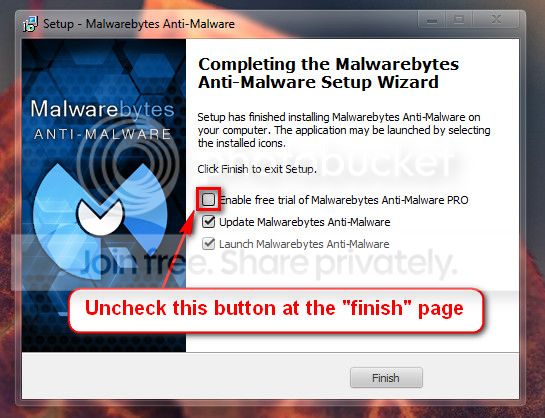
4. Driver Verifier enable to see if it catches any misbehaving drivers:
My Computer
- Computer type
- PC/Desktop
- Computer Manufacturer/Model Number
- Self assembled
- OS
- Windows 10 Home 64Bit
- CPU
- Intel Core i5 10400 @ 2.90GHz
- Motherboard
- Intel Corporation DG41WV (PROCESSOR)
- Memory
- 8.00GB Single-Channel Unknown @ 1329MHz (16-20-20-38)
- Sound Card
- Realtek High Definition Audio
- Monitor(s) Displays
- DELL E170S
- Screen Resolution
- 1280x1024 pixels
- Hard Drives
- 931GB TOSHIBA DT01ACA100 (SATA)
238GB TEAM TM8PS7256G (SATA SSD)
- Case
- Nothing Fancy
- Cooling
- Fans
- Keyboard
- A4 Tech Co LTD
- Mouse
- A4 Tech Co Ltd/Logitech
- Internet Speed
- 25 Mbps
Hey, I have tried to update my Bios true the site of ami.com with their AMI firmware update utility(AMI | American Megatrends Inc. : Product Support). As soon as i press ok, when it says it is going to install it now, my Pc crashes and gives me the screen u get before a bsod and it stucks on that. I tried this several times and everytime the same effect. The utility doesn't work in safe mode, so that is not an option.
I uninstalled Magicdisc and activated driver verifier. I had like 2 bsods in 24 hours with driver verifier, I am not sure what to conclude out of this? I furthermore attached the dump files of some recent bsods to this post. I will do the memory diagnostic tool tonight.
I hope you can help with this!
I uninstalled Magicdisc and activated driver verifier. I had like 2 bsods in 24 hours with driver verifier, I am not sure what to conclude out of this? I furthermore attached the dump files of some recent bsods to this post. I will do the memory diagnostic tool tonight.
I hope you can help with this!
My Computer
- OS
- Windows 7 Home Premium x64
- Local time
- 10:16 AM
- Messages
- 14,164
Does not seem like verifier was enabled and the BSOD's are of 17 - 18th of March.
First, we want to make sure the computer is saving your dump files. Go to Control Panel -> System -> Advanced System Settings -> Startup and Recovery [Settings] Make sure that "Write Debugging Information" is set to Small Memory Dump (256kb) if it is not already.
Next, make sure that the folder C:\Windows\Minidump exists. If not, create it (allow permission if asked). Make sure any dumps you want to analyze, whether yours or others', are in this folder. You can ZIP/RAR the files and send them to someone else to analyze as well.
First, we want to make sure the computer is saving your dump files. Go to Control Panel -> System -> Advanced System Settings -> Startup and Recovery [Settings] Make sure that "Write Debugging Information" is set to Small Memory Dump (256kb) if it is not already.
Next, make sure that the folder C:\Windows\Minidump exists. If not, create it (allow permission if asked). Make sure any dumps you want to analyze, whether yours or others', are in this folder. You can ZIP/RAR the files and send them to someone else to analyze as well.
My Computer
- Computer type
- PC/Desktop
- Computer Manufacturer/Model Number
- Self assembled
- OS
- Windows 10 Home 64Bit
- CPU
- Intel Core i5 10400 @ 2.90GHz
- Motherboard
- Intel Corporation DG41WV (PROCESSOR)
- Memory
- 8.00GB Single-Channel Unknown @ 1329MHz (16-20-20-38)
- Sound Card
- Realtek High Definition Audio
- Monitor(s) Displays
- DELL E170S
- Screen Resolution
- 1280x1024 pixels
- Hard Drives
- 931GB TOSHIBA DT01ACA100 (SATA)
238GB TEAM TM8PS7256G (SATA SSD)
- Case
- Nothing Fancy
- Cooling
- Fans
- Keyboard
- A4 Tech Co LTD
- Mouse
- A4 Tech Co Ltd/Logitech
- Internet Speed
- 25 Mbps
Sorry, I didn't gain a notification on my mail that you had reacted, thus my late reaction.
I do have it enabled such that my pc saves minifump files. The problem is that since I have enabled verifier, my pc doesn't finish the bsod. It stucks at the crashing phase, I never get to the blue screen. It is the same crashing phase as when I have bsods, so we are talking about a bsod, but it just doesn't get to the blue screen, so it doesn't save the dump files. I am gonna disable verifier now and see if I do can get to the blue screen, as it was before. Also will try to update bios with verifier disabled, it might help?
I do have it enabled such that my pc saves minifump files. The problem is that since I have enabled verifier, my pc doesn't finish the bsod. It stucks at the crashing phase, I never get to the blue screen. It is the same crashing phase as when I have bsods, so we are talking about a bsod, but it just doesn't get to the blue screen, so it doesn't save the dump files. I am gonna disable verifier now and see if I do can get to the blue screen, as it was before. Also will try to update bios with verifier disabled, it might help?
My Computer
- OS
- Windows 7 Home Premium x64
- Local time
- 10:16 AM
- Messages
- 14,164
Disable verifier.
Update BIOS.
Post if you get BSOD's normally.
We'll try verifier later.
Update BIOS.
Post if you get BSOD's normally.
We'll try verifier later.
My Computer
- Computer type
- PC/Desktop
- Computer Manufacturer/Model Number
- Self assembled
- OS
- Windows 10 Home 64Bit
- CPU
- Intel Core i5 10400 @ 2.90GHz
- Motherboard
- Intel Corporation DG41WV (PROCESSOR)
- Memory
- 8.00GB Single-Channel Unknown @ 1329MHz (16-20-20-38)
- Sound Card
- Realtek High Definition Audio
- Monitor(s) Displays
- DELL E170S
- Screen Resolution
- 1280x1024 pixels
- Hard Drives
- 931GB TOSHIBA DT01ACA100 (SATA)
238GB TEAM TM8PS7256G (SATA SSD)
- Case
- Nothing Fancy
- Cooling
- Fans
- Keyboard
- A4 Tech Co LTD
- Mouse
- A4 Tech Co Ltd/Logitech
- Internet Speed
- 25 Mbps
I updated my bios, but it is the same as the other one; both version 0802. There is no newer version for my BIOS I believe. (ASUSTeK Computer Inc. -Support- Drivers and Download M4A78LT-M)
Had some BSODs before I updated Bios, i attached them. I didn't had much problems with them when using verifier, but as soons as I stopped that service there came more BSODs, very strange.
Had some BSODs before I updated Bios, i attached them. I didn't had much problems with them when using verifier, but as soons as I stopped that service there came more BSODs, very strange.
My Computer
- OS
- Windows 7 Home Premium x64
- Local time
- 10:16 AM
- Messages
- 14,164
If you are overclocking any hardware, STOP. Reset any changed values back to default.
Reseat all your hardware components.
Check your hard drive(s) for errors by running chkdsk:
Use the System File Checker tool (SFC.exe) to determine which file is causing the issue, and then replace the file.
To do this, follow these steps:
Outdated and Problematic Drivers:
You should update/replace/remove the following drivers. Any drivers that are known to cause BSODs, please remove the software or remove the drivers and then remove the device; steps to do so are given after the list of outdated drivers. If you have ASACPI.sys installed, make sure it is updated and not pre-2009; pre-2009 versions are known to cause BSODs:
The following is for information purposes only. Any drivers in red should be updated/replaced/removed.
AsIO.sys Mon Apr 6 13:21:08 2009 (49D9AD64)
Asus PCProbe Utility
http://www.carrona.org/drivers/driver.php?id=AsIO.sys
ASACPI.sys Thu Jul 16 09:31:29 2009 (4A5E9F11)
Asus ATK0110 ACPI Utility (a known BSOD maker in Win7 and Win8). Also a part of many Asus utilities
http://www.carrona.org/drivers/driver.php?id=ASACPI.sys
AODDriver2.sys Thu Apr 5 15:23:37 2012 (4F7D6499)
AMD Overdrive; also in EasyTune6 for Gigabyte motherboard [br] Known BSOD issues in Win7
http://www.carrona.org/drivers/driver.php?id=AODDriver2.sys
The following is for information purposes only. The following information contains the relevant information from the blue screen analysis:
Reseat all your hardware components.
Check your hard drive(s) for errors by running chkdsk:
Use the System File Checker tool (SFC.exe) to determine which file is causing the issue, and then replace the file.
To do this, follow these steps:
- Open an elevated command prompt. To do this, click Start, click All Programs, click Accessories, right-click Command Prompt, and then click Run as administrator. If you are prompted for an administrator password or for a confirmation, type the password, or click Allow.
- At the command prompt, type the following command, and then press ENTER: sfc /scannow
The sfc /scannow command scans all protected system files and replaces incorrect versions with correct Microsoft versions.
Outdated and Problematic Drivers:
You should update/replace/remove the following drivers. Any drivers that are known to cause BSODs, please remove the software or remove the drivers and then remove the device; steps to do so are given after the list of outdated drivers. If you have ASACPI.sys installed, make sure it is updated and not pre-2009; pre-2009 versions are known to cause BSODs:
The following is for information purposes only. Any drivers in red should be updated/replaced/removed.
AsIO.sys Mon Apr 6 13:21:08 2009 (49D9AD64)
Asus PCProbe Utility
http://www.carrona.org/drivers/driver.php?id=AsIO.sys
ASACPI.sys Thu Jul 16 09:31:29 2009 (4A5E9F11)
Asus ATK0110 ACPI Utility (a known BSOD maker in Win7 and Win8). Also a part of many Asus utilities
http://www.carrona.org/drivers/driver.php?id=ASACPI.sys
AODDriver2.sys Thu Apr 5 15:23:37 2012 (4F7D6499)
AMD Overdrive; also in EasyTune6 for Gigabyte motherboard [br] Known BSOD issues in Win7
http://www.carrona.org/drivers/driver.php?id=AODDriver2.sys
The following is for information purposes only. The following information contains the relevant information from the blue screen analysis:
Code:
[FONT="Lucida Console"]Debug session time: Tue Mar 26 22:26:33.874 2013 (UTC + 6:00)
Loading Dump File [C:\Users\Yusra\SysnativeBSODApps\032613-20872-01.dmp]
Built by: 7601.18044.amd64fre.win7sp1_gdr.130104-1431
System Uptime: 0 days 0:21:30.451
Probably caused by : memory_corruption ( nt!MiFindNodeOrParent+0 )
BugCheck A, {28, 2, 0, fffff800030c6e40}
BugCheck Info: [url=http://www.carrona.org/bsodindx.html#0x0000000A]IRQL_NOT_LESS_OR_EQUAL (a)[/url]
Bugcheck code 0000000A
Arguments:
Arg1: 0000000000000028, memory referenced
Arg2: 0000000000000002, IRQL
Arg3: 0000000000000000, bitfield :
	bit 0 : value 0 = read operation, 1 = write operation
	bit 3 : value 0 = not an execute operation, 1 = execute operation (only on chips which support this level of status)
Arg4: fffff800030c6e40, address which referenced memory
BUGCHECK_STR:  0xA
DEFAULT_BUCKET_ID:  WIN7_DRIVER_FAULT
PROCESS_NAME:  svchost.exe
FAILURE_BUCKET_ID:  X64_0xA_nt!MiFindNodeOrParent+0
BiosVersion = 0802
BiosReleaseDate = 08/24/2010
SystemManufacturer = System manufacturer
SystemProductName = System Product Name
¨¨¨¨¨¨¨¨¨¨¨¨¨¨¨¨¨¨¨¨¨¨¨¨¨¨¨¨¨¨¨¨¨¨¨¨¨¨¨¨¨¨¨¨¨¨¨¨¨¨¨¨¨¨¨¨¨¨¨¨¨¨¨¨¨¨¨¨¨¨¨¨¨¨¨¨¨¨¨¨¨¨¨¨¨¨``
Debug session time: Tue Mar 26 22:04:12.264 2013 (UTC + 6:00)
Loading Dump File [C:\Users\Yusra\SysnativeBSODApps\032613-19234-01.dmp]
Built by: 7601.18044.amd64fre.win7sp1_gdr.130104-1431
System Uptime: 0 days 0:13:39.840
Probably caused by : memory_corruption ( nt!MiAddViewsForSection+122 )
BugCheck 24, {1904fb, fffff88008347068, fffff880083468c0, fffff80003090612}
BugCheck Info: [url=http://www.carrona.org/bsodindx.html#0x00000024]NTFS_FILE_SYSTEM (24)[/url]
Bugcheck code 00000024
Arguments:
Arg1: 00000000001904fb
Arg2: fffff88008347068
Arg3: fffff880083468c0
Arg4: fffff80003090612
PROCESS_NAME:  rundll32.exe
BUGCHECK_STR:  0x24
DEFAULT_BUCKET_ID:  WIN7_DRIVER_FAULT
FAILURE_BUCKET_ID:  X64_0x24_nt!MiAddViewsForSection+122
BiosVersion = 0802
BiosReleaseDate = 08/24/2010
SystemManufacturer = System manufacturer
SystemProductName = System Product Name
¨¨¨¨¨¨¨¨¨¨¨¨¨¨¨¨¨¨¨¨¨¨¨¨¨¨¨¨¨¨¨¨¨¨¨¨¨¨¨¨¨¨¨¨¨¨¨¨¨¨¨¨¨¨¨¨¨¨¨¨¨¨¨¨¨¨¨¨¨¨¨¨¨¨¨¨¨¨¨¨¨¨¨¨¨¨``[/FONT]
My Computer
- Computer type
- PC/Desktop
- Computer Manufacturer/Model Number
- Self assembled
- OS
- Windows 10 Home 64Bit
- CPU
- Intel Core i5 10400 @ 2.90GHz
- Motherboard
- Intel Corporation DG41WV (PROCESSOR)
- Memory
- 8.00GB Single-Channel Unknown @ 1329MHz (16-20-20-38)
- Sound Card
- Realtek High Definition Audio
- Monitor(s) Displays
- DELL E170S
- Screen Resolution
- 1280x1024 pixels
- Hard Drives
- 931GB TOSHIBA DT01ACA100 (SATA)
238GB TEAM TM8PS7256G (SATA SSD)
- Case
- Nothing Fancy
- Cooling
- Fans
- Keyboard
- A4 Tech Co LTD
- Mouse
- A4 Tech Co Ltd/Logitech
- Internet Speed
- 25 Mbps
I believe I updated ASACPI.sys. I have Installed and uninstalled PCProbeII, I don't know if this was what u meant me to do? I had no idea how to update AODDriver2.sys, it wasn't clear to me at all.
When I was using sfc /scannow, it didn't fix all problems, so I put sfcdetails.txt aswell in the attachments, as did I with the BSODs I had over the last few days.
I didn't gain any problems with chkdisk.
When I was using sfc /scannow, it didn't fix all problems, so I put sfcdetails.txt aswell in the attachments, as did I with the BSODs I had over the last few days.
I didn't gain any problems with chkdisk.
My Computer
- OS
- Windows 7 Home Premium x64
- Local time
- 10:16 AM
- Messages
- 14,164
The following is for information purposes only. Any drivers in red should be updated/replaced/removed.
AsIO.sys Mon Apr 6 13:21:08 2009 (49D9AD64)
Asus PCProbe Utility
http://www.carrona.org/drivers/driver.php?id=AsIO.sys
ASACPI.sys Thu Jul 16 09:31:29 2009 (4A5E9F11)
Asus ATK0110 ACPI Utility (a known BSOD maker in Win7 and Win8). Also a part of many Asus utilities
http://www.carrona.org/drivers/driver.php?id=ASACPI.sys
Any drivers in red should be updated/replaced/removed.
AMD OverDrive (AODDriver2.sys) is either a stand-alone application, or a component of the AMD VISION Engine Control Center. This driver is known to cause BSOD's on some Win7 systems.
Sometimes the driver remains and continues to cause BSOD's.Please uninstall all AMD/ATI video stuff from Control Panel...Programs...Uninstall a program
Then, download (but DO NOT install) a fresh copy of the ATI drivers from Global Provider of Innovative Graphics, Processors and Media Solutions | AMD (in the upper right corner of the page)
Use this procedure to install the DRIVER ONLY: ATI video cards - DRIVER ONLY installation procedure
If the device (AODDriver or AODDriver4.01) remains a problem, open Device Manager, select the "View" item.
Then select "Show hidden devices" and scroll down to the Non-Plug and Play Drivers section.
Locate the AODDriver entry, right click on it and select "Uninstall". Reboot for changes to take affect.
My Computer
- Computer type
- PC/Desktop
- Computer Manufacturer/Model Number
- Self assembled
- OS
- Windows 10 Home 64Bit
- CPU
- Intel Core i5 10400 @ 2.90GHz
- Motherboard
- Intel Corporation DG41WV (PROCESSOR)
- Memory
- 8.00GB Single-Channel Unknown @ 1329MHz (16-20-20-38)
- Sound Card
- Realtek High Definition Audio
- Monitor(s) Displays
- DELL E170S
- Screen Resolution
- 1280x1024 pixels
- Hard Drives
- 931GB TOSHIBA DT01ACA100 (SATA)
238GB TEAM TM8PS7256G (SATA SSD)
- Case
- Nothing Fancy
- Cooling
- Fans
- Keyboard
- A4 Tech Co LTD
- Mouse
- A4 Tech Co Ltd/Logitech
- Internet Speed
- 25 Mbps

Interesting SFC details there.
SFC managed to repair all but one error, but the unrepaired error is of a type which could be caused by other problems.
Please run the http://www.sevenforums.com/windows-...4840-windows-update-posting-instructions.html and post the requested data - it will give more background to possible corruption than is visible from the details.txt file.
SFC managed to repair all but one error, but the unrepaired error is of a type which could be caused by other problems.
Please run the http://www.sevenforums.com/windows-...4840-windows-update-posting-instructions.html and post the requested data - it will give more background to possible corruption than is visible from the details.txt file.
My Computer
- Computer type
- Laptop
- Computer Manufacturer/Model Number
- Asus K52F or Lenovo B51-80
- OS
- Win 7 x64 Home Premium (and x86 VirtualBox VM)/Win10
- CPU
- i3 370M/i7 6500U
- Motherboard
- Asus/Lenovo
- Memory
- 8GB - finally :)/8GB
- Graphics Card(s)
- it's an i3, dude!/dual Intel&nVidia
- Sound Card
- onboard
- Monitor(s) Displays
- 15.6" built-in
- Screen Resolution
- 1366x768/1920x1080
- Hard Drives
- 750GB Seagate internal
Sundry external drives attached to other computers on the local network
1TB SSD on the Lenovo
- PSU
- n/a
- Internet Speed
- as much as I can get - usually on a dongle/phone, so <1MB/s
- Antivirus
- MSE/Defender
- Browser
- IE11/12/Edge/Chrome/FF(if I must)
I have removed AsIO through deivce manager. Also I didn't see AODDRIVER, and i believe I have updated ATAKPCI utility already. I am still getting BSODs though, so this isn't the solution. I did what NoelDP asked and i have uploaded my BSODs of the meantime.
My Computer
- OS
- Windows 7 Home Premium x64
Thanks.
The CheckSUR is interesting as well
I'm not even going to try to address the IE10-related problems, since MS is attempting to produce a patch/fix for these, and I haven't seen the particular one you have before..
It did also show the following problems, though...
These belong to an Epson printer- and are from the original disk. It's possible that they were 'cleaned' by an overly-aggressive cleanup tool.
The CBS log is even more interesting this time....
In addition to the 4 Epson files, there are a number of IE-related problems - compare them with the previous run...
Some are the same files - and some are different.
I suspect malware is at work here.
I'll post a fix protocol for the Epson files later - but you need to do some deep checks for malware.
I'll also see if I can glean any more information out of the logs
The CheckSUR is interesting as well
I'm not even going to try to address the IE10-related problems, since MS is attempting to produce a patch/fix for these, and I haven't seen the particular one you have before..
It did also show the following problems, though...
Code:
Checking Component Store
(f) CSI Payload File Missing 0x00000000 Amd64\EP0NOE8F.DXT amd64_prnep00d.inf_31bf3856ad364e35_6.1.7600.16385_none_ae3f8d47fad9c2a7
(f) CSI Payload File Missing 0x00000000 Amd64\EP0NOJ8F.DXT amd64_prnep00d.inf_31bf3856ad364e35_6.1.7600.16385_none_ae3f8d47fad9c2a7
(f) CSI Payload File Missing 0x00000000 Amd64\EP0NOE8H.DXT amd64_prnep00d.inf_31bf3856ad364e35_6.1.7600.16385_none_ae3f8d47fad9c2a7
(f) CSI Payload File Missing 0x00000000 Amd64\EP0NOJ8H.DXT amd64_prnep00d.inf_31bf3856ad364e35_6.1.7600.16385_none_ae3f8d47fad9c2a7
These belong to an Epson printer- and are from the original disk. It's possible that they were 'cleaned' by an overly-aggressive cleanup tool.
The CBS log is even more interesting this time....
Code:
 Line 53931: 2013-04-03 18:57:04, Info                  CSI    00000330 [SR] Repairing 8 components
 Line 53932: 2013-04-03 18:57:04, Info                  CSI    00000331 [SR] Beginning Verify and Repair transaction
 Line 53933: 2013-04-03 18:57:04, Info                  CSI    00000332 [SR] Cannot repair member file [l:36{18}]"Amd64\EP0NOE8F.DXT" of prnep00d.inf, Version = 6.1.7600.16385, pA = PROCESSOR_ARCHITECTURE_AMD64 (9), Culture neutral, VersionScope = 1 nonSxS, PublicKeyToken = {l:8 b:31bf3856ad364e35}, Type = [l:24{12}]"driverUpdate", TypeName neutral, PublicKey neutral in the store, file is missing
 Line 53934: 2013-04-03 18:57:04, Info                  CSI    00000333 [SR] Cannot repair member file [l:36{18}]"Amd64\EP0NOJ8F.DXT" of prnep00d.inf, Version = 6.1.7600.16385, pA = PROCESSOR_ARCHITECTURE_AMD64 (9), Culture neutral, VersionScope = 1 nonSxS, PublicKeyToken = {l:8 b:31bf3856ad364e35}, Type = [l:24{12}]"driverUpdate", TypeName neutral, PublicKey neutral in the store, file is missing
 Line 53935: 2013-04-03 18:57:04, Info                  CSI    00000334 [SR] Cannot repair member file [l:36{18}]"Amd64\EP0NOE8H.DXT" of prnep00d.inf, Version = 6.1.7600.16385, pA = PROCESSOR_ARCHITECTURE_AMD64 (9), Culture neutral, VersionScope = 1 nonSxS, PublicKeyToken = {l:8 b:31bf3856ad364e35}, Type = [l:24{12}]"driverUpdate", TypeName neutral, PublicKey neutral in the store, file is missing
 Line 53936: 2013-04-03 18:57:04, Info                  CSI    00000335 [SR] Cannot repair member file [l:36{18}]"Amd64\EP0NOJ8H.DXT" of prnep00d.inf, Version = 6.1.7600.16385, pA = PROCESSOR_ARCHITECTURE_AMD64 (9), Culture neutral, VersionScope = 1 nonSxS, PublicKeyToken = {l:8 b:31bf3856ad364e35}, Type = [l:24{12}]"driverUpdate", TypeName neutral, PublicKey neutral in the store, file is missing
 Line 53939: 2013-04-03 18:57:04, Info                  CSI    00000337 [SR] Repairing corrupted file [ml:48{24},l:46{23}]"\??\C:\Windows\SysWOW64"\[l:22{11}]"iesetup.dll" from store
 Line 53942: 2013-04-03 18:57:04, Info                  CSI    00000339 [SR] Repairing corrupted file [ml:48{24},l:46{23}]"\??\C:\Windows\SysWOW64"\[l:22{11}]"ieuinit.inf" from store
 Line 53945: 2013-04-03 18:57:04, Info                  CSI    0000033b [SR] Repairing corrupted file [ml:48{24},l:46{23}]"\??\C:\Windows\SysWOW64"\[l:24{12}]"iernonce.dll" from store
 Line 53957: 2013-04-03 18:57:05, Info                  CSI    00000340 [SR] Repairing corrupted file [ml:520{260},l:76{38}]"\??\C:\Program Files\Internet Explorer"\[l:14{7}]"pdm.dll" from store
 Line 53960: 2013-04-03 18:57:05, Info                  CSI    00000342 [SR] Repairing corrupted file [ml:520{260},l:76{38}]"\??\C:\Program Files\Internet Explorer"\[l:20{10}]"msdbg2.dll" from store
 Line 53969: 2013-04-03 18:57:05, Info                  CSI    00000346 [SR] Repairing corrupted file [ml:60{30},l:58{29}]"\??\C:\Windows\SysWOW64\en-US"\[l:32{16}]"iernonce.dll.mui" from store
 Line 53972: 2013-04-03 18:57:05, Info                  CSI    00000348 [SR] Repairing corrupted file [ml:60{30},l:58{29}]"\??\C:\Windows\SysWOW64\en-US"\[l:30{15}]"iesetup.dll.mui" from store
In addition to the 4 Epson files, there are a number of IE-related problems - compare them with the previous run...
Code:
2013-03-30 16:01:06, Info                  CSI    00000354 [SR] Repairing corrupted file [ml:60{30},l:58{29}]"\??\C:\Windows\SysWOW64\nl-NL"\[l:32{16}]"iernonce.dll.mui" from store
2013-03-30 16:01:06, Info                  CSI    00000356 [SR] Repairing corrupted file [ml:60{30},l:58{29}]"\??\C:\Windows\SysWOW64\nl-NL"\[l:30{15}]"iesetup.dll.mui" from store
2013-03-30 16:01:06, Info                  CSI    0000035a [SR] Repairing corrupted file [ml:520{260},l:88{44}]"\??\C:\Program Files (x86)\Internet Explorer"\[l:14{7}]"pdm.dll" from store
2013-03-30 16:01:06, Info                  CSI    0000035c [SR] Repairing corrupted file [ml:520{260},l:88{44}]"\??\C:\Program Files (x86)\Internet Explorer"\[l:20{10}]"msdbg2.dll" from store
Some are the same files - and some are different.
I suspect malware is at work here.
I'll post a fix protocol for the Epson files later - but you need to do some deep checks for malware.
I'll also see if I can glean any more information out of the logs
My Computer
- Computer type
- Laptop
- Computer Manufacturer/Model Number
- Asus K52F or Lenovo B51-80
- OS
- Win 7 x64 Home Premium (and x86 VirtualBox VM)/Win10
- CPU
- i3 370M/i7 6500U
- Motherboard
- Asus/Lenovo
- Memory
- 8GB - finally :)/8GB
- Graphics Card(s)
- it's an i3, dude!/dual Intel&nVidia
- Sound Card
- onboard
- Monitor(s) Displays
- 15.6" built-in
- Screen Resolution
- 1366x768/1920x1080
- Hard Drives
- 750GB Seagate internal
Sundry external drives attached to other computers on the local network
1TB SSD on the Lenovo
- PSU
- n/a
- Internet Speed
- as much as I can get - usually on a dongle/phone, so <1MB/s
- Antivirus
- MSE/Defender
- Browser
- IE11/12/Edge/Chrome/FF(if I must)
I've uploaded a file - rj1aa.zip - to my SkyDrive at Noel's SkyDrive
Please download and save it.
Right-click on the saved file and select Extract all...
Change the target to C:\ and click on Extract
Close all windows (it would be a good idea to print these instructions!)
Now reboot to the Repair Environment - as soon as the machine restarts, start tapping F8 - this should bring up the Advanced Boot Menu, at the top of which should be the option 'Repair my Computer'
Pick that
You'll have to log in with your username and password.
Pick the option to use a Command Prompt
At the prompt type
DIR C:\rj1aa
hit the enter key - if you get a 'Not Found' error try
DIR D:\rj1aa
or
DIR E:\rj1aa
The drive letter in use when you find the folder will need to be substituted (for<drive>) into the following command...
XCOPY <drive>:\rj1aa <drive>:\windows\winsxs /y /i /s /v /h
(e.g. XCOPY P:\wfire P:\windows\winsxs /y /i /s /v /h )
run the command (it should take almost no time)and when the prompt returns, type
EXIT
and hit the Enter key to exit Command Prompt - reboot to Normal Mode Windows.
Now run SFC /SCANNOW in an Elevated Command Prompt
then reboot and upload the new CBS.log file to your reply
Please download and save it.
Right-click on the saved file and select Extract all...
Change the target to C:\ and click on Extract
Close all windows (it would be a good idea to print these instructions!)
Now reboot to the Repair Environment - as soon as the machine restarts, start tapping F8 - this should bring up the Advanced Boot Menu, at the top of which should be the option 'Repair my Computer'
Pick that
You'll have to log in with your username and password.
Pick the option to use a Command Prompt
At the prompt type
DIR C:\rj1aa
hit the enter key - if you get a 'Not Found' error try
DIR D:\rj1aa
or
DIR E:\rj1aa
The drive letter in use when you find the folder will need to be substituted (for<drive>) into the following command...
XCOPY <drive>:\rj1aa <drive>:\windows\winsxs /y /i /s /v /h
(e.g. XCOPY P:\wfire P:\windows\winsxs /y /i /s /v /h )
run the command (it should take almost no time)and when the prompt returns, type
EXIT
and hit the Enter key to exit Command Prompt - reboot to Normal Mode Windows.
Now run SFC /SCANNOW in an Elevated Command Prompt
then reboot and upload the new CBS.log file to your reply
My Computer
- Computer type
- Laptop
- Computer Manufacturer/Model Number
- Asus K52F or Lenovo B51-80
- OS
- Win 7 x64 Home Premium (and x86 VirtualBox VM)/Win10
- CPU
- i3 370M/i7 6500U
- Motherboard
- Asus/Lenovo
- Memory
- 8GB - finally :)/8GB
- Graphics Card(s)
- it's an i3, dude!/dual Intel&nVidia
- Sound Card
- onboard
- Monitor(s) Displays
- 15.6" built-in
- Screen Resolution
- 1366x768/1920x1080
- Hard Drives
- 750GB Seagate internal
Sundry external drives attached to other computers on the local network
1TB SSD on the Lenovo
- PSU
- n/a
- Internet Speed
- as much as I can get - usually on a dongle/phone, so <1MB/s
- Antivirus
- MSE/Defender
- Browser
- IE11/12/Edge/Chrome/FF(if I must)
- Local time
- 12:16 AM
- Messages
- 1,314
I don't see Driver Verifier being active during any of these crashes so far (unless I'm missing some). Koolkat did mention previously that while you said DV was on, the crashdumps said it wasn't. Remember that you must click the 'Finish' button after setting everything up in Driver Verifier and then you need to restart the system cleanly. If the system does not at least shut down cleanly during the restart process, all settings in DV are lost. If DV isn't already causing a boot loop on the system, you can check to see if it's on by going back into it and selecting "Display existing settings". If no drivers are listed, then DV is off.
I'd like some crashdumps generated when DV is active. Remember, if DV causes a boot loop, you can enter Safe Mode and disable it from there.
Analysts:
Crashes consistently show faults that are caused by a corruption of a memory address, notably the top half of the address is getting fudged:
This kind of corruption always appears in this same position, though sometimes a random word value appears instead of 00. I've not been able to trace back far enough with these minidumps to determine where things went wrong, so I cannot ascertain whether a driver bug went in and smeared it, or whether some hardware issue swooped in and smacked it ugly during operation. I would need at least a kernel dump to figure this, though Driver Verifier will probably be a better option at the moment. Notably, this seems to occur frequently with file operations, so perhaps the disk is involved. Again, DV might assist us in finding the root.
I'd like some crashdumps generated when DV is active. Remember, if DV causes a boot loop, you can enter Safe Mode and disable it from there.
Analysts:
Crashes consistently show faults that are caused by a corruption of a memory address, notably the top half of the address is getting fudged:
Code:
2: kd> !analyze -v
*******************************************************************************
*                                                                             *
*                        Bugcheck Analysis                                    *
*                                                                             *
*******************************************************************************

NTFS_FILE_SYSTEM (24)
    If you see NtfsExceptionFilter on the stack then the 2nd and 3rd
    parameters are the exception record and context record. Do a .cxr
    on the 3rd parameter and then kb to obtain a more informative stack
    trace.
Arguments:
Arg1: 00000000001904fb
Arg2: fffff880098a0118
Arg3: fffff8800989f970
Arg4: fffff800030e2b6b

Debugging Details:
------------------

TRIAGER: Could not open triage file : C:\Program Files (x86)\Windows Kits\8.0\Debuggers\x64\triage\modclass.ini, error 2

EXCEPTION_RECORD:  fffff880098a0118 -- (.exr 0xfffff880098a0118)
ExceptionAddress: fffff800030e2b6b (nt!MmUnmapViewInSystemCache+0x000000000000014b)
   ExceptionCode: c0000005 (Access violation)
  ExceptionFlags: 00000000
NumberParameters: 2
   Parameter[0]: 0000000000000000
   Parameter[1]: ffffffffffffffff
Attempt to read from address ffffffffffffffff

CONTEXT:  fffff8800989f970 -- (.cxr 0xfffff8800989f970)
rax=ff[COLOR=Red]00[/COLOR]fa8007f42120 rbx=fffffa800b9b65d0 rcx=0000000000000000
rdx=0000000000af8e0a rsi=0000000000000000 rdi=fffff6fcc0195000
rip=fffff800030e2b6b rsp=fffff880098a0350 rbp=fffffa800a7b9b50
 r8=fffffa80079658d0  r9=fffff98032a00000 r10=fffffa8007f420a0
r11=fffff8a000095940 r12=0000000000000000 r13=0000000000000000
r14=fffffa80057c7050 r15=0000000000000000
iopl=0         nv up ei ng nz na pe nc
cs=0010  ss=0018  ds=002b  es=002b  fs=0053  gs=002b             efl=00010282
nt!MmUnmapViewInSystemCache+0x14b:
fffff800`030e2b6b 4c3910          cmp     qword ptr [rax],r10 ds:002b:ff[COLOR=Red]00[/COLOR]fa80`07f42120=????????????????
Resetting default scope

...My Computer
- OS
- Windows 7 64-bit
Hey, it is true that I haven't uploaded anything with DV on.
The reason for this is because when i had put DV on, I didn't get the full bsod. My PC crashed as it does with a BSOD, but it doesn't go to the blue screen and reboots after, it got stuck on the crash thing. Do you understand what i mean? I can try to enable DV again, but I am not sure it will help. But because it doesn't get to the blue screen, it doesn't create a dump files and thus I couldn't upload a dump file with DV on.
The reason for this is because when i had put DV on, I didn't get the full bsod. My PC crashed as it does with a BSOD, but it doesn't go to the blue screen and reboots after, it got stuck on the crash thing. Do you understand what i mean? I can try to enable DV again, but I am not sure it will help. But because it doesn't get to the blue screen, it doesn't create a dump files and thus I couldn't upload a dump file with DV on.
My Computer
- OS
- Windows 7 Home Premium x64
- Local time
- 12:16 AM
- Messages
- 1,314
So it freezes before it even displays a blue screen, or it's actually displaying the blue screen but doesn't generate a crashdump, and it just gets stuck on that screen? If the latter, provide the bugcheck code and its four parameters shown on the blue screen, and any module name (e.g. baddriver.sys) mentioned. That at least will give us something.
Ultimately, though, what sounds like is happening is the DV checks are altering the environment enough where some file filter driver is bugging out even moreso than it already is, preventing even KiBugCheckEx from doing disk I/O. So whatever is involved in the disk device stack is responsible. Contemplate on what programs you have installed that involve watching or interacting with disk activity as they could be potential causes. That's a pretty generic definition, but at least it may lead us somewhere.
If DV doesn't work, at least a kernel dump of your latest crash may give us some clues. It's MEMORY.DMP located in Windows directory. Archive it and upload to 3rd party filesharing site.
Ultimately, though, what sounds like is happening is the DV checks are altering the environment enough where some file filter driver is bugging out even moreso than it already is, preventing even KiBugCheckEx from doing disk I/O. So whatever is involved in the disk device stack is responsible. Contemplate on what programs you have installed that involve watching or interacting with disk activity as they could be potential causes. That's a pretty generic definition, but at least it may lead us somewhere.
If DV doesn't work, at least a kernel dump of your latest crash may give us some clues. It's MEMORY.DMP located in Windows directory. Archive it and upload to 3rd party filesharing site.
My Computer
- OS
- Windows 7 64-bit
Similar threads
- Replies
- 3
- Views
- 10K

- Replies
- 2
- Views
- 683
- Replies
- 4
- Views
- 2K
- Replies
- 11
- Views
- 10K