Windows 7 Installation - Transfer to a New Computer

How to Transfer your Complete Windows 7 Installation to New Computer

To start, a warning from Microsoft:

   Note
Important

You must use the Sysprep /generalize command to generalize a complete Windows installation before you can use the installation for deployment to a new computer, whether you use imaging, hard disk duplication, or another method. Moving or copying a Windows image to a different computer without running the Sysprep /generalize command is not supported.

This tutorial will show you how to do the transfer.

   Information
Windows 7 System Preparation Tool is a powerful, native Windows tool. When for instance used in so called Audit Mode, it let's you to freely configure Windows 7 to be then deployed to other computers as hardware independent image.

In this tutorial we use System Preparation Tool (sysprep) to prepare your Windows 7 installation to be moved to a new computer, keeping all your installed applications, program settings and user profiles. You can use this method for instance when you have bought a new PC and want to transfer your existing setup completely, without need to reinstall everything, or when you want to make major hardware changes like change the motherboard or GPU, which would usually cause Windows to stop booting normally.

   Warning
Using this method causes Windows 7 to lose all activation information, and it needs to be reactivated afterwards. If your Windows 7 is an OEM version, you might not be able to reactivate it, at least not without phone activation option.

I do not recommend to use this method on RAID systems. All experiments on RAID I know have failed.

With the speed of today's hardware evolution, most of us geeks are upgrading the hardware more often than operating system. Upgrading hardware can be painfully slow process if we need to reinstall the operating system and all our installed applications, plus transfer program settings and user profiles.

Using sysprep makes this easy. Changing the motherboard, or for instance an old ATI GPU to a new nVidia GPU quite often causes Windows 7 not to be able to boot anymore. This fact is usually accepted by the user, who then reinstalls the OS and all applications and transfers user profiles from a backup location.

Same thing when buying a new computer with completely different hardware setup compared to the old one, or trying to restore a system image to different hardware setup. Normally this would include a complete reinstallation of Windows 7 and all applications.

Why not use sysprep to avoid reinstalling? Here are the different scenarios where you can use it.


   Warning

An upgraded Windows cannot be sysprepped. As this method is based in sysprepping, this tutorial is valid only for Windows setups which have not been upgraded.

This means that if you have for instance in-place upgraded Vista to Seven, or using Anytime Upgrade upgraded for instance a Home Premium to Ultimate, you cannot sysprep and this tutorial cannot be used in your case.

Notice that a repair install is also an upgrade install, so if you have ever done a repair install (= in-place upgrade to same edition), you cannot sysprep.


PLEASE DO NOT FORGET TO CREATE A SYSTEM IMAGE BEFORE PROCEEDING!​


As you can read on this thread, on rare occasions this method does not work. If this happens, you can always restore your system using your backup image.

Backup Complete Computer - Create an Image Backup
System Image Recovery

IE10 Users: Please read this article first: Sysprep Fatal Error With IE 10 (FIX) | System Administration


METHOD ONE

Changing hardware components but keeping old hard disk(s)


Use this method if you:
- Change other hardware components but keep your old HD containing Windows 7
- Move the HD containing Windows 7 to another computer
  1. Before installing new hardware, boot Windows 7 normally
  2. Disconnect all external hardware except mouse, keyboard and main display. If your system folders are located only on C: drive, disconnect all other hard disks except that containing the C:. In case of relocated system folders, for instance the profile folder Users located in another drive and other system folders on C:, first move the relocated system folders back to C: then disconnect all other drives. Reboot after this
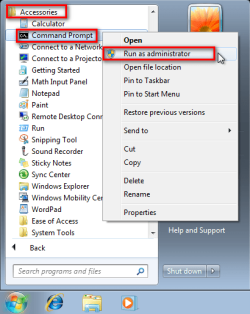
  3. Run Command Prompt as administrator
    .
    Audit_1.png
    .
  4. Type to Command Prompt: %windir%\System32\Sysprep\Sysprep.exe, and hit Enter
    .
    sysprep_start.png
    .
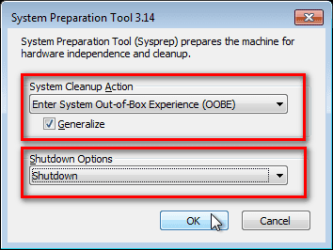
  5. In sysprep dialog that opens, choose System Cleanup Action as Enter System Out-of-Box-Experience (OOBE), select Generalize, select Shutdown Options Shutdown. Click OK
    .
    Sysprep_Run_and_generalize.png
    .
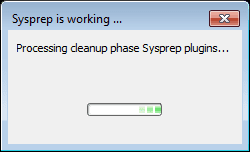
  6. Sysprep generalizes now your Windows 7 setup and shuts down your computer. Do not run any other programs during this phase!
    .
    Sysprep_Run_and_generalize_2.png
    .
    Sysprep_Run_and_generalize_3.png
    .
  7. Switch the main power of your PC off and install the new hardware OR dismount the hard disk(s) and mount it (them) to a new computer
  8. Boot the PC from sysprep generalized hard disk. You will notice Windows booting as if it was the first boot after installation, installing default drivers and updating registry. One or two reboots are needed, depending on your system specifications
    .

    Sysprep_Reinstalling_devices.png
    .
    Sysprep_Registry_settings.png
    .
    Sysprep_Reboot_needed.png
    .
  9. When Windows finally boots up, you will need to enter all information as if this really was a new, fresh installation
    .
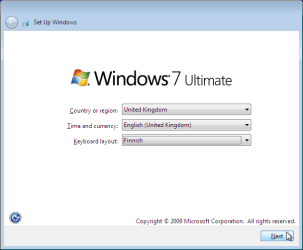
    Sysprep_First_boot_2.png
    .
  10. Because your old user profiles already exist, Windows does not accept your normal username, but instead you have to create a new temporary user. I use username Test for this purpose
    .
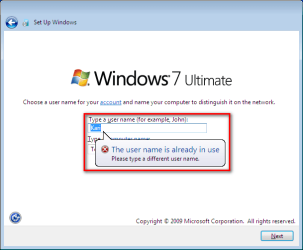
    Sysprep_First_boot_3.png
    .
  11. When login screen appears, choose your old user account to login
    .

    Sysprep_First_boot_5.png
    .
  12. Windows boots now to default OOBE first boot desktop, with default 800*600 resolution and default theme. All your installed applications are there, as well as your old user profiles and folders. Windows has installed the default drivers for your setup, you can update them if needed
    .
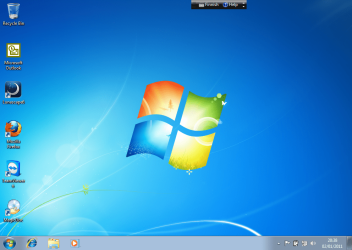
    Sysprep_First_boot_6.png
    .
  13. Go to Control Panel > User Accounts and delete the temporary user account (in this case Test) that you just created


METHOD TWO

Change the hard disk(s) or move Windows 7 setup to a new computer using third party imaging software

Use this method if you:
- Replace the HD containing Windows 7 on your old computer
- Move Windows 7 to a new HD on another computer
  1. Follow steps 1 through 5 above (method 1)
  2. Boot PC with an imaging CD/DVD (Paragon, Macrium etc.). See Macrium Reflect Free:at our sister site TenForums.com: Backup and Restore with Macrium Reflect Windows 10 Backup Restore Tutorials . Also see this post for a practical tip to create a Macrium system image.
  3. Create an image of your system
  4. Turn PC off, change the hard disk(s) and reboot with imaging application, restoring the image OR boot the new computer with imaging software and restore the image
  5. Continue from step 7 above (method 1)

This procedure is failsafe, and works every time. There is nothing to worry, but of course it is recommended to make a backup before trying this. I have even used this method when some serious driver issues caused the PC to constantly crash (BSOD), to reset all drivers to Windows defaults and then reinstalling them one by one to find the culprit.

   Note
What does Sysprep generalizing do to my Windows 7 setup?
  • All system specific information is removed or uninstalled
  • Security ID (SID) of your hardware setup is reseted
  • All system restore points are deleted
  • All event logs are deleted
  • All personalization is removed (taskbar, toolbars, folder options, start orb etc.)
  • Built-in administrator account is disabled (if it was enabled) and needs to be re-enabled after the transfer if needed

What happens when booting first time after sysprep generalizing?
  • First boot configuration is run
  • New SID is created
  • Re-arm counter is reseted if not already re-armed three times
  • Windows 7 is booted using first boot default drivers and settings


I have tested all above mentioned methods with all versions of Windows 7, from Starter to Enterprise. It works every time, with one exception: for reasons unknown to me, sysprep seems sometimes dislike Windows Media Player networking service, which is by default started every time Windows 7 starts. In about every third time I've done this, I've got an error message when trying to generalize:
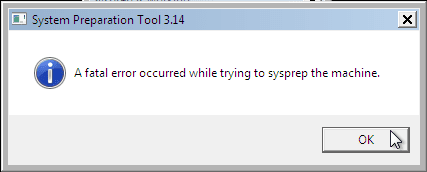
Sysprep_Fatal_Error.png

However, this is not a big problem. You just need to stop the WMP networking service, and run sysprep with generalize option again. You can stop the service in question by typing net stop WMPNetworkSvc to command prompt, and hitting Enter:

Sysprep_Stop_WMP_service.png

If you have any questions, do not hesitate to ask.

Happy computing!

Kari

EDIT: A Useful tip from xxxwea, as later confirmed by Victor:
Kari, just a suggestion.

You might note in the tutorial that if on first booting Windows can't finish configuring, a reboot into safe mode, then a normal reboot will allow it to finish successfully.

This has happened to me both times I used a sysprepped system drive in a new computer. I found the answer to this problem buried deep in this thread the first time I ran into it, and the same thing happened yesterday on a different computer.

It's a seemingly very silly solution, but it works. I do believe many people have abandoned their sysprep work when they encounter the problem.

I think the solution deserves more visibility.
 
Last edited:
success! just got it to work using Aomei, but I just used the regular system image-not the sysprep one. for simplicity and for my situation maybe it makes sense for me to just keep doing it the way I did w/o sysprep. Is there something I am missing here, for my specific situation is there some benefit to using sysprep as opposed to what I mentioned I did above "when I go to the new pc I load windows 7 first, install the LAN driver from disc and then install Aomei. "??? I am sure I will need to update & tweak a few things, plus activate my new windows key-I skipped this on the new PC... So far things seem to be working fine, but I will keep everyone posted...

Still wondering if there is an easier way "Is there an easier way to do this when I can somehow boot to my external HD on the new PC and initiate a system restore-like this but I need more than a CD option (due to system image size): AOMEI Backupper Helps to Create Bootable CD
 

My Computer My Computer

At a glance

win 7 64 bit
OS
win 7 64 bit
Freetvee, a couple of points that might clear up your confusion. And don't fret being confused at first, happened to me too.
1. Sysprep: this is done to strip off drivers that can cause the Windows system to fail if you try to boot it on a new computer with different hardware. If you're transferring a HD to the new PC the Windows systems on the HD is sysprepped first. If you are using an image for the new PC, you do the same sysprep on the old PC, then take an image and restore that image on the new PC. In either case sysprep should be set to shut down the PC upon completion.
If the PC's are identical in hardware, sysprep isn't needed. Just registration with MS.
2. Imaging. The Bootable CD you mention won't contain the image. It contains the imaging software.
It will boot to that interface, not Windows. For making the image you point at what you are imaging (old PC HD that has been sysprepped) and point it to where you want the image stored (your external HD.)
If your imaging software allows naming the image, call it Sysprepccyymmdd. Otherwise rename it to keep it identifiable. You should take an original image before you sysprep the HD, so you can restore the old computer back to its original look. Think you did that already, but learn to make your image using the bootable CD. It's not difficult. Take your time.
For restoring the image of the sysprepped HD you then connect your external HD to the new PC, and use that same CD to boot the new PC.
Then you point to the image of the sysprepped HD that you've created on the external HD, and point to your target partition on the new PC to do the restore of the image. Then you can boot the new PC from the HD. This is all assuming you know how to set boot order in your BIOS. I recommend setting the CD drive as 1st boot device, the C drive as 2nd. On my PC that gives a prompt of about 3 seconds to "hit any key" to boot to CD. Normally I ignore it and boots from the C drive. But if I want to boot from the CD I just hit a key. Yours may work differently, but you won't have trouble figuring it out.
 

My Computer My Computer

At a glance

Windows 7 Ultimate x64QuadCore Intel Core i7 920, 2666 MHz (20 x 133)6134 MB (DDR3-1333 DDR3 SDRAM)(2 - SLI) NVIDIA GeForce GTS 250 (1024 MB)
Computer Manufacturer/Model Number
Home Built
OS
Windows 7 Ultimate x64
CPU
QuadCore Intel Core i7 920, 2666 MHz (20 x 133)
Motherboard
Asus P6T
Memory
6134 MB (DDR3-1333 DDR3 SDRAM)
Graphics Card(s)
(2 - SLI) NVIDIA GeForce GTS 250 (1024 MB)
Sound Card
Onboard Realtek ALC888/1200 @ Intel 82801JB IC
Monitor(s) Displays
HDMII
Screen Resolution
1280 x 800
Hard Drives
Crucial M4 (64 GB SSD)
WD Caviar Blacks
WD5001AALS-00J7B1 ATA Device (465 GB)
WD5001AALS-00L3B2 ATA Device (465 GB)
WD Elements USB External (250 GB)
PSU
Corsair 550
Case
iStarUSA S-10000BL Black
Thanks for all of the details Victor, this clears up a lot & I apprecaite you help greatly!

1. I think the reason this worked for me was that my hardware virtually remained the same-which should normally be the case for my situation... It seems like this make my process even easier then-no need to sysprep if the hardware is staying the same, right? I might have a different motherboard model # but it is still an asrock mobo so basically the same-no worries then?

2. Soooooooo the bootable CD contains the imaging software, which means I can just create a bootable disk then and save even more time! If I skip all of the sysprep, can I just create the bootable CD within windows 7 like normal or do I need to do this differently?

Then on the new PC, if I understand correctly I can setup my bios to boot to CD (finally something I know how to do!), put my bootable CD I created into the new DVD drive and then it will kick me straight into the Aoemi UI where I can then select which system image I want to use to restore my new PC (old PC system image on my external HD), correct?

If the old PC has a HD partition C: & E: will it automatically keep the same partition/file locations on my new PC, or do I need to do something to accomplish this?

Most of the time installing "Standard SATA AHCI Controller" prior to swap gives you NO problems at all. After succesfull boot:

  • uninstall drivers no longer needed. See device manager
  • install drivers for new motherboard. Check device manager
But if your motherbaord dies all of a sudden you can't install "Standard SATA AHCI Controller" anymore. Then you have to use some physical to physical adjust OS software to install drivers (inject them) offline
 

My Computer My Computer

At a glance

Microsoft Windows 7 Home Premium 64-bits 7601...Intel(R) Core(TM) i3 CPU M 370 @ 2.40GHz4,00 GBATI Mobility Radeon HD 5400 Series
Computer type
Laptop
Computer Manufacturer/Model Number
ACER ASPIRE 5742G
OS
Microsoft Windows 7 Home Premium 64-bits 7601 Multiprocessor Free Service Pack 1
CPU
Intel(R) Core(TM) i3 CPU M 370 @ 2.40GHz
Motherboard
Acer Aspire 5742G
Memory
4,00 GB
Graphics Card(s)
ATI Mobility Radeon HD 5400 Series
Sound Card
(1) AMD High Definition Audio Device (2) Realtek High Defi
Screen Resolution
1366 x 768 x 32 bits (4294967296 colors) @ 60 Hz
Hard Drives
WDC WD5000BEVT-22ZAT0
Not understanding what this "Standard SATA AHCI Controller" is that you speak of? Is this something I should download somewhere and add onto my old PC before doing a system image of it, or is this built into the BIOS of my mobo or what??
 

My Computer My Computer

At a glance

win 7 64 bit
OS
win 7 64 bit
Not understanding what this "Standard SATA AHCI Controller" is that you speak of? Is this something I should download somewhere and add onto my old PC before doing a system image of it, or is this built into the BIOS of my mobo or what??
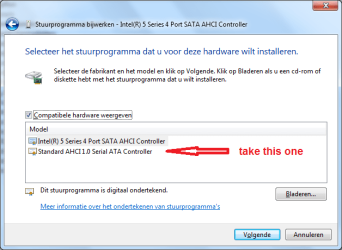
I assume your disk is a SATA disk and BIOS is in AHCI mode. Run device manager, expand "IDE ATA/API controllers" . Right click on your controller driver->update driver. "On my computer"->"pick from list". Put checkmark at "show compatible devices". Now select the standard compatible driver from microsoft

Translate from Dutch so maybe not 100% correct!
 

Attachments

  • Naamloos.png
    Naamloos.png
    21.8 KB · Views: 269

My Computer My Computer

At a glance

Microsoft Windows 7 Home Premium 64-bits 7601...Intel(R) Core(TM) i3 CPU M 370 @ 2.40GHz4,00 GBATI Mobility Radeon HD 5400 Series
Computer type
Laptop
Computer Manufacturer/Model Number
ACER ASPIRE 5742G
OS
Microsoft Windows 7 Home Premium 64-bits 7601 Multiprocessor Free Service Pack 1
CPU
Intel(R) Core(TM) i3 CPU M 370 @ 2.40GHz
Motherboard
Acer Aspire 5742G
Memory
4,00 GB
Graphics Card(s)
ATI Mobility Radeon HD 5400 Series
Sound Card
(1) AMD High Definition Audio Device (2) Realtek High Defi
Screen Resolution
1366 x 768 x 32 bits (4294967296 colors) @ 60 Hz
Hard Drives
WDC WD5000BEVT-22ZAT0
Not understanding what this "Standard SATA AHCI Controller" is that you speak of? Is this something I should download somewhere and add onto my old PC before doing a system image of it, or is this built into the BIOS of my mobo or what??
I assume your disk is a SATA disk and BIOS is in AHCI mode. Run device manager, expand "IDE ATA/API controllers" . Right click on your controller driver->update driver. "On my computer"->"pick from list". Put checkmark at "show compatible devices". Now select the standard compatible driver from microsoft

Translate from Dutch so maybe not 100% correct!

You are correct I am using Sata disk in AHCI mode. Are you saying to do this on the old PC before doing a system image-because it will prevent issues on the new PC? or are you saying to do this on the new PC after imaging it to make sure everything works properly? fyi-havent done any of this and it seems to be working fine currently-thinking if it ain't broke dont fix it maybe... ;-) Is this necessary only if I change the hard drive manufacturer or model # or why should I do this?
 

My Computer My Computer

At a glance

win 7 64 bit
OS
win 7 64 bit
Not understanding what this "Standard SATA AHCI Controller" is that you speak of? Is this something I should download somewhere and add onto my old PC before doing a system image of it, or is this built into the BIOS of my mobo or what??
I assume your disk is a SATA disk and BIOS is in AHCI mode. Run device manager, expand "IDE ATA/API controllers" . Right click on your controller driver->update driver. "On my computer"->"pick from list". Put checkmark at "show compatible devices". Now select the standard compatible driver from microsoft

Translate from Dutch so maybe not 100% correct!

You are correct I am using Sata disk in AHCI mode. Are you saying to do this on the old PC before doing a system image-because it will prevent issues on the new PC? or are you saying to do this on the new PC after imaging it to make sure everything works properly? fyi-havent done any of this and it seems to be working fine currently-thinking if it ain't broke dont fix it maybe... ;-) Is this necessary only if I change the hard drive manufacturer or model # or why should I do this?
You have to do it before imaging the old drive. For example the old mainboard has an intel sata chipset and win7 has an intel sata driver. Maybe the new system has another sata chipset..... the intel sata driver is totally confused and system crashes with stopcode 0x7B. It has nothing to do with harddisk itself!

If you didn't do it and new system is working fine.... no action is needed. Check device manager if all drivers are installed!
 

My Computer My Computer

At a glance

Microsoft Windows 7 Home Premium 64-bits 7601...Intel(R) Core(TM) i3 CPU M 370 @ 2.40GHz4,00 GBATI Mobility Radeon HD 5400 Series
Computer type
Laptop
Computer Manufacturer/Model Number
ACER ASPIRE 5742G
OS
Microsoft Windows 7 Home Premium 64-bits 7601 Multiprocessor Free Service Pack 1
CPU
Intel(R) Core(TM) i3 CPU M 370 @ 2.40GHz
Motherboard
Acer Aspire 5742G
Memory
4,00 GB
Graphics Card(s)
ATI Mobility Radeon HD 5400 Series
Sound Card
(1) AMD High Definition Audio Device (2) Realtek High Defi
Screen Resolution
1366 x 768 x 32 bits (4294967296 colors) @ 60 Hz
Hard Drives
WDC WD5000BEVT-22ZAT0
I assume your disk is a SATA disk and BIOS is in AHCI mode. Run device manager, expand "IDE ATA/API controllers" . Right click on your controller driver->update driver. "On my computer"->"pick from list". Put checkmark at "show compatible devices". Now select the standard compatible driver from microsoft

Translate from Dutch so maybe not 100% correct!

You are correct I am using Sata disk in AHCI mode. Are you saying to do this on the old PC before doing a system image-because it will prevent issues on the new PC? or are you saying to do this on the new PC after imaging it to make sure everything works properly? fyi-havent done any of this and it seems to be working fine currently-thinking if it ain't broke dont fix it maybe... ;-) Is this necessary only if I change the hard drive manufacturer or model # or why should I do this?
You have to do it before imaging the old drive. For example the old mainboard has an intel sata chipset and win7 has an intel sata driver. Maybe the new system has another sata chipset..... the intel sata driver is totally confused and system crashes with stopcode 0x7B. It has nothing to do with harddisk itself!

If you didn't do it and new system is working fine.... no action is needed. Check device manager if all drivers are installed!

got it, good to know. my system is still using intel, and even the same mobo-asrock (different model #) & HD manufacturer-just a different HD model # with 3TB as opposed to the old 2TB, so I guess I should be ok with out doing this?
 

My Computer My Computer

At a glance

win 7 64 bit
OS
win 7 64 bit
You are correct I am using Sata disk in AHCI mode. Are you saying to do this on the old PC before doing a system image-because it will prevent issues on the new PC? or are you saying to do this on the new PC after imaging it to make sure everything works properly? fyi-havent done any of this and it seems to be working fine currently-thinking if it ain't broke dont fix it maybe... ;-) Is this necessary only if I change the hard drive manufacturer or model # or why should I do this?
You have to do it before imaging the old drive. For example the old mainboard has an intel sata chipset and win7 has an intel sata driver. Maybe the new system has another sata chipset..... the intel sata driver is totally confused and system crashes with stopcode 0x7B. It has nothing to do with harddisk itself!

If you didn't do it and new system is working fine.... no action is needed. Check device manager if all drivers are installed!
got it, good to know. my system is still using intel, and even the same mobo-asrock (different model #) & HD manufacturer-just a different HD model # with 3TB as opposed to the old 2TB, so I guess I should be ok with out doing this?
If it works...it's fine
 

My Computer My Computer

At a glance

Microsoft Windows 7 Home Premium 64-bits 7601...Intel(R) Core(TM) i3 CPU M 370 @ 2.40GHz4,00 GBATI Mobility Radeon HD 5400 Series
Computer type
Laptop
Computer Manufacturer/Model Number
ACER ASPIRE 5742G
OS
Microsoft Windows 7 Home Premium 64-bits 7601 Multiprocessor Free Service Pack 1
CPU
Intel(R) Core(TM) i3 CPU M 370 @ 2.40GHz
Motherboard
Acer Aspire 5742G
Memory
4,00 GB
Graphics Card(s)
ATI Mobility Radeon HD 5400 Series
Sound Card
(1) AMD High Definition Audio Device (2) Realtek High Defi
Screen Resolution
1366 x 768 x 32 bits (4294967296 colors) @ 60 Hz
Hard Drives
WDC WD5000BEVT-22ZAT0
Freetvee, a couple of points that might clear up your confusion. And don't fret being confused at first, happened to me too.
1. Sysprep: this is done to strip off drivers that can cause the Windows system to fail if you try to boot it on a new computer with different hardware. If you're transferring a HD to the new PC the Windows systems on the HD is sysprepped first. If you are using an image for the new PC, you do the same sysprep on the old PC, then take an image and restore that image on the new PC. In either case sysprep should be set to shut down the PC upon completion.
If the PC's are identical in hardware, sysprep isn't needed. Just registration with MS.
2. Imaging. The Bootable CD you mention won't contain the image. It contains the imaging software.
It will boot to that interface, not Windows. For making the image you point at what you are imaging (old PC HD that has been sysprepped) and point it to where you want the image stored (your external HD.)
If your imaging software allows naming the image, call it Sysprepccyymmdd. Otherwise rename it to keep it identifiable. You should take an original image before you sysprep the HD, so you can restore the old computer back to its original look. Think you did that already, but learn to make your image using the bootable CD. It's not difficult. Take your time.
For restoring the image of the sysprepped HD you then connect your external HD to the new PC, and use that same CD to boot the new PC.
Then you point to the image of the sysprepped HD that you've created on the external HD, and point to your target partition on the new PC to do the restore of the image. Then you can boot the new PC from the HD. This is all assuming you know how to set boot order in your BIOS. I recommend setting the CD drive as 1st boot device, the C drive as 2nd. On my PC that gives a prompt of about 3 seconds to "hit any key" to boot to CD. Normally I ignore it and boots from the C drive. But if I want to boot from the CD I just hit a key. Yours may work differently, but you won't have trouble figuring it out.

Thanks for all of the details Victor, this clears up a lot & I apprecaite you help greatly!

1. I think the reason this worked for me was that my hardware virtually remained the same-which should normally be the case for my situation... It seems like this make my process even easier then-no need to sysprep if the hardware is staying the same, right? I might have a different motherboard model # but it is still an asrock mobo so basically the same-no worries then?

2. Soooooooo the bootable CD contains the imaging software, which means I can just create a bootable disk then and save even more time! If I skip all of the sysprep, can I just create the bootable CD within windows 7 like normal or do I need to do this differently?

Then on the new PC, if I understand correctly I can setup my bios to boot to CD (finally something I know how to do!), put my bootable CD I created into the new DVD drive and then it will kick me straight into the Aoemi UI where I can then select which system image I want to use to restore my new PC (old PC system image on my external HD), correct?

If the old PC has a HD partition C: & E: will it automatically keep the same partition/file locations on my new PC, or do I need to do something to accomplish this?
 

My Computer My Computer

At a glance

win 7 64 bit
OS
win 7 64 bit
If the old PC has a HD partition C: & E: will it automatically keep the same partition/file locations on my new PC, or do I need to do something to accomplish this?

If you use the built-in windows image backup software to backup/restore... the destination partitions will be exactly on the same spot on disk. So you CAN'T restore to a smaller disk! Drive letters are the same but you can always change them in disk management.

http://www.sevenforums.com/tutorials/663-backup-complete-computer-create-image-backup.html

http://www.sevenforums.com/tutorials/675-system-image-recovery.html
 
Last edited by a moderator:

My Computer My Computer

At a glance

Microsoft Windows 7 Home Premium 64-bits 7601...Intel(R) Core(TM) i3 CPU M 370 @ 2.40GHz4,00 GBATI Mobility Radeon HD 5400 Series
Computer type
Laptop
Computer Manufacturer/Model Number
ACER ASPIRE 5742G
OS
Microsoft Windows 7 Home Premium 64-bits 7601 Multiprocessor Free Service Pack 1
CPU
Intel(R) Core(TM) i3 CPU M 370 @ 2.40GHz
Motherboard
Acer Aspire 5742G
Memory
4,00 GB
Graphics Card(s)
ATI Mobility Radeon HD 5400 Series
Sound Card
(1) AMD High Definition Audio Device (2) Realtek High Defi
Screen Resolution
1366 x 768 x 32 bits (4294967296 colors) @ 60 Hz
Hard Drives
WDC WD5000BEVT-22ZAT0
[1. I think the reason this worked for me was that my hardware virtually remained the same-which should normally be the case for my situation... It seems like this make my process even easier then-no need to sysprep if the hardware is staying the same, right? I might have a different motherboard model # but it is still an asrock mobo so basically the same-no worries then?

2. Soooooooo the bootable CD contains the imaging software, which means I can just create a bootable disk then and save even more time! If I skip all of the sysprep, can I just create the bootable CD within windows 7 like normal or do I need to do this differently?

Then on the new PC, if I understand correctly I can setup my bios to boot to CD (finally something I know how to do!), put my bootable CD I created into the new DVD drive and then it will kick me straight into the Aoemi UI where I can then select which system image I want to use to restore my new PC (old PC system image on my external HD), correct?

If the old PC has a HD partition C: & E: will it automatically keep the same partition/file locations on my new PC, or do I need to do something to accomplish this?

If the image works without sysprepping, sysprep is unnecessary. The imaging software will direct you how to make its bootable CD. All I've seen were installed into Windows, and you make the bootable CD from there. Restoring the image will create the same partition as what was imaged. Just make sure the target drive is big enough to hold the original partition size.
 

My Computer My Computer

At a glance

Windows 7 Ultimate x64QuadCore Intel Core i7 920, 2666 MHz (20 x 133)6134 MB (DDR3-1333 DDR3 SDRAM)(2 - SLI) NVIDIA GeForce GTS 250 (1024 MB)
Computer Manufacturer/Model Number
Home Built
OS
Windows 7 Ultimate x64
CPU
QuadCore Intel Core i7 920, 2666 MHz (20 x 133)
Motherboard
Asus P6T
Memory
6134 MB (DDR3-1333 DDR3 SDRAM)
Graphics Card(s)
(2 - SLI) NVIDIA GeForce GTS 250 (1024 MB)
Sound Card
Onboard Realtek ALC888/1200 @ Intel 82801JB IC
Monitor(s) Displays
HDMII
Screen Resolution
1280 x 800
Hard Drives
Crucial M4 (64 GB SSD)
WD Caviar Blacks
WD5001AALS-00J7B1 ATA Device (465 GB)
WD5001AALS-00L3B2 ATA Device (465 GB)
WD Elements USB External (250 GB)
PSU
Corsair 550
Case
iStarUSA S-10000BL Black
[1. I think the reason this worked for me was that my hardware virtually remained the same-which should normally be the case for my situation... It seems like this make my process even easier then-no need to sysprep if the hardware is staying the same, right? I might have a different motherboard model # but it is still an asrock mobo so basically the same-no worries then?

2. Soooooooo the bootable CD contains the imaging software, which means I can just create a bootable disk then and save even more time! If I skip all of the sysprep, can I just create the bootable CD within windows 7 like normal or do I need to do this differently?

Then on the new PC, if I understand correctly I can setup my bios to boot to CD (finally something I know how to do!), put my bootable CD I created into the new DVD drive and then it will kick me straight into the Aoemi UI where I can then select which system image I want to use to restore my new PC (old PC system image on my external HD), correct?

If the old PC has a HD partition C: & E: will it automatically keep the same partition/file locations on my new PC, or do I need to do something to accomplish this?

If the image works without sysprepping, sysprep is unnecessary. The imaging software will direct you how to make its bootable CD. All I've seen were installed into Windows, and you make the bootable CD from there. Restoring the image will create the same partition as what was imaged. Just make sure the target drive is big enough to hold the original partition size.

Thanks for your thoughts folks. I used Aomei freeware and was very impressed-it worked well, was fast, and was pretty user friendly! Free Partition Software for Windows PCs and Servers I was even able to create a boot disk too which was awesome!!:D The only thing that didnt come across very well was the partitions. My old PC was: system, C: (software) & E: (open for storage), and the new PC showed up as: system, C: (software) & D: (open for storage)-the DVD drive took E: for some reason?!? Is there an easy way to fix this (move dvd to D: and storage drive to E:) that will not cause other issues, before I move forward?
 

My Computer My Computer

At a glance

win 7 64 bit
OS
win 7 64 bit
Thanks for your thoughts folks. I used Aomei freeware and was very impressed-it worked well, was fast, and was pretty user friendly! Free Partition Software for Windows PCs and Servers I was even able to create a boot disk too which was awesome!!:D The only thing that didnt come across very well was the partitions. My old PC was: system, C: (software) & E: (open for storage), and the new PC showed up as: system, C: (software) & D: (open for storage)-the DVD drive took E: for some reason?!? Is there an easy way to fix this (move dvd to D: and storage drive to E:) that will not cause other issues, before I move forward?

E has been moved. It is on another disk (other disk signature) and another beginsector. Windows can't find what win7 calls E (it is defined in registry). Because he doesn't he he assigns a free drive letter to new discovered disk. Most software only adjust C, and bootmenu.... otherwise system won't boot.

Repair it using disk management. Just rightclick on D and called it E. You have to rename E to P first (just example)
 

My Computer My Computer

At a glance

Microsoft Windows 7 Home Premium 64-bits 7601...Intel(R) Core(TM) i3 CPU M 370 @ 2.40GHz4,00 GBATI Mobility Radeon HD 5400 Series
Computer type
Laptop
Computer Manufacturer/Model Number
ACER ASPIRE 5742G
OS
Microsoft Windows 7 Home Premium 64-bits 7601 Multiprocessor Free Service Pack 1
CPU
Intel(R) Core(TM) i3 CPU M 370 @ 2.40GHz
Motherboard
Acer Aspire 5742G
Memory
4,00 GB
Graphics Card(s)
ATI Mobility Radeon HD 5400 Series
Sound Card
(1) AMD High Definition Audio Device (2) Realtek High Defi
Screen Resolution
1366 x 768 x 32 bits (4294967296 colors) @ 60 Hz
Hard Drives
WDC WD5000BEVT-22ZAT0
Thanks for your thoughts folks. I used Aomei freeware and was very impressed-it worked well, was fast, and was pretty user friendly! Free Partition Software for Windows PCs and Servers I was even able to create a boot disk too which was awesome!!:D The only thing that didnt come across very well was the partitions. My old PC was: system, C: (software) & E: (open for storage), and the new PC showed up as: system, C: (software) & D: (open for storage)-the DVD drive took E: for some reason?!? Is there an easy way to fix this (move dvd to D: and storage drive to E:) that will not cause other issues, before I move forward?

E has been moved. It is on another disk (other disk signature) and another beginsector. Windows can't find what win7 calls E (it is defined in registry). Because he doesn't he he assigns a free drive letter to new discovered disk. Most software only adjust C, and bootmenu.... otherwise system won't boot.

Repair it using disk management. Just rightclick on D and called it E. You have to rename E to P first (just example)

Thanks, I just did that and then got a pop up at the end asking “Disk or partition properties were changed. Would you like to reload the properties?” Should I select yes or no??
 

My Computer My Computer

At a glance

win 7 64 bit
OS
win 7 64 bit
Thanks for your thoughts folks. I used Aomei freeware and was very impressed-it worked well, was fast, and was pretty user friendly! Free Partition Software for Windows PCs and Servers I was even able to create a boot disk too which was awesome!!:D The only thing that didnt come across very well was the partitions. My old PC was: system, C: (software) & E: (open for storage), and the new PC showed up as: system, C: (software) & D: (open for storage)-the DVD drive took E: for some reason?!? Is there an easy way to fix this (move dvd to D: and storage drive to E:) that will not cause other issues, before I move forward?

E has been moved. It is on another disk (other disk signature) and another beginsector. Windows can't find what win7 calls E (it is defined in registry). Because he doesn't he he assigns a free drive letter to new discovered disk. Most software only adjust C, and bootmenu.... otherwise system won't boot.

Repair it using disk management. Just rightclick on D and called it E. You have to rename E to P first (just example)

Thanks, I just did that and then got a pop up at the end asking “Disk or partition properties were changed. Would you like to reload the properties?” Should I select yes or no??
Select yes
 

My Computer My Computer

At a glance

Microsoft Windows 7 Home Premium 64-bits 7601...Intel(R) Core(TM) i3 CPU M 370 @ 2.40GHz4,00 GBATI Mobility Radeon HD 5400 Series
Computer type
Laptop
Computer Manufacturer/Model Number
ACER ASPIRE 5742G
OS
Microsoft Windows 7 Home Premium 64-bits 7601 Multiprocessor Free Service Pack 1
CPU
Intel(R) Core(TM) i3 CPU M 370 @ 2.40GHz
Motherboard
Acer Aspire 5742G
Memory
4,00 GB
Graphics Card(s)
ATI Mobility Radeon HD 5400 Series
Sound Card
(1) AMD High Definition Audio Device (2) Realtek High Defi
Screen Resolution
1366 x 768 x 32 bits (4294967296 colors) @ 60 Hz
Hard Drives
WDC WD5000BEVT-22ZAT0
all is working well, thanks!
 

My Computer My Computer

At a glance

win 7 64 bit
OS
win 7 64 bit
Re Arm?

When I boot windows on the new computer after using sysrep, will I have to re enter my windows product key, or what?
 

My Computer My Computer

At a glance

Windows 7 Home Premium 64bitPentium
Computer type
PC/Desktop
Computer Manufacturer/Model Number
Lenevo
OS
Windows 7 Home Premium 64bit
CPU
Pentium
This quote from the beginning of the tutorial:

   Warning
Using this method causes Windows 7 to lose all activation information, and it needs to be reactivated afterwards. If your Windows 7 is an OEM version, you might not be able to reactivate afterwards, at least not without phone activation option.


All activation information will be lost after sysprepping with the generalize switch, so yes you need to reactivate using a valid product key.

Kari
 

My Computer My Computer

At a glance

Windows 10 Pro x64 EN-GB1.6 GHz Intel Core i7-720QM Processor6 GBATI Mobility Radeon HD 5850 Graphics
Computer type
Laptop
Computer Manufacturer/Model Number
HP ENVY 17-1150eg
OS
Windows 10 Pro x64 EN-GB
CPU
1.6 GHz Intel Core i7-720QM Processor
Memory
6 GB
Graphics Card(s)
ATI Mobility Radeon HD 5850 Graphics
Sound Card
Beats sound system with integrated subwoofer
Monitor(s) Displays
17" laptop display, 22" LED and 32" Full HD TV through HDMI
Screen Resolution
1600*900 (1), 1920*1080 (2&3)
Hard Drives
Internal: 2 x 500 GB SATA Hard Disk Drive 7200 rpm
External: 2TB for backups, 3TB USB3 network drive for media
Cooling
As Envy runs a bit warm, I have it on a Cooler Master pad
Keyboard
Logitech diNovo Media Desktop Laser (bluetooth)
Mouse
Logitech Performance Mouse MX
Internet Speed
50/10 Mbps VDSL
Antivirus
Windows Defender 4.3.9431.0
Browser
Maxthon 3.5.2., IE11
This is a really useful article, but . . .

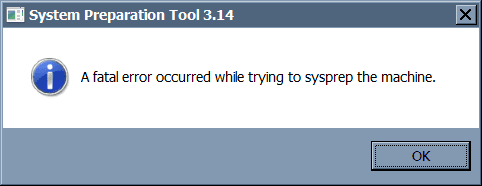
When I try to use sysprep on my Win7 machine I get the error below. I disabled WMPNetworkSvc as suggested in the writeup. I confess I haven't read all 500 posts in this thread but I've googled the web and used the three or four suggestions I found for fixing this problem, but none worked. I suggest someone add a list of known fixes for this problem to the main article in the area where disabling WMPNetworkSvc was suggested
 

Attachments

  • 0024.png
    0024.png
    3.3 KB · Views: 339

My Computer My Computer

At a glance

Win7 Home Premium 64 bitAMD4gbbuilt in
Computer type
PC/Desktop
Computer Manufacturer/Model Number
Custom Build Gigabyte
OS
Win7 Home Premium 64 bit
CPU
AMD
Motherboard
GA-MA78GM-S2H ver 1.1
Memory
4gb
Graphics Card(s)
built in
Hard Drives
Seagate 500 gig SATA 6
Seagate 1 tb SATA
Western Digital 1 tb IDE
Antivirus
Avira
Browser
Firefox
Back
Top