
BIOS; keyboard unresponsive at certain key points

eyc

New member
Local time
1:23 PM
Messages
26
Hi all. I have been agonizing over this issue for a couple days. I hope someone can help me find some closure on this.

ISSUE: I cannot enter BIOS when the BIOS configuration jumper is set to 'normal'; it seems that the keyboard is unresponsive. If I set the jumper to 'configure' the system automatically enters BIOS, but the keyboard is then unresponsive.

I recentely built a new computer:

MOBO: Intel DG45FC.
CPU: Intel E7400
RAM: Corsair XMS2 (2 x 2 GB) PC2-6400 DDR2 800
HDD: Western Digital Blue Caviar 250GB
ODD: Sony CD/DVD drive

On its face, everything is working just fine. But, I want to enter the BIOS for various reasons, one of which is to update it. As stated, when the BIOS configuration jumper is set to 'normal,' I will repeatedly hit F2, but nothing happens.

If I put the jumper to 'configure,' I get pushed into BIOS automatically, but the keyboard is unresponsive. In both instances, the keyboard has power, but it just doesn't work. Keyboard type: Logitech Illuminated wired USB keyboard.
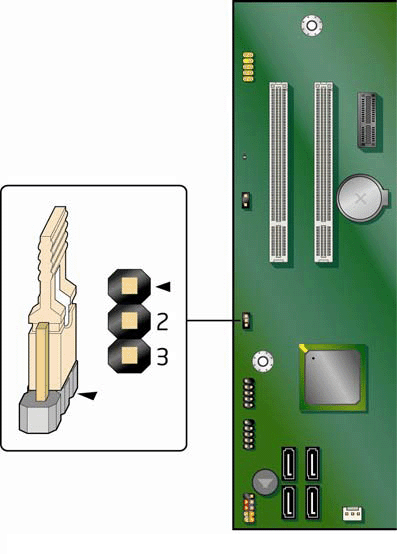
yvnK2.gif


I tried resetting the CMOS - didn't work. I tried updating the BIOS with the latest BIOS update from Intel (express method through Windows environment). The update went through, but it still doesn't work. I tested a new keyboard - didn't work.

I researched online and found ONE nearly identical issue someone was having with their Intel board. See System Setup BIOS Freezes! urgent - Intel® Software Network.

But, they ultimately resolved it by simply updating the BIOS. Once they updated the BIOS, it would recognize the keyboard at all critical times.

Can anyone shed some light on this? I am kind of at a loss.

Thanks much in advance.
 
Last edited:

My Computer

Computer Manufacturer/Model Number
Shuttle SG31G2 Barebones
OS
Windows 7
CPU
Intel Core 2 Quad Q9550 @ 2.83GHz, 12MB Cache
Motherboard
Stock Intel G31
Memory
G.SKILL 4GB (2 x 2GB) DDR2 800
Graphics Card(s)
Onboard GMA 3100
Sound Card
Realtec ALC888
Monitor(s) Displays
Samsung 2333sw 23"
Screen Resolution
1920 x 1080
Hard Drives
Western Digital Caviar Black 640GB 7200 RPM
Hi

If you are using a wireless keyboard,try a PS2 or USB.
 

My Computer

OS
ME/XP/Vista/Win7
@theog -- I am using a wired USB keyboard (Logitech Illuminated Keyboard). I will try to find another (more basic) keyboard and see if that makes a difference. Thanks for the input.
 

My Computer

Computer Manufacturer/Model Number
Shuttle SG31G2 Barebones
OS
Windows 7
CPU
Intel Core 2 Quad Q9550 @ 2.83GHz, 12MB Cache
Motherboard
Stock Intel G31
Memory
G.SKILL 4GB (2 x 2GB) DDR2 800
Graphics Card(s)
Onboard GMA 3100
Sound Card
Realtec ALC888
Monitor(s) Displays
Samsung 2333sw 23"
Screen Resolution
1920 x 1080
Hard Drives
Western Digital Caviar Black 640GB 7200 RPM
Is there any particular reason you want to update the BIOS? What problems do you expect updating to solve?
 

My Computer

Computer type
PC/Desktop
Computer Manufacturer/Model Number
Ignatz Special; 4 speed manual gearbox; factory air conditioning; one of one
OS
Windows 7 Home Premium SP1, 64-bit
CPU
Intel Skylake i5-6600K, not overclocked
Motherboard
AsRock Z170M Extreme 4, micro ATX
Memory
8 GB HyperX DDR4-2666 (2 x 4 GB)
Graphics Card(s)
none; graphics are integrated on CPU
Sound Card
onboard: Realtek ALC1150; external: USB Behringer UF0-202
Monitor(s) Displays
Dell S2340M 23 inch IPS
Screen Resolution
1600 x 900
Hard Drives
System: Crucial MX100 series SSD, 128 GB;
Data: Samsung Spinpoint 103SJ, 1 TB;
Backup: WD Caviar Green WD30EZRX-00D8PB0, 3 TB
PSU
Rosewill SilentNight 500 watt fanless, semi-modular
Case
Antec Solo II
Cooling
Noctua NH-U12S; Noctua F12 intake, Noctua S12A exhaust
Keyboard
Microsoft 200 6JH-00001 USB
Mouse
Dell or Microsoft optical wired; USB
Antivirus
Microsoft Security Essentials and Malwarebytes Premium
Browser
Pale Moon
Other Info
All fans PWM; speeds at idle: CPU circa 500 rpm; intake circa 600 rpm; exhaust circa 600 rpm; CPU temps 27 idle and 47 C load in a warm room (27 C/81 F) when running Intel Extreme Tuning Utility stress test.
Is there any particular reason you want to update the BIOS? What problems do you expect updating to solve?

Good question. I'm actually not sure. I am pretty new to building computers. I just thought it would be the most prudent thing to do. I also have a strange "unkown" PCI device in my device manager. And I thought updating the BIOS would help get rid of it.

Also, I'm sending the computer to California (from Chicago), and I wanted to make sure that it was all buttoned up before sending it along, so that if anyone needed to troubleshoot it, it would be ready to go. I figured that updating the BIOS would be a logical step towards acheiving that goal.

Perhaps I should just ignore it?
 

My Computer

Computer Manufacturer/Model Number
Shuttle SG31G2 Barebones
OS
Windows 7
CPU
Intel Core 2 Quad Q9550 @ 2.83GHz, 12MB Cache
Motherboard
Stock Intel G31
Memory
G.SKILL 4GB (2 x 2GB) DDR2 800
Graphics Card(s)
Onboard GMA 3100
Sound Card
Realtec ALC888
Monitor(s) Displays
Samsung 2333sw 23"
Screen Resolution
1920 x 1080
Hard Drives
Western Digital Caviar Black 640GB 7200 RPM
BIOS updates are not to be taken lightly and are generally NOT done as a matter of course or as part of normal maintenance.

They are recommended when you are having specific issues and have very good reason to believe (typically from documentation by the BIOS provider) that the update will resolve the specific issue. They are not recommended as a "well, maybe it will help" or "well, it can't hurt" type of thing. If you can't enumerate and document why you would do it, don't. I've had PCs run on the same BIOS for their entire working lives.

I wouldn't get overly concerned about the unknown PCI device either. What does it prevent you from doing that your PC could otherwise do, particularly when you have (apparently) no good reason other than hope to believe that a BIOS update might resolve it?

You should certainly do what you need to do to be able to enter the BIOS and make whatever changes you need to make. So, I would get that resolved. But I wouldn't update the BIOS given that you don't know whether it would accomplish anything.
 

My Computer

Computer type
PC/Desktop
Computer Manufacturer/Model Number
Ignatz Special; 4 speed manual gearbox; factory air conditioning; one of one
OS
Windows 7 Home Premium SP1, 64-bit
CPU
Intel Skylake i5-6600K, not overclocked
Motherboard
AsRock Z170M Extreme 4, micro ATX
Memory
8 GB HyperX DDR4-2666 (2 x 4 GB)
Graphics Card(s)
none; graphics are integrated on CPU
Sound Card
onboard: Realtek ALC1150; external: USB Behringer UF0-202
Monitor(s) Displays
Dell S2340M 23 inch IPS
Screen Resolution
1600 x 900
Hard Drives
System: Crucial MX100 series SSD, 128 GB;
Data: Samsung Spinpoint 103SJ, 1 TB;
Backup: WD Caviar Green WD30EZRX-00D8PB0, 3 TB
PSU
Rosewill SilentNight 500 watt fanless, semi-modular
Case
Antec Solo II
Cooling
Noctua NH-U12S; Noctua F12 intake, Noctua S12A exhaust
Keyboard
Microsoft 200 6JH-00001 USB
Mouse
Dell or Microsoft optical wired; USB
Antivirus
Microsoft Security Essentials and Malwarebytes Premium
Browser
Pale Moon
Other Info
All fans PWM; speeds at idle: CPU circa 500 rpm; intake circa 600 rpm; exhaust circa 600 rpm; CPU temps 27 idle and 47 C load in a warm room (27 C/81 F) when running Intel Extreme Tuning Utility stress test.
BIOS updates are not to be taken lightly and are generally NOT done as a matter of course or as part of normal maintenance.

They are recommended when you are having specific issues and have very good reason to believe (typically from documentation by the BIOS provider) that the update will resolve the specific issue. They are not recommended as a "well, maybe it will help" or "well, it can't hurt" type of thing. If you can't enumerate and document why you would do it, don't. I've had PCs run on the same BIOS for their entire working lives.

I wouldn't get overly concerned about the unknown PCI device either. What does it prevent you from doing that your PC could otherwise do, particularly when you have (apparently) no good reason other than hope to believe that a BIOS update might resolve it?

You should certainly do what you need to do to be able to enter the BIOS and make whatever changes you need to make. So, I would get that resolved. But I wouldn't update the BIOS given that you don't know whether it would accomplish anything.

That is sound advice. Thank you. As you noted, I need to determine whether I should even pursue the issue anymore. At the end of the day, the computer works just fine. The only thing I cannot do is enter the BIOS. I would never need to overclock. But, maybe some day, I'll want to change the boot priority (the only other imagineable thing I would need BIOS for). I'll try some more troubleshooting when I get back home. Thanks again everyone.
 

My Computer

Computer Manufacturer/Model Number
Shuttle SG31G2 Barebones
OS
Windows 7
CPU
Intel Core 2 Quad Q9550 @ 2.83GHz, 12MB Cache
Motherboard
Stock Intel G31
Memory
G.SKILL 4GB (2 x 2GB) DDR2 800
Graphics Card(s)
Onboard GMA 3100
Sound Card
Realtec ALC888
Monitor(s) Displays
Samsung 2333sw 23"
Screen Resolution
1920 x 1080
Hard Drives
Western Digital Caviar Black 640GB 7200 RPM
Have you always used f2 to enter the bios cause I have to hit delete to enter mine. Probaly a dumb question but just wondering.
 

My Computer

Computer Manufacturer/Model Number
Self Built
OS
Windows 7 ultimate 64 bit / XP Home sp3
CPU
intel Core 2 Duo E8400 3.0ghz
Motherboard
Asus P5ND bios 1401
Memory
8 gigs 1066 OCZ Fata1ty
Graphics Card(s)
EVGA GTX 580 Call of Duty Black Ops Edition
Sound Card
Creative Soundblaster Audigy 2zs
Monitor(s) Displays
Asus 24in LCD's 2MS X2
Screen Resolution
1920x1080p @60Hz
Hard Drives
WD Caviar 500 Black/ WD Caviar 200 Blue
PSU
OCZ 700W GameXtreme
Case
NZXT Apollo
Cooling
Corsair H50 CPU/120mm x3 /60mm x2 /Corsair Dominator Ram
Keyboard
Logitech Bluetooth Wireless MX5000
Mouse
Logitech Bluetooth Wireless MX1000
Internet Speed
Download 19.83 Upload 0.97
Other Info
Logitech Z2300 Speakers/ Bose Noise Cancelling Headphones/Avermedia PCI-e Hybrid TV Bravo/Epson NX415 all in one/ 4 Port Powered USB Hub/ LG 10x Bluray Burner /TSST Corp DVDRW External
I built the computer from scratch with an Intel mobo just yesterday. The splash screen says "Press F2 to enter BIOS," but I never bothered trying another key (i.e., F10, del, etc.)

I'll give it a shot, but I'm pretty sure it is something other than that, as the keyboard is unresponsive when I'm in the configure mode too.
 

My Computer

Computer Manufacturer/Model Number
Shuttle SG31G2 Barebones
OS
Windows 7
CPU
Intel Core 2 Quad Q9550 @ 2.83GHz, 12MB Cache
Motherboard
Stock Intel G31
Memory
G.SKILL 4GB (2 x 2GB) DDR2 800
Graphics Card(s)
Onboard GMA 3100
Sound Card
Realtec ALC888
Monitor(s) Displays
Samsung 2333sw 23"
Screen Resolution
1920 x 1080
Hard Drives
Western Digital Caviar Black 640GB 7200 RPM
What BIOS do you currently have?

Here is a list of recent BIOSes for that board, with some detail on what each is supposed to fix:

http://downloadmirror.intel.com/18173/eng/ID_0117_ReleaseNotes.pdf

Here is what it says about the most recent BIOS from September:

BIOS Version 0117

About This Release:
• September 27, 2009
• IDG4510H.86A.0117.2009.0927.1107
• ME Firmware Revision: 1129 SKU4
• Integrated Graphics Option ROM Revision: 1800
• SATA RAID Option ROM Revision: 8.8.0.1009
• PXE LAN Option ROM Revision: Intel(R) Boot Agent GE v1.3.27

New Fixes/Features:
• Fixed issue where the system would be unrecoverable if unsuitable
manual memory settings are used.
• Fixed issue where system is unable to boot to hard drive when Boot
Type is set to Advanced.
• Fixed issue where Express BIOS Update in silent mode fails in
Windows* Vista with Service Pack 2.
• Fixed issue where the BIOS Setup Compliance Test failed.
• Fixed issue with POST code 51 when using certain wireless
keyboard.


The last bullet may or may not refer to your issue?
 

My Computer

Computer type
PC/Desktop
Computer Manufacturer/Model Number
Ignatz Special; 4 speed manual gearbox; factory air conditioning; one of one
OS
Windows 7 Home Premium SP1, 64-bit
CPU
Intel Skylake i5-6600K, not overclocked
Motherboard
AsRock Z170M Extreme 4, micro ATX
Memory
8 GB HyperX DDR4-2666 (2 x 4 GB)
Graphics Card(s)
none; graphics are integrated on CPU
Sound Card
onboard: Realtek ALC1150; external: USB Behringer UF0-202
Monitor(s) Displays
Dell S2340M 23 inch IPS
Screen Resolution
1600 x 900
Hard Drives
System: Crucial MX100 series SSD, 128 GB;
Data: Samsung Spinpoint 103SJ, 1 TB;
Backup: WD Caviar Green WD30EZRX-00D8PB0, 3 TB
PSU
Rosewill SilentNight 500 watt fanless, semi-modular
Case
Antec Solo II
Cooling
Noctua NH-U12S; Noctua F12 intake, Noctua S12A exhaust
Keyboard
Microsoft 200 6JH-00001 USB
Mouse
Dell or Microsoft optical wired; USB
Antivirus
Microsoft Security Essentials and Malwarebytes Premium
Browser
Pale Moon
Other Info
All fans PWM; speeds at idle: CPU circa 500 rpm; intake circa 600 rpm; exhaust circa 600 rpm; CPU temps 27 idle and 47 C load in a warm room (27 C/81 F) when running Intel Extreme Tuning Utility stress test.

My Computer

Computer type
PC/Desktop
Computer Manufacturer/Model Number
Ignatz Special; 4 speed manual gearbox; factory air conditioning; one of one
OS
Windows 7 Home Premium SP1, 64-bit
CPU
Intel Skylake i5-6600K, not overclocked
Motherboard
AsRock Z170M Extreme 4, micro ATX
Memory
8 GB HyperX DDR4-2666 (2 x 4 GB)
Graphics Card(s)
none; graphics are integrated on CPU
Sound Card
onboard: Realtek ALC1150; external: USB Behringer UF0-202
Monitor(s) Displays
Dell S2340M 23 inch IPS
Screen Resolution
1600 x 900
Hard Drives
System: Crucial MX100 series SSD, 128 GB;
Data: Samsung Spinpoint 103SJ, 1 TB;
Backup: WD Caviar Green WD30EZRX-00D8PB0, 3 TB
PSU
Rosewill SilentNight 500 watt fanless, semi-modular
Case
Antec Solo II
Cooling
Noctua NH-U12S; Noctua F12 intake, Noctua S12A exhaust
Keyboard
Microsoft 200 6JH-00001 USB
Mouse
Dell or Microsoft optical wired; USB
Antivirus
Microsoft Security Essentials and Malwarebytes Premium
Browser
Pale Moon
Other Info
All fans PWM; speeds at idle: CPU circa 500 rpm; intake circa 600 rpm; exhaust circa 600 rpm; CPU temps 27 idle and 47 C load in a warm room (27 C/81 F) when running Intel Extreme Tuning Utility stress test.
For the sake of creating a record in case anyone else has this problem, I wanted to report the fix.

It was the keyboard.

The Logitech Illuminated USB keyboard did not work. I used a basic stock HP USB keyboard, and all my issues were resolved. Thanks, everyone.
 

My Computer

Computer Manufacturer/Model Number
Shuttle SG31G2 Barebones
OS
Windows 7
CPU
Intel Core 2 Quad Q9550 @ 2.83GHz, 12MB Cache
Motherboard
Stock Intel G31
Memory
G.SKILL 4GB (2 x 2GB) DDR2 800
Graphics Card(s)
Onboard GMA 3100
Sound Card
Realtec ALC888
Monitor(s) Displays
Samsung 2333sw 23"
Screen Resolution
1920 x 1080
Hard Drives
Western Digital Caviar Black 640GB 7200 RPM
For the sake of creating a record in case anyone else has this problem, I wanted to report the fix.

It was the keyboard.

The Logitech Illuminated USB keyboard did not work. I used a basic stock HP USB keyboard, and all my issues were resolved. Thanks, everyone.

HI EYC

Actually it is both the keyboard and the bios. That bios has a bug when using a usb keyboard

Hmm.. . after a bit more digging this weekend I have new revelations.. . The issue is related to whether or not a keyboard/ mouse is connected to one of the computer's usb ports.

Hope this helps

Ken J+
 

My Computer

Computer Manufacturer/Model Number
HP Pavillion dv-7 1005 Tx
OS
Win 8 Release candidate 8400
CPU
[email protected]
Memory
4 gigs
Graphics Card(s)
Nvidia 9600M
Sound Card
HD built-in
Monitor(s) Displays
17" Wxga
Screen Resolution
1440x900
Cooling
none
Internet Speed
45Mb down 5Mb up
Back
Top