Dual Boot Installation with Windows 7 and XP

How to Setup a Dual Boot Installation with Windows 7 and XP


   Information
This will show you how to install Windows 7 and XP to dual boot with when you already have either Windows 7 or XP installed first.
   Note
With a dual boot installaton, you will have two operating systems (OS) installed. When you start the computer, you will have the choice to choose which OS you would like to start up to. This method is the easiest way of doing a dual boot with these two operating systems.
   Tip
When dual booting with another OS (ex: Vista or XP), you may not always have that OS partition show up in Computer with a driver letter in Windows 7. If this happens, then you will just need to add a drive letter to the OS (ex: Vista or XP) partition in Windows 7 Disk Management for it to show up in Computer with a driver letter.
   Warning
To stop XP from deleting your Windows 7 System Restore Points everytime XP is started, then see System Restore Points - Stop XP Dual Boot Delete to hide Windows 7 from XP.

Windows 7 Minimum Hardware Requirements


NOTE: For more information on this, see: Windows 7 system requirements
  • 1 GHz 32-bit or 64-bit processor
  • 1 GB RAM for 32-bit Windows 7 OR 2 GB RAM for 64-bit Windows 7
  • 16 GB available disk space 32-bit Windows 7 OR 20 GB for 64-bit Windows 7
  • Support for DirectX 9 graphics with 128 MB memory (in order to enable Aero theme)
  • DVD-R/W Drive
  • Internet or phone access to activate Windows 7.
Windows XP Minimum Hardware Requirements

NOTE: For more information on this, see: System requirements for Windows XP operating systems
  • PC with 300 megahertz (MHz) or higher processor clock speed recommended; 233-MHz minimum required;* Intel Pentium/Celeron family, AMD K6/Athlon/Duron family, or compatible processor recommended
  • 128 megabytes (MB) of RAM or higher recommended (64 MB minimum supported; may limit performance and some features)
  • 1.5 gigabyte (GB) of available hard disk space.*
  • Super VGA (800 × 600) or higher resolution video adapter and monitor
  • CD-ROM or DVD drive
  • Keyboard and Microsoft Mouse or compatible pointing device
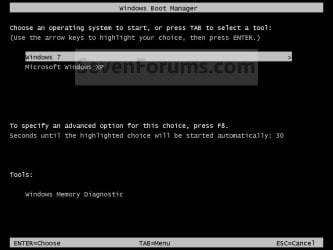
EXAMPLE: Windows Boot Manager
NOTE: This is the boot screen where you select what operating system that you would like to start. By default, you have 30 seconds to choose another operating system before the default operating system will start automatically.
Example.jpg


OPTION ONE

When XP is Installed First


NOTE: If you have a RAID setup, you will need to have the Windows 7 RAID drivers on a USB flash drive available to select and load while installing Windows 7.
1. Do step 2 or 3 below for where you wanted to install Windows 7 at.

2. To Create a New Partition from the XP Hard Disk Drive
A) With your Windows 7 installation disc boot into the Command Prompt from the System Recovery Options screen.
NOTE: Make sure that the CD/DVD drive is selected first in the boot order in the BIOS.

B) In the command prompt, select and shrink the XP volume by how many MB (1024 MB = 1 GB) you want to have for this Windows 7 partition. (See screenshot below)
NOTE: You would do steps 2 to 9 in METHOD TWO at that link. Windows 7 will need a minimum of 16 GB (16384 MB).
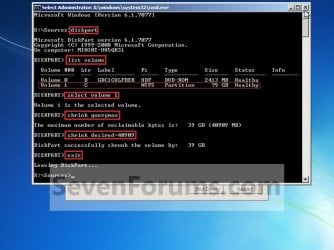
XP-W7_1.jpg
C) Click on the X at the top right corner to close the command prompt. (See screenshot above)

D) Click on the X at the top right corner to close System Recovery Options. (See screenshot below)
XP-W7_2.jpg
E) Go to step 4.
3. To Use a Separate Hard Disk Drive than the XP Drive
A) Boot from your Windows 7 installation disc.
NOTE: Make sure that the CD/DVD drive is selected first in the boot order in the BIOS.
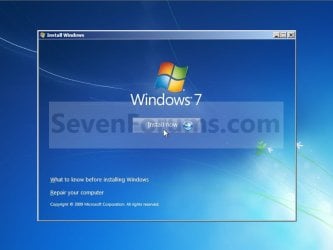
4. Click on the Install now button. (See screenshot below)
XP-W7_3.jpg
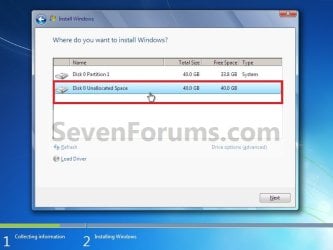
5. When you get to this point, select the partition (step 2) or hard drive to install Windows 7 on. (See screenshot below)
XP-W7_4.jpg
6. Finish installing Windows 7.
NOTE: You would start at step 9 in that link to finish installing Windows 7.

7. When finished, restart the computer to have the option to boot from XP (Earlier Verision of Windows) or Windows 7. (See screenshot below)

   Note
If you are only booting into Windows 7 and do not have XP listed in the Windows Boot Manager, then you can install only EasyBCD (step 8 Option Two below) to add XP (or Windows 7) while started in Windows 7 the same way to the boot list.

Example.jpg


OPTION TWO

When Windows 7 is Installed First


   Warning

1. To Create a New Partition from the Windows 7 Hard Disk Drive
NOTE: If you want to install XP on a separate internal hard drive instead, then skip this step and go to step 2.
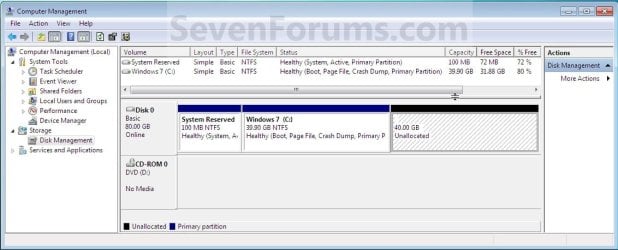
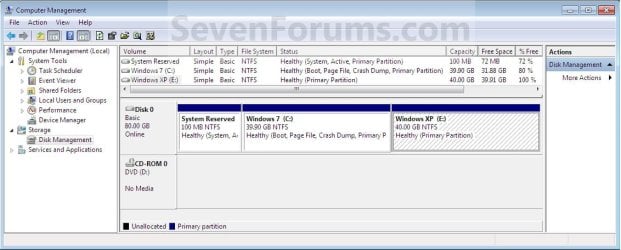
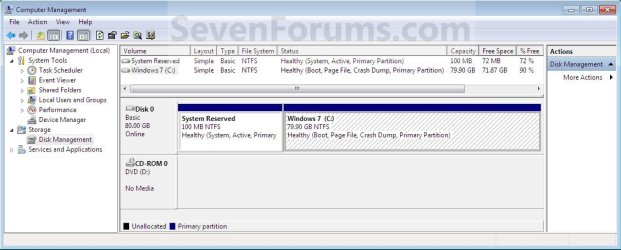
A) In Windows 7, select and shrink the Windows 7 volume in Disk Management by how many MB (1024 MB = 1 GB) you want to have for this XP partition. (See screenshots below)
NOTE: You would do all of Method One at that link.
W7-XP-1.jpg

W7-XP-2.jpg

W7-XP-3.jpg
2. Insert your XP installation disc, then restart the computer and press any key to boot from it when prompted. (See screenshot below)
NOTE: Make sure that the CD/DVD drive is selected first in the boot order in the BIOS.

Step1.jpg
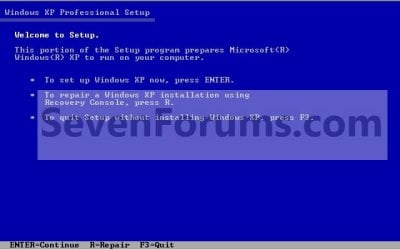
3. From XP Setup, Press Enter. (See screenshot below)


   Warning

W7-XP-4.jpg
4. Press F8. (See screenshot below)
NOTE: On some multimedia keyboards, you may need to press the F-Lock or Function key before pressing F8.
W7-XP-5.jpg
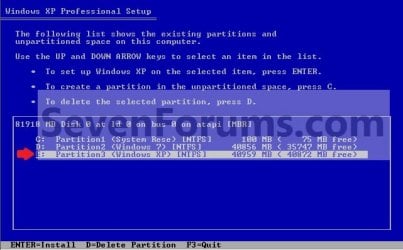
5. Select the partition (step 1) or hard drive that you want to install XP on using the arrow keys and press Enter.
W7-XP-6.jpg
6. Finish installing XP.


   Tip
If you get Error loading Operating System after XP restarts:
  • Using your Windows 7 installation disc, boot to the command prompt at startup.
  • Type in these comands below, and press enter after each one.
    • bootrec /FixMbr
    • bootrec /FixBoot
    • bootrec /RebuildBcd
  • Exit the command prompt and restart the computer.
  • At this point, Windows 7 should boot up the same way before trying to install XP.
  • Continue to step 8 below and run EasyBCD from Windows 7 instead.

7. In XP, download and install .Net Framework 2.0 (32-bit) version or .Net Framework 2.0 (64-bit) version first, and EasyBCD (free version) for your 32-bit (x86) or 64-bit (x86) XP.
NOTE: In XP, Net Framework is required to be installed to run EasyBCD. After you click on Register (at bottom of link) for the free EasyBCD, registration is not required to download it.

8. Run EasyBCD (free version).
NOTE: This is required to repair the Windows 7 boot file and add XP to the Windows Boot Manager list.

9. On the left side of EasyBCD, click on the Add New Entry button. (See screenshot below)
A) In the top section under Operating Systems, click on the Windows tab. (See screenshot below)
B) To the right of Type, select Windows NT/2k/XP/2k3 from the drop down menu. (See screenshot below)
:warn:WARNING: Be sure to leave the Automatically detect correct drive box checked.

C) To the right of Name, you can leave the default Microsoft Windows XP as the name to be displayed in the Windows Boot Manager, or you can type whatever name you would like to have instead. (See screenshot below)
D) Click on the Add Entry button. (See screenshot below)
W7-XP-7.jpg
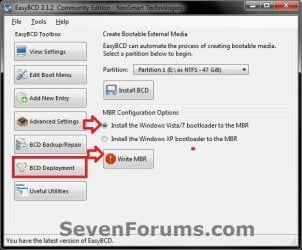
10. On the left side of EasyBCD, click on the BCD Deployment button, select (dot) the Install the Windows Vista/7 bootloader to the MBR option, and click on the Write MBR button. (See screenshot below)
W7-XP-9.jpg
11. Close EasyBCD.

12. Restart the computer to have the option to boot from Microsoft Windows XP or Windows 7. (See screenshot below)
Example2.jpg
   Tip
If Windows 7 will not start up when selected, then use your Windows 7 installation DVD to do a Startup Repair.

That's it,
Shawn


Last edited:
Thanks again Greg!

I did set the first boot device to Hard Drive. I am unsure as to why this is occurring.

Can the set-up that I have now hurt anything?

I was also wondering about the Windows 7 bootable disc I have. As I was installing it, I was waiting to see a screen for entering the serial number. It never came up. I know when I installed XP a few times that it wanted a serial number. Does this sound right? I am unfamiliar with windows 7 so I figured I would ask.

The Windows 7 edition that I have is 32-bit, like the XP I have. I really would like to have the 64-bit version. A friend of mine told me that I may be able to get the 64-bit upgrade from MS for no charge. Have you heard of this or is there a way to do this on my Windows 7 32-bit OS?

Thanks once again!

John G.
 

My Computer My Computer

At a glance

Windows XP Pro
OS
Windows XP Pro
There's nothing wrong with what you have now. I just thought you'd want Win7 HD set to boot first, which can be set in BIOS setup by choosing it as first boot Device. I'm aware you have a HD set first to boot now, but that HD is XP - that's all.

Where did you get Win7? Did you burn the DVD? You're entitled to use either 32- or 64-bit Win7 with each Win7 license.
 
There's nothing wrong with what you have now. I just thought you'd want Win7 HD set to boot first, which can be set in BIOS setup by choosing it as first boot Device. I'm aware you have a HD set first to boot now, but that HD is XP - that's all.

Where did you get Win7? Did you burn the DVD? You're entitled to use either 32- or 64-bit Win7 with each Win7 license.

The Windows 7 disc came with another pc that I had ordered a while back from Tiger Direct.

The disc has Windows 7 Professional at the top and also says to the mid-right side the following:
Support for these products provided by Si 805018 32bit version
W7-Prox86-RTM v.1.0 DVD.

The reason for asking bout the 64-bit version was that I thought it would be better and also thought that I could upgrade this 32-bit version to the 64-bit version. I am not sure if i can do that.

Any suggestions on if I can upgrade to the 64-bit version, without having to do another install.

Thank you for your time and effort!

John G.
 

My Computer My Computer

At a glance

Windows XP Pro
OS
Windows XP Pro
Sounds like an OEM license if the disk you're referring to was for an OS preinstalled on the old machine or an OEM System Builder's disk which locks itself to the first mobo installed upon. These are unable to migrate to a new mobo without special exception being made by MS Phone Activation.

To find out if it's either flavor of OEM look at Computer>Properties, scroll down to activation field to see the Product ID. Is there an OEM in the string? Or you can look at the COA sticker on the old machine it came with, or the disk it came with. What exactly does it say under version, above the Product Key?

If it's retail full or Upgrade version then it can migrate to the hardware of your choice.

All versions of Win7 can have either 32- or 64-bit version installed, your choice. 32 bit vs 64 bit Comparison - Windows 7 Forums
 
Sounds like an OEM license if the disk you're referring to was for an OS preinstalled on the old machine or an OEM System Builder's disk which locks itself to the first mobo installed upon. These are unable to migrate to a new mobo without special exception being made by MS Phone Activation.

To find out if it's either flavor of OEM look at Computer>Properties, scroll down to activation field to see the Product ID. Is there an OEM in the string? Or you can look at the COA sticker on the old machine it came with, or the disk it came with. What exactly does it say under version, above the Product Key?

If it's retail full or Upgrade version then it can migrate to the hardware of your choice.

All versions of Win7 can have either 32- or 64-bit version installed, your choice. 32 bit vs 64 bit Comparison - Windows 7 Forums

I went and checked in the activation field and it said that I have 2 days left to activate.

I then keyed in the code that I found on the disc some time back, and it worked.

It said that this copy of windows are genuine. I guess that is the end of that particular problem-lol.

Now as far as the 64-bit version- Can I use the same disc to upgrade or change to the 64-bit? I really would like to get the 64-bit as I was told that is makes an improvement for sound quality over the 32-bit version. Also, will 4-gigs of ram be sufficient?

Thanks again!

John G.
 

My Computer My Computer

At a glance

Windows XP Pro
OS
Windows XP Pro
Does it say OEM in the Product ID string at Computer>Properties when you scroll down?

4gb is right on the border of 64 bit viability. I think I would stick with 32 bit unless I upgrade RAM. Of course if you have specific reasons you want it, fine. But it could lag a bit since some of your RAM is apportioned to hardware, as can be seen by typing Resource Monitor into Start Search box and clicking on the Memory tab.
 
Does it say OEM in the Product ID string at Computer>Properties when you scroll down?

4gb is right on the border of 64 bit viability. I think I would stick with 32 bit unless I upgrade RAM. Of course if you have specific reasons you want it, fine. But it could lag a bit since some of your RAM is apportioned to hardware, as can be seen by typing Resource Monitor into Start Search box and clicking on the Memory tab.


Yes, It has a product ID # with OEM in the midst of the numbers. I would imagine that this is ok. It does say above this that Windows is activated.

I may just stick with this 32-bit version for now. Maybe when I can add more ram, I may try and see if I like it. I am curious to hear if there is an audible difference between the 32-bit and the 64-bit versions.

My main goal with adding another HDD with Windows 7 is to use it with a bare minimum of programs installed, that could possibly cause my J River media center to lag or something. I have the free edition of AVG anti-virus on the other HDD running on XP. I just want this drive for listening to my music files without any sudden interuptions. Maybe you can tell me if I should leave out all of the windows updates and such. I just want the most needed and thats it.

Maybe you can tell me what I can do to obtain the bare minimum needed things.

Thanks again, so very much!

John G.
 

My Computer My Computer

At a glance

Windows XP Pro
OS
Windows XP Pro
John, if it says OEM in the string then it is either Factory OEM which comes preinstalled or Builder's OEM which also is locked to the first mobo installed upon, and should not activate on changed hardware unless it includes an identical mobo.

The only other explanation could be that it is cracked. Is it possible you bought bootleg Win7? Where did you get Win7? What does it say on your disk?
 
John, if it says OEM in the string then it is either Factory OEM which comes preinstalled or Builder's OEM which also is locked to the first mobo installed upon, and should not activate on changed hardware unless it includes an identical mobo.

The only other explanation could be that it is cracked. Is it possible you bought bootleg Win7? Where did you get Win7? What does it say on your disk?


The software included on this DVD-ROM was pre-installed on your hard drive at the factory and may only be used for backup and recovery of your computer system.

Performance of the software is the sole responsibility of Si

For Distribution Only With A New Si PC

www.supportforyourpc.com

Portions @ 2009 Microsoft Corporation.
All Rights Reserved

Do I have a boot-leg copy? :mad:

John G.
 

My Computer My Computer

At a glance

Windows XP Pro
OS
Windows XP Pro
You said the disk came with another PC you ordered from Tiger Direct. Did you install it on that PC, or was it already installed and this is the Reinstallation DVD for that PC? If so it should only activate on that hardware it was originally installed upon.

Is it possible it came with the PC but wasn't used for that PC, an OEM copy which has never been activated before, e.g. did the PC come with Vista and this DVD was included to upgrade that?
 
You said the disk came with another PC you ordered from Tiger Direct. Did you install it on that PC, or was it already installed and this is the Reinstallation DVD for that PC? If so it should only activate on that hardware it was originally installed upon.

Is it possible it came with the PC but wasn't used for that PC, an OEM copy which has never been activated before, e.g. did the PC come with Vista and this DVD was included to upgrade that?

When I purchased the pc from Tiger Direct, it already had Vista installed. So I would have to say that this windows 7 disc had never been installed.

Never did use it to upgrade to windows 7.

It is now installed on my other pc on the new HDD.

Is that ok if I used this disc to load on my other HDD?

John G.
 

My Computer My Computer

At a glance

Windows XP Pro
OS
Windows XP Pro
I've seen several posts over the past 3 years where the Win7 Upgrade kit DVD's - apparently Builder's OEM disks - were used on another machine. Since I don't know the exact EULA which covers those I cannot say for certain if it is lawful, but if it activates and holds activation then MS is not making an effort to block it's use or requiring it to be tied to a qualifying Vista OS. For all I know you paid a retail premium for it.

It is however now locked to this mobo and will not be able to migrate without special exception from MS Phone Activation. It could also flag as Non-Genuine at some point down the line if the key turns out to be not legit.

As to your question about AVG, it is not recommended by anyone I respect here. I would use Microsoft Security Essentials with the Win7 firewall kept Updated automatically.

Run a Clean Boot and Win7 shouldn't hang on adequate hardware: Troubleshooting Steps for Windows 7 - Windows 7 Forums. These steps will assure you have a perfect Clean Reinstall - Factory OEM Windows 7
 
I've seen several posts over the past 3 years where the Win7 Upgrade kit DVD's - apparently Builder's OEM disks - were used on another machine. Since I don't know the exact EULA which covers those I cannot say for certain if it is lawful, but if it activates and holds activation then MS is not making an effort to block it's use or requiring it to be tied to a qualifying Vista OS. For all I know you paid a retail premium for it.

It is however now locked to this mobo and will not be able to migrate without special exception from MS Phone Activation. It could also flag as Non-Genuine at some point down the line if the key turns out to be not legit.

As to your question about AVG, it is not recommended by anyone I respect here. I would use Microsoft Security Essentials with the Win7 firewall kept Updated automatically.

Run a Clean Boot and Win7 shouldn't hang on adequate hardware: Troubleshooting Steps for Windows 7 - Windows 7 Forums. These steps will assure you have a perfect Clean Reinstall - Factory OEM Windows 7

OK- Thanks again for all your help! I will read over the Run a clean boot articles you have posted.

One last question- Should I or do I need to get the service packs for windows 7?

Thanks again,

John G.
 

My Computer My Computer

At a glance

Windows XP Pro
OS
Windows XP Pro
Yes you need any Service Packs as they are overhauls of the OS, which like an engine overhaul become the engine itself.
 
thank you so much , followed your instrucrtions which where very well constructed , Im now booting xp / win7 on the same disk , absolutly fantastic , well done.
 

My Computer My Computer

At a glance

Windows 7 Ultimate x64,Windows 7 Ultimate 32,...amd 965 3.48 gig a-dataati ??? 1 gig 800 mghtz
Computer Manufacturer/Model Number
asus
OS
Windows 7 Ultimate x64,Windows 7 Ultimate 32, win 7 starter
CPU
amd 965 3.4
Motherboard
asus
Memory
8 gig a-data
Graphics Card(s)
ati ??? 1 gig 800 mghtz
Sound Card
on board
Monitor(s) Displays
20" lcd
Hard Drives
3 x 500 gig sata
PSU
500 watt
Case
??
Cooling
Arctic Cooling Freezer 13 PRO
I had windows 7 OS and after following these steps i installed windows xp. But now even if I restart my PC the OS option screen isn't coming. It directly boots win7. In other words win xp isn't booting. Help!!...
 

My Computer My Computer

At a glance

Windows 7 Professional 32bit
Computer Manufacturer/Model Number
Compaq/CQ3150IX Desktop PC
OS
Windows 7 Professional 32bit
Hello Dnanush, and welcome to Seven Forums.

While in Windows 7, double check using OPTION TWO in the tutorial below to see if you have XP listed or not, and if you have the default 30 seconds timeout period enabled (checked).
http://www.sevenforums.com/tutorials/2285-operating-system-start-change-display-list-time.html

If you do not have XP listed, then you could install only EasyBCD to add XP to the boot list the same way as starting at step 8 in OPTION TWO in the this tutorial here.

Hope this helps, :)
Shawn
 

My Computer My Computer

At a glance

64-bit Windows 11 Pro for WorkstationsIntel i7-8700K OC'd to 5 GHz64 GB (4x16GB) G.SKILL TridentZ RGB DDR4 3600...ASUS ROG-STRIX-GTX1080TI-O11G-GAMING
Computer type
PC/Desktop
Computer Manufacturer/Model Number
Self built custom
OS
64-bit Windows 11 Pro for Workstations
CPU
Intel i7-8700K OC'd to 5 GHz
Motherboard
ASUS ROG Maximus XI Formula Z390
Memory
64 GB (4x16GB) G.SKILL TridentZ RGB DDR4 3600 MHz
Graphics Card(s)
ASUS ROG-STRIX-GTX1080TI-O11G-GAMING
Sound Card
Integrated
Monitor(s) Displays
2 x Samsung Odyssey G7 27"
Screen Resolution
2560x1440
Hard Drives
1TB Samsung 990 PRO M.2,
4TB Samsung 990 PRO PRO M.2,
TerraMaster F8 SSD Plus NAS
PSU
Seasonic Prime Titanium 850W
Case
Thermaltake Core P3
Cooling
Corsair Hydro H115i
Keyboard
Logitech wireless K800
Mouse
Logitech MX Master 4
Internet Speed
2 Gb/s Download and 100 Mb/s Upload
Antivirus
Malwarebyte Anti-Malware Premium
Browser
Google Chrome
Other Info
Logitech Z625 speaker system,
Logitech BRIO 4K Pro webcam,
HP Color LaserJet Pro MFP M477fdn,
APC SMART-UPS RT 1000 XL - SURT1000XLI,
Galaxy S23 Plus phone
Hello Greg,

I just wanted to say once again, Thanks for all your help for the pc I had installed the second HDD! It is working fine.

My problem is with my other computer that has only 1 HDD. I purchased it as an already built desktop pc. I ordered it through Tiger Direct. It is a Systemax desktop pc. I can tell you what it has inside- mo-bo is a MSI G31TMP-P21/CPU=Intel Celeron E3300 2.5GHz/RAM=rendition MEO 2GB Single Channel DDR2 PC6400 800MHz/Power Supply= ATX 250W Switching power supply-Model#SL-8270BTX/HDD=WD 250GB model#WD2500AAJS/LG super multi DVD-rom drive. I am unsure of the model # of the DVD-rom drive, but could take it out if you need it. I kind of thought that maybe the dvd drive could be having an issue of writing to the HDD, or maybe the HDD is having problems. I am not sure.

I hope that the info I have listed could be of some assistance. Sorry for the delay, I will try and stay on this pc, which is working fine, as I try and solve the issue of the broken one!

Thanks so much!

Best Regards,

John G.
 

My Computer My Computer

At a glance

Windows XP Pro
OS
Windows XP Pro
What do I do if I have Windows 7 installed first, a SATA drive, and no floppy disk drive?
 

My Computer My Computer

At a glance

Windows 7
OS
Windows 7
Back
Top