Solved Hard Drive Compatibility with different computers

I agree. It is very easy though. I just wonder, since the OS ours used when running programs if moving the OS over would have an effect as well, or if moving the OS hard drives only effects boot speeds.... Again I know the difference is minimal, but these little questions would probably help me in the future with other hard drives and how they work
 

My Computer My Computer

OS
Windows 7 Home Premium 64 Bit
The OS and it's components get their performance from the access time. The data transfer rate plays only a minor role.

If you look at the example in post # 18, the access time is 19.6ms. That is very slow. An average HDD is 15ms and the best are 12ms. A SSD is 0.1ms or less - that is 120 to 190 times faster than a HDD. That's why SSDs give such a performance boost to the OS.

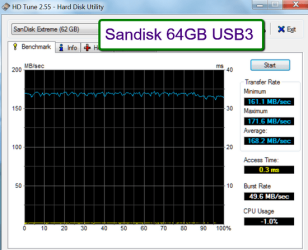
Even my USB sticks are a lot faster than HDDs. I have a 128GB stick with Mint installed. That has an access time of 0.7ms and a 64GB stick also with Linux that has an access time of 0.3ms - even the data rate is a lot higher than the example in post #18. Those systems are a lot faster then HDD installed systems - in boot and execution. Example:
 

Attachments

  • 2014-04-12_1920.png
    2014-04-12_1920.png
    32.7 KB · Views: 7

My Computer My Computer

Computer Manufacturer/Model Number
HP, Dell, Gateway, Toshiba - 4 laptops and 2 desktops
OS
Vista, Windows7, Mint Mate, Zorin, Windows 8
CPU
from 1.6GHz Duo to i7
Monitor(s) Displays
2x HP w2207
Hard Drives
5x HDD, 7x SSD, 12x Externals
Keyboard
with trackball - no mices
Mouse
Trackball mice
Internet Speed
DSL 6000
Sounds like overall the most economical thing to do is upgrade my hard drive when I can to a SSD.

Then whenever I get the money I can upgrade my motherboard to one that can hold DDR3 ram and hold a way better processor, and upgrade my processor. Would cost me a few hundred but that would be cheaper than a new computer. Also upgrading my hard drive to an SSD would be transferable to the upgraded computer. My performance is nearly where I want it so I probably won't buy all those upgrades anytime soon. I'll just save my money, get an SSD and eventually when it's worth it I may jump to a new motherboard.

Really appreciate all the advice
 

My Computer My Computer

OS
Windows 7 Home Premium 64 Bit
It's true that SSDs are way way faster, but we don't have any evidence that your dissatisfaction with your current situation is due to slow hard drives.

In fact, I don't even think we know what CPU you have.

If it is more than 5 or so years old--not an Intel Core 2 Duo or newer, I'd suspect that your issues are 90 plus percent related to CPU and/or graphics card.

It might be that a CPU upgrade for $100 would have more real-world immediate effect than a $100 SSD.

But we don't know what CPU you have and buying a new CPU for an old socket is a dead-end street, so I can understand a preference for spending the first $100 on an SSD. Just don't expect to be overwhelmed by it. You'll notice booting is quicker and apps open more quickly, but you've still got your antique CPU as an anchor holding you down.
 

My Computer My Computer

Computer type
PC/Desktop
Computer Manufacturer/Model Number
Ignatz Special; 4 speed manual gearbox; factory air conditioning; one of one
OS
Windows 7 Home Premium SP1, 64-bit
CPU
Intel Skylake i5-6600K, not overclocked
Motherboard
AsRock Z170M Extreme 4, micro ATX
Memory
8 GB HyperX DDR4-2666 (2 x 4 GB)
Graphics Card(s)
none; graphics are integrated on CPU
Sound Card
onboard: Realtek ALC1150; external: USB Behringer UF0-202
Monitor(s) Displays
Dell S2340M 23 inch IPS
Screen Resolution
1600 x 900
Hard Drives
System: Crucial MX100 series SSD, 128 GB;
Data: Samsung Spinpoint 103SJ, 1 TB;
Backup: WD Caviar Green WD30EZRX-00D8PB0, 3 TB
PSU
Rosewill SilentNight 500 watt fanless, semi-modular
Case
Antec Solo II
Cooling
Noctua NH-U12S; Noctua F12 intake, Noctua S12A exhaust
Keyboard
Microsoft 200 6JH-00001 USB
Mouse
Dell or Microsoft optical wired; USB
Antivirus
Microsoft Security Essentials and Malwarebytes Premium
Browser
Pale Moon
Other Info
All fans PWM; speeds at idle: CPU circa 500 rpm; intake circa 600 rpm; exhaust circa 600 rpm; CPU temps 27 idle and 47 C load in a warm room (27 C/81 F) when running Intel Extreme Tuning Utility stress test.
I have a $300 video card, a 3GB HD Radeon 7970.

If you remember earlier in all this I shared my motherboard specifics. I took one person's advice and upgraded my processor to the Intel Core 2 Quad 2.4 GHZ. It has definitely improved my computers performance overall. I have 6 GB of DDR2 RAM.
 

My Computer My Computer

OS
Windows 7 Home Premium 64 Bit
Sounds like overall the most economical thing to do is upgrade my hard drive when I can to a SSD.

Then whenever I get the money I can upgrade my motherboard to one that can hold DDR3 ram and hold a way better processor, and upgrade my processor. Would cost me a few hundred but that would be cheaper than a new computer. Also upgrading my hard drive to an SSD would be transferable to the upgraded computer. My performance is nearly where I want it so I probably won't buy all those upgrades anytime soon. I'll just save my money, get an SSD and eventually when it's worth it I may jump to a new motherboard.

Really appreciate all the advice
Why don't you get a SSD now - e.g this one for $60. That is sufficent for the OS. You can always reuse it later for something else when you can afford a bigger one. E.g. I run all my virtual systems from an external SSD. I would not have any system on a spinning disk - waayyy too slow.
 

My Computer My Computer

Computer Manufacturer/Model Number
HP, Dell, Gateway, Toshiba - 4 laptops and 2 desktops
OS
Vista, Windows7, Mint Mate, Zorin, Windows 8
CPU
from 1.6GHz Duo to i7
Monitor(s) Displays
2x HP w2207
Hard Drives
5x HDD, 7x SSD, 12x Externals
Keyboard
with trackball - no mices
Mouse
Trackball mice
Internet Speed
DSL 6000
It might be that a CPU upgrade for $100 would have more real-world immediate effect than a $100 SSD.
Not so unless you do a lot of CPU intensive work - e.g. video encoding.
 

My Computer My Computer

Computer Manufacturer/Model Number
HP, Dell, Gateway, Toshiba - 4 laptops and 2 desktops
OS
Vista, Windows7, Mint Mate, Zorin, Windows 8
CPU
from 1.6GHz Duo to i7
Monitor(s) Displays
2x HP w2207
Hard Drives
5x HDD, 7x SSD, 12x Externals
Keyboard
with trackball - no mices
Mouse
Trackball mice
Internet Speed
DSL 6000
I also already upgraded my processor to the best processor offered for my motherboard.

Actually we talked about that in a different thread a few days ago. If you look up my threads. Sorry, I mentioned it was in this thread but I forgot it was in another.

Anyway. It's not smart in my opinion to spend $60 on a small hard drive with sketchy reviews when I'm just going to buy a better one in a month or two. I would rather buy what I need and save the money in the long run
 

My Computer My Computer

OS
Windows 7 Home Premium 64 Bit
I don't know about 'sketchy reviews' I own two (of 7) Mushkin SSDs and they perform very well. Plus the company is known for excellent customer service.

I run 3 desktops with 60GB SSDs - and that since years. I got my first 60GB SSD in 2008 (for $265 at the time). I never ran out of space, in fact my 60GB SSDs are half empty.

That would be a different story for laptops where you have only 1 port. There I would go with a 240GB model.

But if you want a bigger SSD, here is a really good deal for $75:

Amazon.com: Mushkin Chronos 120 GB SATA 6.0 Gb-s 2.5-Inch Solid State Drive (MKNSSDCR120GB): Electronics

But if you rather go by flaky reviews than the opinion of someone with 6 years of SSD experience, you may want to buy something else.
 

My Computer My Computer

Computer Manufacturer/Model Number
HP, Dell, Gateway, Toshiba - 4 laptops and 2 desktops
OS
Vista, Windows7, Mint Mate, Zorin, Windows 8
CPU
from 1.6GHz Duo to i7
Monitor(s) Displays
2x HP w2207
Hard Drives
5x HDD, 7x SSD, 12x Externals
Keyboard
with trackball - no mices
Mouse
Trackball mice
Internet Speed
DSL 6000
Looks like they're there are a ton of 120 GB drives from reputedly brands on Amazon for $75. Seems like my best bet. Most are sata 3.
 

My Computer My Computer

OS
Windows 7 Home Premium 64 Bit
It's got Samsung, Kingston, etc
 

My Computer My Computer

OS
Windows 7 Home Premium 64 Bit
Samsung 840 EVO is an excellent choice if in your budget. Maybe the best choice as of today.

Crucial M500 is another good one that is often seen at a low price because it is being discontinued and replaced by the M550.
 

My Computer My Computer

Computer type
PC/Desktop
Computer Manufacturer/Model Number
Ignatz Special; 4 speed manual gearbox; factory air conditioning; one of one
OS
Windows 7 Home Premium SP1, 64-bit
CPU
Intel Skylake i5-6600K, not overclocked
Motherboard
AsRock Z170M Extreme 4, micro ATX
Memory
8 GB HyperX DDR4-2666 (2 x 4 GB)
Graphics Card(s)
none; graphics are integrated on CPU
Sound Card
onboard: Realtek ALC1150; external: USB Behringer UF0-202
Monitor(s) Displays
Dell S2340M 23 inch IPS
Screen Resolution
1600 x 900
Hard Drives
System: Crucial MX100 series SSD, 128 GB;
Data: Samsung Spinpoint 103SJ, 1 TB;
Backup: WD Caviar Green WD30EZRX-00D8PB0, 3 TB
PSU
Rosewill SilentNight 500 watt fanless, semi-modular
Case
Antec Solo II
Cooling
Noctua NH-U12S; Noctua F12 intake, Noctua S12A exhaust
Keyboard
Microsoft 200 6JH-00001 USB
Mouse
Dell or Microsoft optical wired; USB
Antivirus
Microsoft Security Essentials and Malwarebytes Premium
Browser
Pale Moon
Other Info
All fans PWM; speeds at idle: CPU circa 500 rpm; intake circa 600 rpm; exhaust circa 600 rpm; CPU temps 27 idle and 47 C load in a warm room (27 C/81 F) when running Intel Extreme Tuning Utility stress test.
Right, there you have a lot choices. All modern SSDs are sata 3. But even if you don't have a 6Gb port, they will work OK. It is the access time that counts, not the data transfer rate. The OS makes a lot of ramdom access operations (mostly reads) for mainly 4K blocks. So there is not a lot of data to transfer but the access has to be fast.
 

My Computer My Computer

Computer Manufacturer/Model Number
HP, Dell, Gateway, Toshiba - 4 laptops and 2 desktops
OS
Vista, Windows7, Mint Mate, Zorin, Windows 8
CPU
from 1.6GHz Duo to i7
Monitor(s) Displays
2x HP w2207
Hard Drives
5x HDD, 7x SSD, 12x Externals
Keyboard
with trackball - no mices
Mouse
Trackball mice
Internet Speed
DSL 6000
Okay. I'm going to bite the bullet and get the Samsung 840 EVO-Series 120GB SSD.

My simple question is: What's the easiest and best way to get the operating system on there?

I don't want to have issues with my product key being verified, and I'm not sure if having it on my other hard drive will effect that,

because I do have a USB thumb drive to boot from and to install windows 7 from.

So with me having that usb thumb drive, will it be easy to install from there? And will it be easy to uninstall the operating system from my second hard drive?

Or is there a better easier way?

Also, will that fit in my computers normal hard drive slot? Both of the hard drives above I mentioned fit perfectly but I'm not sure if it will fit properly. (Yes, I will of course take that Seagate out of my computer).
 

My Computer My Computer

OS
Windows 7 Home Premium 64 Bit
Also one last question, I have a sata 0,1,2, and 3 port. Does it matter what port I put it in?

My other hard drive was in like sata 0, but that port was blocking my video card, so I had to move them to other sata ports.

I know these are a lot of questions. But honestly when I upgraded my processor (as we talked about in the other thread) it brought my computer nearly to the performance I want. I think upgrading to this SSD should get me exactly where I want. So all of your help is helping me a ton! Then after this I can put off upgrading my motherboard for a while.
 

My Computer My Computer

OS
Windows 7 Home Premium 64 Bit
see comments:

My simple question is: What's the easiest and best way to get the operating system on there?

Best: A clean install from either an ordinary Windows 7 installation disc or from a USB drive containing the installation files.

Second best: "cloning" or "imaging" your current installation to the SSD.


If your PC is a name brand like HP or Dell or Lenovo, you should have a sticker with a 25 character "Product Key" on it. Do you have such a sticker and Product Key? What version of Windows 7 is mentioned on that sticker?

If you don't have the Product Key, you will have major problems with activation, which must be done within 30 days.

Tell us exactly what it says on your sticker, but DON'T post the actual 25 characters that should be in this format: xxxxx-xxxxx-xxxxx-xxxxx-xxxxx.


I don't want to have issues with my product key being verified, and I'm not sure if having it on my other hard drive will effect that, because I do have a USB thumb drive to boot from and to install windows 7 from.

Changing hard drives would not have any effect. Changing motherboards might matter, depending on exactly what version of Windows you have.

So with me having that usb thumb drive, will it be easy to install from there? And will it be easy to uninstall the operating system from my second hard drive?


It should be easy assuming you have a valid Windows 7 Product Key and the thumb drive is not defective and contains installation files for that same version of Windows 7.

You don't "uninstall" the OS on the other drive. You first get Windows going and updated on the SSD. Then you reconnect the other drive and delete the partition containing the OS on that drive.

If you have any personal data on that OS partition, you need to copy it somewhere else before you delete the partition or you will lose it.


Also, will that fit in my computers normal hard drive slot? Both of the hard drives above I mentioned fit perfectly but I'm not sure if it will fit properly. (Yes, I will of course take that Seagate out of my computer).

SSDs are somewhat smaller than normal hard drives. Yes, it will fit. You have 3 choices:

1: buy the bare Samsung drive and buy a separate "2.5 inch adapter" that will allow you to mount the SSD in a standard 3.5 inch drive bay.

2: buy a package that includes both the drive and the adapter in a single package for one price.

3: buy the bare drive and don't use an adapter. You'd instead secure the drive in the drive bay with something like Velcro or duct tape. They don't have any moving parts, so aren't as fragile as hard drives. I used duct tape for a couple of years.
 

My Computer My Computer

Computer type
PC/Desktop
Computer Manufacturer/Model Number
Ignatz Special; 4 speed manual gearbox; factory air conditioning; one of one
OS
Windows 7 Home Premium SP1, 64-bit
CPU
Intel Skylake i5-6600K, not overclocked
Motherboard
AsRock Z170M Extreme 4, micro ATX
Memory
8 GB HyperX DDR4-2666 (2 x 4 GB)
Graphics Card(s)
none; graphics are integrated on CPU
Sound Card
onboard: Realtek ALC1150; external: USB Behringer UF0-202
Monitor(s) Displays
Dell S2340M 23 inch IPS
Screen Resolution
1600 x 900
Hard Drives
System: Crucial MX100 series SSD, 128 GB;
Data: Samsung Spinpoint 103SJ, 1 TB;
Backup: WD Caviar Green WD30EZRX-00D8PB0, 3 TB
PSU
Rosewill SilentNight 500 watt fanless, semi-modular
Case
Antec Solo II
Cooling
Noctua NH-U12S; Noctua F12 intake, Noctua S12A exhaust
Keyboard
Microsoft 200 6JH-00001 USB
Mouse
Dell or Microsoft optical wired; USB
Antivirus
Microsoft Security Essentials and Malwarebytes Premium
Browser
Pale Moon
Other Info
All fans PWM; speeds at idle: CPU circa 500 rpm; intake circa 600 rpm; exhaust circa 600 rpm; CPU temps 27 idle and 47 C load in a warm room (27 C/81 F) when running Intel Extreme Tuning Utility stress test.
see comments

Also one last question, I have a sata 0,1,2, and 3 port. Does it matter what port I put it in?

It should work in any port, but I'd put it on the port that equates to "Disk 0" when viewed in Windows Disk Management.

That's most likely a port now being used by one or the other of your hard drives. Take a look in Windows Disk Management and tell us which drive is shown as "Disk 0".

Better yet, post a screen shot of Windows Disk Management.

The most important thing is to NOT have any other hard drive connected when you start to install to the SSD.


My Computer My Computer

Computer type
PC/Desktop
Computer Manufacturer/Model Number
Ignatz Special; 4 speed manual gearbox; factory air conditioning; one of one
OS
Windows 7 Home Premium SP1, 64-bit
CPU
Intel Skylake i5-6600K, not overclocked
Motherboard
AsRock Z170M Extreme 4, micro ATX
Memory
8 GB HyperX DDR4-2666 (2 x 4 GB)
Graphics Card(s)
none; graphics are integrated on CPU
Sound Card
onboard: Realtek ALC1150; external: USB Behringer UF0-202
Monitor(s) Displays
Dell S2340M 23 inch IPS
Screen Resolution
1600 x 900
Hard Drives
System: Crucial MX100 series SSD, 128 GB;
Data: Samsung Spinpoint 103SJ, 1 TB;
Backup: WD Caviar Green WD30EZRX-00D8PB0, 3 TB
PSU
Rosewill SilentNight 500 watt fanless, semi-modular
Case
Antec Solo II
Cooling
Noctua NH-U12S; Noctua F12 intake, Noctua S12A exhaust
Keyboard
Microsoft 200 6JH-00001 USB
Mouse
Dell or Microsoft optical wired; USB
Antivirus
Microsoft Security Essentials and Malwarebytes Premium
Browser
Pale Moon
Other Info
All fans PWM; speeds at idle: CPU circa 500 rpm; intake circa 600 rpm; exhaust circa 600 rpm; CPU temps 27 idle and 47 C load in a warm room (27 C/81 F) when running Intel Extreme Tuning Utility stress test.
see comments:

My simple question is: What's the easiest and best way to get the operating system on there?

Best: A clean install from either an ordinary Windows 7 installation disc or from a USB drive containing the installation files.

Second best: "cloning" or "imaging" your current installation to the SSD.

If your PC is a name brand like HP or Dell or Lenovo, you should have a sticker with a 25 character "Product Key" on it. Do you have such a sticker and Product Key? What version of Windows 7 is mentioned on that sticker?

If you don't have the Product Key, you will have major problems with activation, which must be done within 30 days.

Tell us exactly what it says on your sticker, but DON'T post the actual 25 characters that should be in this format: xxxxx-xxxxx-xxxxx-xxxxx-xxxxx.


I don't want to have issues with my product key being verified, and I'm not sure if having it on my other hard drive will effect that, because I do have a USB thumb drive to boot from and to install windows 7 from.

Changing hard drives would not have any effect. Changing motherboards might matter, depending on exactly what version of Windows you have.

So with me having that usb thumb drive, will it be easy to install from there? And will it be easy to uninstall the operating system from my second hard drive?


It should be easy assuming you have a valid Windows 7 Product Key and the thumb drive is not defective and contains installation files for that same version of Windows 7.


Also, will that fit in my computers normal hard drive slot? Both of the hard drives above I mentioned fit perfectly but I'm not sure if it will fit properly. (Yes, I will of course take that Seagate out of my computer).

SSDs are somewhat smaller than normal hard drives. Yes, it will fit. You have 3 choices:

1: buy the bare Samsung drive and buy a separate "2.5 inch adapter" that will allow you to mount the SSD in a standard 3.5 inch drive bay.

2: buy a package that includes both the drive and the adapter in a single package for one price.

3: buy the bare drive and don't use an adapter. You'd instead secure the drive in the drive bay with something like Velcro or duct tape. They don't have any moving parts, so aren't as fragile as hard drives. I used duct tape for a couple of years.


The USB Drive I have Windows 7 on I have used several times to do clean installs. I also already did it to my current Hitachi hard drive.

I have a key with the operating system code, it's a Dell sticker, Windows 7 Home Premium Key.

If that sounds good I'll get the drive and Amazon.com: SABRENT 3.5-Inch to SSD / 2.5-Inch HDD Bay Drives Converter (BK-HDDH): Electronics

So based off the info I gave you, I could buy that, screw the hard drive into it, do a clean wipe on both my hd's, and then boot from a usb, install windows with the key I have. (I've done it a few times, and also wiped out hard drives using cmd and clean all before).

Then install my important programs and whatnot on that hard drive,

move picture files and other storage files onto my hitachi hard drive.

Am I completely dead on and good to go here? Am I missing anything?
 

My Computer My Computer

OS
Windows 7 Home Premium 64 Bit
see comments

Also one last question, I have a sata 0,1,2, and 3 port. Does it matter what port I put it in?

It should work in any port, but I'd put it on the port that equates to "Disk 0" when viewed in Windows Disk Management.

That's most likely a port now being used by one or the other of your hard drives. Take a look in Windows Disk Management and tell us which drive is shown as "Disk 0".

Better yet, post a screen shot of Windows Disk Management.

The most important thing is to NOT have any other hard drive connected when you start to install to the SSD.


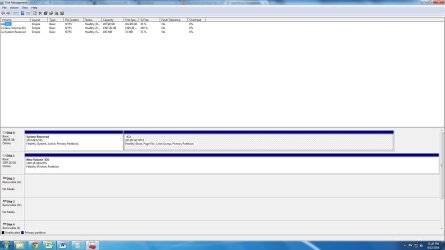
Here is a screenshot. Like I said. I forgot exactly what order they were in, but I think Disk 1 and Disk 0 were blocking my video card so I moved over 1 slot to the side to plug in my hard drive.

Then the other slots on the side of that I plugged the Seagate into.


Also, why would it be important not to have any other hard drives plugged in?

Couldn't I just boot from my usb drive, do a clean wipe on BOTH hard drives, and then install windows on 1 particular hard drive? Or would having both drives plugged in complicate things (for example, I boot from the usb drive, but when I install windows it would install it to a random drive, and complicate matters)
 

Attachments

  • screenshot 1.jpg
    screenshot 1.jpg
    120.7 KB · Views: 2

My Computer My Computer

OS
Windows 7 Home Premium 64 Bit
see comments:

The USB Drive I have Windows 7 on I have used several times to do clean installs. I also already did it to my current Hitachi hard drive.

I have a key with the operating system code, it's a Dell sticker, Windows 7 Home Premium Key.

Does it say OEM on that sticker somewhere?

I'll have to take your word for it that it's a valid license and key and that you successfully installed AND ACTIVATED on your current hard drive.

Dells don't come with an installation disc as far as I know. Where did you get the files to put on the USB thumb drive?


If that sounds good I'll get the drive and Amazon.com: SABRENT 3.5-Inch to SSD / 2.5-Inch HDD Bay Drives Converter (BK-HDDH): Electronics

That should work fine.

So based off the info I gave you, I could buy that, screw the hard drive into it, do a clean wipe on both my hd's, and then boot from a usb, install windows with the key I have. (I've done it a few times, and also wiped out hard drives using cmd and clean all before).

You've got the order wrong.

You should:

1: attach the SSD to the adapter.

2: mount the adapter and SSD in the drive bay.

3: remove or disconnect all of your other hard drives and any external stuff other than monitor, keyboard, and mouse.

4: connect the SSD to the right port on the motherboard and to your power supply

5: install Windows 7 to the SSD.

6: Fully update Windows 7 and satisfy yourself that the SSD is working OK. Probably run a benchmark and check a few settings like alignment and defragmentation status.

7: Then and only then start thinking about your old hard drives and other programs.


Am I missing anything?


I'd go to the motherboard manufacturer's web site and download the NIC (Ethernet) driver for Windows 7 for that particular motherboard model and put it on your USB stick. That driver should be installed by Windows 7, but I'd download it separately just in case I could not get an Internet connection going immediately after I installed Windows.

 

My Computer My Computer

Computer type
PC/Desktop
Computer Manufacturer/Model Number
Ignatz Special; 4 speed manual gearbox; factory air conditioning; one of one
OS
Windows 7 Home Premium SP1, 64-bit
CPU
Intel Skylake i5-6600K, not overclocked
Motherboard
AsRock Z170M Extreme 4, micro ATX
Memory
8 GB HyperX DDR4-2666 (2 x 4 GB)
Graphics Card(s)
none; graphics are integrated on CPU
Sound Card
onboard: Realtek ALC1150; external: USB Behringer UF0-202
Monitor(s) Displays
Dell S2340M 23 inch IPS
Screen Resolution
1600 x 900
Hard Drives
System: Crucial MX100 series SSD, 128 GB;
Data: Samsung Spinpoint 103SJ, 1 TB;
Backup: WD Caviar Green WD30EZRX-00D8PB0, 3 TB
PSU
Rosewill SilentNight 500 watt fanless, semi-modular
Case
Antec Solo II
Cooling
Noctua NH-U12S; Noctua F12 intake, Noctua S12A exhaust
Keyboard
Microsoft 200 6JH-00001 USB
Mouse
Dell or Microsoft optical wired; USB
Antivirus
Microsoft Security Essentials and Malwarebytes Premium
Browser
Pale Moon
Other Info
All fans PWM; speeds at idle: CPU circa 500 rpm; intake circa 600 rpm; exhaust circa 600 rpm; CPU temps 27 idle and 47 C load in a warm room (27 C/81 F) when running Intel Extreme Tuning Utility stress test.
Back
Top