
VMware Player - Install and Setup Zorin

How to Install and Setup Zorin in VMware Player

   Information
This tutorial is aimed at Windows users who want to try out a Linux distro and learn about a virtual OS installation at the same time. If you are not interested in the virtual part, you can skip directly to Chapter 2 which explains the Zorin setup.


Zorin is a Linux distro with an Ubuntu base. Of all the Linux distros I know, it comes the closest to Windows as far as the user interface (UI) is concerned.

If you are not familiar with Linux and want to experiment with it, I recommend you try Zorin. It can be downloaded from the Zorin site (click on the 'Get it' button). I suggest you take the 64bit version which is the one used in this tutorial.

Coming from Windows, you will not be too alienated using Zorin. It has a Start menu that can be customized to look like Windows 7 or XP and it has a familiar task bar. But there are, of course, differences.

I will explain how to make the basic setup in VMware Player and how to setup Zorin so that it is convenient to use. At one point that involves the command line (Terminal). But don't be scared, I have prepared everything such that this step can be easily mastered.

The setup in VMware player will be explained with text and pictures and the setup inside Zorin will be explained with a video. But I have also documented the essential steps in text format.

Chapter 1 - install Zorin in VMware Player

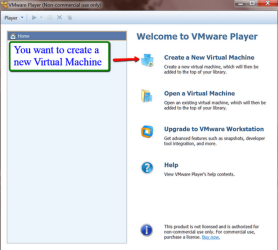
Download VMware Player from this site and install it on your system. Then start VMware Player and you will see this window.
1.png
Here you just click on 'Create a new virtual machine' and you get to this window.
2.png
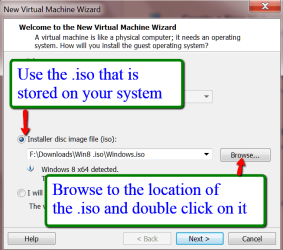
Here you select to install from the .iso image and navigate to the Zorin .iso file that you have downloaded. Then Next.

3.png
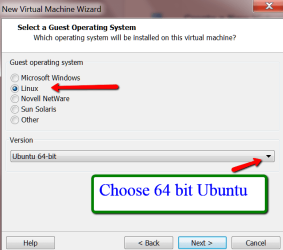
Mark Linux and choose the Ubuntu 64bit. Then Next.
4.png

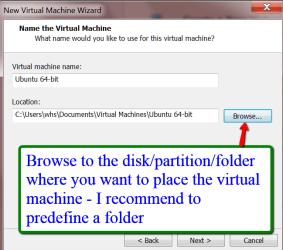
Browse to the disk/partition and folder where you want to install the virtual partition files. Default is Documents. I recommend predefining a folder for the VMware installation so that all VMware files are in one place. When you are done with the installation, there will be over 25 files and subfolders. Having those mixed with other folders would be messy.
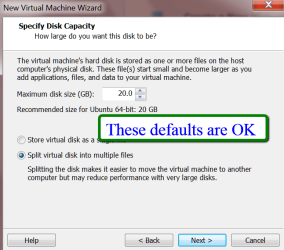
5.png

In this window you can take the defaults. Zorin will start out with less than 6GB of disk space usage so a maximum of 20GB for the dynamic virtual disk should suffice. Then Next.
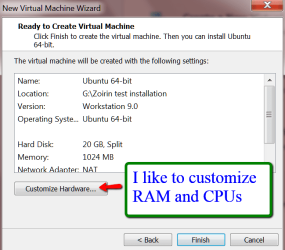
6.png

The default allocation is 1GB of RAM and 1 processor. I always assign 2GB of RAM and 2 processors. But you may take what is suitable for your PC. The defaults will work. Then Finish.
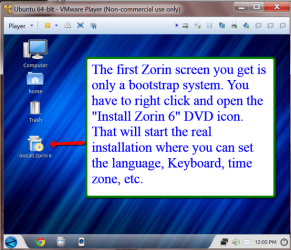
7.png

Now VMware Player will install the bootstrap system of Zorin. Once this is done, you need to right click on the "Install Zorin 6" DVD as shown in the picture and Open that. This will start the full installation of Zorin.

The Zorin installation process is very similar to the Windows installation process. You set the language, keyboard layout, time zone, and give the system a name. You must define a password - I always use 1234 because Linux distros ask many times for authentication with the password. A complicated password will make the operation more cumbersome. There is one big difference to a Windows installation - you do not need a product key. Zorin is freeware.

Once your installation is completed, restart Zorin - click on the Zorin Start button (bottom left) and then on the power symbol (bottom right in the start menu). That will bring up the various options (restart, shutdown, etc.)

I will explain the rest of the Zorin setup in the following video. The steps are also summarized in the text below the video. Read the note below because you may have to make an audio setting.


Chapter 2 - setting up Zorin

Note: If the audio of this video is too low, do the following:
Right click on the speaker icon in the task tray (bottom right) > Playback devices > double click on your output device > Enhancement tab > check the 'Loudness Equalizer' box


The synopsis of the settings discussed in the video

Screen resolution:Start > System Settings > Display
Full screen: VMware dock > Full screen icon
Hide/Unhide VMware dock: Leftmost icon on the dock
VMware Tools: VMware dock > Player > Manage > Install VMware Tools
Terminal (Command Prompt): Start > Accessories > Terminal
Terminal commands to install VMware Tools:

sudo mount /dev/cdrom /media/cdrom
cp /media/cdrom/VMware*.tar.gz /tmp
sudo umount /media/cdrom
cd /tmp
tar xzvf VMware*.gz
cd vmware-tools-distrib/
sudo ./vmware-install.pl

Those commands are posted on Sevenforums under: "VMware and Zorin"

Office Applications:Start > Office > Libre Office
GParted (Disk Mgmt): Start > System Tools > Administration > GParted
Software Center: Start > System Tools > Administration > Software Center
Firefox Installation: Start > Internet > Zorin Web Browser Manager
Help file: Start > Accessories > Help
Text Editor (Wordpad): Start > Accessories > Text Editor


Last edited:
Well done Ethel to be honest I was rather sceptical that it could be done but now I know thanks to your efforts:thumbsup:
 

My Computer My Computer

Computer type
PC/Desktop
Computer Manufacturer/Model Number
Own build (new) Desk1 / Asus ROG Win 7 / Desk2 1st build
OS
Desk1 7 Home Prem / Desk2 10 Pro / Main lap Asus ROG 10 Pro 2 laptop Toshiba 7 Pro Asus P2520 7 & 10
CPU
Desk1 i5 3750K / Laptop i7 GTX 860M / Desk2 i5 2500
Motherboard
Desk1 Asus P877-V / Desk2 Gigabyte H67 UD3H / Laptop ?
Memory
Desk1 8GB (1866) / Desk2 16GB (1333) / Laptop 8Gb DDR3
Graphics Card(s)
Desk 1& 2NVidia GTX 650 & Laptops on board Intel
Sound Card
Desk 1 & 2 -XONAR DG Realtek High Def audio Laptop
Monitor(s) Displays
Desk 1 Benq HD 2450 / Desk2 Philips 24" / Laptop 17.5"
Screen Resolution
1920x1080 D1 & D2 & Laptop 1
Hard Drives
Desk1 Samsung 120GB 830 SSD
Asus ROG 256GB 850 Pro SSD
Desk2 Samsung 840 256 SSD
Toshiba 120GB EVO
PSU
Desk 1 Corsair HX 1050/ Laptop ? / Desk 2 Corsair HX 650
Case
Desk 1 Cooler HAF XM ? Toshiba laptop / Desk2 Coolermaster
Cooling
Fans on all Desk1 -2 Desk2 - all Coolermasters 5 Laptop ?
Keyboard
Desk 1 MS Sidewinder X6 Desk 2 MS Sidewinder X 4
Mouse
Desk 1&2 - Gigabyte MS 900 gamer - laptop - Logitec wireless
Internet Speed
ADSL2+
Other Info
One other Desktop (tester) and spare Toshba laptop both with SSD's
Running Kaspersky 2016 ISS on all machines config'd identically
Logitec audio stereo systems on each machine (x3)
Canon MG5250MFC
Router/modem TP-Link running WPA2SK
zorin os 12

Hello ICIT2LOL, I was rather unsure myself, but all is good. I will mark this as solved.;)
 

My Computer My Computer

Computer type
PC/Desktop
Computer Manufacturer/Model Number
ASUS A85XM-A custom build
OS
Windows 10 Pro 64 bit
CPU
AMD A4-5300 APU with Radeon(tm) HD Graphics
Motherboard
ASUSTeK COMPUTER INC. A85XM-A
Memory
8.00 GB
Graphics Card(s)
AMD Radeon HD 7480D
Sound Card
(1) High Definition Audio Device (2) Realtek High Definiti
Monitor(s) Displays
HP W2072a 20 inch Led Backlit Monitor
Screen Resolution
1600 x 900 x 32 bits (4294967296 colors) @ 60 Hz
Hard Drives
TOSHIBA DT01ACA100 SATA Disk Device
Keyboard
Acer
Mouse
Acer
Internet Speed
varies
Antivirus
Windows Defender Antivirus
Browser
Waterfox, Edge
Yep I reckon you passed the entrance test LOL!!
 

My Computer My Computer

Computer type
PC/Desktop
Computer Manufacturer/Model Number
Own build (new) Desk1 / Asus ROG Win 7 / Desk2 1st build
OS
Desk1 7 Home Prem / Desk2 10 Pro / Main lap Asus ROG 10 Pro 2 laptop Toshiba 7 Pro Asus P2520 7 & 10
CPU
Desk1 i5 3750K / Laptop i7 GTX 860M / Desk2 i5 2500
Motherboard
Desk1 Asus P877-V / Desk2 Gigabyte H67 UD3H / Laptop ?
Memory
Desk1 8GB (1866) / Desk2 16GB (1333) / Laptop 8Gb DDR3
Graphics Card(s)
Desk 1& 2NVidia GTX 650 & Laptops on board Intel
Sound Card
Desk 1 & 2 -XONAR DG Realtek High Def audio Laptop
Monitor(s) Displays
Desk 1 Benq HD 2450 / Desk2 Philips 24" / Laptop 17.5"
Screen Resolution
1920x1080 D1 & D2 & Laptop 1
Hard Drives
Desk1 Samsung 120GB 830 SSD
Asus ROG 256GB 850 Pro SSD
Desk2 Samsung 840 256 SSD
Toshiba 120GB EVO
PSU
Desk 1 Corsair HX 1050/ Laptop ? / Desk 2 Corsair HX 650
Case
Desk 1 Cooler HAF XM ? Toshiba laptop / Desk2 Coolermaster
Cooling
Fans on all Desk1 -2 Desk2 - all Coolermasters 5 Laptop ?
Keyboard
Desk 1 MS Sidewinder X6 Desk 2 MS Sidewinder X 4
Mouse
Desk 1&2 - Gigabyte MS 900 gamer - laptop - Logitec wireless
Internet Speed
ADSL2+
Other Info
One other Desktop (tester) and spare Toshba laptop both with SSD's
Running Kaspersky 2016 ISS on all machines config'd identically
Logitec audio stereo systems on each machine (x3)
Canon MG5250MFC
Router/modem TP-Link running WPA2SK
I am a wee bit confused.
I have Windows 7 and Linux Mint Cinnamon, and also Zorin, dual-booted on some of our machines.
I previously had Windows 7 Pro and Linux Mint Cinnamon dual-boot on my main machine; but, when I switched to a SSD for the system drive, although I had successfully managed to do it before, I could not get the Linux partition to clone to the new drive --- so currently this machine is not dual-boot.
Then I stumbled upon this thread and wondered if VMware Player might be a better solution than the aggravation of having to boot back and forth.
I scanned through these pages and my answer may very well be there, but I did not catch it.

Question 1: With VMware Player, can I install programs and use them in Linux the same as I can in dual-boot configuration ?

Question 2: Lets say I am using Windows and have a few programs and need to do something in Linux; do I have to close out of my Windows programs before calling up Linux ?

Question 3: Does VMware Player/Linux simply behave as if it were another program in Windows, allowing one to simply click back and forth between the two ?

Sorry for so many questions.
Thanks for reading and all help is appreciated.
 

My Computer My Computer

Computer type
PC/Desktop
Computer Manufacturer/Model Number
Dell Optiplex 780m "mini-tower"
OS
Windows 7 Pro x64
CPU
Intel Core Two Duo E8600 3.33 ghz
Motherboard
Whatever DELL put in it
Memory
8GB
Graphics Card(s)
Gigabyte Radeon R7 240
Monitor(s) Displays
HP 2159m
PSU
750 Watt Corsair CX750
Keyboard
Logitech Wireless
Mouse
Logitech Wireless
Browser
Chrome, Firefox, IE
I am a wee bit confused.
I have Windows 7 and Linux Mint Cinnamon, and also Zorin, dual-booted on some of our machines.
I previously had Windows 7 Pro and Linux Mint Cinnamon dual-boot on my main machine; but, when I switched to a SSD for the system drive, although I had successfully managed to do it before, I could not get the Linux partition to clone to the new drive --- so currently this machine is not dual-boot.
Then I stumbled upon this thread and wondered if VMware Player might be a better solution than the aggravation of having to boot back and forth.
I scanned through these pages and my answer may very well be there, but I did not catch it.

Question 1: With VMware Player, can I install programs and use them in Linux the same as I can in dual-boot configuration ?

Question 2: Lets say I am using Windows and have a few programs and need to do something in Linux; do I have to close out of my Windows programs before calling up Linux ?

Question 3: Does VMware Player/Linux simply behave as if it were another program in Windows, allowing one to simply click back and forth between the two ?

Sorry for so many questions.
Thanks for reading and all help is appreciated.

1. Yes.
2. No.
3. Yes.

The only downsides to running a VM are reduced performance and you cannot easily access the virtual disks directly from Windows. You will need a reasonably powerful CPU and at least 8GB of RAM. You also need to have support in the BIOS for virtualisation.


You might also want to give VirtualBox a look. It is pretty much the same as VMware Player with a few more features.
 

My Computer My Computer

Computer type
Laptop
Computer Manufacturer/Model Number
Hewlett-Packard/G62-107SA Notebook
OS
Microsoft Windows 7 Home Premium 64-bit Service Pack 1
CPU
Intel(R) Core(TM) i3 CPU M 330 @ 2.13GHz
Motherboard
Hewlett-Packard 1425
Memory
8 GB DDR3
Graphics Card(s)
Intel(R) HD Graphics
Sound Card
Realtek High Definition Audio
Monitor(s) Displays
Builtin
Screen Resolution
1366 x 768 x 32 bits (4294967296 colors) @ 60 Hz
Hard Drives
250 GB SATA Hard Disk Drive 7200 rpm
2TB Seagate GoFlex USB 2 Drive
1TB Iomega Prestige USB 2 Drive
1.5TB Iomega Prestige USB 2 Drive (Samsung)
2TB WD MyBook Live NAS.
Mouse
Logitech Anywhere MX
Internet Speed
152 Mbs download 10 Mbs upload
Antivirus
Norton 360
Browser
Chrome
You might also want to give VirtualBox a look. It is pretty much the same as VMware Player with a few more features.

Thanks !
I will check it out.
 

My Computer My Computer

Computer type
PC/Desktop
Computer Manufacturer/Model Number
Dell Optiplex 780m "mini-tower"
OS
Windows 7 Pro x64
CPU
Intel Core Two Duo E8600 3.33 ghz
Motherboard
Whatever DELL put in it
Memory
8GB
Graphics Card(s)
Gigabyte Radeon R7 240
Monitor(s) Displays
HP 2159m
PSU
750 Watt Corsair CX750
Keyboard
Logitech Wireless
Mouse
Logitech Wireless
Browser
Chrome, Firefox, IE
You might also want to give VirtualBox a look.

Thanks again.
I have downloaded VirtualBox v. 6.0.
However, I read that it works for Windows 8.1 and 10; no mention of Windows 7.
Is that simply due to Windows 7 being extinct; or, should I download an earlier version ?
6.0 was not the most recent; the information on the downloads page said something about the version after 6.0 not supporting software virtualization; I had no idea what that meant, but to be safe, I got the 6.0
 

My Computer My Computer

Computer type
PC/Desktop
Computer Manufacturer/Model Number
Dell Optiplex 780m "mini-tower"
OS
Windows 7 Pro x64
CPU
Intel Core Two Duo E8600 3.33 ghz
Motherboard
Whatever DELL put in it
Memory
8GB
Graphics Card(s)
Gigabyte Radeon R7 240
Monitor(s) Displays
HP 2159m
PSU
750 Watt Corsair CX750
Keyboard
Logitech Wireless
Mouse
Logitech Wireless
Browser
Chrome, Firefox, IE
Thanks again.
I have downloaded VirtualBox v. 6.0.
However, I read that it works for Windows 8.1 and 10; no mention of Windows 7.
Is that simply due to Windows 7 being extinct; or, should I download an earlier version ?
6.0 was not the most recent; the information on the downloads page said something about the version after 6.0 not supporting software virtualization; I had no idea what that meant, but to be safe, I got the 6.0

I've not run VB on W7 for several years now being on W10. I don't see any reason why it wouldn't though. I guess you are just going to have to try it unless someone else can chip in with info.
 

My Computer My Computer

Computer type
Laptop
Computer Manufacturer/Model Number
Hewlett-Packard/G62-107SA Notebook
OS
Microsoft Windows 7 Home Premium 64-bit Service Pack 1
CPU
Intel(R) Core(TM) i3 CPU M 330 @ 2.13GHz
Motherboard
Hewlett-Packard 1425
Memory
8 GB DDR3
Graphics Card(s)
Intel(R) HD Graphics
Sound Card
Realtek High Definition Audio
Monitor(s) Displays
Builtin
Screen Resolution
1366 x 768 x 32 bits (4294967296 colors) @ 60 Hz
Hard Drives
250 GB SATA Hard Disk Drive 7200 rpm
2TB Seagate GoFlex USB 2 Drive
1TB Iomega Prestige USB 2 Drive
1.5TB Iomega Prestige USB 2 Drive (Samsung)
2TB WD MyBook Live NAS.
Mouse
Logitech Anywhere MX
Internet Speed
152 Mbs download 10 Mbs upload
Antivirus
Norton 360
Browser
Chrome
7 isn't on the list of support host OS's. Chapter 1. First Steps


Maybe I'll be able to test tomorrow night. Did you download 6 or 6.1?
 

My Computers My Computers

System One System Two

My Computer My Computer

Computer type
PC/Desktop
Computer Manufacturer/Model Number
Dell Optiplex 780m "mini-tower"
OS
Windows 7 Pro x64
CPU
Intel Core Two Duo E8600 3.33 ghz
Motherboard
Whatever DELL put in it
Memory
8GB
Graphics Card(s)
Gigabyte Radeon R7 240
Monitor(s) Displays
HP 2159m
PSU
750 Watt Corsair CX750
Keyboard
Logitech Wireless
Mouse
Logitech Wireless
Browser
Chrome, Firefox, IE
I was able to install version 6 on Windows 7, configure a virtual machine, and start it without any errors. I have not done anything with the virtual machine but power it on.
 

My Computers My Computers

System One System Two

I was able to install version 6 on Windows 7, configure a virtual machine, and start it without any errors. I have not done anything with the virtual machine but power it on.

THANKS !
I got to staring at that dancing banana or whatever it is and hypnotized myself......

Thanks for checking it out.
I need to close a bunch of programs and try my hand at installing it.


>>> One Hour Later: I got the "Enable Intel Virtualization Technology" box checked to Enable in BIOS.
There were two more options that I left un-checked, "Intel VT for I/O" and "Intel Trusted Execution Technology" ; I had no idea about these two and left them disabled.

I got Virtual Box installed and have the "Oracle VM Virtual Box Manager" on the screen (picture of a penguin holding a hammer and looking in a toolbox)
I have no idea where to go from there.

>>> Two more hours later: I downloaded the most recent Linux Mint Cinnamon 9.3.
I created a "Machine" and finally figured out how to load the ISO into the make-believe DVD tray --- the instructions I was following were for a much older version and the "Help" in VirtualBox seemed to skip this important information.
I soldiered on and now I have a Linux screen that says "Install Linux Mint"
I think I will call it a night.
 
Last edited:

My Computer My Computer

Computer type
PC/Desktop
Computer Manufacturer/Model Number
Dell Optiplex 780m "mini-tower"
OS
Windows 7 Pro x64
CPU
Intel Core Two Duo E8600 3.33 ghz
Motherboard
Whatever DELL put in it
Memory
8GB
Graphics Card(s)
Gigabyte Radeon R7 240
Monitor(s) Displays
HP 2159m
PSU
750 Watt Corsair CX750
Keyboard
Logitech Wireless
Mouse
Logitech Wireless
Browser
Chrome, Firefox, IE
It sounds like you created a new virtual machine and that you are at the installation screen. Just follow through the prompts to install it. If you have any further issues with Linux mint you might want to check out their forum. https://forums.linuxmint.com/
 

My Computers My Computers

System One System Two

It sounds like you created a new virtual machine and that you are at the installation screen. Just follow through the prompts to install it. If you have any further issues with Linux mint you might want to check out their forum. https://forums.linuxmint.com/


Thanks; I really appreciate your input and help.
It may be just wishful thinking; but, if this Virtual machine business allows me to do pretty much anything I would otherwise be able to do in a dual-boot environment, and me not have to be all the time booting back and forth, this just might prove to be WAY COOL ! ! !
 

My Computer My Computer

Computer type
PC/Desktop
Computer Manufacturer/Model Number
Dell Optiplex 780m "mini-tower"
OS
Windows 7 Pro x64
CPU
Intel Core Two Duo E8600 3.33 ghz
Motherboard
Whatever DELL put in it
Memory
8GB
Graphics Card(s)
Gigabyte Radeon R7 240
Monitor(s) Displays
HP 2159m
PSU
750 Watt Corsair CX750
Keyboard
Logitech Wireless
Mouse
Logitech Wireless
Browser
Chrome, Firefox, IE
Back
Top