
You are using an out of date browser. It may not display this or other websites correctly.
You should upgrade or use an alternative browser.
You should upgrade or use an alternative browser.
What's your Internet Speed?
- Thread starter Airbot
- Start date
So what can I do? I called them last year about reducing my bill when it jumped up $40 a month. They said "Sure, if you want to drop some of the services."
My Computer
At a glance
Windows 7 Ultimate x641.86 GHz Intrel Core 23 GB Dual Channel DDR2 @ 3.32 MHzIntel Q965/Q963 Express chipset
- Computer type
- PC/Desktop
- Computer Manufacturer/Model Number
- refurb in an HP/Compaq case
- OS
- Windows 7 Ultimate x64
- CPU
- 1.86 GHz Intrel Core 2
- Motherboard
- HP 0A60h XU1
- Memory
- 3 GB Dual Channel DDR2 @ 3.32 MHz
- Graphics Card(s)
- Intel Q965/Q963 Express chipset
- Monitor(s) Displays
- Dell CRT
- Hard Drives
- 977GB Samsung HD 103 SI ATA
- Case
- HP Compaq DC5800
- Mouse
- wired optical
- Antivirus
- Microsoft Security Essentials, MalwareBytes, Spyware Blaster
- Browser
- Firefox 32-bit
That's the problem. If you don't have much of a choice in what ISPs you have in your area, then they screw you over and know they can get away with it since your area lacks competition. I can tell you right now where I live I pay about the same for TV, Internet and a land line, but my Internet speed is at least 4x faster than that.
I just noticed you live in NY. Surely you have Verizon FIOS and Comcast available? While Comcast isn't the best out there for a multitude of reasons that you can read about all over the Internet, they are a tier 1 ISP, and I'm sure Verizon FIOS is too since that's all fiber right to the house.
If you look at other ISP websites that offer their services you may find out that what you're paying now for Internet can give you a download and upload speed that's a hell of a lot faster than what you're paying for now. Even though the price you're paying now for what you're getting is a crime, if you are the only one using it, not doing any online gaming, streaming and other stuff, then that Internet speed would suffice. But if you have other ISPs in your area you could do better for what you're paying for. In fact, your own town may have its own Internet offering. The people in this town voted for city-based Internet in an effort to create more competition, but the stupid city has to do all kinds of things to roll it out. Yet there's another town near by that does have city-based Internet access. Why this city can't get their crap together that was voted for I don't know. And it's been at least five long years! They spend money on BS and the mayor, etc have a serious lack of common sense and leadership. In fact, this town has its own low power AM radio station like many other towns for city information and emergency information. That transmitter has to be licensed with the FCC and the license has to be renewed every so often (they expire). Well, that license expired in like 2016 and they have yet to renew it. I emailed a city council member that would handle that sort of thing and no email back. So I filed an informal complaint with the FCC. It pisses me off that this city can't roll out city-wide Internet after it's been voted on by the people and spend hordes of money on stupid crap to no end then not even renew a simple low power AM radio station in 4 years. Even after I've made an attempt to let them know about it.
Anyway, you may want to look at dslreports.com and see what you have there for ISPs and read the reviews. It's absolutely egregious that part of the bundle which is the Internet portion is so expensive yet you have a piss poor Internet speed. Please tell me the TV part of the package at least has many premiere channels like the Paramount Network, IFC, Smithsonian, HBO, Showtime and all the rest of that crap where they just repeat the same movie weekend after weekend. If not, that's another rip off. LOL
I just noticed you live in NY. Surely you have Verizon FIOS and Comcast available? While Comcast isn't the best out there for a multitude of reasons that you can read about all over the Internet, they are a tier 1 ISP, and I'm sure Verizon FIOS is too since that's all fiber right to the house.
If you look at other ISP websites that offer their services you may find out that what you're paying now for Internet can give you a download and upload speed that's a hell of a lot faster than what you're paying for now. Even though the price you're paying now for what you're getting is a crime, if you are the only one using it, not doing any online gaming, streaming and other stuff, then that Internet speed would suffice. But if you have other ISPs in your area you could do better for what you're paying for. In fact, your own town may have its own Internet offering. The people in this town voted for city-based Internet in an effort to create more competition, but the stupid city has to do all kinds of things to roll it out. Yet there's another town near by that does have city-based Internet access. Why this city can't get their crap together that was voted for I don't know. And it's been at least five long years! They spend money on BS and the mayor, etc have a serious lack of common sense and leadership. In fact, this town has its own low power AM radio station like many other towns for city information and emergency information. That transmitter has to be licensed with the FCC and the license has to be renewed every so often (they expire). Well, that license expired in like 2016 and they have yet to renew it. I emailed a city council member that would handle that sort of thing and no email back. So I filed an informal complaint with the FCC. It pisses me off that this city can't roll out city-wide Internet after it's been voted on by the people and spend hordes of money on stupid crap to no end then not even renew a simple low power AM radio station in 4 years. Even after I've made an attempt to let them know about it.
Anyway, you may want to look at dslreports.com and see what you have there for ISPs and read the reviews. It's absolutely egregious that part of the bundle which is the Internet portion is so expensive yet you have a piss poor Internet speed. Please tell me the TV part of the package at least has many premiere channels like the Paramount Network, IFC, Smithsonian, HBO, Showtime and all the rest of that crap where they just repeat the same movie weekend after weekend. If not, that's another rip off. LOL
My Computer
At a glance
Windows 7 Ultimate x64
- Computer type
- PC/Desktop
- OS
- Windows 7 Ultimate x64
My Computer
At a glance
Windows 7 Ultimate x641.86 GHz Intrel Core 23 GB Dual Channel DDR2 @ 3.32 MHzIntel Q965/Q963 Express chipset
- Computer type
- PC/Desktop
- Computer Manufacturer/Model Number
- refurb in an HP/Compaq case
- OS
- Windows 7 Ultimate x64
- CPU
- 1.86 GHz Intrel Core 2
- Motherboard
- HP 0A60h XU1
- Memory
- 3 GB Dual Channel DDR2 @ 3.32 MHz
- Graphics Card(s)
- Intel Q965/Q963 Express chipset
- Monitor(s) Displays
- Dell CRT
- Hard Drives
- 977GB Samsung HD 103 SI ATA
- Case
- HP Compaq DC5800
- Mouse
- wired optical
- Antivirus
- Microsoft Security Essentials, MalwareBytes, Spyware Blaster
- Browser
- Firefox 32-bit

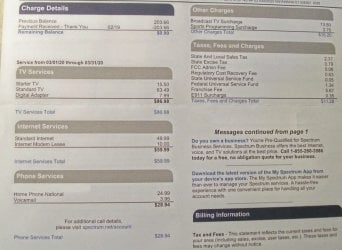
Spectrum Internet Ultra With WiFi (400 Mbps) - $94.99My ISP is Spectrum. My modem is a Motorola SB5101. My cable bill is "bundled" which includes phone and TV and the bottom line per month is $213.29. The itemized invoice shows I am paying $59.99 for Internet connection plus a $10 modem lease fee.
Spectrum TV Gold (HBO, Showtime, Starz, TCM, etc.) - $112.49
Spectrum Voice (unlimited long distance) - $9.99
Total bill with fees and equipment rental - $251.94
My Computer
At a glance
Windows 7 Professional SP1 64-bitIntel Core i7-4790 3.60 GHz32 GB DDR3-1600 MHzIntegrated Intel HD Graphics 4600
- Computer type
- PC/Desktop
- Computer Manufacturer/Model Number
- Dell OptiPlex 9020
- OS
- Windows 7 Professional SP1 64-bit
- CPU
- Intel Core i7-4790 3.60 GHz
- Memory
- 32 GB DDR3-1600 MHz
- Graphics Card(s)
- Integrated Intel HD Graphics 4600
- Monitor(s) Displays
- Viewsonic 32" LCD
- Hard Drives
- Kingston SATA 3 240 GB SSD
- Internet Speed
- Spectrum Internet 1000 Mbps
Spectrum Internet Ultra With WiFi (400 Mbps) - $94.99
Spectrum TV Gold (HBO, Showtime, Starz, TCM, etc.) - $112.49
Spectrum Voice (unlimited long distance) - $9.99
Total bill with fees and equipment rental - $251.94
That may not be true for his area. I tried to pull up the rates for Syracuse since all I know is that he lives in up state NY and the website told me to call them. How did you find those rates? It does look like he's being fleeced.
Also, is that just the introductory rates or what ever marketing crap it's called? I know cable providers will advertise so-called 'starting at' prices and then latter on go up from there.
My Computer
At a glance
Windows 7 Ultimate x64
- Computer type
- PC/Desktop
- OS
- Windows 7 Ultimate x64
Debodun, just out of curisoty. Have you ever power cycled your modem? It's possible that you may not be aware of a free Internet speed upgrade your ISP rolled out and in order to take advantage of that you have to power cycle the modem. To do that press and hold the reset button for at least 10-15 seconds. The reset button will more than likely be be a small recessed hole where you have to use something like a tooth pick. It's worth a shot if in fact you were given a free Internet speed boost and didn't know about it. But I do have my doubts.
My Computer
At a glance
Windows 7 Ultimate x64
- Computer type
- PC/Desktop
- OS
- Windows 7 Ultimate x64
$251.94 a month isn't cheap, but I've been with Spectrum (formerly under different names) since I got cable service for the first time in 1999.
Frontier FIOS is the other big boy in the Tampa Bay area, but I'm content to stick with Spectrum.
Frontier FIOS is the other big boy in the Tampa Bay area, but I'm content to stick with Spectrum.
My Computer
At a glance
Windows 7 Professional SP1 64-bitIntel Core i7-4790 3.60 GHz32 GB DDR3-1600 MHzIntegrated Intel HD Graphics 4600
- Computer type
- PC/Desktop
- Computer Manufacturer/Model Number
- Dell OptiPlex 9020
- OS
- Windows 7 Professional SP1 64-bit
- CPU
- Intel Core i7-4790 3.60 GHz
- Memory
- 32 GB DDR3-1600 MHz
- Graphics Card(s)
- Integrated Intel HD Graphics 4600
- Monitor(s) Displays
- Viewsonic 32" LCD
- Hard Drives
- Kingston SATA 3 240 GB SSD
- Internet Speed
- Spectrum Internet 1000 Mbps
I remember doing that, but it was a while ago. Does the computer have to be on to do that? This power cycle is not the same as just unplugging the modem for 5 minutes, then re-booting?
My Computer
At a glance
Windows 7 Ultimate x641.86 GHz Intrel Core 23 GB Dual Channel DDR2 @ 3.32 MHzIntel Q965/Q963 Express chipset
- Computer type
- PC/Desktop
- Computer Manufacturer/Model Number
- refurb in an HP/Compaq case
- OS
- Windows 7 Ultimate x64
- CPU
- 1.86 GHz Intrel Core 2
- Motherboard
- HP 0A60h XU1
- Memory
- 3 GB Dual Channel DDR2 @ 3.32 MHz
- Graphics Card(s)
- Intel Q965/Q963 Express chipset
- Monitor(s) Displays
- Dell CRT
- Hard Drives
- 977GB Samsung HD 103 SI ATA
- Case
- HP Compaq DC5800
- Mouse
- wired optical
- Antivirus
- Microsoft Security Essentials, MalwareBytes, Spyware Blaster
- Browser
- Firefox 32-bit
My ISP is Spectrum. My modem is a Motorola SB5101. My cable bill is "bundled" which includes phone and TV and the bottom line per month is $213.29. The itemized invoice shows I am paying $59.99 for Internet connection plus a $10 modem lease fee.
I pay $49.99 with internet only at Spectrum. I bought my own modem.
Oh and my d/l speed is 20 Mbps...Thats why I'm here.
My Computer
At a glance
Windows 7 Home Premium 64 bit3rd Generation Intel® Core™ i5-3317U6.00 GBIntel HD Graphics 4000
- Computer Manufacturer/Model Number
- Inspiron 5520
- OS
- Windows 7 Home Premium 64 bit
- CPU
- 3rd Generation Intel® Core™ i5-3317U
- Motherboard
- Dell Inc., 04G65K, A02, .GT7DGS1.CN1296627H0F0C.
- Memory
- 6.00 GB
- Graphics Card(s)
- Intel HD Graphics 4000
- Screen Resolution
- 1366x768
- Hard Drives
- C: Total - 939685 MB
- PSU
- plugged in
- Case
- changeable
- Local time
- 5:53 PM
- Messages
- 182
Verizon FiOS 200 down 220 up. $40/mo (no taxes).
That was after I found out my $57/mo 100MB service was upped to 200meg. via a number of phone calls.
That was after I found out my $57/mo 100MB service was upped to 200meg. via a number of phone calls.
My Computers
-
At a glance
Win7 x64AMD- Computer type
- Laptop
- Computer Manufacturer/Model Number
- Toshiba
- OS
- Win7 x64
- CPU
- AMD
-
At a glance
Win 7 Pro x64AMD FX-835016GBnVidia GeForce 1060- Computer type
- PC/Desktop
- System Manufacturer/Model Number
- AMD based MB
- OS
- Win 7 Pro x64
- CPU
- AMD FX-8350
- Motherboard
- Gigabyte GA-970A-D3P
- Memory
- 16GB
- Graphics Card(s)
- nVidia GeForce 1060
- Monitor(s) Displays
- 25"
- Screen Resolution
- 1920x1200
- Hard Drives
- two SSD;
two 4TB HDD
- PSU
- 700watt Seasonic
- Internet Speed
- 300MB up & down
- Browser
- Firefox
- Other Info
- BD Recorder

My Computer
At a glance
windows 7 home permium 64 bitsi7 950dominator memory 16gigsasus gtx680 dcii oc,
- Computer type
- PC/Desktop
- Computer Manufacturer/Model Number
- home built
- OS
- windows 7 home permium 64 bits
- CPU
- i7 950
- Motherboard
- asus sabetooth x58
- Memory
- dominator memory 16gigs
- Graphics Card(s)
- asus gtx680 dcii oc,
- Sound Card
- asus xonar phoebus ,sennheiser pro headphones
- Monitor(s) Displays
- BenQ XL2420T 24" Class Widescreen LED Backlit Gaming Monito
- Hard Drives
- "Intel® SSD 520 Series (240GB, 2.5in SATA 6Gb/s, 25nm, MLC/ Samsung evo 1tb ssd
2X wd 1tb 64mb cash sata 6oo/6g hdd
- PSU
- corsair ax850 watt psu
- Case
- tk v51
- Cooling
- cpu h100i gtx case 4x140 riing fans 1x120 riing fan
- Keyboard
- CORSAIR k70 rgb
- Mouse
- corsair m65 rgb
- Internet Speed
- 120 down 15.0 up
- Antivirus
- webroot/mwb
- Browser
- IE /crome

Seriously, I'm allotted 300 Mbps, but can only use 100 Mbps because I only wired up the house with two pairs of wires in the Ethernet cabling (there are 4 pairs in Ethernet cable). So if I used all eight wires (four pairs) I'd have 1 Gbps so I could pull the 300 Mbps instead of the 100 Mbps max with two pairs of wires. At the time I didn't think I'd go past that. So just a few days ago I bought pre-made patch Ethernet cable so I can saturate the modem with my allotted bandwidth. I didn't want to mess with keystone connectors and trying to crimp the connectors and all that all over again.
My Computer
At a glance
Windows 7 Ultimate x64
- Computer type
- PC/Desktop
- OS
- Windows 7 Ultimate x64
- Local time
- 5:53 PM
- Messages
- 182
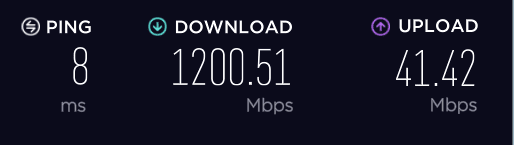
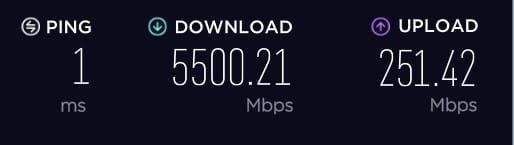
Where on Earth did those previous numbers come from?? I doubt any consumer has 5 Gb service.
My Computers
-
At a glance
Win7 x64AMD- Computer type
- Laptop
- Computer Manufacturer/Model Number
- Toshiba
- OS
- Win7 x64
- CPU
- AMD
-
At a glance
Win 7 Pro x64AMD FX-835016GBnVidia GeForce 1060- Computer type
- PC/Desktop
- System Manufacturer/Model Number
- AMD based MB
- OS
- Win 7 Pro x64
- CPU
- AMD FX-8350
- Motherboard
- Gigabyte GA-970A-D3P
- Memory
- 16GB
- Graphics Card(s)
- nVidia GeForce 1060
- Monitor(s) Displays
- 25"
- Screen Resolution
- 1920x1200
- Hard Drives
- two SSD;
two 4TB HDD
- PSU
- 700watt Seasonic
- Internet Speed
- 300MB up & down
- Browser
- Firefox
- Other Info
- BD Recorder
OCIR's image is probably from work or at home using fiber.
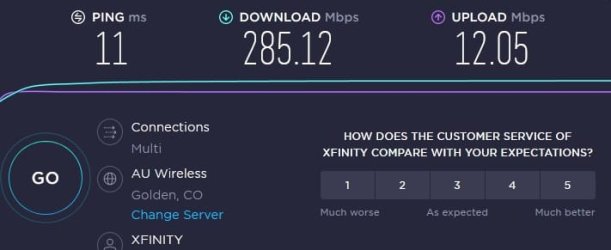
Mine is just an edited image. LOL My real speed should be 300 Mbps. Instead it says 285 Mbps. So I'm being ripped off 1.8 MBps. I doubt it's the router. I can rule it out by plugging directly into the modem, but don't feel like messing with it.
Mine is just an edited image. LOL My real speed should be 300 Mbps. Instead it says 285 Mbps. So I'm being ripped off 1.8 MBps. I doubt it's the router. I can rule it out by plugging directly into the modem, but don't feel like messing with it.
My Computer
At a glance
Windows 7 Ultimate x64
- Computer type
- PC/Desktop
- OS
- Windows 7 Ultimate x64

- Local time
- 4:53 PM
- Messages
- 546
You need to read your ISP agreement. ISPs only say up to a specific speed not guarantee it. However, if you were only getting 20 Mbps then you might have a case.OCIR's image is probably from work or at home using fiber.
Mine is just an edited image. LOL My real speed should be 300 Mbps. Instead it says 285 Mbps. So I'm being ripped off 1.8 MBps. I doubt it's the router. I can rule it out by plugging directly into the modem, but don't feel like messing with it.
Spectrum: Up to 200, 400, 1000 Mbps (wireless speeds may vary)
Xfinty: 50 Mbps, 100 Mbps, 300 Mbps, 600 Mbps, 900 Mbps, 1200 Mbps, 3000 Mbps (Actual speeds vary and are not guaranteed)
My Computers
-
At a glance
Windows 7 Home Premium 64-bitsAMD FX-8350GSKILL Ripjaw-X PC3 12800 8GB (2x4GB)ASUS ROG STRIX GTX 1060 6GB- Computer type
- PC/Desktop
- Computer Manufacturer/Model Number
- Custom build
- OS
- Windows 7 Home Premium 64-bits
- CPU
- AMD FX-8350
- Motherboard
- Gigabyte GA-990FXA-UD3 (AM3+)
- Memory
- GSKILL Ripjaw-X PC3 12800 8GB (2x4GB)
- Graphics Card(s)
- ASUS ROG STRIX GTX 1060 6GB
- Sound Card
- Integrated
- Monitor(s) Displays
- Asus VE228H (21.5-in)
- Screen Resolution
- 1920x1080 60Hz
- Hard Drives
- SAMSUNG 870 EVO 2.5 Inch SATA SSD (1TB)
SAMSUNG 870 EVO 2.5 Inch SATA SSD (1TB)
SAMSUNG 870 EVO 2.5 Inch SATA SSD (1TB)
- PSU
- Corsair RM750x (750 watts)
- Case
- Corsair Carbide Series 200R
- Cooling
- Corsair Hydro Series H60 (CWCH60)
- Keyboard
- Logitech Elite
- Mouse
- Logitech M510 Wireless Mouse
- Internet Speed
- Comcast Gigabit Extra (1200Mbps down / 35Mbps up)
- Antivirus
- Malwarebytes
- Browser
- Firefox, Edge, Chrome
- Other Info
- ASUS DRW-24B1ST DVD-RW (24X) optical drive
Seagate Expansion Desk (5TB) external SATA/USB HDD
Comcast XB8 Internet Gateway
-
At a glance
Windows 7 Pro (64-bit)AMD Phenom II 960T X4Corsair XMS2 DDR2-800 8GB (4x2GB)ASUS ENGTX560 DCII OC/2DI/1GD5 1GB- Computer type
- PC/Desktop
- System Manufacturer/Model Number
- Custom
- OS
- Windows 7 Pro (64-bit)
- CPU
- AMD Phenom II 960T X4
- Motherboard
- ASUS M4N82 Deluxe
- Memory
- Corsair XMS2 DDR2-800 8GB (4x2GB)
- Graphics Card(s)
- ASUS ENGTX560 DCII OC/2DI/1GD5 1GB
- Monitor(s) Displays
- Samsung 930B 19-inch LCD
- Screen Resolution
- 1280x1024
- Hard Drives
- Samsung SSD 870 EVO 1000 GB (Windows 10)
Seagate ST1000DM003 1000 GB (Windows 7)
- PSU
- Antec TruePower (new) TP-650
- Case
- Antec Three Hundred
- Cooling
- AMD stock cooler from FX8350
- Mouse
- Logitech M100
- Internet Speed
- Xfinity Gigabit Extra 1200/35 Mbps
The "not guaranteed" part is just a legal buffering maneuver to mitigate litigation due to how consumer electronics are and the medium by which the data is sent. My cable modem could probably do 1 Gbps easily if the modem's profile allowed it. Not only that, but I purposely set the modem on my work bench next to the wall where just behind the wall to the outside is the network interface service entrance. That will insure the modem is as close to the service entrance as possible to minimize any data decay through impedance on the coaxial line.
The missing 1.8 MBps could be due to some unknown overhead in my router or computer. I could rule it out by plugging directly into the modem and see what happens. But because Comcast has so-called "sticky" IP address assignments, if I plug directly into the modem with my computer for testing, the MAC address will change and thus I'll get a new external WAN IP address. Then when I plug back into the router I doubt I'll have the same external WAN IP address I had before. This can be a real pain when your IP address is tied to a firewall and lots of other things for access control that can't (at this time) take advantage of a DDNS issued name.
Next thing you know pharmaceuticals will use litigation mitigation by stating a whole class of "possible" side effects. Sure, I always wanted to take Lithotripsy and have the overwhelming desire to sniff my carpet and oink like a pig... Oh wait.
The missing 1.8 MBps could be due to some unknown overhead in my router or computer. I could rule it out by plugging directly into the modem and see what happens. But because Comcast has so-called "sticky" IP address assignments, if I plug directly into the modem with my computer for testing, the MAC address will change and thus I'll get a new external WAN IP address. Then when I plug back into the router I doubt I'll have the same external WAN IP address I had before. This can be a real pain when your IP address is tied to a firewall and lots of other things for access control that can't (at this time) take advantage of a DDNS issued name.
Next thing you know pharmaceuticals will use litigation mitigation by stating a whole class of "possible" side effects. Sure, I always wanted to take Lithotripsy and have the overwhelming desire to sniff my carpet and oink like a pig... Oh wait.
My Computer
At a glance
Windows 7 Ultimate x64
- Computer type
- PC/Desktop
- OS
- Windows 7 Ultimate x64
- Local time
- 4:53 PM
- Messages
- 546
I think you are fretting about absolutely nothing. You will never get an exact Internet speed no matter how hard you try.The "not guaranteed" part is just a legal buffering maneuver to mitigate litigation due to how consumer electronics are and the medium by which the data is sent. My cable modem could probably do 1 Gbps easily if the modem's profile allowed it. Not only that, but I purposely set the modem on my work bench next to the wall where just behind the wall to the outside is the network interface service entrance. That will insure the modem is as close to the service entrance as possible to minimize any data decay through impedance on the coaxial line.
The missing 1.8 MBps could be due to some unknown overhead in my router or computer. I could rule it out by plugging directly into the modem and see what happens. But because Comcast has so-called "sticky" IP address assignments, if I plug directly into the modem with my computer for testing, the MAC address will change and thus I'll get a new external WAN IP address. Then when I plug back into the router I doubt I'll have the same external WAN IP address I had before. This can be a real pain when your IP address is tied to a firewall and lots of other things for access control that can't (at this time) take advantage of a DDNS issued name.
Next thing you know pharmaceuticals will use litigation mitigation by stating a whole class of "possible" side effects. Sure, I always wanted to take Lithotripsy and have the overwhelming desire to sniff my carpet and oink like a pig... Oh wait.
The result that the speed test gives you depends upon many things including:
- What program you are using to perform the test
- What server you are connecting for the test
- The network traffic between you and the test server
- The time of day
BTW, you might want to find somebody located nearby with the same plan as you. You can then have them run the same speed test as you are using.
My Computers
-
At a glance
Windows 7 Home Premium 64-bitsAMD FX-8350GSKILL Ripjaw-X PC3 12800 8GB (2x4GB)ASUS ROG STRIX GTX 1060 6GB- Computer type
- PC/Desktop
- Computer Manufacturer/Model Number
- Custom build
- OS
- Windows 7 Home Premium 64-bits
- CPU
- AMD FX-8350
- Motherboard
- Gigabyte GA-990FXA-UD3 (AM3+)
- Memory
- GSKILL Ripjaw-X PC3 12800 8GB (2x4GB)
- Graphics Card(s)
- ASUS ROG STRIX GTX 1060 6GB
- Sound Card
- Integrated
- Monitor(s) Displays
- Asus VE228H (21.5-in)
- Screen Resolution
- 1920x1080 60Hz
- Hard Drives
- SAMSUNG 870 EVO 2.5 Inch SATA SSD (1TB)
SAMSUNG 870 EVO 2.5 Inch SATA SSD (1TB)
SAMSUNG 870 EVO 2.5 Inch SATA SSD (1TB)
- PSU
- Corsair RM750x (750 watts)
- Case
- Corsair Carbide Series 200R
- Cooling
- Corsair Hydro Series H60 (CWCH60)
- Keyboard
- Logitech Elite
- Mouse
- Logitech M510 Wireless Mouse
- Internet Speed
- Comcast Gigabit Extra (1200Mbps down / 35Mbps up)
- Antivirus
- Malwarebytes
- Browser
- Firefox, Edge, Chrome
- Other Info
- ASUS DRW-24B1ST DVD-RW (24X) optical drive
Seagate Expansion Desk (5TB) external SATA/USB HDD
Comcast XB8 Internet Gateway
-
At a glance
Windows 7 Pro (64-bit)AMD Phenom II 960T X4Corsair XMS2 DDR2-800 8GB (4x2GB)ASUS ENGTX560 DCII OC/2DI/1GD5 1GB- Computer type
- PC/Desktop
- System Manufacturer/Model Number
- Custom
- OS
- Windows 7 Pro (64-bit)
- CPU
- AMD Phenom II 960T X4
- Motherboard
- ASUS M4N82 Deluxe
- Memory
- Corsair XMS2 DDR2-800 8GB (4x2GB)
- Graphics Card(s)
- ASUS ENGTX560 DCII OC/2DI/1GD5 1GB
- Monitor(s) Displays
- Samsung 930B 19-inch LCD
- Screen Resolution
- 1280x1024
- Hard Drives
- Samsung SSD 870 EVO 1000 GB (Windows 10)
Seagate ST1000DM003 1000 GB (Windows 7)
- PSU
- Antec TruePower (new) TP-650
- Case
- Antec Three Hundred
- Cooling
- AMD stock cooler from FX8350
- Mouse
- Logitech M100
- Internet Speed
- Xfinity Gigabit Extra 1200/35 Mbps
I already know about the variables. Believe me. I've tried other "speed test" websites as well. Up to and including Cloudflare's. What I can tell you is that I'm betting that if the profile in the modem were swamped for a higher tier service, I bet, just bet you'd get that 1 Gbps or what ever. So what I'm trying to say is, if a different modem profile could get me say, near 1 Gbps, it sure as hell should give me 300 Mbps.
Again, I need to bypass my router to verify. And yes, I've rebooted my modem I don't know how many times for certain things after the "free" upgrade was given some years ago.
My town is putting in fiber anyway, and I want those asymmetric speeds, so I'll be switching. Think I'll still get 285 Mbps? LOL!
Due note, I'm not really complaining, I just stated it wasn't full 300 Mbps as was advertised and that I needed to bypass my router for testing. Nothing more, nothing less.
I yield back the balance of my time.
Again, I need to bypass my router to verify. And yes, I've rebooted my modem I don't know how many times for certain things after the "free" upgrade was given some years ago.
My town is putting in fiber anyway, and I want those asymmetric speeds, so I'll be switching. Think I'll still get 285 Mbps? LOL!
Due note, I'm not really complaining, I just stated it wasn't full 300 Mbps as was advertised and that I needed to bypass my router for testing. Nothing more, nothing less.
I yield back the balance of my time.
My Computer
At a glance
Windows 7 Ultimate x64
- Computer type
- PC/Desktop
- OS
- Windows 7 Ultimate x64
Similar threads

- Replies
- 22
- Views
- 3K

- Replies
- 98
- Views
- 19K

