Solved BSOD new build, error 0x0000001e

CptSwagSauce

New member
Local time
1:11 PM
Messages
3
Afternoon all,

I apologise that this is my first post, however I am truly at a loss.

My build is:

Intel 4670k i5
Gigabyte Z87X-D3H
(4x4) 16GB Avexir Core Series (1600MHz)
7970 ASUS Matrix

This is a brand new build, of which I have experienced a number of BSODs during it's conception. I am now on my 5th install of Windows and still haven't isolated the issue.

So far I have:

- Memtest'd all memory modules, individually and in different slots (all 1 pass with 0 errors - I will run overnight for a greater number of passes as time has been a constraint).
- Removed my SSD to eliminate this from the possibilities.
- installed old/current/beta GPU drivers.
- Currently no AV installed to eliminate this as a contributing factor

The occurrences seem to have reduced, but not gone completely. I wish I had my previous logs to share, but this is my most recent install of Windows and my only log is now attached.

I am at a loss of where to go next other than perhaps update my motherboard's BIOS?

Any help would be greatly appreciated - apologies if I've left off any information (just ask).

Thanks, Adam
 

My Computer My Computer

Computer type
PC/Desktop
OS
Windows 7 Ultimate x64
Hi CptSwagSauce.

Install Service pack 1 and all other windows updates. Otherwise the system will remain vulnerable to threats.
Code:
[COLOR=Red]Windows 7 Kernel Version 7600 MP[/COLOR] (4 procs) Free x64
Product: WinNt, suite: TerminalServer SingleUserTS
Built by: 7600.17273.amd64fre.win7_gdr.130318-1532
Learn how to install Windows 7 Service Pack 1 (SP1)
Service Pack and Update Center - Microsoft Windows

Scan the system for possible virus infection with the following programs.

Do some Disc checks.

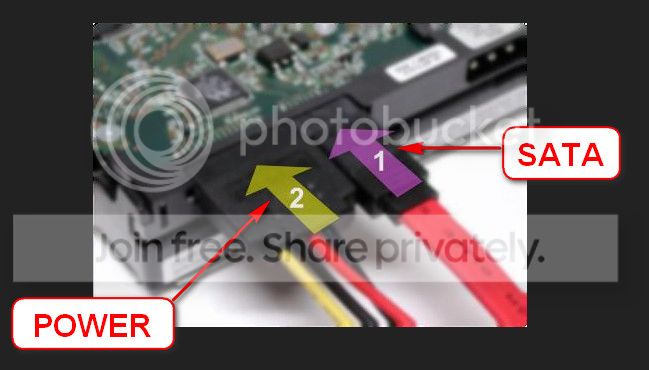
  1. Re-seat the sata and power cables.
    72974453_zps85c47d93.jpg

    Amke it sure that the HDDis properly screwed there. Also, if possible, change the SATA cable and apply it in another port on the motherboard.
  2. Run chkdsk /f/r, following the option two of the tutorial Disk Check
  3. Seatool for dos: SeaTools | Seagate download
    Burn it in a blank cd. boot from the CD, click on "Accept", wait for it to finish detecting the drives, then in the upper left corner select "Basic Tests", then select "Long Test" and let it run.
Let us know the results.
 

My Computer My Computer

Computer type
PC/Desktop
Computer Manufacturer/Model Number
Self Assembled
OS
Microsoft Windows 10 Pro Insider Preview 64-bit
CPU
Intel(R) Core(TM) i3-4130 CPU @ 3.40GHz
Motherboard
Gigabyte Technology Co., Ltd. B85M-D3H
Memory
Corsair Vengence 4GB x2 (8.00GB Dual-Channel DDR3 @ 798MHz)
Graphics Card(s)
2047MB GeForce GTS 450 (ZOTAC International)
Sound Card
Onboard (Realtek High Definition Audio)
Monitor(s) Displays
LG Flatron E2040T
Screen Resolution
1600x900
Hard Drives
Western Digital 1 TB
Seagate 500 GB
PSU
Corsair VS550
Case
Cooler Master K380
Cooling
Cooler Master Seidon 120V Plus
Keyboard
Logitech MK260r
Mouse
Logitech MK260r
Internet Speed
PMPL Broadband
Antivirus
Windows Defender + MBAM
Browser
Firefox
Other Info
Dell Studio 15" Laptop
Thank you Arc - Didn't realise I was still missing SP1!

I have done all of the above and no faults were found. I've switched both SATA ports and wire for my HDD connection.

A few hours in and no blue screen which is currently an improvement, although I'm not convinced they have gone away for good just yet. Going to leave it running over night to see if it logs any more BSODs - will report back.
 

My Computer My Computer

Computer type
PC/Desktop
OS
Windows 7 Ultimate x64
After a few more nights of research I discovered some Gigabyte motherboards (mine is a Z87X D3H) don't like having all memory slots occupied. After removing 2 of my 4 memory sticks the system now appears to be stable without BSODs.

Not an ideal solution obviously, but it's nice to know where the problem lies!

Hopefully this may help others :).
 

My Computer My Computer

Computer type
PC/Desktop
OS
Windows 7 Ultimate x64
After a few more nights of research I discovered some Gigabyte motherboards (mine is a Z87X D3H) don't like having all memory slots occupied. After removing 2 of my 4 memory sticks the system now appears to be stable without BSODs.

Not an ideal solution obviously, but it's nice to know where the problem lies!

Hopefully this may help others :).
What you have said about the board is true.

And your conclusion is also true ...... but that is a bad luck only.
 

My Computer My Computer

Computer type
PC/Desktop
Computer Manufacturer/Model Number
Self Assembled
OS
Microsoft Windows 10 Pro Insider Preview 64-bit
CPU
Intel(R) Core(TM) i3-4130 CPU @ 3.40GHz
Motherboard
Gigabyte Technology Co., Ltd. B85M-D3H
Memory
Corsair Vengence 4GB x2 (8.00GB Dual-Channel DDR3 @ 798MHz)
Graphics Card(s)
2047MB GeForce GTS 450 (ZOTAC International)
Sound Card
Onboard (Realtek High Definition Audio)
Monitor(s) Displays
LG Flatron E2040T
Screen Resolution
1600x900
Hard Drives
Western Digital 1 TB
Seagate 500 GB
PSU
Corsair VS550
Case
Cooler Master K380
Cooling
Cooler Master Seidon 120V Plus
Keyboard
Logitech MK260r
Mouse
Logitech MK260r
Internet Speed
PMPL Broadband
Antivirus
Windows Defender + MBAM
Browser
Firefox
Other Info
Dell Studio 15" Laptop
Back
Top