Solved Erratic BSOD issue with new build

Let us know how it goes.

While installing chipset drivers from the disc, it is better to not go for install all the things but the necessary drivers only like chipset, sound, display and LAN. RST is additional and easily avoidable.
 

My Computer

Computer type
PC/Desktop
Computer Manufacturer/Model Number
Self Assembled
OS
Microsoft Windows 10 Pro Insider Preview 64-bit
CPU
Intel(R) Core(TM) i3-4130 CPU @ 3.40GHz
Motherboard
Gigabyte Technology Co., Ltd. B85M-D3H
Memory
Corsair Vengence 4GB x2 (8.00GB Dual-Channel DDR3 @ 798MHz)
Graphics Card(s)
2047MB GeForce GTS 450 (ZOTAC International)
Sound Card
Onboard (Realtek High Definition Audio)
Monitor(s) Displays
LG Flatron E2040T
Screen Resolution
1600x900
Hard Drives
Western Digital 1 TB
Seagate 500 GB
PSU
Corsair VS550
Case
Cooler Master K380
Cooling
Cooler Master Seidon 120V Plus
Keyboard
Logitech MK260r
Mouse
Logitech MK260r
Internet Speed
PMPL Broadband
Antivirus
Windows Defender + MBAM
Browser
Firefox
Other Info
Dell Studio 15" Laptop
Let us know how it goes.

While installing chipset drivers from the disc, it is better to not go for install all the things but the necessary drivers only like chipset, sound, display and LAN. RST is additional and easily avoidable.

OK. Little update for you. Mainly spent last night reloading and reconfiguring stuff with about fifteen minutes of gaming. Much improved but two crashes to date. The last one was an IRQL_NOT_LESS_THAN_OR_EQUAL, the one before I forget but both were linked to ntoskernel. I'd reinstalled AVG this time as an anti-virus. Third party driver-wise then the obvious essentials aside there are only printer and joystick drivers added thus far.

Since the second crash i've switched to the MS AHCI driver from the Intel one the chipset driver package installed. I've also run memtest 86+ (I was using the non '+' version previously) for seven hours overnight with no issues reported.
 

My Computer

Computer type
PC/Desktop
Computer Manufacturer/Model Number
Custom
OS
Windows 7 Home Premium 64 Bit SP1
CPU
i5 4670K
Motherboard
Gigabyte Z87-D3HP
Memory
16GB Corsair Vengence 1600
Graphics Card(s)
AMD 6950
Hard Drives
Samsung 830 SSD
Seagate ST200DM
Samsung HD753LJ
Seagate ST310005
Antivirus
AVG
Browser
IE 10, Firefox, Chrome

My Computer

Computer type
PC/Desktop
Computer Manufacturer/Model Number
Self Assembled
OS
Microsoft Windows 10 Pro Insider Preview 64-bit
CPU
Intel(R) Core(TM) i3-4130 CPU @ 3.40GHz
Motherboard
Gigabyte Technology Co., Ltd. B85M-D3H
Memory
Corsair Vengence 4GB x2 (8.00GB Dual-Channel DDR3 @ 798MHz)
Graphics Card(s)
2047MB GeForce GTS 450 (ZOTAC International)
Sound Card
Onboard (Realtek High Definition Audio)
Monitor(s) Displays
LG Flatron E2040T
Screen Resolution
1600x900
Hard Drives
Western Digital 1 TB
Seagate 500 GB
PSU
Corsair VS550
Case
Cooler Master K380
Cooling
Cooler Master Seidon 120V Plus
Keyboard
Logitech MK260r
Mouse
Logitech MK260r
Internet Speed
PMPL Broadband
Antivirus
Windows Defender + MBAM
Browser
Firefox
Other Info
Dell Studio 15" Laptop

My Computer

Computer type
PC/Desktop
Computer Manufacturer/Model Number
Custom
OS
Windows 7 Home Premium 64 Bit SP1
CPU
i5 4670K
Motherboard
Gigabyte Z87-D3HP
Memory
16GB Corsair Vengence 1600
Graphics Card(s)
AMD 6950
Hard Drives
Samsung 830 SSD
Seagate ST200DM
Samsung HD753LJ
Seagate ST310005
Antivirus
AVG
Browser
IE 10, Firefox, Chrome
Make it sure that your Samsung SSD is running with the up-to date firmware.

Do some Disc checks to the other HDDs other than the SSD.

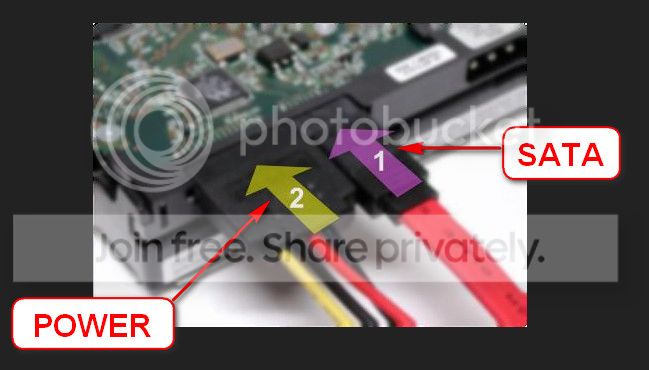
  1. Re-seat the sata and power.
    72974453_zps85c47d93.jpg
  2. Run chkdsk /f/r, following the option two of the tutorial Disk Check
  3. Seatool for dos: SeaTools | Seagate download
    Burn it in a blank cd. boot from the CD, click on "Accept", wait for it to finish detecting the drives, then in the upper left corner select "Basic Tests", then select "Long Test" and let it run.
  4. Post screenshots of all the SSDs and HDDs using CrystalDiskInfo - Software - Crystal Dew World
 

My Computer

Computer type
PC/Desktop
Computer Manufacturer/Model Number
Self Assembled
OS
Microsoft Windows 10 Pro Insider Preview 64-bit
CPU
Intel(R) Core(TM) i3-4130 CPU @ 3.40GHz
Motherboard
Gigabyte Technology Co., Ltd. B85M-D3H
Memory
Corsair Vengence 4GB x2 (8.00GB Dual-Channel DDR3 @ 798MHz)
Graphics Card(s)
2047MB GeForce GTS 450 (ZOTAC International)
Sound Card
Onboard (Realtek High Definition Audio)
Monitor(s) Displays
LG Flatron E2040T
Screen Resolution
1600x900
Hard Drives
Western Digital 1 TB
Seagate 500 GB
PSU
Corsair VS550
Case
Cooler Master K380
Cooling
Cooler Master Seidon 120V Plus
Keyboard
Logitech MK260r
Mouse
Logitech MK260r
Internet Speed
PMPL Broadband
Antivirus
Windows Defender + MBAM
Browser
Firefox
Other Info
Dell Studio 15" Laptop
Funnily enough I checked the cables earlier. Seemed OK.

Chkdsk was fine the other day but I will run again along with the Seagate stuff.

Crystal screenshots attached (1x SSD and 3 x HDDs, one of which is split into two partitions)
 

My Computer

Computer type
PC/Desktop
Computer Manufacturer/Model Number
Custom
OS
Windows 7 Home Premium 64 Bit SP1
CPU
i5 4670K
Motherboard
Gigabyte Z87-D3HP
Memory
16GB Corsair Vengence 1600
Graphics Card(s)
AMD 6950
Hard Drives
Samsung 830 SSD
Seagate ST200DM
Samsung HD753LJ
Seagate ST310005
Antivirus
AVG
Browser
IE 10, Firefox, Chrome
All seems fine. But there must be some causes of the stop 0xf4 bsod. Make sure the firmware is updated and the seatools test, too.

I will ask for some more help, if I am missing something.
 

My Computer

Computer type
PC/Desktop
Computer Manufacturer/Model Number
Self Assembled
OS
Microsoft Windows 10 Pro Insider Preview 64-bit
CPU
Intel(R) Core(TM) i3-4130 CPU @ 3.40GHz
Motherboard
Gigabyte Technology Co., Ltd. B85M-D3H
Memory
Corsair Vengence 4GB x2 (8.00GB Dual-Channel DDR3 @ 798MHz)
Graphics Card(s)
2047MB GeForce GTS 450 (ZOTAC International)
Sound Card
Onboard (Realtek High Definition Audio)
Monitor(s) Displays
LG Flatron E2040T
Screen Resolution
1600x900
Hard Drives
Western Digital 1 TB
Seagate 500 GB
PSU
Corsair VS550
Case
Cooler Master K380
Cooling
Cooler Master Seidon 120V Plus
Keyboard
Logitech MK260r
Mouse
Logitech MK260r
Internet Speed
PMPL Broadband
Antivirus
Windows Defender + MBAM
Browser
Firefox
Other Info
Dell Studio 15" Laptop
All seems fine. But there must be some causes of the stop 0xf4 bsod. Make sure the firmware is updated and the seatools test, too.

I will ask for some more help, if I am missing something.

Thanks. Chkdsk is running as I type. Seatools failed to see a disk controller so nothing to report for that.
 

My Computer

Computer type
PC/Desktop
Computer Manufacturer/Model Number
Custom
OS
Windows 7 Home Premium 64 Bit SP1
CPU
i5 4670K
Motherboard
Gigabyte Z87-D3HP
Memory
16GB Corsair Vengence 1600
Graphics Card(s)
AMD 6950
Hard Drives
Samsung 830 SSD
Seagate ST200DM
Samsung HD753LJ
Seagate ST310005
Antivirus
AVG
Browser
IE 10, Firefox, Chrome
Seatools failed to see a disk controller so nothing to report for that.
Interesting. Let us see a screenshot or camera snap by running it again?
 

My Computer

Computer type
PC/Desktop
Computer Manufacturer/Model Number
Self Assembled
OS
Microsoft Windows 10 Pro Insider Preview 64-bit
CPU
Intel(R) Core(TM) i3-4130 CPU @ 3.40GHz
Motherboard
Gigabyte Technology Co., Ltd. B85M-D3H
Memory
Corsair Vengence 4GB x2 (8.00GB Dual-Channel DDR3 @ 798MHz)
Graphics Card(s)
2047MB GeForce GTS 450 (ZOTAC International)
Sound Card
Onboard (Realtek High Definition Audio)
Monitor(s) Displays
LG Flatron E2040T
Screen Resolution
1600x900
Hard Drives
Western Digital 1 TB
Seagate 500 GB
PSU
Corsair VS550
Case
Cooler Master K380
Cooling
Cooler Master Seidon 120V Plus
Keyboard
Logitech MK260r
Mouse
Logitech MK260r
Internet Speed
PMPL Broadband
Antivirus
Windows Defender + MBAM
Browser
Firefox
Other Info
Dell Studio 15" Laptop
Seatools failed to see a disk controller so nothing to report for that.
Interesting. Let us see a screenshot or camera snap by running it again?


I'll try and do that for you in a bit. Would the controller mode affect it seeing the drives do you think?

Chkdsk'ed the half of one of the drives (partition E:, which is on the smaller, older Seagate). Interestingly I got another BSOD shortly after commencing Chkdsk'ing the second partition (partition Z: ).
 

My Computer

Computer type
PC/Desktop
Computer Manufacturer/Model Number
Custom
OS
Windows 7 Home Premium 64 Bit SP1
CPU
i5 4670K
Motherboard
Gigabyte Z87-D3HP
Memory
16GB Corsair Vengence 1600
Graphics Card(s)
AMD 6950
Hard Drives
Samsung 830 SSD
Seagate ST200DM
Samsung HD753LJ
Seagate ST310005
Antivirus
AVG
Browser
IE 10, Firefox, Chrome
Screenshot of Seagate Tools screen attached.

I've also taken the older Seagate drive out for now.
 

My Computer

Computer type
PC/Desktop
Computer Manufacturer/Model Number
Custom
OS
Windows 7 Home Premium 64 Bit SP1
CPU
i5 4670K
Motherboard
Gigabyte Z87-D3HP
Memory
16GB Corsair Vengence 1600
Graphics Card(s)
AMD 6950
Hard Drives
Samsung 830 SSD
Seagate ST200DM
Samsung HD753LJ
Seagate ST310005
Antivirus
AVG
Browser
IE 10, Firefox, Chrome
Hmm. You now need to plan for a dismantle and re-seat the computer. Probably the cabling is not in perfect state, and it is a good cause of a stop 0xf4 BSOD.
 

My Computer

Computer type
PC/Desktop
Computer Manufacturer/Model Number
Self Assembled
OS
Microsoft Windows 10 Pro Insider Preview 64-bit
CPU
Intel(R) Core(TM) i3-4130 CPU @ 3.40GHz
Motherboard
Gigabyte Technology Co., Ltd. B85M-D3H
Memory
Corsair Vengence 4GB x2 (8.00GB Dual-Channel DDR3 @ 798MHz)
Graphics Card(s)
2047MB GeForce GTS 450 (ZOTAC International)
Sound Card
Onboard (Realtek High Definition Audio)
Monitor(s) Displays
LG Flatron E2040T
Screen Resolution
1600x900
Hard Drives
Western Digital 1 TB
Seagate 500 GB
PSU
Corsair VS550
Case
Cooler Master K380
Cooling
Cooler Master Seidon 120V Plus
Keyboard
Logitech MK260r
Mouse
Logitech MK260r
Internet Speed
PMPL Broadband
Antivirus
Windows Defender + MBAM
Browser
Firefox
Other Info
Dell Studio 15" Laptop
Hmm. You now need to plan for a dismantle and re-seat the computer. Probably the cabling is not in perfect state, and it is a good cause of a stop 0xf4 BSOD.

OK. I re-did all the drive cables anyway last night when I pulled one of the drives out. Won't take 5 minutes to check the other cables tonight. As usual I will report back with either bad news or after a day or two of good/no news :rolleyes:
 

My Computer

Computer type
PC/Desktop
Computer Manufacturer/Model Number
Custom
OS
Windows 7 Home Premium 64 Bit SP1
CPU
i5 4670K
Motherboard
Gigabyte Z87-D3HP
Memory
16GB Corsair Vengence 1600
Graphics Card(s)
AMD 6950
Hard Drives
Samsung 830 SSD
Seagate ST200DM
Samsung HD753LJ
Seagate ST310005
Antivirus
AVG
Browser
IE 10, Firefox, Chrome
First for tonight :cry:
 

My Computer

Computer type
PC/Desktop
Computer Manufacturer/Model Number
Custom
OS
Windows 7 Home Premium 64 Bit SP1
CPU
i5 4670K
Motherboard
Gigabyte Z87-D3HP
Memory
16GB Corsair Vengence 1600
Graphics Card(s)
AMD 6950
Hard Drives
Samsung 830 SSD
Seagate ST200DM
Samsung HD753LJ
Seagate ST310005
Antivirus
AVG
Browser
IE 10, Firefox, Chrome
And more

EDIT: As a final throw of the dice i've removed half the RAM. The RAM I have is on the motherboard manufacturer's approved RAM list (4x4GB Corsair Vengeance 1600) but I have read a few observations that some Gigabyte motherboards have been playing up with >2 DIMMs in place.
 
Last edited:

My Computer

Computer type
PC/Desktop
Computer Manufacturer/Model Number
Custom
OS
Windows 7 Home Premium 64 Bit SP1
CPU
i5 4670K
Motherboard
Gigabyte Z87-D3HP
Memory
16GB Corsair Vengence 1600
Graphics Card(s)
AMD 6950
Hard Drives
Samsung 830 SSD
Seagate ST200DM
Samsung HD753LJ
Seagate ST310005
Antivirus
AVG
Browser
IE 10, Firefox, Chrome
And more

EDIT: As a final throw of the dice i've removed half the RAM. The RAM I have is on the motherboard manufacturer's approved RAM list (4x4GB Corsair Vengeance 1600) but I have read a few observations that some Gigabyte motherboards have been playing up with >2 DIMMs in place.
It should not be the final throw.

Have you tried the seatools test after re-seating the cables? What is the result? And what is the result of the memtest?

Moreover, there are some BSODs during using Steam. It is quite usual. Needs more troubleshooting on it.

When the Intel(R) Ethernet Connection I217-V driver e1d62x64.sys is failing despite of being the latest version, it is something there that is causing the blockage to the network. AVG is a known victim.

Uninstall AVG. Use Microsoft Security Essentials as your antivirus with windows inbuilt firewall, and free MBAM as the on demand scanner.
Download, install and update those, and then run full system scans with both of them, one by one.
It will attempt to minimize the netio.sys caused BSOD.

Let us know the results, all inclusive. For any further BSOD, post it following the Blue Screen of Death (BSOD) Posting Instructions. It needs more troubleshooting, as it is a multiple issue and you are a steam gamer.
__________________________________________________________________________
BSOD ANALYSIS:
Code:
BugCheck 1A, {41287, 0, 0, 0}

Probably caused by : ntkrnlmp.exe ( nt! ?? ::FNODOBFM::`string'+454f5 )

Followup: MachineOwner
----------------------------------------------------------------------------------
BugCheck D1, {fffffaa00dfd7430, 2, 1, fffff88001488211}

*** WARNING: Unable to verify timestamp for e1d62x64.sys
*** ERROR: Module load completed but symbols could not be loaded for e1d62x64.sys
*** WARNING: Unable to verify timestamp for atikmdag.sys
*** ERROR: Module load completed but symbols could not be loaded for atikmdag.sys
Probably caused by : NETIO.SYS ( NETIO!NetioDereferenceNetBufferListChain+132 )

Followup: MachineOwner
-------------------------------------------------------------------------------------
BugCheck A, {fffffa001153ffd8, 2, 0, fffff80003071621}

Probably caused by : ntkrnlmp.exe ( nt!AlpcpQueueIoCompletionPort+41 )

Followup: MachineOwner
---------
 

My Computer

Computer type
PC/Desktop
Computer Manufacturer/Model Number
Self Assembled
OS
Microsoft Windows 10 Pro Insider Preview 64-bit
CPU
Intel(R) Core(TM) i3-4130 CPU @ 3.40GHz
Motherboard
Gigabyte Technology Co., Ltd. B85M-D3H
Memory
Corsair Vengence 4GB x2 (8.00GB Dual-Channel DDR3 @ 798MHz)
Graphics Card(s)
2047MB GeForce GTS 450 (ZOTAC International)
Sound Card
Onboard (Realtek High Definition Audio)
Monitor(s) Displays
LG Flatron E2040T
Screen Resolution
1600x900
Hard Drives
Western Digital 1 TB
Seagate 500 GB
PSU
Corsair VS550
Case
Cooler Master K380
Cooling
Cooler Master Seidon 120V Plus
Keyboard
Logitech MK260r
Mouse
Logitech MK260r
Internet Speed
PMPL Broadband
Antivirus
Windows Defender + MBAM
Browser
Firefox
Other Info
Dell Studio 15" Laptop
And more

EDIT: As a final throw of the dice i've removed half the RAM. The RAM I have is on the motherboard manufacturer's approved RAM list (4x4GB Corsair Vengeance 1600) but I have read a few observations that some Gigabyte motherboards have been playing up with >2 DIMMs in place.
It should not be the final throw.

Have you tried the seatools test after re-seating the cables? What is the result? And what is the result of the memtest?

Moreover, there are some BSODs during using Steam. It is quite usual. Needs more troubleshooting on it.

When the Intel(R) Ethernet Connection I217-V driver e1d62x64.sys is failing despite of being the latest version, it is something there that is causing the blockage to the network. AVG is a known victim.

Uninstall AVG. Use Microsoft Security Essentials as your antivirus with windows inbuilt firewall, and free MBAM as the on demand scanner.
Download, install and update those, and then run full system scans with both of them, one by one.
It will attempt to minimize the netio.sys caused BSOD.

Let us know the results, all inclusive. For any further BSOD, post it following the Blue Screen of Death (BSOD) Posting Instructions. It needs more troubleshooting, as it is a multiple issue and you are a steam gamer.
__________________________________________________________________________
BSOD ANALYSIS:
Code:
BugCheck 1A, {41287, 0, 0, 0}

Probably caused by : ntkrnlmp.exe ( nt! ?? ::FNODOBFM::`string'+454f5 )

Followup: MachineOwner
----------------------------------------------------------------------------------
BugCheck D1, {fffffaa00dfd7430, 2, 1, fffff88001488211}

*** WARNING: Unable to verify timestamp for e1d62x64.sys
*** ERROR: Module load completed but symbols could not be loaded for e1d62x64.sys
*** WARNING: Unable to verify timestamp for atikmdag.sys
*** ERROR: Module load completed but symbols could not be loaded for atikmdag.sys
Probably caused by : NETIO.SYS ( NETIO!NetioDereferenceNetBufferListChain+132 )

Followup: MachineOwner
-------------------------------------------------------------------------------------
BugCheck A, {fffffa001153ffd8, 2, 0, fffff80003071621}

Probably caused by : ntkrnlmp.exe ( nt!AlpcpQueueIoCompletionPort+41 )

Followup: MachineOwner
---------


For Seatools I was stuck with the issue that it couldn't see any disks at all (I posted the screenshot as you requested). If you've got any theories on getting it to work then i'm open to suggestion. I did wonder if my BIOS having AHCI mode enabled was the issue and I should perhaps switch it back to IDE?

I know what you're saying about the antivirus stuff but i've now used three anti-virus products including MSE for an extended period and was getting the same crashes for all. Likewise the system has been scanned using a number of products several times with nothing untowards coming up.

As for reducing the number of DIMMs to two, I left the PC running in Windows overnight pulling down a load of games images over Steam, UPlay and Origin to keep it busy. I had also cranked the RAM frequency back up to 1600 as this previously increased the frequency of BSOD incidents (i've been running it at 1333 most of the time since i've had problems). Despite all this the machine did not crash in the 7 or so hours I left it running. It might just be luck but i'll know more when i've had a chance to run it over the weekend.
 

My Computer

Computer type
PC/Desktop
Computer Manufacturer/Model Number
Custom
OS
Windows 7 Home Premium 64 Bit SP1
CPU
i5 4670K
Motherboard
Gigabyte Z87-D3HP
Memory
16GB Corsair Vengence 1600
Graphics Card(s)
AMD 6950
Hard Drives
Samsung 830 SSD
Seagate ST200DM
Samsung HD753LJ
Seagate ST310005
Antivirus
AVG
Browser
IE 10, Firefox, Chrome
So far so good. BSOD incidents since switching to 2 DIMMs = 0. Had one lock-up but that was absolutely my own fault (accidentally flicked a cable out whilst sticking the side panel back on). Will update again in a day or two.
 

My Computer

Computer type
PC/Desktop
Computer Manufacturer/Model Number
Custom
OS
Windows 7 Home Premium 64 Bit SP1
CPU
i5 4670K
Motherboard
Gigabyte Z87-D3HP
Memory
16GB Corsair Vengence 1600
Graphics Card(s)
AMD 6950
Hard Drives
Samsung 830 SSD
Seagate ST200DM
Samsung HD753LJ
Seagate ST310005
Antivirus
AVG
Browser
IE 10, Firefox, Chrome
Monday morning and still absolutely solid as a rock on 2 DIMMs. I think we have our answer so its time to continue my frank conversation with Gigabyte. :mad:

Thanks again for all your help guys, your efforts have been massively appreciated.
 

My Computer

Computer type
PC/Desktop
Computer Manufacturer/Model Number
Custom
OS
Windows 7 Home Premium 64 Bit SP1
CPU
i5 4670K
Motherboard
Gigabyte Z87-D3HP
Memory
16GB Corsair Vengence 1600
Graphics Card(s)
AMD 6950
Hard Drives
Samsung 830 SSD
Seagate ST200DM
Samsung HD753LJ
Seagate ST310005
Antivirus
AVG
Browser
IE 10, Firefox, Chrome
Monday morning and still absolutely solid as a rock on 2 DIMMs. I think we have our answer so its time to continue my frank conversation with Gigabyte. :mad:

Thanks again for all your help guys, your efforts have been massively appreciated.
Good as a plan :)
If you think that your BSOD issue is over at a point of time, you may mark this thread as solved.
 

My Computer

Computer type
PC/Desktop
Computer Manufacturer/Model Number
Self Assembled
OS
Microsoft Windows 10 Pro Insider Preview 64-bit
CPU
Intel(R) Core(TM) i3-4130 CPU @ 3.40GHz
Motherboard
Gigabyte Technology Co., Ltd. B85M-D3H
Memory
Corsair Vengence 4GB x2 (8.00GB Dual-Channel DDR3 @ 798MHz)
Graphics Card(s)
2047MB GeForce GTS 450 (ZOTAC International)
Sound Card
Onboard (Realtek High Definition Audio)
Monitor(s) Displays
LG Flatron E2040T
Screen Resolution
1600x900
Hard Drives
Western Digital 1 TB
Seagate 500 GB
PSU
Corsair VS550
Case
Cooler Master K380
Cooling
Cooler Master Seidon 120V Plus
Keyboard
Logitech MK260r
Mouse
Logitech MK260r
Internet Speed
PMPL Broadband
Antivirus
Windows Defender + MBAM
Browser
Firefox
Other Info
Dell Studio 15" Laptop
Back
Top