First define a nasty. I can understand a large hosting site unwittingly hosting suspect installers but why would they inject "nasties" into an installer. I'm in no position to say it doesn't happen but it is a really dumb business practice if it does happen. If it can be shown then maybe we need a list of black banned hosting sites.
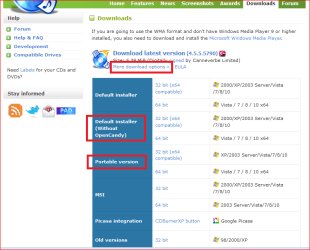
How-to Geek has been on a rant about it for some time. This is an example Yes, Every Freeware Download Site is Serving Crapware (Here?s the Proof)
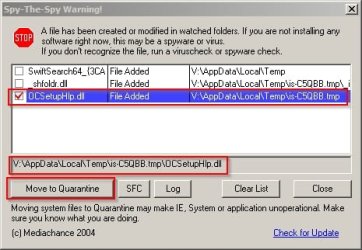
Some can be easily removed with MBAM. But some installers contain Conduit along with other PUPs that interfere with notification tray icons. I ran into this with a download of PowerISO. Removing the crap was not fun. That inspired me to run TimeFreeze before trying any install. In the case of PowerISO a right click scan with MBAM showed it contained PUPs. But up to then I had only encountered fairly harmless ones. I installed anyway. Bad move.
Looks interesting.
My Computer
At a glance
Microsoft Windows 7 Home Premium 64-bit Servi...Intel(R) Core(TM) i3 CPU M 330 @ 2.13GHz8 GB DDR3Intel(R) HD Graphics
- Computer type
- Laptop
- Computer Manufacturer/Model Number
- Hewlett-Packard/G62-107SA Notebook
- OS
- Microsoft Windows 7 Home Premium 64-bit Service Pack 1
- CPU
- Intel(R) Core(TM) i3 CPU M 330 @ 2.13GHz
- Motherboard
- Hewlett-Packard 1425
- Memory
- 8 GB DDR3
- Graphics Card(s)
- Intel(R) HD Graphics
- Sound Card
- Realtek High Definition Audio
- Monitor(s) Displays
- Builtin
- Screen Resolution
- 1366 x 768 x 32 bits (4294967296 colors) @ 60 Hz
- Hard Drives
- 250 GB SATA Hard Disk Drive 7200 rpm
2TB Seagate GoFlex USB 2 Drive
1TB Iomega Prestige USB 2 Drive
1.5TB Iomega Prestige USB 2 Drive (Samsung)
2TB WD MyBook Live NAS.
- Mouse
- Logitech Anywhere MX
- Internet Speed
- 152 Mbs download 10 Mbs upload
- Antivirus
- Norton 360
- Browser
- Chrome