
Installing Windows 7 onto a HP ZBook 17 Laptop (and dual booting)

spotify95

New member
Member
Local time
3:54 PM
Messages
73
Hello,

I previously posted about the purchase and upgrade of a Dell Studio 17 laptop, to be run exclusively under Windows 7:

Possible upgrades for Dell Studio 1745 Laptop

I've since decided to abandon that idea, and whilst I still have the Dell Studio, I have found something more suitable, as follows:

I've recently purchased a HP ZBook 17 laptop (I believe it to be ex-business) and am going to use that for Windows 7 instead, due to having way better specifications:

Intel Core i7-4700MQ, 4 core, 8 threads
16GB RAM DDR3L, 4x 4GB
750GB 7200RPM Hard Drive
Plus some Nvidia Quadro GPU that I have yet to find out which model it is.

It also has room for an MSATA SSD and an additional 2.5in drive (so 3 drives in total)

I need to install Windows 7 on to this laptop (and possibly dual boot it with Windows 10 - since Windows 10 will behave better with an SSD - the time lost via the dual boot process should be made up for by the use of an SSD. The laptop currently has no OS installed.

A few questions I need to ask:

1) How would I go about getting Windows 7 installed? I have a license key, as well as Windows 7 Pro on a DVD - hopefully that install will work OK. Is there a certain way/order that the drivers need to be installed?
2) Do I need to change any BIOS settings - it says about Secure Boot, which I assume needs to be disabled? It also says about Legacy, UEFI Hybrid, and UEFI Native. Which of these options would I ned for Windows 7 - and Windows 10?
3) It also says (on startup) about PXE booting, which I assume is via a network? Can I disable this without any issues? I only plan on booting from the SSD/HDD bays, a DVD drive, and a USB memory stick.
4) Are there any complications that I need to be aware of, regarding dual booting? Any additional settings I need to make?

Any help would be appreciated so that I don't mess anything up.

Lastly, I plan to make some upgrades as required in the future: the Wi-Fi is an older Intel Centrino N card, which needs upgrading (I assume the AC7260 will be OK?), the RAM can be increased (16GB > 32GB), and I might add an LTE card (as it has a SIM slot). I might also upgrade the DVD drive to a Blu-Ray drive.

Kind regards,
spotify95
 
Last edited:

My Computer My Computer

At a glance

Windows 7 Professional, 64 bitIntel Core i7-4510U @ 2.00GHz16GB DDR3Intel HD 4400 (integrated)
Computer type
Laptop
Computer Manufacturer/Model Number
HP 15-ac153sa
OS
Windows 7 Professional, 64 bit
CPU
Intel Core i7-4510U @ 2.00GHz
Memory
16GB DDR3
Graphics Card(s)
Intel HD 4400 (integrated)
Monitor(s) Displays
Inbuilt 15.6 inch HD display
Screen Resolution
1366x768
Hard Drives
2TB HDD, partitioned as 1TB (Windows 7) and 1TB (Windows 10)
2TB external HDD (portable)
Cooling
1x built in laptop fan
Keyboard
HP Slimline Wired Keyboard
Mouse
HP Optical Wired Mouse
Internet Speed
Virgin Media 250Mbps
Antivirus
Microsoft Windows Defender
Browser
Chrome, Firefox
Other Info
Laptop is set up as dual boot with Windows 7 Professional and Windows 10 Home. Windows 7 preferred.
1) Tuen off secure boot

2) Not familiar with your bios, mine has efi, legacy, or both.

3) Depends if you want to install your two os in the same mode or different modes.

4)
since Windows 10 will behave better with an SSD
Win7 does great on an ssd

5) You shouldnt need to use your own product key. There should be one on the machine. Or use the HP oem installation media.

6) Drivers should be on HP website

7) Looks like yours is HP zbook 17 G2
 
Last edited:

My Computers My Computers

  • At a glance

    7 X64i5 84002x8gb 3200mhz
    Computer type
    PC/Desktop
    OS
    7 X64
    CPU
    i5 8400
    Motherboard
    gigabyte b365m ds3h
    Memory
    2x8gb 3200mhz
    Hard Drives
    various
    PSU
    pure power 11 400w cm
    Case
    Coolermaster
    Cooling
    cryorig m9i
  • At a glance

    7x64g54008gb ddr4 2400
    Computer type
    PC/Desktop
    OS
    7x64
    CPU
    g5400
    Motherboard
    ga b365m ds3h
    Memory
    8gb ddr4 2400
    PSU
    xfx pro 450w
You need to check the specs some of those came with only sata2 not 3 so an ssd wont work at its best the problem is with a 5400 spin speed on the hd that will crawl along
 

My Computer My Computer

At a glance

win 8 32 bit
Computer type
PC/Desktop
OS
win 8 32 bit
You need to check the specs some of those came with only sata2 not 3 so an ssd wont work at its best the problem is with a 5400 spin speed on the hd that will crawl along
Hi, I've just checked on the HP website and it says:

  • mSATA storage bay
    128GB mini-card Solid State Drive
  • Primary storage bay
    Hard drives
    • 320/500/750GB 7200 rpm SMART SATA II
    • 1TB 5400 rpm SMART SATA II
    • 500GB 7200 rpm SMART SATA II Self Encrypting Drive
    • 500GB 5400 rpm SMART SATA II Self Encrypting Drive FIPS 140-2 compliant

    Solid State Drive
    • 128/180/512GB SATA 6 Gb/s
    • 256GB SATA 6 Gb/s Self Encrypting Drive
I assume that SATA 6Gb/s is SATA 3, SATA 3Gbps is SATA 2 (which are those hard drives listed above), and SATA 1.5Gbps is the original SATA standard.
Most mechanical hard drives aren't going to get anywhere near the SATA 3 speed limit of 6Gbps: for example, a mechanical disk in a USB enclosure is getting about 40MBps, or 320Mbps. The 2TB hard drive in my main laptop is currently getting about 80-90MBps, falling short of even the original 1.5Gbps threshold.
Most SATA SSDs (with about 500MBps transfer rates) will be slightly bottlenecked if it was a SATA 2 interface, rather than a SATA 3 interface - but still much better than a HDD.
Is there any way to tell if my hard drives, hard drive interfaces, or mSATA interface, is bottlenecked down to SATA 2? It's still not a huge problem if it is, though.

edit: The current HDD installed is a HGST 750GB 7200RPM, SATA 6.0Gb/s drive.

- - - Updated - - -

1) Tuen off secure boot
2) Not familiar with your bios, mine has efi, legacy, or both.
3) Depends if you want to install your two os in the same mode or different modes.
4) Win7 does great on an ssd
5) You shouldnt need to use your own product key. There should be one on the machine. Or use the HP oem installation media.
6) Drivers should be on HP website
7) Looks like yours is HP zbook 17 G2

Hi,
Thank you for your quick response.

1) I thought that secure boot needed to be disabled - is this for installing Windows 7/10, or does secure boot need to be switched off permanently?
2) I assume that UEFI Hybrid is a cross between UEFI and BIOS/Legacy? Which mode would Windows 7, and Windows 10, work best under, regarding installation? I am pretty sure that my current dual boot machine, a HP 15-ac153sa, uses legacy mode for Windows 7.
3) I've never used PXE booting before - I assume that it is safe to disable this? Isn't this for enterprises?
4) What do you mean by installing the OSes in the same mode or different modes? I just want to install Windows 7 (the 64 bit version, of course), install Windows 10, and go from there.
5) Never tried Windows 7 before on an SSD to be honest! First Windows 7 laptop was an Acer Aspire 5742, which had a 5400rpm, 500GB disk. Second Windows 7 laptop is the current HP 15-ac153sa, which came with Windows 10 (but now dual boot), and has a 2TB mechanical disk (5400rpm). Getting a 2TB SSD would have been expensive.
6) This laptop apparently had Windows 8, so the product key should be in the BIOS? Therefore, I'll have to use a new key for Windows 7. The last time I checked (when I sold my Acer Aspire a couple of years ago), the Windows 7 to 10 free upgrade was still working, so hopefully I can use that for the Windows 10, as I have no plans to install Windows 8.

I've seen the drivers on the HP website - do I need to install them in any particular order? I know that chipset should be done first. Also thank you for the information, I thought mine was the G2 version. There are many different Zbook versions - the G3 and later had inbuilt batteries, instead of batteries that can be just clipped out - and I don't know if the later Zbooks support Windows 7, or multiple HDDs. I thought that this Zbook only had 1x HDD slot and the mSATA slot - imagine my surprise when I saw the 2nd HDD slot!
 

My Computer My Computer

At a glance

Windows 7 Professional, 64 bitIntel Core i7-4510U @ 2.00GHz16GB DDR3Intel HD 4400 (integrated)
Computer type
Laptop
Computer Manufacturer/Model Number
HP 15-ac153sa
OS
Windows 7 Professional, 64 bit
CPU
Intel Core i7-4510U @ 2.00GHz
Memory
16GB DDR3
Graphics Card(s)
Intel HD 4400 (integrated)
Monitor(s) Displays
Inbuilt 15.6 inch HD display
Screen Resolution
1366x768
Hard Drives
2TB HDD, partitioned as 1TB (Windows 7) and 1TB (Windows 10)
2TB external HDD (portable)
Cooling
1x built in laptop fan
Keyboard
HP Slimline Wired Keyboard
Mouse
HP Optical Wired Mouse
Internet Speed
Virgin Media 250Mbps
Antivirus
Microsoft Windows Defender
Browser
Chrome, Firefox
Other Info
Laptop is set up as dual boot with Windows 7 Professional and Windows 10 Home. Windows 7 preferred.
Win7 doesn't support secure boot. So it needs to be disabled in bios or win7 wont boot.

If you want to install both os to the same disk (ssd) , they need to both be installed in the same mode ( both os hybrid efi, or both os legacy ).

If you are using windows setup to install - you need to boot the installation media in the correct mode.

If you boot the installation media in efi mode, setup wants to install windows in efi mode. It wants either an uninitialized disk, or a disk that has already been initialized in gpt style. Setup will complain if the disk is in mbr partition style. And vice versa.

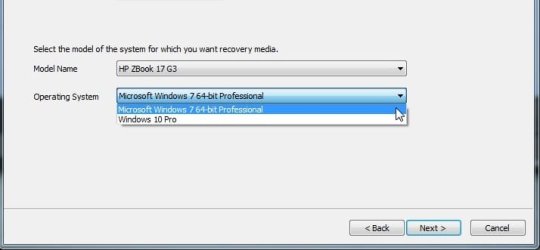
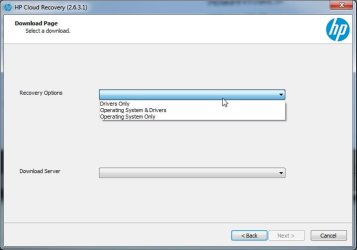
You could install win7 first. You could use the media you already have ( if it includes SP1). Install pro edition, skip entering the key and use the oem activation. Your machine has win7 oem activation. You just need to run this slp.cmd. View attachment HP-OEM.zip Unless you want to d/l the oem installation media, which should also include the drivers and some oem programs , it also has some updates included. HP has a cloud recovery tool thing to d/l the media if you want

Then run simplix to do the updates.

Probably a good idea to d/l the drivers first and pop them on a usb stick.

I've never used PXE booting before - I assume that it is safe to disable this?
yes

- - - Updated - - -

EDIT: I could only find the HP media for the g3, it should still work fine though. I suppose they stop providing installation media after a certain period - I would guess 5yrs. The downloads are big because they are multilanguage. If you dont mind the giant downloads, you could get both os, which means two using 2 usb sticks. If you want to do this, you could download only the os and download the drivers for the g2 separately from HP site.

HP-CLOUDRECOVERY1.jpg

HP-CLOUD-RECOVERY2.jpg
 
Last edited:

My Computers My Computers

  • At a glance

    7 X64i5 84002x8gb 3200mhz
    Computer type
    PC/Desktop
    OS
    7 X64
    CPU
    i5 8400
    Motherboard
    gigabyte b365m ds3h
    Memory
    2x8gb 3200mhz
    Hard Drives
    various
    PSU
    pure power 11 400w cm
    Case
    Coolermaster
    Cooling
    cryorig m9i
  • At a glance

    7x64g54008gb ddr4 2400
    Computer type
    PC/Desktop
    OS
    7x64
    CPU
    g5400
    Motherboard
    ga b365m ds3h
    Memory
    8gb ddr4 2400
    PSU
    xfx pro 450w
As you have a small SSD I suggest you install this way:

- Try to install as UEFI
- Make 3 partitions on the HDD - 20G+20G+remain.

- Install win 7 on the mSATA and move the C:\user folder to the first 20G on the HDD. While in Audit mode, remove the assigned letter of the second HDD partition and assign a letter D: to the first HDD partition and letter E: to the big HDD partition.
- Boot from Win 7 and move temp folders to D:\System and move virtual memory to D:\
- Shrink the Win 7 partition to make space to Win 10 (same size)

- Install win 10 on the unallocated space on mSATA (created above) and move the C:\user folder to the second 20G on the HDD. While in Audit mode, remove the assigned letter of the first HDD partition and assign a letter D: to the second partition and letter E: to the big HDD partition.
- Boot from Win 10 and move temp folders to D:\System and move virtual memory to D:\

Remark: A drive letter is assigned to a partition by the OS. Both OS (Win 7 and Win 10) will have a D: partition
- On Win 7, D: will be on the first HDD (20G) partition and the second partition will have no letter.
- On Win 10, D: will be on the second HDD (20G) partition and the second partition will have no letter.
- The third HDD will have a letter E: and will be used to store common data.

Boot from Win 7 and move libraries (documents, pictures etc) to E:
Boot from Win 10 and move libraries (documents, pictures etc) to E:

Attached is the documentation to move C:

My computer tree
MY_Tree.JPG
 

Attachments

My Computers My Computers

  • At a glance

    Windows 7 HP 64i5 6600K - 800MHz to 4200MHz4+4G GSkill DDR4 3000IG - Intel 530
    Computer type
    PC/Desktop
    Computer Manufacturer/Model Number
    custom build
    OS
    Windows 7 HP 64
    CPU
    i5 6600K - 800MHz to 4200MHz
    Motherboard
    GA-Z170-HD3P
    Memory
    4+4G GSkill DDR4 3000
    Graphics Card(s)
    IG - Intel 530
    Monitor(s) Displays
    Samsung 226BW
    Screen Resolution
    1680x1050
    Hard Drives
    (1) -1 SM951 – 128GB M.2 AHCI PCIe SSD drive for Windows 7 and Lubuntu
    (2) -1 WD SATA 3 - 1T for Data
    (3) -1 WD SATA 3 - 1T for backup
    PSU
    Thermaltake 450W TR2 gold
    Keyboard
    Old and good Chicony mechanical keyboard
    Mouse
    Logitech mX performance - 9 buttons (had to disable some)
    Internet Speed
    500Mb/s
    Browser
    Firefox 64
    Other Info
    TinyWall firewall
  • At a glance

    Windows 7 Proi7-4500U 800MHz to 3.0GHz(4+4)G DDR3 1600IG intel 4400 + NVIDIA GeForce GT 745M
    Computer type
    Laptop
    System Manufacturer/Model Number
    Asus Q550LF
    OS
    Windows 7 Pro
    CPU
    i7-4500U 800MHz to 3.0GHz
    Motherboard
    Asus Q550LF
    Memory
    (4+4)G DDR3 1600
    Graphics Card(s)
    IG intel 4400 + NVIDIA GeForce GT 745M
    Sound Card
    Realtek
    Monitor(s) Displays
    LG Display LP156WF4-SPH1
    Screen Resolution
    1920 x 1080
    Hard Drives
    BX500 120G SSD for Windows and programs +
    1T HDD for data
    Internet Speed
    500 Mb/s
    Browser
    Firefox
    Other Info
    TinyWall firewall
Win7 doesn't support secure boot. So it needs to be disabled in bios or win7 wont boot.
If you want to install both os to the same disk (ssd) , they need to both be installed in the same mode ( both os hybrid efi, or both os legacy ).
If you are using windows setup to install - you need to boot the installation media in the correct mode.
If you boot the installation media in efi mode, setup wants to install windows in efi mode. It wants either an uninitialized disk, or a disk that has already been initialized in gpt style. Setup will complain if the disk is in mbr partition style. And vice versa.
You could install win7 first. You could use the media you already have ( if it includes SP1). Install pro edition, skip entering the key and use the oem activation. Your machine has win7 oem activation. You just need to run this slp.cmd. View attachment 419698 Unless you want to d/l the oem installation media, which should also include the drivers and some oem programs , it also has some updates included. HP has a cloud recovery tool thing to d/l the media if you want
Then run simplix to do the updates.
Probably a good idea to d/l the drivers first and pop them on a usb stick.
yes
- - - Updated - - -
EDIT: I could only find the HP media for the g3, it should still work fine though. I suppose they stop providing installation media after a certain period - I would guess 5yrs. The downloads are big because they are multilanguage. If you dont mind the giant downloads, you could get both os, which means two using 2 usb sticks. If you want to do this, you could download only the os and download the drivers for the g2 separately from HP site.
View attachment 419701
View attachment 419699
Hi,
Thank you for your help! I understand now about secure boot - that will be switched off when the time comes to install! I will do a test install of W10, followed by a test install of W7, on the (currently supplied) 750GB HDD, to make sure everything works. Then I'll order all of the parts I need, such as the mSATA SSD, the secondary HDD (I will use 1TB instead of 750GB), a third HDD (if needed), and anything else, such as the wireless modules, RAM, etc.

I tried using my Windows 10 USB stick and it came up with an error about me trying to use a UEFI USB whilst in legacy mode. However, I'm sure that my Windows 7 install disks are Legacy, I will have to check and go from there. If in doubt, I'll do legacy for both - shouldn't have any negative effect on performance and usability? Besides, when I received the laptop, it was set to legacy anyway!

I was informed previously that I should install Windows 7 first, then Windows 10, then go from there. I know I have Windows 7 with SP1 on a disk, which I could use.

Also, instead of using HP media, would it be OK just to do a clean install, then add drivers, then add any software I would like? I don't really need the HP business tools as I'm just using it for personal use and don't have a requirement for those tools.

Lastly, I need to upgrade my Wi-Fi card from the Centrino N to an AC wi-fi card: I've heard that the AC 7260 will work just fine.
However, the model number listed on HP is 710661-001, whereas the only ones I can find on eBay (in the UK) are number 784650-005. I don't want to order from China in case it doesn't work or is not genuine (and it takes too long to arrive).
Will the 784650-005 model work instead of the 710661-001 model that is listed on the HP website? They are both Intel AC7260.
As you have a small SSD I suggest you install this way:
- Try to install as UEFI
- Make 3 partitions on the HDD - 20G+20G+remain.
- Install win 7 on the mSATA and move the C:\user folder to the first 20G on the HDD. While in Audit mode, remove the assigned letter of the second HDD partition and assign a letter D: to the first HDD partition and letter E: to the big HDD partition.
- Boot from Win 7 and move temp folders to D:\System and move virtual memory to D:\
- Shrink the Win 7 partition to make space to Win 10 (same size)
- Install win 10 on the unallocated space on mSATA (created above) and move the C:\user folder to the second 20G on the HDD. While in Audit mode, remove the assigned letter of the first HDD partition and assign a letter D: to the second partition and letter E: to the big HDD partition.
- Boot from Win 10 and move temp folders to D:\System and move virtual memory to D:\

Remark: A drive letter is assigned to a partition by the OS. Both OS (Win 7 and Win 10) will have a D: partition
- On Win 7, D: will be on the first HDD (20G) partition and the second partition will have no letter.
- On Win 10, D: will be on the second HDD (20G) partition and the second partition will have no letter.
- The third HDD will have a letter E: and will be used to store common data.
Boot from Win 7 and move libraries (documents, pictures etc) to E:
Boot from Win 10 and move libraries (documents, pictures etc) to E:
Attached is the documentation to move C:
My computer tree
View attachment 419707
Hi, thank you for the information regarding the setting up of partitions on the laptop.

I currently don't have any SSDs at all installed, just the 750GB HDD that the laptop came with. I will install an SSD (probably 512GB) once I know that everything is working fine under both OS'es.

When I have everything set up the way I want it, I will have an mSATA SSD with two partitions, one for W7 and one for W10. I will then also have the secondary HDD, as well as possibly a third drive (as I have enough room in the case).

Will I need to have 20GB partitions on the HDD with a 512GB mSATA SSD (i.e. 256GB SSD space per OS)?
Also, is it a good idea to remove the drive letter of the second OS?
So basically, when I am in Windows 7: the W7 partition is C, the W10 partition has no letter, the DVD drive is D, the secondary HDD is E and the third drive is F?
And likewise, when I am in Windows 10: W10 is C, W7 has no letter, DVD is D, 2nd HDD is E, 3rd HDD is F?

Or is it best to let the other operating system have a lettered partition?

Also, are you able to help regarding the wireless card question I mentioned above? Will any HP AC 7260 module work, or do I strictly need the one for the Zbook 17, namely 710661-001?
 

My Computer My Computer

At a glance

Windows 7 Professional, 64 bitIntel Core i7-4510U @ 2.00GHz16GB DDR3Intel HD 4400 (integrated)
Computer type
Laptop
Computer Manufacturer/Model Number
HP 15-ac153sa
OS
Windows 7 Professional, 64 bit
CPU
Intel Core i7-4510U @ 2.00GHz
Memory
16GB DDR3
Graphics Card(s)
Intel HD 4400 (integrated)
Monitor(s) Displays
Inbuilt 15.6 inch HD display
Screen Resolution
1366x768
Hard Drives
2TB HDD, partitioned as 1TB (Windows 7) and 1TB (Windows 10)
2TB external HDD (portable)
Cooling
1x built in laptop fan
Keyboard
HP Slimline Wired Keyboard
Mouse
HP Optical Wired Mouse
Internet Speed
Virgin Media 250Mbps
Antivirus
Microsoft Windows Defender
Browser
Chrome, Firefox
Other Info
Laptop is set up as dual boot with Windows 7 Professional and Windows 10 Home. Windows 7 preferred.
Will I need to have 20GB partitions on the HDD with a 512GB mSATA SSD

No. I think he imagined you only had a 60gb ssd.

Will any HP AC 7260 module work, or do I strictly need the one for the Zbook 17, namely 710661-001?

If you search tinternet quite likely someone has done it or at least asked the same question.

The proprietary parts from hp, dell etc usually carry a big profit margin. Probably others will fit and work just fine - but check on tinternet to see .

- - - Updated - - -

I know I have Windows 7 with SP1 on a disk, which I could use.
If it is not called "professional" on the disk you can remake it so it offers all editions.Then just select which one to install like this:

all-editions-win7.jpg

- - - Updated - - -

The basic How To:

1. Put the win 7 dvd in the dvdrom drive

2. rt click dvdrom drive and select copy

3. rt click on your HD - directly on the os drive C will do fine and select paste.

It takes 3-4 mins to copy all that. You will end up with a folder called something like C:\GRMCULXFRER_EN_DVD . might be slightly different name depending on edition or langugae

4. Look inside the GRMCULXFRER_EN_DVD\sources folder for a tiny file called ei.cfg and delete it.
( or rename it to ei.cfg.bok )

5. Create a bootable iso from the GRMCULXFRER_EN_DVD folder and then burn it to dvd.

Very easy. But because the original win7 with SP1 is not new, it is useful to add a couple of updates and usb3 drivers into the installation media before creating the iso.

You can use my thing to do it. I will probably upload an slightly updated version shortly after I have given it a test.. Not necessary to include the simplix pack, it is optional
Update your Win 7 installation media

- - - Updated - - -

You had better check that part number in the manual, then look for something compatible

https://content.etilize.com/User-Manual/1037716620.pdf

Page 51:
WLAN Intel Dual Band Wireless-AC 7260 802.11 ac 2×2 WiFi + Bluetooth 4.0 Combo adapter 710663-001

- - - Updated - - -

Is this what you are looking for? Only a tenner
GENUINE HP Spectre 13-3000 Wifi Wireless Board Card 710663-001 5712505435526 | eBay
 

My Computers My Computers

  • At a glance

    7 X64i5 84002x8gb 3200mhz
    Computer type
    PC/Desktop
    OS
    7 X64
    CPU
    i5 8400
    Motherboard
    gigabyte b365m ds3h
    Memory
    2x8gb 3200mhz
    Hard Drives
    various
    PSU
    pure power 11 400w cm
    Case
    Coolermaster
    Cooling
    cryorig m9i
  • At a glance

    7x64g54008gb ddr4 2400
    Computer type
    PC/Desktop
    OS
    7x64
    CPU
    g5400
    Motherboard
    ga b365m ds3h
    Memory
    8gb ddr4 2400
    PSU
    xfx pro 450w
No. I think he imagined you only had a 60gb ssd.
If you search tinternet quite likely someone has done it or at least asked the same question.
The proprietary parts from hp, dell etc usually carry a big profit margin. Probably others will fit and work just fine - but check on tinternet to see .
- - - Updated - - -
If it is not called "professional" on the disk you can remake it so it offers all editions.Then just select which one to install like this:

View attachment 419708
- - - Updated - - -
The basic How To:
1. Put the win 7 dvd in the dvdrom drive
2. rt click dvdrom drive and select copy
3. rt click on your HD - directly on the os drive C will do fine and select paste.
It takes 3-4 mins to copy all that. You will end up with a folder called something like C:\GRMCULXFRER_EN_DVD . might be slightly different name depending on edition or langugae
4. Look inside the GRMCULXFRER_EN_DVD\sources folder for a tiny file called ei.cfg and delete it.
( or rename it to ei.cfg.bok )
5. Create a bootable iso from the GRMCULXFRER_EN_DVD folder and then burn it to dvd.
Very easy. But because the original win7 with SP1 is not new, it is useful to add a couple of updates and usb3 drivers into the installation media before creating the iso.
You can use my thing to do it. I will probably upload an slightly updated version shortly after I have given it a test.. Not necessary to include the simplix pack, it is optional
Update your Win 7 installation media
- - - Updated - - -
You had better check that part number in the manual, then look for something compatible
https://content.etilize.com/User-Manual/1037716620.pdf
Page 51:
WLAN Intel Dual Band Wireless-AC 7260 802.11 ac 2×2 WiFi + Bluetooth 4.0 Combo adapter 710663-001
- - - Updated - - -
Is this what you are looking for? Only a tenner
GENUINE HP Spectre 13-3000 Wifi Wireless Board Card 710663-001 5712505435526 | eBay
Hello,

Thank you for getting back to me again,

Yeah I don't have any SSD at all - the HP manual listed a 128GB mSATA SSD, but any mSATA will go in there. I could even but a 1TB, but there's no point when (a) 1TB mSATA is more expensive than 1TB SATA 3 or NVMe, and (b) I'll be using a mechanical disk for storage of data.

I will check - might just get a generic AC 7260 to see if that does it, if not then I can always use it in another machine - as the Dell Studio that I mentioned before only has wireless G at present, and definitely needs something better. Even a cheap wireless N card will be better than the G card.

I think that the disk I made (for the HP 15) was Windows 7 Professional. I have Windows 7 Home Premium (for an old Acer that I had), as well as Windows 7 Professional (for this HP), didn't make Windows 7 Ultimate or Education etc as I don't have licenses for those (and they are quite rare to be OEM licenses).

I'll definitely consider adding the USB drivers - the thing I didn't like previously with my HP 15, was that I had a DVD drive, and nothing else. And Bluetooth (from the AC 3165) wasn't working at all.
Also, I'm not upgrading my AC3165 in my HP 15 to an AC7260 because the 3165 gives good enough theoretical throughput (as well as 5GHz usage) to not be a bottleneck. The problems I have are with low throughput, 2.4GHz only, G or N cards.
Also, I checked the model number 710663-001, and it appears that this is a full height version of the 7260: my HP Zbook 17 needs a half height card. The current Centrino N has model number 670292-001, so I'd need a half height version of the AC 7260.
 

My Computer My Computer

At a glance

Windows 7 Professional, 64 bitIntel Core i7-4510U @ 2.00GHz16GB DDR3Intel HD 4400 (integrated)
Computer type
Laptop
Computer Manufacturer/Model Number
HP 15-ac153sa
OS
Windows 7 Professional, 64 bit
CPU
Intel Core i7-4510U @ 2.00GHz
Memory
16GB DDR3
Graphics Card(s)
Intel HD 4400 (integrated)
Monitor(s) Displays
Inbuilt 15.6 inch HD display
Screen Resolution
1366x768
Hard Drives
2TB HDD, partitioned as 1TB (Windows 7) and 1TB (Windows 10)
2TB external HDD (portable)
Cooling
1x built in laptop fan
Keyboard
HP Slimline Wired Keyboard
Mouse
HP Optical Wired Mouse
Internet Speed
Virgin Media 250Mbps
Antivirus
Microsoft Windows Defender
Browser
Chrome, Firefox
Other Info
Laptop is set up as dual boot with Windows 7 Professional and Windows 10 Home. Windows 7 preferred.
spotify95, I thought that you had a 128G mSATA drive. In fact you don't need a big SSD for windows and programs if you already have a big HDD for data.
The big advantage of having \Users (user configuration and data) on another drive is that you can reinstall windows and your settings and data won't be affected.
In my desktop I have a 128G M.2 SSD with Win 7 and Lubuntu and have moved the \Users to a 1T HDD (data).
On my laptop I replaced the ODD (CD/DVD drive) with a HDD caddy and installed a 120G SSD. I also moved the \Users to the HDD. It is a way to have the speed of a SSD and the space of a HDD at low cost.
Nowadays the cost of a SSD has dropped drastically.

I would think about buying one regular 2.5" SSD instead of a mSATA.
mSATA has been replaced by M.2 drives and you won't find a fast and cheap one.
 

My Computers My Computers

  • At a glance

    Windows 7 HP 64i5 6600K - 800MHz to 4200MHz4+4G GSkill DDR4 3000IG - Intel 530
    Computer type
    PC/Desktop
    Computer Manufacturer/Model Number
    custom build
    OS
    Windows 7 HP 64
    CPU
    i5 6600K - 800MHz to 4200MHz
    Motherboard
    GA-Z170-HD3P
    Memory
    4+4G GSkill DDR4 3000
    Graphics Card(s)
    IG - Intel 530
    Monitor(s) Displays
    Samsung 226BW
    Screen Resolution
    1680x1050
    Hard Drives
    (1) -1 SM951 – 128GB M.2 AHCI PCIe SSD drive for Windows 7 and Lubuntu
    (2) -1 WD SATA 3 - 1T for Data
    (3) -1 WD SATA 3 - 1T for backup
    PSU
    Thermaltake 450W TR2 gold
    Keyboard
    Old and good Chicony mechanical keyboard
    Mouse
    Logitech mX performance - 9 buttons (had to disable some)
    Internet Speed
    500Mb/s
    Browser
    Firefox 64
    Other Info
    TinyWall firewall
  • At a glance

    Windows 7 Proi7-4500U 800MHz to 3.0GHz(4+4)G DDR3 1600IG intel 4400 + NVIDIA GeForce GT 745M
    Computer type
    Laptop
    System Manufacturer/Model Number
    Asus Q550LF
    OS
    Windows 7 Pro
    CPU
    i7-4500U 800MHz to 3.0GHz
    Motherboard
    Asus Q550LF
    Memory
    (4+4)G DDR3 1600
    Graphics Card(s)
    IG intel 4400 + NVIDIA GeForce GT 745M
    Sound Card
    Realtek
    Monitor(s) Displays
    LG Display LP156WF4-SPH1
    Screen Resolution
    1920 x 1080
    Hard Drives
    BX500 120G SSD for Windows and programs +
    1T HDD for data
    Internet Speed
    500 Mb/s
    Browser
    Firefox
    Other Info
    TinyWall firewall
Back
Top