Repair Install

How to Do a Repair Install to Fix Windows 7


   Information
This will show you how to do a repair install (aka: in-place upgrade install) to fix your currently installed Windows 7 and preserve your user accounts, data, programs, and system drivers.
   Note
Do a Repair installation if:
  • A System Restore did not help fix your Windows 7.
  • There is no other easier option left that can fix your Windows 7.
  • You DO NOT want to do a Clean reinstall of Windows 7.
  • You DO want to preserve your user accounts, data, programs, and system drivers.
   Tip
ITEMS THAT WILL BE RESET TO DEFAULT OR AFFECTED:
  • Sounds
  • Services
  • Visual Effects Settings
  • Device Drivers - Be sure to have these handy to reinstall. They do not always remain after the repair (upgrade) install.
  • You may lose the ability to sign on to MSN Messenger, to solve this problem have a look at this thread Unable to sign in to WLM.
  • You may lose your custom themes due to not having permisions set on the old themes. Go to the hidden themes folder at C:/Users/(User-Name)/AppData/Local/Microsoft/Windows/Themes, then Take Ownership of the themes folder and you will now have all your themes back.
  • It has been reported that you may also lose your Media Center gadget after doing the repair install.
  • Windows Updates will need to be checked and reinstalled again.
   Warning

  • You can only do a repair install with the same edition Windows 7 installation disc for the same edition of Windows 7 that you have installed.
  • You cannot use a OEM Windows 7 "Factory" Restore/Recovery type of installation disc that came with or created from a store bought computer to do a repair install with. These can only be used do a clean install instead.
  • You can do a repair install on a factory OEM installation with the latest official Windows 7 with SP1 ISO file here: Microsoft: Windows 7 Direct Download Links, and use Windows 7 USB-DVD Download Tool to create a bootable DVD or USB flash drive with the ISO to do the repair install from within Windows 7.
  • You can use a retail OEM Windows 7 installation disc to do a repair install with.
  • You can use a retail (full or upgrade) Windows 7 installation disc to do a repair install with.
  • You cannot do a repair install with a System Repair Disc. A System Repair Disc is not a installation disc, and will only boot to the System Recovery Options screen.
  • If you have a 32-bit (x86) Windows 7 currently installed, then you must use a 32-bit Windows 7 installation disc to be able to do a repair install with.
  • If you have a 64-bit (x64) Windows 7 currently installed, then you must use a 64-bit Windows 7 installation disc to be able to do a repair install with.
  • You can use a retail Windows 7 SP1 installation disc (ex: Technet (available), MSDN (available), or retail (when available)) to do a repair install with on a currently installed Windows 7 SP1.
  • You can use a Windows 7 SP1 installation disc (ex: Technet (available), MSDN (available), or retail (when available)) to do a repair install with on a currently installed slipstream Windows 7 SP1.
  • You cannot use a slipstream Windows 7 installation disc to do a repair install with on a currently installed Windows 7 SP1.
  • You cannot use a slipstream Windows 7 installation disc to do a repair install with on a currently installed slipstream Windows 7 SP1.
  • You can only do a repair install from within Windows 7.
  • You cannot do a repair install at boot or in Safe Mode.
  • You must be logged into Windows 7 in a administrator account to be able to do a repair install.
  • You must have at least 8.87 GB + what is currently being used of free space (more if you have a larger installation) on the hard drive/partition Windows 7 is installed on to do a repair install.
  • If you changed the default location of a user account's profile folder, then you will need to change it back to the default C:\Users location first.
  • If you moved the default location of a user folder, then you will need to change it back to the default C:\Users\(user-name) location first.


Here's How:
NOTE: Be sure to back up anything that you do not want to lose first to be extra safe.1. Start Windows 7, and log on to an administrator account.

2. Disable any 3rd party firewall, antivirus, or other security program to avoid it from possibly preventing the repair in-place upgrade installation of Windows 7.

3. Do either step 4, step 5, or step 6 below depending if your retail Windows 7 installation ISO/DVD/USB has SP1 or not, and if your currently installed Windows 7 has SP1 installed or not.

4. Repair Installed Windows 7 SP1 using Windows 7 with SP1 ISO

   Note
If you do not have a Windows 7 with SP1 ISO, then you can download an official ISO with your retail product key from Microsoft at the link below.

:ar: Microsoft Software Recovery

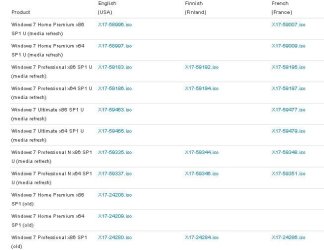
You can also download the latest official Windows 7 SP1 Media Refresh (SP1 U) ISO file at the link below, but this link is not always available for download.

:ar: Microsoft: Windows 7 Direct Download Links

A) If you have not already, you will need to install a program like 7-Zip that supports extracting a ISO to a folder.

B) Using the program (ex: 7-Zip) from step 1, extract the Windows 7 SP1 ISO file to a folder on a partition or HDD other than the current Windows 7 partition. (see screenshot below)
NOTE: For example with 7-Zip, right click on ISO, click on 7-Zip, Extract files, browse button, select where you want to extract to, and click on OK twice.7-Zip.jpg
C) While in Windows 7 SP1, open the folder that you extracted the ISO into, and run the setup.exe file.

D) Go to step 7 below.
5. Repair Installed Windows 7 SP1 using Windows 7 with SP1 DVD/USB

   Note
If you do not have a Windows 7 with SP1 ISO, then you can download an official ISO with your retail product key from Microsoft at the link below.

:ar: http://www.microsoft.com/en-us/software-recovery

You can also download the latest official Windows 7 SP1 Media Refresh (SP1 U) ISO file at the link below, but this link is not always available for download.

:ar: Microsoft: Windows 7 Direct Download Links

Afterwards, you can use Windows 7 USB-DVD Download Tool to create a bootable DVD or USB flash drive with the ISO to do the repair install from within Windows 7 using this step.

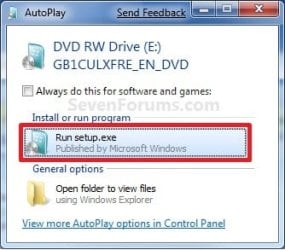
A) While in Windows 7 SP1, insert your retail Windows 7 SP1 installation DVD into the DVD drive, or connect your Windows 7 with SP1 installation USB thumb drive, and click on the Run setup.exe option in AutoPlay. (see screenshot below)
NOTE: If the AutoPlay window does not open, then open the drive folder in Computer and run the setup.exe file.AutoPlay.jpg
B) Go to Go to step 7 below.
6. Repair Installed Windows 7 without SP1 using Windows 7 without SP1 DVD/USB

   Note
If you do not have a Windows 7 without SP1 installation DVD/USB, then you can download the latest official Windows 7 Professional or Home Premium without SP1 ISO file here: Microsoft: Windows 7 Direct Download Links, and use Windows 7 USB-DVD Download Tool to create a bootable DVD or USB flash drive with the ISO to do the repair install from within Windows 7 using this step.

It is preferred to have SP1 installed on your PC and to use step 4 or step 5 above to do a repair install with instead though.

A) While in Windows 7 SP1 installed, insert your retail Windows 7 installation DVD into the DVD drive, or connect your Windows 7 installation USB thumb drive, and click on the Run setup.exe option in AutoPlay. (see screenshot below)
NOTE: If the AutoPlay window does not open, then open the drive folder in Computer and run the setup.exe file.AutoPlay.jpg
B) Go to Go to step 7 below.
7. If prompted by UAC, then click on Yes.

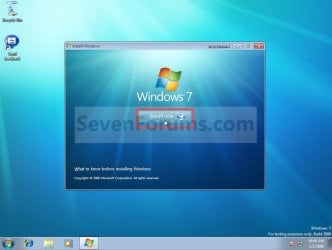
8. Click on the Install Now button to start the installation. (see screenshot below)Step1.jpg
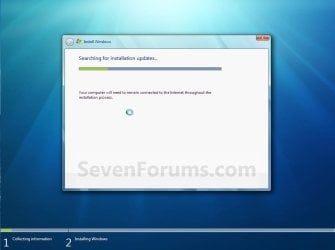
9. If prompted, uncheck the I want to help make Windows installation better box (unless you would like to :) ), and click on the Go online to get the latest updates for installation option. (see screenshot below)Step2.jpg
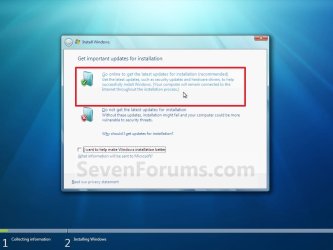
A) Windows 7 will now check online for and install any available installation updates. (see screenshots below)Step2A.jpg

Step2B.jpg

10. Check the I accept the license terms box, and click on Next. (see screenshot below)Step3.jpg
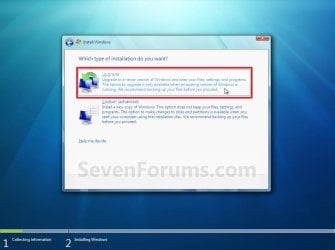
11. Click on the Upgrade option. (see screenshot below)Step4.jpg
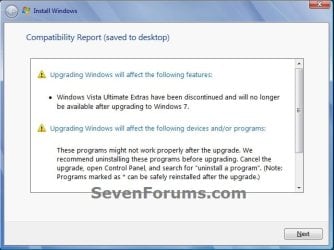
12. Windows will now check for any compatibility issues. If any are found like in the example below, click on the red X to cancel the repair install and close this "Install Windows" window, take care of any found issues (ex: uninstall any incompatible program), then restart the repair install process over again.Compatibility-Report.jpg
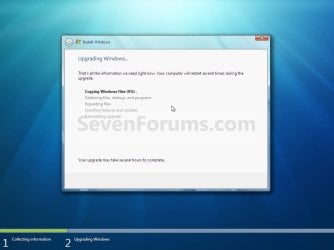
13. The installation of Windows 7 will now begin. (see screenshot below)
NOTE: During the installation process, your screen may flash and computer will restart a few times.Step5.jpg
14. After the final restart, you will see this screen for a moment. (see screenshot below)Step6.jpg
15. Type in your Windows 7 product key number. (see screenshot below step 16)

16. Uncheck the Automatically activate Windows when I'm online box unchecked, then click on the Next button. (see screenshot below)
NOTE: You can activate Windows 7 later after you make sure it is running properly. (see step 23 below)
If you chose to automatically activate Windows online when you set up your computer, automatic activation begins trying to activate your copy of Windows three days after you log on for the first time.Step7.jpg
17. Click on Use recommended settings. (see screenshot below)

:note: You will always be able to change your Windows Update settings at anytime in Windows 7.

Step8.jpg
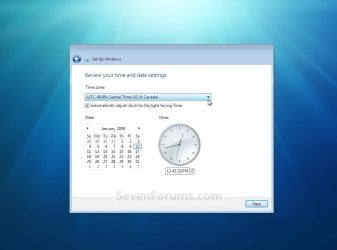
18. Select your time zone and set your time and date settings, then click on the Next button. (see screenshot below)Step9.jpg
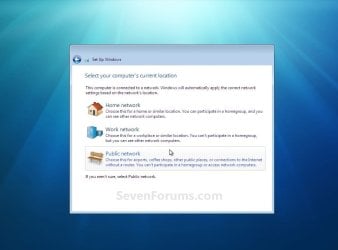
19. Click on the option for your computer's location to select the correct network location type settings to be applied for that location. (see screenshot below)
NOTE: It is best to select Public location for the best security.Step10.jpg
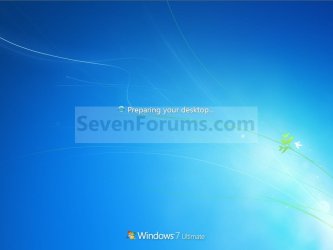
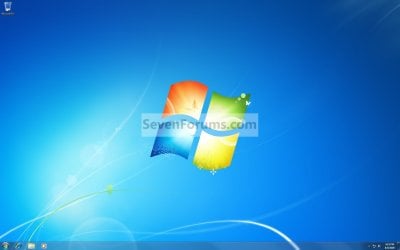
20. Windows 7 will now prepare your desktop to startup. (see screenshots below)Step11A.jpg

Desktop.jpg

21. If you used a DVD or USB to do the repair install with, then you can remove the DVD or USB when the repair install has successfully completed and you are logged in to Windows 7.

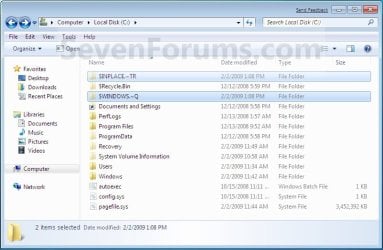
22. Check to see if you are missing any user files. If you are, then you can copy them from the C:\Windows.old or the hidden protected operating system C:\$INPLACE.~TR and C:\WINDOWS.~Q backup folders. (see screenshot below)Old_Install.jpg
23. If everything checks out in step 21, then you can run Disk Cleanup (step 5 at this link). You will need to click on the Clean up system files button first, and then could check the Files discarded by Windows upgrade, Previous Windows installations, and Windows upgrade log files boxes. (see screenshot below)
NOTE: This will delete the C:\Windows.old, C:\$INPLACE.~TR and C:\WINDOWS.~Q folders from step 21 above.Disk_Cleanup.jpg
24. Refresh your Windows Experience Index (WEI) score.

25. When finished, activate Windows 7, and make sure that your 3rd party security programs (if applicable) are enabled again.
That's it,
Shawn


Last edited:
Repair worked like magic but now my windows key does not work

Hi,

Downloaded the Windows 7 Professional (swedish) SP1 iso as my disc said my system was newer than disc. Repair solved my issues in windows like a charm (windows installer crashing on both install and uinstall).

Afterwards however my Windows is unactivated. Since I only have a disc from Dell with Windows 7 x64 professional I don't (as I am aware of) have a product key printed. I used a key recovery software to find the key but the activation says its for the standard version.

I can not confirm if this key that is found is the one I was previously using or not.

I did make a Windows recovery point to my external hard drive before runing the repair install. Is there a way I could use that to find out what key I was using before?

Thank you in advance.

Fredrik
 

My Computer

Computer type
Laptop
Computer Manufacturer/Model Number
Dell
OS
Windows 7 Professional
CPU
Intel i7
Memory
8gb
Graphics Card(s)
Quadro FX 1800M
Hard Drives
Samsung SSD 256Gb
Antivirus
F-Secure
Hi,

Downloaded the Windows 7 Professional (swedish) SP1 iso as my disc said my system was newer than disc. Repair solved my issues in windows like a charm (windows installer crashing on both install and uinstall).

Afterwards however my Windows is unactivated. Since I only have a disc from Dell with Windows 7 x64 professional I don't (as I am aware of) have a product key printed. I used a key recovery software to find the key but the activation says its for the standard version.

I can not confirm if this key that is found is the one I was previously using or not.

I did make a Windows recovery point to my external hard drive before runing the repair install. Is there a way I could use that to find out what key I was using before?

Thank you in advance.

Fredrik
Sure no COA sticker is on computer? Check the back of laptop, check under battery, check battery compartment.

"I did make a Windows recovery point to my external hard drive " how did you make that?
 
Last edited:

My Computer

Computer type
Laptop
Computer Manufacturer/Model Number
ACER ASPIRE 5742G
OS
Microsoft Windows 7 Home Premium 64-bits 7601 Multiprocessor Free Service Pack 1
CPU
Intel(R) Core(TM) i3 CPU M 370 @ 2.40GHz
Motherboard
Acer Aspire 5742G
Memory
4,00 GB
Graphics Card(s)
ATI Mobility Radeon HD 5400 Series
Sound Card
(1) AMD High Definition Audio Device (2) Realtek High Defi
Screen Resolution
1366 x 768 x 32 bits (4294967296 colors) @ 60 Hz
Hard Drives
WDC WD5000BEVT-22ZAT0
Hi,

Downloaded the Windows 7 Professional (swedish) SP1 iso as my disc said my system was newer than disc. Repair solved my issues in windows like a charm (windows installer crashing on both install and uinstall).

Afterwards however my Windows is unactivated. Since I only have a disc from Dell with Windows 7 x64 professional I don't (as I am aware of) have a product key printed. I used a key recovery software to find the key but the activation says its for the standard version.

I can not confirm if this key that is found is the one I was previously using or not.

I did make a Windows recovery point to my external hard drive before runing the repair install. Is there a way I could use that to find out what key I was using before?

Thank you in advance.

Fredrik
sure no COA sticker is on computer? check the back of laptop, check under battery, check battery compartment.

"I did make a Windows recovery point to my external hard drive " how did you make that?

Nice! Now I feel stupid, didn't think to check underneath battery. There was a key different to what I found before and it worked! Thank you!

Not sure if I translated properly from Swedish. From control panel -> back up -> "create a system image" (translated)

Fredrik
 

My Computer

Computer type
Laptop
Computer Manufacturer/Model Number
Dell
OS
Windows 7 Professional
CPU
Intel i7
Memory
8gb
Graphics Card(s)
Quadro FX 1800M
Hard Drives
Samsung SSD 256Gb
Antivirus
F-Secure
@Fredrik.... no need to feel stupid. Underneath battery is not a place you think of. The key you found before was the OEM-registration key. A general licence key
 

My Computer

Computer type
Laptop
Computer Manufacturer/Model Number
ACER ASPIRE 5742G
OS
Microsoft Windows 7 Home Premium 64-bits 7601 Multiprocessor Free Service Pack 1
CPU
Intel(R) Core(TM) i3 CPU M 370 @ 2.40GHz
Motherboard
Acer Aspire 5742G
Memory
4,00 GB
Graphics Card(s)
ATI Mobility Radeon HD 5400 Series
Sound Card
(1) AMD High Definition Audio Device (2) Realtek High Defi
Screen Resolution
1366 x 768 x 32 bits (4294967296 colors) @ 60 Hz
Hard Drives
WDC WD5000BEVT-22ZAT0
Notes on Successful Repair

Worked like a charm, thank you. The greatest difficulty, and the most time, was in freeing up the needed 26+Gb of free space in the 65Gb Win7 partition on my 128 Gb SSD. This is a dual boot machine, and the rest of the SSD is MintLinux, swap, and shared data. i had to move or delete over 12 Gb of files and programs. Adobe is the worst offender, in saving huge caches, and EULA notices in 26 languages, for each of 12 Abobe Suite programs.

the actual install is slow, and rebooted about 4 times .

What needed repair afterwards?
  • Most importantly, boot defaulted to a windows MBR, rather than the Linux Grub, so i had to change the boot drive to restore the dual boot.
  • Trying to preserve SSD space I turn off hiberfil, and have a minimal pagefile on the SSD. The install replaced the 1Gb pagefile with 16Gb (equal to my RAM). Easy to fix
  • Two utilities, related to a) the motherboard, and b) the soundcard, needed to be reinstalled.

No other problems so far.

thanks much.
 

My Computer

Computer type
PC/Desktop
Computer Manufacturer/Model Number
custom build
OS
Win 7 Home Premium 64bit
CPU
Intel IvyBridge i5
Motherboard
Asus
Memory
16Gb
Hard Drives
12GB SSD, 2 1Tb Western Digital, 1 2Tb
Antivirus
Comodo
Browser
Chromium, Chrome, Firefox
Can you boot into Safe Mode and while there, initiate System Restore?

Lesson #1: Never interrupt Windows Updates, or any update for that matter.

Do a "system restore" ... eventually from "win7 recovery environment"

http://www.sevenforums.com/tutorials/700-system-restore.html

Try booting up in safe mode and restoring to a previous restore point.

Unfortunately there is no system restore points.

Also I'm aware about never interrupting window updates but it appears someone has :(

Further symptoms:

Every time it boots it says "do not turn off, configuring updates, 35%, welcome, it then says windows explorer crashed" I then can't open any programs and the taskbar doesn't show. However in safe mode the taskbar shows but it still doesn't allow me to open a program/file.

It's running Windows 7 SP1, can I reverse the update?

How can I run an elevated CMD when my taskbar doesn't work?

How can I enable VSS Copy in Service using CMD?
 

My Computer

OS
Windows 7 Professional 64bit
...I've experienced it getting stuck (seemingly) at 35%, but if I wait long enough it finally completes. Maybe wait longer?
 

My Computer

Computer type
PC/Desktop
Computer Manufacturer/Model Number
Alienware® ALX X58
OS
Win 7 Ult SP1/Win 10 Pro (all x64)
CPU
Intel® Core™ i7-975 Extreme O/C to 4.02 GHz, 8MB Cache
Motherboard
Asus® P6T Deluxe V2 X58 LGA1366
Memory
24GB Corsair Vengeance DDR3 SDRAM at 1600MHz - 6 x 4096MB
Graphics Card(s)
1792 MB NVIDIA® GeForce® GTX 295 Dual Core
Sound Card
Onboard Soundmax® High-Definition 7.1 Performance Audio
Monitor(s) Displays
Samsung XL2370 LED backlit 23" W/S 2ms response time
Screen Resolution
1920 X 1080
Hard Drives
2 x 500gb SATA II
1 x 1TB SATA II
1 external eSATA LaCie 3TB
(Non-RAID)
PSU
Alienware® 1200 Watt Multi-GPU
Case
Alienware® P2 ALX Chassis with AlienIce™ 3.0 Video Cooling
Cooling
Alienware® High-Perf. Liquid Cooling + Acoustic Dampening
Keyboard
Microsoft® Wireless Entertainment 8000 + Logitech® G15 Wired
Mouse
Microsoft® Wireless Laser 8000 + Logitech® G9 Wired
Internet Speed
1Gb/s
Antivirus
McAfee LiveSafe
Browser
Firefox - latest
Other Info
Using non-RAID on purpose as I find RAID to be too temperamental.
Now set to AHCI
...I've experienced it getting stuck (seemingly) at 35%, but if I wait long enough it finally completes. Maybe wait longer?

I wait longer but when it loads it says explorer.exe crashed.

File New Task - Type explorer.exe before it lets me finish typing it crashes again.
 

My Computer

OS
Windows 7 Professional 64bit
That's too bad. A complete format and reinstall is about all that can be done. But hopefully someone else will have an idea.
 

My Computer

Computer type
PC/Desktop
Computer Manufacturer/Model Number
Alienware® ALX X58
OS
Win 7 Ult SP1/Win 10 Pro (all x64)
CPU
Intel® Core™ i7-975 Extreme O/C to 4.02 GHz, 8MB Cache
Motherboard
Asus® P6T Deluxe V2 X58 LGA1366
Memory
24GB Corsair Vengeance DDR3 SDRAM at 1600MHz - 6 x 4096MB
Graphics Card(s)
1792 MB NVIDIA® GeForce® GTX 295 Dual Core
Sound Card
Onboard Soundmax® High-Definition 7.1 Performance Audio
Monitor(s) Displays
Samsung XL2370 LED backlit 23" W/S 2ms response time
Screen Resolution
1920 X 1080
Hard Drives
2 x 500gb SATA II
1 x 1TB SATA II
1 external eSATA LaCie 3TB
(Non-RAID)
PSU
Alienware® 1200 Watt Multi-GPU
Case
Alienware® P2 ALX Chassis with AlienIce™ 3.0 Video Cooling
Cooling
Alienware® High-Perf. Liquid Cooling + Acoustic Dampening
Keyboard
Microsoft® Wireless Entertainment 8000 + Logitech® G15 Wired
Mouse
Microsoft® Wireless Laser 8000 + Logitech® G9 Wired
Internet Speed
1Gb/s
Antivirus
McAfee LiveSafe
Browser
Firefox - latest
Other Info
Using non-RAID on purpose as I find RAID to be too temperamental.
Now set to AHCI
That's too bad. A complete format and reinstall is about all that can be done. But hopefully someone else will have an idea.

Hopefully because that is the last thing I would want to do :(
 

My Computer

OS
Windows 7 Professional 64bit
Would just like to say a big thank you to the OP, followed this tut yesterday after my install went a bit hay wire, and I couldn't install any programs without some error coming up.

All seems fine now, and didn't know you repaired it in this manor, so learned something new and windows is working correctly, so happy days.


Is it possible to add to the original post, that if you have a laptop with a broken screen this repair can still be done.

I started doing, and after it rebooted I could see on the laptop screen, well about 25% of the screen that the repair was doing something, but I knew that I was going to have to type in the product key and without being able to see anything that would have been... fun.
But luckily after another reboot it displayed on the monitor, which was a relief and I was able to carry on no problems.
 

My Computer

OS
Windows 7 HP 64 bit
Repair install

Hello there,

I cant seem to install SP1 multiple fails, I've tried my best to look through the earlier posts so I'm sorry if someone has said the same things but I'm not sure they have exactly.

I have got an win 7 ultimate sp1 x64 ISO and have found out my BD-Rom drive is broken (i know but i don't use it so it went unnoticed for awhile)
i have no flash drives only external Hard drives, i have read that you can do a repair install from simply extracting the ISO to desktop, in a virtual drive (daemon tools lite) even the External HD and just run setup so i tried these and they all seems to load up so i can press on update or custom install, my problem though is that the SP1 ISO is saying i need it to be installed already?? this being the reason i want to do this in the first place i was annoyed, i read you can get the PRE SP1 ISO but i came across this -

How to Repair a Corrupt Windows 7 Installation | PCWorld

"you can still perform a repair by using a simple workaround: Right-click the Setup file before you run it, and select the Properties menu. From there, navigate to the Compatibility tab, and check Run this program in compatibility mode for:. Then select Windows Vista (Service Pack 2) from the drop-down menu. Be sure to also check the box at the bottom labeled Run this program as an administrator; then click OK. Run the Setup utility again"

tried this and it then seems to get past the problem with not having SP1 already on, i wont go any further though because i don't have enough space to create a system image and I'm waiting on another drive to do this with.

Basicly what are your thoughts on this, do you think it will get through 100% with no problems?


Thanks
 

My Computer

Computer type
Laptop
Computer Manufacturer/Model Number
Acer Aspire 6935G
OS
Windows 7 Ultimate x64
Memory
4 gig
Antivirus
MSE, Malwarebytes
Browser
firefox
Hello there,

I cant seem to install SP1 multiple fails, I've tried my best to look through the earlier posts so I'm sorry if someone has said the same things but I'm not sure they have exactly.

I have got an win 7 ultimate sp1 x64 ISO and have found out my BD-Rom drive is broken (i know but i don't use it so it went unnoticed for awhile)
i have no flash drives only external Hard drives, i have read that you can do a repair install from simply extracting the ISO to desktop, in a virtual drive (daemon tools lite) even the External HD and just run setup so i tried these and they all seems to load up so i can press on update or custom install, my problem though is that the SP1 ISO is saying i need it to be installed already?? this being the reason i want to do this in the first place i was annoyed, i read you can get the PRE SP1 ISO but i came across this -

How to Repair a Corrupt Windows 7 Installation | PCWorld

"you can still perform a repair by using a simple workaround: Right-click the Setup file before you run it, and select the Properties menu. From there, navigate to the Compatibility tab, and check Run this program in compatibility mode for:. Then select Windows Vista (Service Pack 2) from the drop-down menu. Be sure to also check the box at the bottom labeled Run this program as an administrator; then click OK. Run the Setup utility again"

tried this and it then seems to get past the problem with not having SP1 already on, i wont go any further though because i don't have enough space to create a system image and I'm waiting on another drive to do this with.

Basicly what are your thoughts on this, do you think it will get through 100% with no problems?


Thanks
Did you mount the ISO in daemon tools? Or did you extract the files to some empty folder?
Did you run the setup.exe ? What error message?
 

My Computer

Computer type
Laptop
Computer Manufacturer/Model Number
ACER ASPIRE 5742G
OS
Microsoft Windows 7 Home Premium 64-bits 7601 Multiprocessor Free Service Pack 1
CPU
Intel(R) Core(TM) i3 CPU M 370 @ 2.40GHz
Motherboard
Acer Aspire 5742G
Memory
4,00 GB
Graphics Card(s)
ATI Mobility Radeon HD 5400 Series
Sound Card
(1) AMD High Definition Audio Device (2) Realtek High Defi
Screen Resolution
1366 x 768 x 32 bits (4294967296 colors) @ 60 Hz
Hard Drives
WDC WD5000BEVT-22ZAT0
Hello GutiarGuy, and welcome to Seven Forums. :)

It may or may not work, but it should go fine if you use step 6 in the tutorial on the first page here using an ISO file without SP1.
 

My Computer

Computer type
PC/Desktop
Computer Manufacturer/Model Number
Self built custom
OS
64-bit Windows 11 Pro for Workstations
CPU
Intel i7-8700K OC'd to 5 GHz
Motherboard
ASUS ROG Maximus XI Formula Z390
Memory
64 GB (4x16GB) G.SKILL TridentZ RGB DDR4 3600 MHz
Graphics Card(s)
ASUS ROG-STRIX-GTX1080TI-O11G-GAMING
Sound Card
Integrated
Monitor(s) Displays
2 x Samsung Odyssey G7 27"
Screen Resolution
2560x1440
Hard Drives
1TB Samsung 990 PRO M.2,
4TB Samsung 990 PRO PRO M.2,
TerraMaster F8 SSD Plus NAS
PSU
Seasonic Prime Titanium 850W
Case
Thermaltake Core P3
Cooling
Corsair Hydro H115i
Keyboard
Logitech wireless K800
Mouse
Logitech MX Master 4
Internet Speed
2 Gb/s Download and 100 Mb/s Upload
Antivirus
Malwarebyte Anti-Malware Premium
Browser
Google Chrome
Other Info
Logitech Z625 speaker system,
Logitech BRIO 4K Pro webcam,
HP Color LaserJet Pro MFP M477fdn,
APC SMART-UPS RT 1000 XL - SURT1000XLI,
Galaxy S23 Plus phone
thanks for quick reply :)

i tried all ways to see if the setup would run and it did. i would just like to know if these are tried and tested ways to complete the repair without any problems.

1. Daemon tools method, does it work 100% when using virtual drive being used to repair?
2. External hard drive method, is there any known problems this way?
3. Extracted to desktop or anywhere on C: for example C:\windows 7, is there any known probs with this way?

when i run setup with compatibility mode not on i get this message - To upgrade, you need to be running Windows 7 with Service Pack 1 installed. Close the installation, open Windows Update, and then check updates for Service Pack 1.

When i put it in compatibility mode it gets past this but this is where i then cancel due to not having anything backed up yet just in case.
 

My Computer

Computer type
Laptop
Computer Manufacturer/Model Number
Acer Aspire 6935G
OS
Windows 7 Ultimate x64
Memory
4 gig
Antivirus
MSE, Malwarebytes
Browser
firefox
thanks for quick replay :)

i tried all ways to see if the setup would run and it did. i would just like to know if these are tried and tested ways to complete the repair without any problems.

1. Daemon tools method, does it work 100% when using virtual drive being used to repair?
2. External hard drive method, is there any known problems this way?
3. Extracted to desktop or anywhere on C: for example C:\windows 7, is there any known probs with this way?

when i run setup with compatibility mode not on i get this message - To upgrade, you need to be running Windows 7 with Service Pack 1 installed. Close the installation, open Windows Update, and then check updates for Service Pack 1.

When i put it in compatibility mode it gets past this but this is where i then cancel due to not having anything backed up yet just in case.

1. Daemon tools method, does it work 100% when using virtual drive being used to repair?=>windows thinks it's a real CD.
2. External hard drive method, is there any known problems this way?=>just another drive.
3. Extracted to desktop or anywhere on C: for example C:\windows 7, is there any known probs with this way?=>another drive but also in a folder. In folder doesn't better.

It works 100%.
 

My Computer

Computer type
Laptop
Computer Manufacturer/Model Number
ACER ASPIRE 5742G
OS
Microsoft Windows 7 Home Premium 64-bits 7601 Multiprocessor Free Service Pack 1
CPU
Intel(R) Core(TM) i3 CPU M 370 @ 2.40GHz
Motherboard
Acer Aspire 5742G
Memory
4,00 GB
Graphics Card(s)
ATI Mobility Radeon HD 5400 Series
Sound Card
(1) AMD High Definition Audio Device (2) Realtek High Defi
Screen Resolution
1366 x 768 x 32 bits (4294967296 colors) @ 60 Hz
Hard Drives
WDC WD5000BEVT-22ZAT0
1. Daemon tools method, does it work 100% when using virtual drive being used to repair?=>windows thinks it's a real CD.
2. External hard drive method, is there any known problems this way?=>just another drive.
3. Extracted to desktop or anywhere on C: for example C:\windows 7, is there any known probs with this way?=>another drive but also in a folder. In folder doesn't better.

It works 100%.

Great so that clears up that part thank you :)

what about running the SP1 ISO in compatibility mode though, it seems to get past the previous error i stated and i would prefer to just do it that way rather than using the older ISO without SP1
 

My Computer

Computer type
Laptop
Computer Manufacturer/Model Number
Acer Aspire 6935G
OS
Windows 7 Ultimate x64
Memory
4 gig
Antivirus
MSE, Malwarebytes
Browser
firefox
1. Daemon tools method, does it work 100% when using virtual drive being used to repair?=>windows thinks it's a real CD.
2. External hard drive method, is there any known problems this way?=>just another drive.
3. Extracted to desktop or anywhere on C: for example C:\windows 7, is there any known probs with this way?=>another drive but also in a folder. In folder doesn't better.

It works 100%.

Great so that clears up that part thank you :)

what about running the SP1 ISO in compatibility mode though, it seems to get past the previous error i stated and i would prefer to just do it that way rather than using the older ISO without SP1
use SP1 ISO and fool setup.exe by configuring it in compatibility mode
 

My Computer

Computer type
Laptop
Computer Manufacturer/Model Number
ACER ASPIRE 5742G
OS
Microsoft Windows 7 Home Premium 64-bits 7601 Multiprocessor Free Service Pack 1
CPU
Intel(R) Core(TM) i3 CPU M 370 @ 2.40GHz
Motherboard
Acer Aspire 5742G
Memory
4,00 GB
Graphics Card(s)
ATI Mobility Radeon HD 5400 Series
Sound Card
(1) AMD High Definition Audio Device (2) Realtek High Defi
Screen Resolution
1366 x 768 x 32 bits (4294967296 colors) @ 60 Hz
Hard Drives
WDC WD5000BEVT-22ZAT0
1. Daemon tools method, does it work 100% when using virtual drive being used to repair?=>windows thinks it's a real CD.
2. External hard drive method, is there any known problems this way?=>just another drive.
3. Extracted to desktop or anywhere on C: for example C:\windows 7, is there any known probs with this way?=>another drive but also in a folder. In folder doesn't better.

It works 100%.

Great so that clears up that part thank you :)

what about running the SP1 ISO in compatibility mode though, it seems to get past the previous error i stated and i would prefer to just do it that way rather than using the older ISO without SP1
use SP1 ISO and fool setup.exe by configuring it in compatibility mode

Okay i will fool setup.exe using compatibility mode when i get my other drive first to backup just in case anything goes wrong :)
I don't recall seeing anyone talk about fooling the setup so this might be good for others in the same position :) i just wanted to be sure it would fully work!
Thanks Brink for the welcome by the way
 

My Computer

Computer type
Laptop
Computer Manufacturer/Model Number
Acer Aspire 6935G
OS
Windows 7 Ultimate x64
Memory
4 gig
Antivirus
MSE, Malwarebytes
Browser
firefox
Hi,

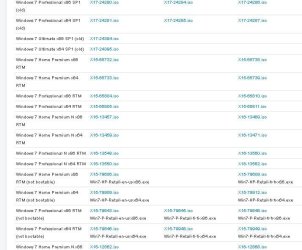
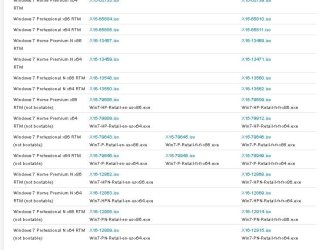
This is my computer system, may I know which Windows 7 SP1 using Windows 7 with SP1 ISO to download?

OS version: Windows 7 Service Pack 1, 6.1, build: 7601 (x64)
Hardware: LIFEBOOK SH771, FUJITSU, FJNB235
CPU: GenuineIntel Intel(R) Core(TM) i7-2640M CPU @ 2.80GHz
 

Attachments

  • 1.JPG
    1.JPG
    56.3 KB · Views: 386
  • 2.JPG
    2.JPG
    81.7 KB · Views: 153
  • 3.JPG
    3.JPG
    82.9 KB · Views: 138

My Computer

Computer type
Laptop
Computer Manufacturer/Model Number
LIFEBOOK SH771, FUJITSU, FJNB235
OS
Windows 7 Service Pack 1, 6.1, build: 7601 (x64)
CPU
GenuineIntel Intel(R) Core(TM) i7-2640M CPU @ 2.80GHz
Memory
132/285 GB & 1
Antivirus
Malwarebytes anti-mareware
Back
Top