System Freeze: Only when I come back to computer

dinglesniff

New member
Member
Local time
9:21 PM
Messages
37
EDIT 8-8-13 I did a FULL Windows Install, set all my settings to clock and am still getting the error. I have fine tuned and found that the issue ONLY arises when I shut down the monitor. It seems either the Video card drivers or the GPU or the usb monitor drivers are shutting off the card causing the system to crash.

1. I have taken the USB 3 plugs out of the ports on my monitor and this still seems to happen.
2. Sleep / hibernate is disabled.

REALLY would love ANY help


So I have a conundrum, the computer only freezes when I am not looking at it. I have never caught the crash while it is in use.

My system is:
i7-930
6GB ram
EVGA titan
3 30" Surround monitors
6 IDE Hard Drives
1 SSD

The issue first started occurring about a month ago, I felt at first it was an O/C issue, but then I questioned this since it was the first time I had an issue and I have had a stable overclock for over a year now. Then I realized the issue only occurred when I left the computer at night and turned off the monitors.

This led me to believe that the issue may reside with either video drivers or the monitors (has a usb port) themselves as I had just installed the Titan. I went ahead and loaded Beta drivers and the system seemed to have gone away. However, the only thing I have done new now is:

- Installed a new SSD and used the Samsung Pro 512GB migration software
- Installed signed Driver release drivers for the Titan

After spending the day yesterday on the new SSD, I still had issues so reading the forums I installed WinDGB but when I used the tutorial and forced my system to crash now windows is highly unstable. Right now I am running TrueImage back to my image before I moved the system to the SSD. So hopefully the SSD likes that image.

What can I do now? How do I diagnose where the driver conflict is?(I assume this is the issue?), I have had old issues like right clicking in explorer and explorer crashing, but for all of us long timers we know that's a shell issue. I REALLY do not want to reinstall windows, but I am starting to feel it's back to the drawing board and making an up to date slipstream Win 7 DVD.

Please help
 
Last edited:

My Computer My Computer

OS
Windows 7 Ultimate
CPU
i7-930 @3.99ghz
Motherboard
Gigabyte X58-UD5
Memory
G.Skill 6GB
Graphics Card(s)
Titan
Sound Card
onboard
Monitor(s) Displays
Dell 30"
Screen Resolution
2560x1600 surround
Hard Drives
4 1.5 TB seagate HD
PSU
Corsair HX750

My Computer My Computer

Computer type
PC/Desktop
Computer Manufacturer/Model Number
Self Assembled
OS
Microsoft Windows 10 Pro Insider Preview 64-bit
CPU
Intel(R) Core(TM) i3-4130 CPU @ 3.40GHz
Motherboard
Gigabyte Technology Co., Ltd. B85M-D3H
Memory
Corsair Vengence 4GB x2 (8.00GB Dual-Channel DDR3 @ 798MHz)
Graphics Card(s)
2047MB GeForce GTS 450 (ZOTAC International)
Sound Card
Onboard (Realtek High Definition Audio)
Monitor(s) Displays
LG Flatron E2040T
Screen Resolution
1600x900
Hard Drives
Western Digital 1 TB
Seagate 500 GB
PSU
Corsair VS550
Case
Cooler Master K380
Cooling
Cooler Master Seidon 120V Plus
Keyboard
Logitech MK260r
Mouse
Logitech MK260r
Internet Speed
PMPL Broadband
Antivirus
Windows Defender + MBAM
Browser
Firefox
Other Info
Dell Studio 15" Laptop
Yeah sleep is disabled, file added, and is a desktop pc.

I will make another grab all on next lock down
 

My Computer My Computer

OS
Windows 7 Ultimate
CPU
i7-930 @3.99ghz
Motherboard
Gigabyte X58-UD5
Memory
G.Skill 6GB
Graphics Card(s)
Titan
Sound Card
onboard
Monitor(s) Displays
Dell 30"
Screen Resolution
2560x1600 surround
Hard Drives
4 1.5 TB seagate HD
PSU
Corsair HX750
This is the event throughout the log .....
Event[0]:
Log Name: System
Source: Ntfs
Date: 2013-03-11T18:24:27.256
Event ID: 55
Task: N/A
Level: Error
Opcode: N/A
Keyword: Classic
User: N/A
User Name: N/A
Computer: Liquidgroup
Description:
The file system structure on the disk is corrupt and unusable. Please run the chkdsk utility on the volume I:.
The volume I is a 1.5 TB Seagate as it is appearing, the volume name is "Games".

ITEM|VALUE
Drive | I:
Description | Local Fixed Disk
Compressed | No
File System | NTFS
Size | 1.36 TB (1,500,289,421,312 bytes)
Free Space | 1.29 TB (1,418,012,127,232 bytes)
Volume Name | Games - Data Seagate
Volume Serial Number | 5AEF0330

Do some Disc checks on Volume I.

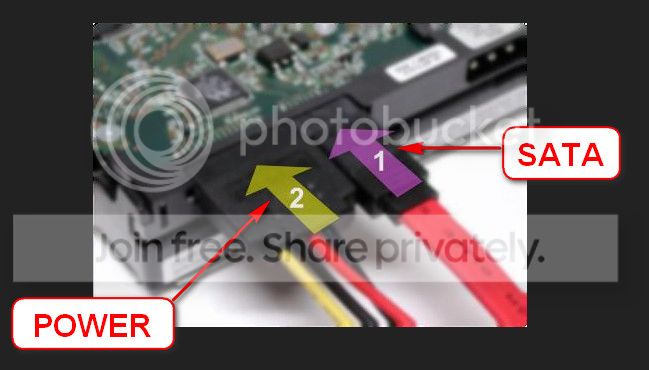
  1. Reseat the sata and power.
    72974453_zps85c47d93.jpg
  2. Run chkdsk /f/r, following the option two of the tutorial Disk Check
  3. Seatool for dos: SeaTools | Seagate download
    • Burn it in a blank cd. boot from the CD, click on "Accept", wait for it to finish detecting the drives, then in the upper left corner select "Basic Tests", then select "Long Test" and let it run.
    • You can use Win32 DiscImager to create a bootable USB and run Seatools for DOS. Follow this post to know how to make a bootable Seatools USB.
Make it sure that the Samsung 840 PRO Series SSD is running with the up-to-date firmware.

Let us know the results.
 

My Computer My Computer

Computer type
PC/Desktop
Computer Manufacturer/Model Number
Self Assembled
OS
Microsoft Windows 10 Pro Insider Preview 64-bit
CPU
Intel(R) Core(TM) i3-4130 CPU @ 3.40GHz
Motherboard
Gigabyte Technology Co., Ltd. B85M-D3H
Memory
Corsair Vengence 4GB x2 (8.00GB Dual-Channel DDR3 @ 798MHz)
Graphics Card(s)
2047MB GeForce GTS 450 (ZOTAC International)
Sound Card
Onboard (Realtek High Definition Audio)
Monitor(s) Displays
LG Flatron E2040T
Screen Resolution
1600x900
Hard Drives
Western Digital 1 TB
Seagate 500 GB
PSU
Corsair VS550
Case
Cooler Master K380
Cooling
Cooler Master Seidon 120V Plus
Keyboard
Logitech MK260r
Mouse
Logitech MK260r
Internet Speed
PMPL Broadband
Antivirus
Windows Defender + MBAM
Browser
Firefox
Other Info
Dell Studio 15" Laptop
Thanks, but I am not sure if the I: drive would be the source of the problem. Regardless I am going to run a chkdsk i: /f /r now.
 

My Computer My Computer

OS
Windows 7 Ultimate
CPU
i7-930 @3.99ghz
Motherboard
Gigabyte X58-UD5
Memory
G.Skill 6GB
Graphics Card(s)
Titan
Sound Card
onboard
Monitor(s) Displays
Dell 30"
Screen Resolution
2560x1600 surround
Hard Drives
4 1.5 TB seagate HD
PSU
Corsair HX750
Thanks, but I am not sure if the I: drive would be the source of the problem. Regardless I am going to run a chkdsk i: /f /r now.
That's a data/information based report only ... so it should tell the fact.

Seatools is a must one to run. chkdsk would not be enough.

And, if you want, as you said that you are not sure, run seatools for all your HDDs but not the SSD.

Dont forget the firmware check for the SSD.
 

My Computer My Computer

Computer type
PC/Desktop
Computer Manufacturer/Model Number
Self Assembled
OS
Microsoft Windows 10 Pro Insider Preview 64-bit
CPU
Intel(R) Core(TM) i3-4130 CPU @ 3.40GHz
Motherboard
Gigabyte Technology Co., Ltd. B85M-D3H
Memory
Corsair Vengence 4GB x2 (8.00GB Dual-Channel DDR3 @ 798MHz)
Graphics Card(s)
2047MB GeForce GTS 450 (ZOTAC International)
Sound Card
Onboard (Realtek High Definition Audio)
Monitor(s) Displays
LG Flatron E2040T
Screen Resolution
1600x900
Hard Drives
Western Digital 1 TB
Seagate 500 GB
PSU
Corsair VS550
Case
Cooler Master K380
Cooling
Cooler Master Seidon 120V Plus
Keyboard
Logitech MK260r
Mouse
Logitech MK260r
Internet Speed
PMPL Broadband
Antivirus
Windows Defender + MBAM
Browser
Firefox
Other Info
Dell Studio 15" Laptop
I ran chkdsk but it rebooted before I saw the result.

I ran seatools and it found no errors running long test.

firmware wise the SSD is up to date.

should I run chkdsk on my ssd?
 

My Computer My Computer

OS
Windows 7 Ultimate
CPU
i7-930 @3.99ghz
Motherboard
Gigabyte X58-UD5
Memory
G.Skill 6GB
Graphics Card(s)
Titan
Sound Card
onboard
Monitor(s) Displays
Dell 30"
Screen Resolution
2560x1600 surround
Hard Drives
4 1.5 TB seagate HD
PSU
Corsair HX750
No, dont run chkdsk on the SSD.

If you are using RAID setup, try disabling RAID in the BIOS. Set the storage controllers to AHCI mode. Replace the SATA and power cables.

And then run the computer normally, and observe if there is any more problem. If so, let us know in the proper way., with the zip file.
 

My Computer My Computer

Computer type
PC/Desktop
Computer Manufacturer/Model Number
Self Assembled
OS
Microsoft Windows 10 Pro Insider Preview 64-bit
CPU
Intel(R) Core(TM) i3-4130 CPU @ 3.40GHz
Motherboard
Gigabyte Technology Co., Ltd. B85M-D3H
Memory
Corsair Vengence 4GB x2 (8.00GB Dual-Channel DDR3 @ 798MHz)
Graphics Card(s)
2047MB GeForce GTS 450 (ZOTAC International)
Sound Card
Onboard (Realtek High Definition Audio)
Monitor(s) Displays
LG Flatron E2040T
Screen Resolution
1600x900
Hard Drives
Western Digital 1 TB
Seagate 500 GB
PSU
Corsair VS550
Case
Cooler Master K380
Cooling
Cooler Master Seidon 120V Plus
Keyboard
Logitech MK260r
Mouse
Logitech MK260r
Internet Speed
PMPL Broadband
Antivirus
Windows Defender + MBAM
Browser
Firefox
Other Info
Dell Studio 15" Laptop
Actually chkdsk did not stop running the monitors were off. it is still running on the E drive
 

My Computer My Computer

OS
Windows 7 Ultimate
CPU
i7-930 @3.99ghz
Motherboard
Gigabyte X58-UD5
Memory
G.Skill 6GB
Graphics Card(s)
Titan
Sound Card
onboard
Monitor(s) Displays
Dell 30"
Screen Resolution
2560x1600 surround
Hard Drives
4 1.5 TB seagate HD
PSU
Corsair HX750
The chkdsk results can be found in the event logs as a wininit event on the windows application logs
 

My Computer My Computer

Computer type
Laptop
Computer Manufacturer/Model Number
Asus K52F or Lenovo B51-80
OS
Win 7 x64 Home Premium (and x86 VirtualBox VM)/Win10
CPU
i3 370M/i7 6500U
Motherboard
Asus/Lenovo
Memory
8GB - finally :)/8GB
Graphics Card(s)
it's an i3, dude!/dual Intel&nVidia
Sound Card
onboard
Monitor(s) Displays
15.6" built-in
Screen Resolution
1366x768/1920x1080
Hard Drives
750GB Seagate internal
Sundry external drives attached to other computers on the local network
1TB SSD on the Lenovo
PSU
n/a
Internet Speed
as much as I can get - usually on a dongle/phone, so <1MB/s
Antivirus
MSE/Defender
Browser
IE11/12/Edge/Chrome/FF(if I must)
The I and E drive are showing errors like this, any ideas? They both passed the long test in seatools


Checking file system on I:
The type of the file system is NTFS.
Volume label is Games - Data Seagate.

A disk check has been scheduled.
Windows will now check the disk.

CHKDSK is verifying files (stage 1 of 5)...
312064 file records processed. File verification completed.
0 large file records processed. 0 bad file records processed. 0 EA records processed. 4 reparse records processed. CHKDSK is verifying indexes (stage 2 of 5)...
318294 index entries processed. Index verification completed.
0 unindexed files scanned. 0 unindexed files recovered. CHKDSK is verifying security descriptors (stage 3 of 5)...
312064 file SDs/SIDs processed. Cleaning up 14 unused index entries from index $SII of file 0x9.
Cleaning up 14 unused index entries from index $SDH of file 0x9.
Cleaning up 14 unused security descriptors.
Security descriptor verification completed.
3116 data files processed. CHKDSK is verifying Usn Journal...
37290768 USN bytes processed. Usn Journal verification completed.
CHKDSK is verifying file data (stage 4 of 5)...
312048 files processed. File data verification completed.
CHKDSK is verifying free space (stage 5 of 5)...
345945675 free clusters processed. Free space verification is complete.
Correcting errors in the Volume Bitmap.
Write failure with status 0xc0000185 at offset 0x15d5037de00 for 0x200 bytes.
The second NTFS boot sector is unwriteable.

Internal Info:
00 c3 04 00 44 1b 01 00 2a 12 02 00 00 00 00 00 ....D...*.......
0b 00 00 00 04 00 00 00 00 00 00 00 00 00 00 00 ................
00 00 00 00 00 00 00 00 00 00 00 00 00 00 00 00 ................
 

My Computer My Computer

OS
Windows 7 Ultimate
CPU
i7-930 @3.99ghz
Motherboard
Gigabyte X58-UD5
Memory
G.Skill 6GB
Graphics Card(s)
Titan
Sound Card
onboard
Monitor(s) Displays
Dell 30"
Screen Resolution
2560x1600 surround
Hard Drives
4 1.5 TB seagate HD
PSU
Corsair HX750
Chkdsk detected some errors. Tried to recover those ... but failed, as some sectors it found unwriteable.

Back up the data and change the disc.
 

My Computer My Computer

Computer type
PC/Desktop
Computer Manufacturer/Model Number
Self Assembled
OS
Microsoft Windows 10 Pro Insider Preview 64-bit
CPU
Intel(R) Core(TM) i3-4130 CPU @ 3.40GHz
Motherboard
Gigabyte Technology Co., Ltd. B85M-D3H
Memory
Corsair Vengence 4GB x2 (8.00GB Dual-Channel DDR3 @ 798MHz)
Graphics Card(s)
2047MB GeForce GTS 450 (ZOTAC International)
Sound Card
Onboard (Realtek High Definition Audio)
Monitor(s) Displays
LG Flatron E2040T
Screen Resolution
1600x900
Hard Drives
Western Digital 1 TB
Seagate 500 GB
PSU
Corsair VS550
Case
Cooler Master K380
Cooling
Cooler Master Seidon 120V Plus
Keyboard
Logitech MK260r
Mouse
Logitech MK260r
Internet Speed
PMPL Broadband
Antivirus
Windows Defender + MBAM
Browser
Firefox
Other Info
Dell Studio 15" Laptop
Ok I got my first BSOD but my computer rebooted see dump
 

My Computer My Computer

OS
Windows 7 Ultimate
CPU
i7-930 @3.99ghz
Motherboard
Gigabyte X58-UD5
Memory
G.Skill 6GB
Graphics Card(s)
Titan
Sound Card
onboard
Monitor(s) Displays
Dell 30"
Screen Resolution
2560x1600 surround
Hard Drives
4 1.5 TB seagate HD
PSU
Corsair HX750
Ok I got my first BSOD but my computer rebooted see dump

This BSOD is caused by Display/graphics.
Code:
*******************************************************************************
*                                                                             *
*                        Bugcheck Analysis                                    *
*                                                                             *
*******************************************************************************

Use !analyze -v to get detailed debugging information.

BugCheck 1000007E, {ffffffffc0000094, fffff88006c01045, fffff8800e4a1478, fffff8800e4a0cd0}
[COLOR=Red]
Probably caused by : nvlddmkm.sys[/COLOR] ( nvlddmkm+1045 )

Followup: MachineOwner
---------
Whereas the display driver is the latest one.
Code:
fffff880`06c00000 fffff880`076e5000   nvlddmkm T (no symbols)           
    Loaded symbol image file: nvlddmkm.sys
    Image path: \SystemRoot\system32\DRIVERS\nvlddmkm.sys
[COLOR=Red]    Image name: nvlddmkm.sys
    Timestamp:        Fri Jun 21 14:36:16 2013[/COLOR] (51C41788)
    CheckSum:         00AB87FF
    ImageSize:        00AE5000
    Translations:     0000.04b0 0000.04e4 0409.04b0 0409.04e4
But still if it is crashing, there must be something that is influencing display adversely.

I am seeing that you are highly overclocked.
Code:
CPUID:        "Intel(R) Core(TM) i7 CPU         930  @ 2.80GHz"
MaxSpeed:     2800
[COLOR=Red]CurrentSpeed: 3990[/COLOR]
As you are getting BSODs, you should stop overclocking and run all the hardware components like CPU, GPU and RAM to their default settings. Also set the BIOS to default, too.
How To Clear CMOS (Reset BIOS)

Stress test the Graphics Card using Furmark.
Video Card - Stress Test with Furmark

Is the computer hot? Report us the heat of the computer after a couple of hours of your normal usage. Upload a screenshot of the summery tab of Speccy.

Check if the Power Supply Unit (PSU) supplying adequate power to the computer or not.
eXtreme Power Supply Calculator
At least 30% free is good. Also let us know about the wattage of your PSU.
 

My Computer My Computer

Computer type
PC/Desktop
Computer Manufacturer/Model Number
Self Assembled
OS
Microsoft Windows 10 Pro Insider Preview 64-bit
CPU
Intel(R) Core(TM) i3-4130 CPU @ 3.40GHz
Motherboard
Gigabyte Technology Co., Ltd. B85M-D3H
Memory
Corsair Vengence 4GB x2 (8.00GB Dual-Channel DDR3 @ 798MHz)
Graphics Card(s)
2047MB GeForce GTS 450 (ZOTAC International)
Sound Card
Onboard (Realtek High Definition Audio)
Monitor(s) Displays
LG Flatron E2040T
Screen Resolution
1600x900
Hard Drives
Western Digital 1 TB
Seagate 500 GB
PSU
Corsair VS550
Case
Cooler Master K380
Cooling
Cooler Master Seidon 120V Plus
Keyboard
Logitech MK260r
Mouse
Logitech MK260r
Internet Speed
PMPL Broadband
Antivirus
Windows Defender + MBAM
Browser
Firefox
Other Info
Dell Studio 15" Laptop
My system has been stable for years with the 1GHZ overclock and I have not had any issues. I have set the Titan to the default settings, but it should be able to Overclock. One titan had the same O/C and had little issues...

PSU Wise I have a Corsair AX860 and technically it should be fine.


System:

Gigabyte X58-ud5 rev 2
3 sticks of 2GB G Skill ram
2 EVGA Titans STock
I7-930 O/C to 3.99ghz
3 Dell 30"
1 DVD Burner
10 system fans
Corsaid AX860 PSU
3 1.5TB HD
3 3TB WD Red HD
1 Samsung 840 pro SSD
Ok I got my first BSOD but my computer rebooted see dump

This BSOD is caused by Display/graphics.
Code:
*******************************************************************************
*                                                                             *
*                        Bugcheck Analysis                                    *
*                                                                             *
*******************************************************************************

Use !analyze -v to get detailed debugging information.

BugCheck 1000007E, {ffffffffc0000094, fffff88006c01045, fffff8800e4a1478, fffff8800e4a0cd0}
[COLOR=Red]
Probably caused by : nvlddmkm.sys[/COLOR] ( nvlddmkm+1045 )

Followup: MachineOwner
---------
Whereas the display driver is the latest one.
Code:
fffff880`06c00000 fffff880`076e5000   nvlddmkm T (no symbols)           
    Loaded symbol image file: nvlddmkm.sys
    Image path: \SystemRoot\system32\DRIVERS\nvlddmkm.sys
[COLOR=Red]    Image name: nvlddmkm.sys
    Timestamp:        Fri Jun 21 14:36:16 2013[/COLOR] (51C41788)
    CheckSum:         00AB87FF
    ImageSize:        00AE5000
    Translations:     0000.04b0 0000.04e4 0409.04b0 0409.04e4
But still if it is crashing, there must be something that is influencing display adversely.

I am seeing that you are highly overclocked.
Code:
CPUID:        "Intel(R) Core(TM) i7 CPU         930  @ 2.80GHz"
MaxSpeed:     2800
[COLOR=Red]CurrentSpeed: 3990[/COLOR]
As you are getting BSODs, you should stop overclocking and run all the hardware components like CPU, GPU and RAM to their default settings. Also set the BIOS to default, too.
How To Clear CMOS (Reset BIOS)

Stress test the Graphics Card using Furmark.
Video Card - Stress Test with Furmark

Is the computer hot? Report us the heat of the computer after a couple of hours of your normal usage. Upload a screenshot of the summery tab of Speccy.

Check if the Power Supply Unit (PSU) supplying adequate power to the computer or not.
eXtreme Power Supply Calculator
At least 30% free is good. Also let us know about the wattage of your PSU.
 

My Computer My Computer

OS
Windows 7 Ultimate
CPU
i7-930 @3.99ghz
Motherboard
Gigabyte X58-UD5
Memory
G.Skill 6GB
Graphics Card(s)
Titan
Sound Card
onboard
Monitor(s) Displays
Dell 30"
Screen Resolution
2560x1600 surround
Hard Drives
4 1.5 TB seagate HD
PSU
Corsair HX750
Every system is different. One can handle overclock that does not necessarily mean that the other one also can do it. If it can, it would not have BSOD'd.

It would be better if you follow the instructions and give us the proper feedback which will pave the path to further proceeding.
 

My Computer My Computer

Computer type
PC/Desktop
Computer Manufacturer/Model Number
Self Assembled
OS
Microsoft Windows 10 Pro Insider Preview 64-bit
CPU
Intel(R) Core(TM) i3-4130 CPU @ 3.40GHz
Motherboard
Gigabyte Technology Co., Ltd. B85M-D3H
Memory
Corsair Vengence 4GB x2 (8.00GB Dual-Channel DDR3 @ 798MHz)
Graphics Card(s)
2047MB GeForce GTS 450 (ZOTAC International)
Sound Card
Onboard (Realtek High Definition Audio)
Monitor(s) Displays
LG Flatron E2040T
Screen Resolution
1600x900
Hard Drives
Western Digital 1 TB
Seagate 500 GB
PSU
Corsair VS550
Case
Cooler Master K380
Cooling
Cooler Master Seidon 120V Plus
Keyboard
Logitech MK260r
Mouse
Logitech MK260r
Internet Speed
PMPL Broadband
Antivirus
Windows Defender + MBAM
Browser
Firefox
Other Info
Dell Studio 15" Laptop
Check if the Power Supply Unit (PSU) supplying adequate power to the computer or not.
eXtreme Power Supply Calculator
At least 30% free is good. Also let us know about the wattage of your PSU.
It says that it utilizes about 750 watts and I have an 860 AX860 Corsair power supply.

I uninstalled the 320.49 drivers and am trying earlier ones.


I just lowered my O/C but I don't see how this should affect it as I had a GTX 460 / Titan before and the system has been o/c stable since day one. Why would it be affected now?
 

My Computer My Computer

OS
Windows 7 Ultimate
CPU
i7-930 @3.99ghz
Motherboard
Gigabyte X58-UD5
Memory
G.Skill 6GB
Graphics Card(s)
Titan
Sound Card
onboard
Monitor(s) Displays
Dell 30"
Screen Resolution
2560x1600 surround
Hard Drives
4 1.5 TB seagate HD
PSU
Corsair HX750
If the power utilization is 750 watts, better you opt for a 1000 watts PSU. Power utilization increases in situations, and then it will be at critical state at present.

Overclocking puts a stress on hardware. Hardware depreciates normally during the passage of time and utilization; overclocking accelerates the depreciation rate. So, as the overclocked hardware are stable at day 1, it will not remain that steady after a passage of time.
 

My Computer My Computer

Computer type
PC/Desktop
Computer Manufacturer/Model Number
Self Assembled
OS
Microsoft Windows 10 Pro Insider Preview 64-bit
CPU
Intel(R) Core(TM) i3-4130 CPU @ 3.40GHz
Motherboard
Gigabyte Technology Co., Ltd. B85M-D3H
Memory
Corsair Vengence 4GB x2 (8.00GB Dual-Channel DDR3 @ 798MHz)
Graphics Card(s)
2047MB GeForce GTS 450 (ZOTAC International)
Sound Card
Onboard (Realtek High Definition Audio)
Monitor(s) Displays
LG Flatron E2040T
Screen Resolution
1600x900
Hard Drives
Western Digital 1 TB
Seagate 500 GB
PSU
Corsair VS550
Case
Cooler Master K380
Cooling
Cooler Master Seidon 120V Plus
Keyboard
Logitech MK260r
Mouse
Logitech MK260r
Internet Speed
PMPL Broadband
Antivirus
Windows Defender + MBAM
Browser
Firefox
Other Info
Dell Studio 15" Laptop
Your specs show a HX-750 power supply.
Your computer does not use 750W of power. A quality 750W power supply will run your computer with watts left over.

Please do as instructed and run the computer at default setting until this problem is solved. (No Over Clock).

Once the problem is solved you can alway go back to the over clock and see what happens.
 

My Computer My Computer

Computer type
PC/Desktop
Computer Manufacturer/Model Number
Home made Desktop
OS
Windows 10 Pro. 64/ version 1709 Windows 7 Pro/64
CPU
Intel i7-6800K @ 4.3
Motherboard
ASUS X-99 Deluxe II
Memory
Corsair Platinum 16 gig @2400
Graphics Card(s)
EVGA GTX 1070 OC
Monitor(s) Displays
Asus 27" LED LCD/VE278Q
Screen Resolution
1920-1080 or 1280-720 HDMI
Hard Drives
INTEL SSD 730-240 Gb Sata 3.0/
PSU
EVGA Platium 1200W
Case
Phanteks Luxe Tempered Glass 8 fans/ one radiator
Cooling
XSPC/ Water Cooled CPU
Keyboard
Das 4 Professional
Mouse
Logitech M705/MX Anywhere 2-S
Internet Speed
100 mbits
Antivirus
Microsoft Security Essentials/ Malwarebytes Premium 3.0/ SAS
Browser
I.E. 11 default/Firefox/ ISP Time Warner Cable/Spectrum
Other Info
LG BluRay Burner/
Sound system-KLipsch-THX/
Icy Dock ssd Hot Swap bays.
I am not sure if its a power issue yet but I am looking at placing an order for another PSU.

In the meantime it may be a windows issue no? Could it possibly be corruption with the second card?

Problem signature:
Problem Event Name: BlueScreen
OS Version: 6.1.7601.2.1.0.256.4
Locale ID: 1033

Additional information about the problem:
BCCode: 50
BCP1: FFFFFA8010D9D000
BCP2: 0000000000000000
BCP3: FFFFF80003A7E69A
BCP4: 0000000000000000
OS Version: 6_1_7601
Service Pack: 1_0
Product: 256_1
 

My Computer My Computer

OS
Windows 7 Ultimate
CPU
i7-930 @3.99ghz
Motherboard
Gigabyte X58-UD5
Memory
G.Skill 6GB
Graphics Card(s)
Titan
Sound Card
onboard
Monitor(s) Displays
Dell 30"
Screen Resolution
2560x1600 surround
Hard Drives
4 1.5 TB seagate HD
PSU
Corsair HX750
Back
Top