

Arceml
New member
- Local time
- 2:43 PM
- Messages
- 1
Hello everyone,
I am usually a lurker on this forum as I still use Windows 7 Ultimate as my daily driver (except for stuff that needs the internet) and this community has helped me out in many ways. However in this particular case I cannot find a single thread anywhere here nor anywhere online for that matter so I'm posting here in the hopes someone can help. Also I understand this is way ahead of schedule since Y2K38 happens in 2038 but I figured might as well run some tests on my 32bit software now so I won't get blindsided by this problem a decade later because I tend to forget easily.
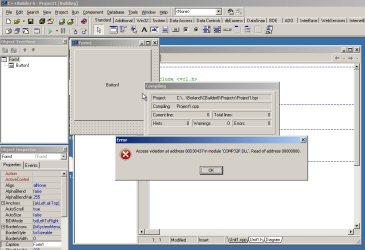
So far, Borland C++Builder 6 Enterprise has been the only 32bit program that I use that from my tests continuously gives me trouble. Before Y2K38, C++Builder can easily compile my programs without issue or fuss, however when the time is reached it no longer can, providing the error message below:

Anyone who still uses this ancient program for their software projects, or anyone knowledgeable on this - is there anything I can do to resolve this issue? I really do not want to get something new or different if I can absolutely help it as I use this program a lot.
I am running tests on it in a Windows 7 Ultimate 64bit VirtualBox VM on my linux machine. But I have successfully replicated this error on VMWare on my main machine and on bare metal on an old Thinkpad T520 that I sold to a friend.
Any help would be greatly appreciated!
I am usually a lurker on this forum as I still use Windows 7 Ultimate as my daily driver (except for stuff that needs the internet) and this community has helped me out in many ways. However in this particular case I cannot find a single thread anywhere here nor anywhere online for that matter so I'm posting here in the hopes someone can help. Also I understand this is way ahead of schedule since Y2K38 happens in 2038 but I figured might as well run some tests on my 32bit software now so I won't get blindsided by this problem a decade later because I tend to forget easily.
So far, Borland C++Builder 6 Enterprise has been the only 32bit program that I use that from my tests continuously gives me trouble. Before Y2K38, C++Builder can easily compile my programs without issue or fuss, however when the time is reached it no longer can, providing the error message below:
Anyone who still uses this ancient program for their software projects, or anyone knowledgeable on this - is there anything I can do to resolve this issue? I really do not want to get something new or different if I can absolutely help it as I use this program a lot.
I am running tests on it in a Windows 7 Ultimate 64bit VirtualBox VM on my linux machine. But I have successfully replicated this error on VMWare on my main machine and on bare metal on an old Thinkpad T520 that I sold to a friend.
Any help would be greatly appreciated!
Attachments
My Computers
System One System Two
-
- OS
- Windows 7 Ultimate X64
-
- Computer type
- PC/Desktop

