Solved multiple BSOD (IRQL_NOT_LESS_OR_EQUAL 0x0000000a)

mvd1968

New member
Local time
2:47 AM
Messages
5
Hi y'r all

I think that for about a year ago is started to have BSOD. This was after 1 year of running this pc with no problems. Normaly make a fresh windows install 2 times a year.
Mostly the first time i started up my computer it gave an BSOD. After the restart the computer worked fine. This type of starteup i could live with, the 1 BSOD after startup i had accepted
After installing a fresh WIN7 i still got this type of BSOD.
Yesterday, when returing from a week holiday the computer gave an BSOD the first startup. After that i restarted and it BSOD again after some time.
When the BSOD apears, first the screen fades in colored lines and the BSOD screen is there.

I searched the internet and read that i maybe caused by an graphic card driver.
So i deleted the Catalys software and drivers for my 2 videocards AMD HD-6800.
After that it did not BSOD anymore in that session.
This morning it gave an BSOD on startup again. No more restarts or BSOD in this session.

I did the memtest for about an hour, no problems there. Had all 4 memory banks filled (8gb total) as have run speccy and can upload my specs.
I did not overclocked or changed settings for memory in the BIOS. Used the default AHCI option.
Updated my bios to the newest firmware.

I attached the SF zip file and this is an overview of my since 7-3

IRQL_NOT_LESS_OR_EQUAL 0x0000000a
PAGE_FAULT_IN_NONPAGED_AREA0x00000050
IRQL_NOT_LESS_OR_EQUAL 0x0000000a
PAGE_FAULT_IN_NONPAGED_AREA0x00000050
SYSTEM_THREAD_EXCEPTION_NOT_HANDLED 0x1000007e
IRQL_NOT_LESS_OR_EQUAL0x0000000a

So now i came a cross this website and hoped thet you have some sollutions for me??
It nows runs without BSOD for about 1 hour
 

My Computer

Computer type
PC/Desktop
Computer Manufacturer/Model Number
custom build
OS
Microsoft Windows 7 Home Premium 64-bit SP1
CPU
Intel Core i7 950 @ 3.07GHz 46 °C
Motherboard
ASRock X58 Extreme3 (CPUSocket) 37 °C
Memory
8,00 GB Triple-Kanaal DDR3 @ 536MHz (8-8-8-20)
Graphics Card(s)
2 x AMD Radeon HD 6800 Series (Sapphire/PCPartner)
Hard Drives
0GB OCZ-ONYX ATA Device (SSD)
932GB Western Digital WDC WD10EZEX-00RKKA0 ATA Device (SATA) 24 °C
932GB SAMSUNG HD103SJ ATA Device (SATA) 23 °C
Browser
Internet Explorer Versie 9.0.8112.16421

My Computer

Computer Manufacturer/Model Number
Custom Built
OS
Windows 7 Ultimate 32-Bit & Windows 7 Ultimate 64-Bit
CPU
Intel Core i7 CPU 950 @ 3.07GHz
Motherboard
ASUS P6T DELUXE V2
Memory
OCZ 6GB (3 x 2GB) 240-Pin DDR3 SDRAM DDR3 1600 OCZ3X1600R2
Graphics Card(s)
ATI Radeon HD 5700 Series
Sound Card
OnBoard
Hard Drives
WD6400AACS-00M3B0 (640GB SATA )
PSU
CORSAIR 850w
Case
NZXT LEXA
Cooling
Intel Stock Heatsink Fan
Keyboard
Microsoft Wireless Laser Keyboard 7000
Mouse
Microsoft Wireless Laser Mouse 7000

My Computer

Computer type
PC/Desktop
Computer Manufacturer/Model Number
custom build
OS
Microsoft Windows 7 Home Premium 64-bit SP1
CPU
Intel Core i7 950 @ 3.07GHz 46 °C
Motherboard
ASRock X58 Extreme3 (CPUSocket) 37 °C
Memory
8,00 GB Triple-Kanaal DDR3 @ 536MHz (8-8-8-20)
Graphics Card(s)
2 x AMD Radeon HD 6800 Series (Sapphire/PCPartner)
Hard Drives
0GB OCZ-ONYX ATA Device (SSD)
932GB Western Digital WDC WD10EZEX-00RKKA0 ATA Device (SATA) 24 °C
932GB SAMSUNG HD103SJ ATA Device (SATA) 23 °C
Browser
Internet Explorer Versie 9.0.8112.16421
Code:
*******************************************************************************
*                                                                             *
*                        Bugcheck Analysis                                    *
*                                                                             *
*******************************************************************************

Use !analyze -v to get detailed debugging information.

[URL="http://www.carrona.org/bsodindx.html#0x0000000A"]BugCheck A[/URL], {fffffc00051b50c0, 2, 1, fffff80002cf8240}
[code][B]Usual causes:[/B]  Kernel mode driver, System Service, BIOS, Windows, Virus scanner, Backup tool, compatibility
Probably caused by : memory_corruption ( nt!MiReplenishPageSlist+c0 )

Followup: MachineOwner
--------------------------------------------------------------------------------------------------------------
BugCheck 1000007E, {ffffffffc0000005, fffff88004578b55, fffff88009794898, fffff880097940f0}
Code:
[B]Usual causes:[/B]  Insufficient disk space, Device driver, Video card, BIOS, Breakpoint with no debugger attached, Hardware incompatibility, Faulty system service, Memory, 3rd party remote control,
*** WARNING: Unable to verify timestamp for win32k.sys
*** ERROR: Module load completed but symbols could not be loaded for win32k.sys
Probably caused by : memory_corruption

Followup: memory_corruption
-------------------------------------------------------------------------------------------------------------
Use !analyze -v to get detailed debugging information.

BugCheck 50, {fffff8a802d243b0, 0, fffff880053ced38, 5}
Code:
[B]Usual causes:[/B]  Defective hardware (particularly memory - but not just RAM), Faulty system service, Antivirus,  Device driver, NTFS corruption, BIOS
Could not read faulting driver name
Probably caused by : dxgmms1.sys ( dxgmms1!VIDMM_LINEAR_POOL::FindAdjacentBlocksOnFreeList+1c )

Followup: MachineOwner
-------------------------------------------------------------------------------------------------------------
[/code] These are the three stopcodes you are getting. These are not specifying anything unfortunately, but gives us a prima facie conception about the probable cause. You do the following:

  • Test your RAM modules for possible errors.
    How to Test and Diagnose RAM Issues with Memtest86+

    Run memtest for at least 8 passes, preferably overnight.
  • Uninstall Avast using Avast Uninstall Utility. Use Microsoft Security Essentials as your antivirus with windows inbuilt firewall, and free MBAM as the on demand scanner.
    Download, install and update those, and then run full system scans with both of them, one by one.
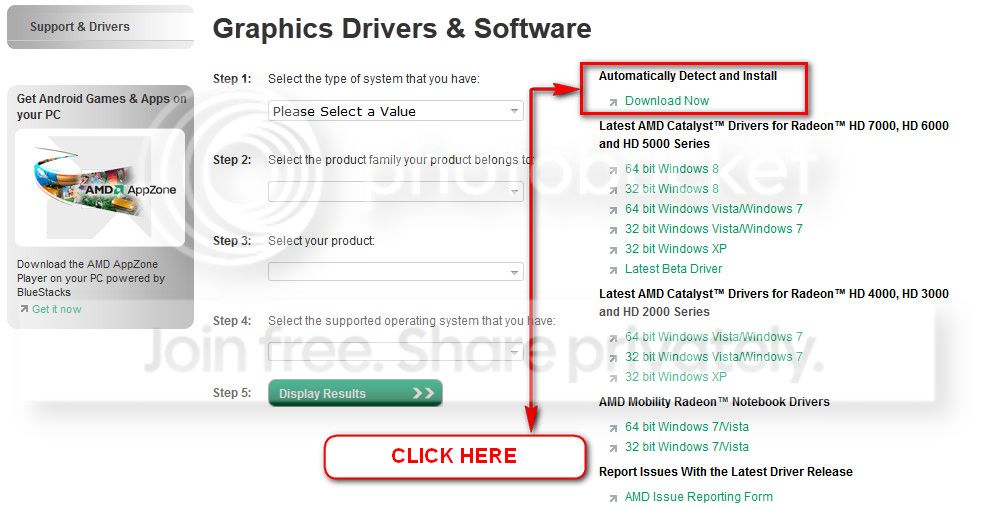
  • Update your ATI/AMD display driver.
    You can get it from the link in our forum, http://www.sevenforums.com/graphic-...alyst-video-driver-windows-7-a.html#post17671, or you may go to AMD Graphics Driver and Software and opt for Automatically Detect and Install the appropriate driver for your card.
    ATI_zps0bc28aaa.jpg


    During installation, you may opt for advanced installation, and install the display driver only, not the Catalyst Control Center.
  • Try to Update the BIOS
    Code:
    BIOS-versie/datum    American Megatrends Inc. P2.80, [COLOR=Red]31-10-2011[/COLOR]
Let us know the results.
 

My Computer

Computer type
PC/Desktop
Computer Manufacturer/Model Number
Self Assembled
OS
Microsoft Windows 10 Pro Insider Preview 64-bit
CPU
Intel(R) Core(TM) i3-4130 CPU @ 3.40GHz
Motherboard
Gigabyte Technology Co., Ltd. B85M-D3H
Memory
Corsair Vengence 4GB x2 (8.00GB Dual-Channel DDR3 @ 798MHz)
Graphics Card(s)
2047MB GeForce GTS 450 (ZOTAC International)
Sound Card
Onboard (Realtek High Definition Audio)
Monitor(s) Displays
LG Flatron E2040T
Screen Resolution
1600x900
Hard Drives
Western Digital 1 TB
Seagate 500 GB
PSU
Corsair VS550
Case
Cooler Master K380
Cooling
Cooler Master Seidon 120V Plus
Keyboard
Logitech MK260r
Mouse
Logitech MK260r
Internet Speed
PMPL Broadband
Antivirus
Windows Defender + MBAM
Browser
Firefox
Other Info
Dell Studio 15" Laptop
Did all the above.

Removed avast and installed MSE en MBAM, run the test, gave no warnings
Updated the ATI drivers to the latest 13.1
Bios was already the newest version 2.80

Did the memtest, 7 passes, 10 hours testing, non errors

What about my BIOS settings? can that trigger an BSOD? Maybe my memory settings are not right?

Keep you informed.

Edit:

After restart got multiple BSOD again.
Did removed the Catalys ATI drivers and worked with the standard vga driver. No BSOD after this.
I supose the fauls are due the videodrivers? I have 2 videocards (crossfire).
Is it possible that one of the card or both has an defect? Or is it more likely that is is because of an faulty driver?

Edit 2:

Also in this mode without the ATI drivers i get an BSOD after 10 minutes
 
Last edited:

My Computer

Computer type
PC/Desktop
Computer Manufacturer/Model Number
custom build
OS
Microsoft Windows 7 Home Premium 64-bit SP1
CPU
Intel Core i7 950 @ 3.07GHz 46 °C
Motherboard
ASRock X58 Extreme3 (CPUSocket) 37 °C
Memory
8,00 GB Triple-Kanaal DDR3 @ 536MHz (8-8-8-20)
Graphics Card(s)
2 x AMD Radeon HD 6800 Series (Sapphire/PCPartner)
Hard Drives
0GB OCZ-ONYX ATA Device (SSD)
932GB Western Digital WDC WD10EZEX-00RKKA0 ATA Device (SATA) 24 °C
932GB SAMSUNG HD103SJ ATA Device (SATA) 23 °C
Browser
Internet Explorer Versie 9.0.8112.16421
I framed an idea after seeing your data for the first time (no expressed though, as those are hard to say from the part of a remote debugger), but want to see the newer ones. I expect the same random bugchecks there, too.

Post it following the Blue Screen of Death (BSOD) Posting Instructions.
 

My Computer

Computer type
PC/Desktop
Computer Manufacturer/Model Number
Self Assembled
OS
Microsoft Windows 10 Pro Insider Preview 64-bit
CPU
Intel(R) Core(TM) i3-4130 CPU @ 3.40GHz
Motherboard
Gigabyte Technology Co., Ltd. B85M-D3H
Memory
Corsair Vengence 4GB x2 (8.00GB Dual-Channel DDR3 @ 798MHz)
Graphics Card(s)
2047MB GeForce GTS 450 (ZOTAC International)
Sound Card
Onboard (Realtek High Definition Audio)
Monitor(s) Displays
LG Flatron E2040T
Screen Resolution
1600x900
Hard Drives
Western Digital 1 TB
Seagate 500 GB
PSU
Corsair VS550
Case
Cooler Master K380
Cooling
Cooler Master Seidon 120V Plus
Keyboard
Logitech MK260r
Mouse
Logitech MK260r
Internet Speed
PMPL Broadband
Antivirus
Windows Defender + MBAM
Browser
Firefox
Other Info
Dell Studio 15" Laptop
Hi

After these BSOD i did some fault excluding today.
First removed one graphic videocard and some memory banks.
I also disconnected an multicard reader that i had installed last year.

With this setup no more BSOD. So i added the second videocard and did some burn-in test. Also the system stayed stable.
Strange is that i have 4 x 2gb of memory in my pc. When i add 3x2gb in tripple memory setup it worked fine.After adding the last 2gb (so 4x2gb) i got some BSOD.
Maybe my motherboard cant handle 3x2gb and 1x2gb. This has worked when buying the pc but maybe in an firmware update this went wrong? The manual says that it is possible. swapped memory banks and this did not gave me BSODs.

So i ordered 2x2gb of the same memory brand/type, Hope that running in 2x 3x2gb (double trippl) would solve the problems. Otherwise maybe i got an defect in my motherboard?

I am running the whole day on 3x2GB without any BSOD
 

My Computer

Computer type
PC/Desktop
Computer Manufacturer/Model Number
custom build
OS
Microsoft Windows 7 Home Premium 64-bit SP1
CPU
Intel Core i7 950 @ 3.07GHz 46 °C
Motherboard
ASRock X58 Extreme3 (CPUSocket) 37 °C
Memory
8,00 GB Triple-Kanaal DDR3 @ 536MHz (8-8-8-20)
Graphics Card(s)
2 x AMD Radeon HD 6800 Series (Sapphire/PCPartner)
Hard Drives
0GB OCZ-ONYX ATA Device (SSD)
932GB Western Digital WDC WD10EZEX-00RKKA0 ATA Device (SATA) 24 °C
932GB SAMSUNG HD103SJ ATA Device (SATA) 23 °C
Browser
Internet Explorer Versie 9.0.8112.16421
Test your RAM modules for possible errors.
How to Test and Diagnose RAM Issues with Memtest86+
Run memtest for at least 8 passes, preferably overnight.

First run it with all the existing/installed RAM modules. If it comes with no error, all is good.

But if it starts showing errors, Stop testing. Errors/red lines means one or more RAM is faulty. But the fault may occur due to a faulty DIMM slot, too, which is a motherboard component. Using memtest86+, you can discriminate between a faulty RAM and a faulty motherboard.

How? Say you have two RAM sticks and two DIMM slots. You obtained errors at the test with all RAM sticks installed. Now, remove all the sticks but one. Test it in all the available slots, one by one. Continue the same procedure for all the available sticks.
How to make the inference that is it a RAM issue or it is a motherboard issue? Suppose you have got the result like that:
test|Slot1|Slot2
RAM1| Error | Error
RAM2|Good|Good
It is a RAM, a bad RAM.

But if you have got a result like that:
test|Slot1|Slot2
RAM1| Error |Good
RAM2| Error |Good
It is a motherboard issue. The particular slot is bad.
 

My Computer

Computer type
PC/Desktop
Computer Manufacturer/Model Number
Self Assembled
OS
Microsoft Windows 10 Pro Insider Preview 64-bit
CPU
Intel(R) Core(TM) i3-4130 CPU @ 3.40GHz
Motherboard
Gigabyte Technology Co., Ltd. B85M-D3H
Memory
Corsair Vengence 4GB x2 (8.00GB Dual-Channel DDR3 @ 798MHz)
Graphics Card(s)
2047MB GeForce GTS 450 (ZOTAC International)
Sound Card
Onboard (Realtek High Definition Audio)
Monitor(s) Displays
LG Flatron E2040T
Screen Resolution
1600x900
Hard Drives
Western Digital 1 TB
Seagate 500 GB
PSU
Corsair VS550
Case
Cooler Master K380
Cooling
Cooler Master Seidon 120V Plus
Keyboard
Logitech MK260r
Mouse
Logitech MK260r
Internet Speed
PMPL Broadband
Antivirus
Windows Defender + MBAM
Browser
Firefox
Other Info
Dell Studio 15" Laptop
Well i think it is officialy solved. Started my pc today and no BSOD at all. Did an burn-in test for about 15 minuts and no errors.
"normaly" the first startup BSOD always on me. Happy that is it solved but verry curios what the problem was.

I did an complete memtest serveral times and no errors there. So i think the memory was fine but when i used 3x2gb instead of 4 x 2gb the BSOD disapeared. I swapped this last added 1 x 2gb but did also did not changed, no BSODs. So the memory is fine but when installing to much memory it BSOD? Strange because bought he PC with x42gb and runned it faultless over 1,5 years?

Any users with an Asrock X58 extrem 3 who can explain this

Well officialy solved now. No BSOD anymore.
Removed MSE and istalled my old virus scanner again.
Runned memtest overnight no errors. Think the error was on the motherboard ram slot.
 
Last edited:

My Computer

Computer type
PC/Desktop
Computer Manufacturer/Model Number
custom build
OS
Microsoft Windows 7 Home Premium 64-bit SP1
CPU
Intel Core i7 950 @ 3.07GHz 46 °C
Motherboard
ASRock X58 Extreme3 (CPUSocket) 37 °C
Memory
8,00 GB Triple-Kanaal DDR3 @ 536MHz (8-8-8-20)
Graphics Card(s)
2 x AMD Radeon HD 6800 Series (Sapphire/PCPartner)
Hard Drives
0GB OCZ-ONYX ATA Device (SSD)
932GB Western Digital WDC WD10EZEX-00RKKA0 ATA Device (SATA) 24 °C
932GB SAMSUNG HD103SJ ATA Device (SATA) 23 °C
Browser
Internet Explorer Versie 9.0.8112.16421
Back
Top