HiI recently retired my wife's Tosh C660, like the OP it was slowing down, even with 6GB ram.
Now to throw another spanner in the works >>I would have only installed the 32bit versionbased on those last 2 screenshots, and OP's comments got a funny feeling the Linux install has corrupted the NTFS format or the Rufus settings are wrong Yeah, I figured out/thought Linus must have changed something, I guess that's why the reccomend not putting Linux on the same drive as windows. If the computer can mount 2 hd I will do a separate install for each on diff hds, unfortunately this Toshiba won't accept 2 hds but I think my HP does.
when/if you have completed your install please run this command (C:\Windows\system32>fsutil fsinfo ntfsinfo c)
C:\Windows\system32>fsutil fsinfo ntfsinfo c:
Version should be 3.1 I've got it up and running win7 now, I did have to remove the usb when it rebooted the first time, I thought I should but I figured it would tell me to remove all media before restarting. I did install 64 bit, Do I need to run sys32-fsutil fsinfo ntfs info)? Do older windows systems use a diff NTFS? What is Macrium?
I'm not entirely sure your OS will function correctly, might be you have ti install again
OP >>>> you should have deleted partitions 2/3, then i would also have formatted the remaining partition, this would have changed/updated it to a supported version, then install I deleted all partitions and had formated inside the istall process so the NTFS would be right. Do older windows systems use a diff NTFS?
(no point in keeping it/them -- just install Macrium and create an image when the install is complete)
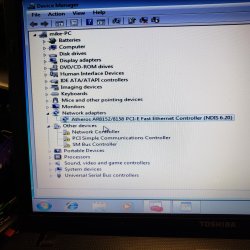
The new install did not install/find drivers for the internet, I used to have a usb dongle that I cannot find that would bi pass the Realtek installed since Linux 18 did not support it. Ho do I fix this?
Thanks so much, it's been so long since I did any of this but hopefully it's coming back. This forum has been a blessing to me. Mike
Now to throw another spanner in the works >>I would have only installed the 32bit versionbased on those last 2 screenshots, and OP's comments got a funny feeling the Linux install has corrupted the NTFS format or the Rufus settings are wrong Yeah, I figured out/thought Linus must have changed something, I guess that's why the reccomend not putting Linux on the same drive as windows. If the computer can mount 2 hd I will do a separate install for each on diff hds, unfortunately this Toshiba won't accept 2 hds but I think my HP does.
when/if you have completed your install please run this command (C:\Windows\system32>fsutil fsinfo ntfsinfo c)
C:\Windows\system32>fsutil fsinfo ntfsinfo c:
Version should be 3.1 I've got it up and running win7 now, I did have to remove the usb when it rebooted the first time, I thought I should but I figured it would tell me to remove all media before restarting. I did install 64 bit, Do I need to run sys32-fsutil fsinfo ntfs info)? Do older windows systems use a diff NTFS? What is Macrium?
I'm not entirely sure your OS will function correctly, might be you have ti install again
OP >>>> you should have deleted partitions 2/3, then i would also have formatted the remaining partition, this would have changed/updated it to a supported version, then install I deleted all partitions and had formated inside the istall process so the NTFS would be right. Do older windows systems use a diff NTFS?
(no point in keeping it/them -- just install Macrium and create an image when the install is complete)
The new install did not install/find drivers for the internet, I used to have a usb dongle that I cannot find that would bi pass the Realtek installed since Linux 18 did not support it. Ho do I fix this?
Thanks so much, it's been so long since I did any of this but hopefully it's coming back. This forum has been a blessing to me. Mike
Last edited:
My Computer
At a glance
Windows 7 64 bitIntel I34gigs
- Computer type
- PC/Desktop
- Computer Manufacturer/Model Number
- Toshiba
- OS
- Windows 7 64 bit
- CPU
- Intel I3
- Memory
- 4gigs
- Hard Drives
- Samsung evo 850 500gb