User Folders - Change Default Location

How to Change the Default Location of User Folders in Windows 7 and Windows 8

   Information
This will show you how to change (move) the default location of your account's C:\Users\(user-name) folders to another location of your choice instead in Windows 7 and Windows 8, and still have access to the user folder from the Start Menu (Windows 7 only) location.

   Tip
If you are just wanting to save HDD space, then you might consider this below to be able to access the files from your libraries with the files actually located where you like instead. This way you will not have to worry about any potential issues that come with moving user folder locations. For example, whatever partition you move your user folders to will now be included in a system image in Windows 7 and Windows 8.

  • Create a new folder at any location you want.
  • Move any files you want into the new folder.
  • Include the new folder into a library (Windows 7 or Windows 8) of your choice.
  • If you like, you can also set the new folder to be the default save to location (Windows 7 or Windows 8) for the library as well.
   Warning
If you change the default location of your Favorites folder in Windows 8 or 8.1, your Favorites in Internet Explorer will no longer be available until you move your Favorites back to the default "C:\Users\(user-name)" location.


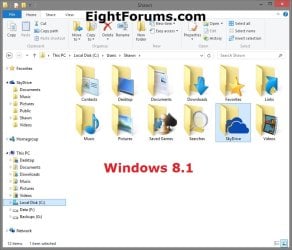
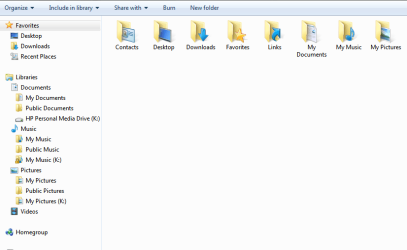
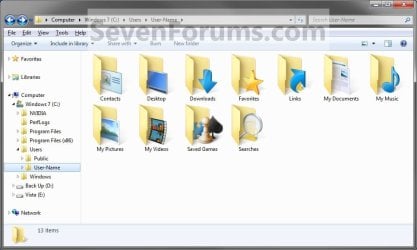
EXAMPLE: User Folders
NOTE: This is at the default C:\Users\(user-name) location.
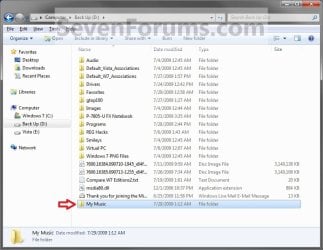
Example1.jpg

Windows_8.1.jpg


OPTION ONE

To Change Main User Profile Folder Location


1. For how, see:
http://www.sevenforums.com/tutorials/87555-user-profile-change-default-location.html

OR

How to Relocate User Profiles to another Partition or Disk in Windows 8


OPTION TWO

To Change User Folders Location from within User Profile Folder


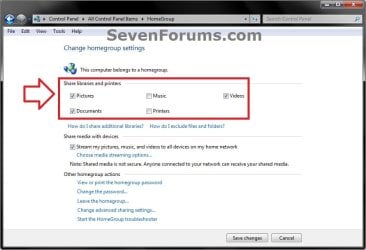
1. If you a part of a homegroup, then you will need to change the homegroup settings to no longer share the user folder (ex: My Music) that you want to move first by unchecking the folder and clicking on Save Changes. (see screenshot below)
NOTE: This is so the user folder (ex: My Music) will not be shared on the homegroup anymore.
Homegroup.jpg
2. In Windows Explorer, navigate to where (ex: D: drive) you want to move the default user folder (ex: My Music) location to.

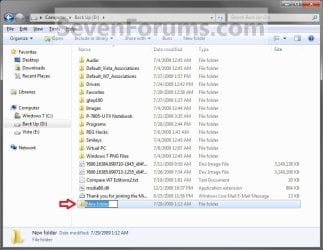
3. Create a New Folder by right clicking or press and hold on a empty space in the main window there, and click/tap on New and Folder. Name the new folder without spaces (ex: "Music" for My Music) for the user folder that you want to move there. (See screenshots below)
NOTE: The name that you type in for the new folder will be what you see as the user folder name in the Start Menu (shell:UsersFilesFolder) location when finished with all of these steps. It would be best to use the same name as the user folder to avoid confusion.
Rename1.jpg

Rename2.jpg

4. Close this window. (See screenshots above)

5. Press the Windows+R keys to open the Run dialog, type shell:UsersFilesFolder, and press enter.
NOTE: This will open your C:\Users\(user-name) folder.

6. Right click or press and hold on a user folder (ex: My Music, My Documents, My Pictures, etc.....) that you want to move the default location for, and click/tap on Properties. (See screenshot below)
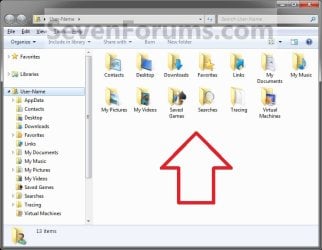
Right_Click_On_A_User_Folder.jpg
7. Click/tap on the Location tab, and Move button. (See screenshot below)
Properties1.jpg
8. Navigate to the same location as in step 2 and 3 above, then select the renamed new folder (ex: Music), and click/tap on the Select Folder button. (See screenshot below)
Properties2.jpg
9. Click/tap on OK. (See screenshot below)
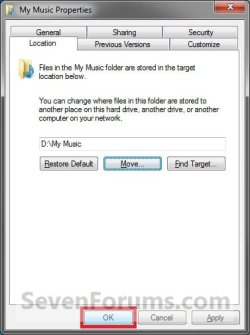
Properties3.jpg
10. Click/tap on Yes. (See screenshot below)
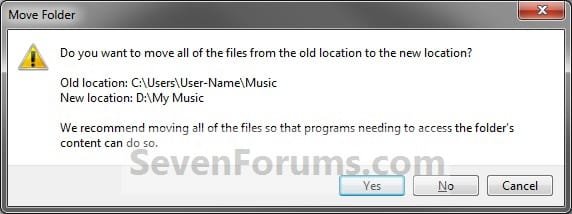
Properties4.jpg
11. After a few seconds when the location has been changed, the Properties window (screenshot under step 9) will then close.

12. Check back at the C:\Users\(user-name) location to make sure that the old user folder (ex: My Music) that you moved is no longer there. If it is, then make sure that the contents of the folder were moved to the new location, and delete it. (See screenshot below)
NOTE: If you are unable to delete the folder, then restart the computer and try again.
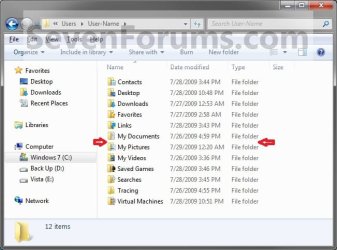
Finished2.jpg
13. You will notice that the folder at the shell:UsersFilesFolder location and the new location (ex: D drive) you moved the user folder to, now has the default user folder (ex: My Music) icon. (See screenshot below)
NOTE: The Start Menu in Windows 7 now opens the user folder from the new location (ex: D: drive) that you moved the user folder to.
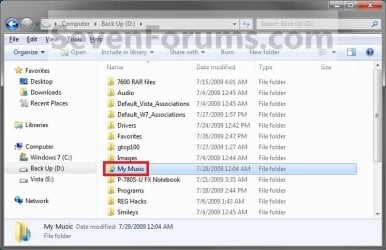
Finished.jpg
14. If you a part of a homegroup, then you can now change the homegroup settings back to share the user folder (ex: My Music) again if you like by checking the folder, and click/tap on Save Changes. (see screenshot below)
Homegroup.jpg
   Tip
If you wanted to restore the default location of the user folder, then see:

How to Restore the Default Location of User Folders in Windows 7 and Windows 8


That's it,
Shawn


Last edited:
  • Like
Reactions: Lee
Create empty folders on the designated drive - as many as you want to move. Call then F1, F2, etc. (or anything, it does not matter) and Move your folders to any of those predefined folders.

WHS. Thanks. I will try it again. I did create new files on my D drive and after opening the shell:userfilesfolder I clicked Move under Location in the Properties box along with selecting the new file on D for the new location and then hit Yes as soon as the box popped up yet all that happened is a copy of the My Pics folder into the new location instead of a complete move. I was able to delete the new My Pics file from my D drive and everything was intact and the same in My Pics on my C drive.
The above instructions say to name the file exactly the same thing My Pics from C to a new My Pics D is that an issue here? Should I do something with Libraries instead?
Thanks again WHS
 

My Computer

Computer Manufacturer/Model Number
Asus Notebook N73SV
OS
Microsoft Windows 7 Home Premium 64-bit
CPU
Intel(R) Core(TM) i7-2630QM CPU @ 2.00GHz
Motherboard
AsusTek Computer Inc. N73SV
Memory
8GB SODIMM (4GB in two banks)
Graphics Card(s)
(1) Intel(R) HD Graphics Family (2) NVIDIA GeForce GT 540M
Sound Card
(1) Realtek High Definition Audio (2) Intel(R) Display Aud
Hard Drives
1. ST9500420AS 465.78GB w/ 3 Partitions
2. ST9500420AS 465.76GB w/ 2 Partitions
Case
N/A
Cooling
N/A
Keyboard
QWERTY
Mouse
N/A
Internet Speed
Cable DSL
Other Info
BIOS Date: 03/21/11 11:18:03 Ver: 04.06.03
Logical Disks (1-4 Local Fixed Disk)
1. C: OS NTFS 197.55GB
2. D: Data NTFS 243.21GB
3. E: SDATA1 NTFS 232.88GB
4. F: SDATA2 NTFS 232.87GB
5. G: CD-ROM Disc removable
Hello Sarin,

I have updated the steps in the tutorial a bit to see if that may help. Please try again to see if it may. :)
 

My Computer

Computer type
PC/Desktop
Computer Manufacturer/Model Number
Self built custom
OS
64-bit Windows 11 Pro for Workstations
CPU
Intel i7-8700K OC'd to 5 GHz
Motherboard
ASUS ROG Maximus XI Formula Z390
Memory
64 GB (4x16GB) G.SKILL TridentZ RGB DDR4 3600 MHz
Graphics Card(s)
ASUS ROG-STRIX-GTX1080TI-O11G-GAMING
Sound Card
Integrated
Monitor(s) Displays
2 x Samsung Odyssey G7 27"
Screen Resolution
2560x1440
Hard Drives
1TB Samsung 990 PRO M.2,
4TB Samsung 990 PRO PRO M.2,
TerraMaster F8 SSD Plus NAS
PSU
Seasonic Prime Titanium 850W
Case
Thermaltake Core P3
Cooling
Corsair Hydro H115i
Keyboard
Logitech wireless K800
Mouse
Logitech MX Master 4
Internet Speed
2 Gb/s Download and 100 Mb/s Upload
Antivirus
Malwarebyte Anti-Malware Premium
Browser
Google Chrome
Other Info
Logitech Z625 speaker system,
Logitech BRIO 4K Pro webcam,
HP Color LaserJet Pro MFP M477fdn,
APC SMART-UPS RT 1000 XL - SURT1000XLI,
Galaxy S23 Plus phone
If this does not work, you have an alternate route (which I actually prefer).

Make folders on your other disk and call them Documents, Pictures, Videos, etc.. Then right click on those folders and INCLUDE them into the appropriate library. Then copy your data from the C folders into the corresponding folders there. If that worked OK, you can delete the content of the folders in C (but not the base folder).

That gives you an extra entry in the libraries and clearly seperates the base system defined folders from your data. The advantage is tha system and program defined folders (especially in Documents) do not get mixed with your own stuff.
 

My Computer

Computer Manufacturer/Model Number
HP, Dell, Gateway, Toshiba - 4 laptops and 2 desktops
OS
Vista, Windows7, Mint Mate, Zorin, Windows 8
CPU
from 1.6GHz Duo to i7
Monitor(s) Displays
2x HP w2207
Hard Drives
5x HDD, 7x SSD, 12x Externals
Keyboard
with trackball - no mices
Mouse
Trackball mice
Internet Speed
DSL 6000
Last edited:

My Computer

Computer type
PC/Desktop
Computer Manufacturer/Model Number
Self built custom
OS
64-bit Windows 11 Pro for Workstations
CPU
Intel i7-8700K OC'd to 5 GHz
Motherboard
ASUS ROG Maximus XI Formula Z390
Memory
64 GB (4x16GB) G.SKILL TridentZ RGB DDR4 3600 MHz
Graphics Card(s)
ASUS ROG-STRIX-GTX1080TI-O11G-GAMING
Sound Card
Integrated
Monitor(s) Displays
2 x Samsung Odyssey G7 27"
Screen Resolution
2560x1440
Hard Drives
1TB Samsung 990 PRO M.2,
4TB Samsung 990 PRO PRO M.2,
TerraMaster F8 SSD Plus NAS
PSU
Seasonic Prime Titanium 850W
Case
Thermaltake Core P3
Cooling
Corsair Hydro H115i
Keyboard
Logitech wireless K800
Mouse
Logitech MX Master 4
Internet Speed
2 Gb/s Download and 100 Mb/s Upload
Antivirus
Malwarebyte Anti-Malware Premium
Browser
Google Chrome
Other Info
Logitech Z625 speaker system,
Logitech BRIO 4K Pro webcam,
HP Color LaserJet Pro MFP M477fdn,
APC SMART-UPS RT 1000 XL - SURT1000XLI,
Galaxy S23 Plus phone
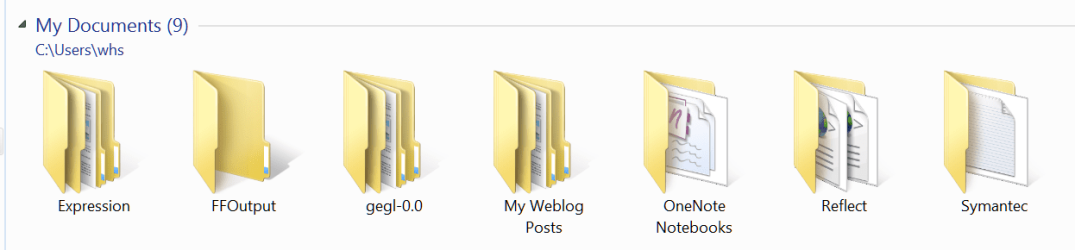
I think that method is a much cleaner cut and you do not get all those program generated folders mixed into your stuff. Plus there is a much smaller chance to make a mistake. Those are the ones that settled in my default documents folder in the brand new system in just a couple of weeks. And there are a few I have already deleted.
 

Attachments

  • 2012-01-15_1457.png
    2012-01-15_1457.png
    91.8 KB · Views: 328

My Computer

Computer Manufacturer/Model Number
HP, Dell, Gateway, Toshiba - 4 laptops and 2 desktops
OS
Vista, Windows7, Mint Mate, Zorin, Windows 8
CPU
from 1.6GHz Duo to i7
Monitor(s) Displays
2x HP w2207
Hard Drives
5x HDD, 7x SSD, 12x Externals
Keyboard
with trackball - no mices
Mouse
Trackball mice
Internet Speed
DSL 6000
Thanks again everyone. If I read this correctly you are saying to Copy the contents only from say, My Pics, into a new folder (named anything) on my D drive and once I see that they are all in the new folder I should Delete the original contents only, or pics, from the MyPics folder and leave the actual empty MyPics folder intact?

Do I then include the new folder holding my pictures on the D drive in the Library on my C drive or is that just me reading into the above messages and not needed?
 

My Computer

Computer Manufacturer/Model Number
Asus Notebook N73SV
OS
Microsoft Windows 7 Home Premium 64-bit
CPU
Intel(R) Core(TM) i7-2630QM CPU @ 2.00GHz
Motherboard
AsusTek Computer Inc. N73SV
Memory
8GB SODIMM (4GB in two banks)
Graphics Card(s)
(1) Intel(R) HD Graphics Family (2) NVIDIA GeForce GT 540M
Sound Card
(1) Realtek High Definition Audio (2) Intel(R) Display Aud
Hard Drives
1. ST9500420AS 465.78GB w/ 3 Partitions
2. ST9500420AS 465.76GB w/ 2 Partitions
Case
N/A
Cooling
N/A
Keyboard
QWERTY
Mouse
N/A
Internet Speed
Cable DSL
Other Info
BIOS Date: 03/21/11 11:18:03 Ver: 04.06.03
Logical Disks (1-4 Local Fixed Disk)
1. C: OS NTFS 197.55GB
2. D: Data NTFS 243.21GB
3. E: SDATA1 NTFS 232.88GB
4. F: SDATA2 NTFS 232.87GB
5. G: CD-ROM Disc removable
Sarin,

Correct. Instead of moving say your C:\Users\(user-name)\My Pictures folder to another location, you could create a new folder named whatever on D: , copy what you want to be saved into the D:\new folder instead of any other location, then include the D:\new folder to say your Pictures library. :)
 

My Computer

Computer type
PC/Desktop
Computer Manufacturer/Model Number
Self built custom
OS
64-bit Windows 11 Pro for Workstations
CPU
Intel i7-8700K OC'd to 5 GHz
Motherboard
ASUS ROG Maximus XI Formula Z390
Memory
64 GB (4x16GB) G.SKILL TridentZ RGB DDR4 3600 MHz
Graphics Card(s)
ASUS ROG-STRIX-GTX1080TI-O11G-GAMING
Sound Card
Integrated
Monitor(s) Displays
2 x Samsung Odyssey G7 27"
Screen Resolution
2560x1440
Hard Drives
1TB Samsung 990 PRO M.2,
4TB Samsung 990 PRO PRO M.2,
TerraMaster F8 SSD Plus NAS
PSU
Seasonic Prime Titanium 850W
Case
Thermaltake Core P3
Cooling
Corsair Hydro H115i
Keyboard
Logitech wireless K800
Mouse
Logitech MX Master 4
Internet Speed
2 Gb/s Download and 100 Mb/s Upload
Antivirus
Malwarebyte Anti-Malware Premium
Browser
Google Chrome
Other Info
Logitech Z625 speaker system,
Logitech BRIO 4K Pro webcam,
HP Color LaserJet Pro MFP M477fdn,
APC SMART-UPS RT 1000 XL - SURT1000XLI,
Galaxy S23 Plus phone
Yes, you should INCLUDE those folders into the libraries. Else you have only access to your files if you go to the D drive which may not always be convenient.

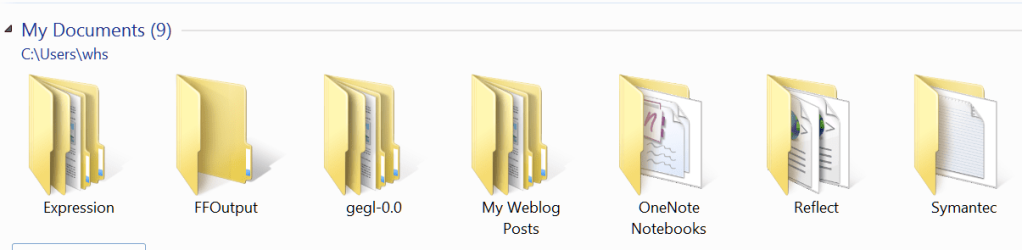
And leave the Windows default folders in place - even if they are originally empty. Some programs may need them. And if you copy the folders, leave those that were created by programs in the default folders and do not delete them because it is there that those programs will be looking for them. Here are some that are nesting in my default Documents folder.
 

Attachments

  • 2012-01-16_1552.png
    2012-01-16_1552.png
    99.8 KB · Views: 305

My Computer

Computer Manufacturer/Model Number
HP, Dell, Gateway, Toshiba - 4 laptops and 2 desktops
OS
Vista, Windows7, Mint Mate, Zorin, Windows 8
CPU
from 1.6GHz Duo to i7
Monitor(s) Displays
2x HP w2207
Hard Drives
5x HDD, 7x SSD, 12x Externals
Keyboard
with trackball - no mices
Mouse
Trackball mice
Internet Speed
DSL 6000
Existing Redirected User Folders

I had a system crash and have an existing external hard drive "K" originally created using Brink's "Windows 7 - User Folders - Change Default Location" tutorial. The external hard drive is good. Which tutorial should I use to "attach" my existing K drive which contains my Documents, Music, Pictures and Videos folders?

Thanks

PS. Thanks for these tutorials for redirecting these User Folders. Saved a ton of time.
 

My Computer

Computer Manufacturer/Model Number
HP Pavilion Elite 9280t
OS
Windows 7
CPU
Intel Core i7 CPU 920
Memory
9GB DDR3
Graphics Card(s)
ATI Radeon 4650
Monitor(s) Displays
Samsung 24"
Screen Resolution
1776 x 1000
Hard Drives
600GB & 1.5TB
Internet Speed
Verizon Fios
Hello Techron,

I'd recommend to start over, and move your user folders, and just copy what you want from the old folders on the K drive.

If it's just a matter of HDD space, you could just leave your user folders alone at their default location on the C: drive, and just include the folders on the K drive to each library. This way you could access them through the library without having to mess with the user folders locations.
 

My Computer

Computer type
PC/Desktop
Computer Manufacturer/Model Number
Self built custom
OS
64-bit Windows 11 Pro for Workstations
CPU
Intel i7-8700K OC'd to 5 GHz
Motherboard
ASUS ROG Maximus XI Formula Z390
Memory
64 GB (4x16GB) G.SKILL TridentZ RGB DDR4 3600 MHz
Graphics Card(s)
ASUS ROG-STRIX-GTX1080TI-O11G-GAMING
Sound Card
Integrated
Monitor(s) Displays
2 x Samsung Odyssey G7 27"
Screen Resolution
2560x1440
Hard Drives
1TB Samsung 990 PRO M.2,
4TB Samsung 990 PRO PRO M.2,
TerraMaster F8 SSD Plus NAS
PSU
Seasonic Prime Titanium 850W
Case
Thermaltake Core P3
Cooling
Corsair Hydro H115i
Keyboard
Logitech wireless K800
Mouse
Logitech MX Master 4
Internet Speed
2 Gb/s Download and 100 Mb/s Upload
Antivirus
Malwarebyte Anti-Malware Premium
Browser
Google Chrome
Other Info
Logitech Z625 speaker system,
Logitech BRIO 4K Pro webcam,
HP Color LaserJet Pro MFP M477fdn,
APC SMART-UPS RT 1000 XL - SURT1000XLI,
Galaxy S23 Plus phone
The advantage of Shawn's suggestion is that you still have the default folders on C, but they take practically no disk space because they are initially empty. But over time, the system and some programs create all kinds of little folders in those defauld folders - especially in Documents. Those usually take very little space. So they are not a problem for disk space usage.

If you do like Shawn says, you do not have those automatically generated folders mixed in with your own folders which I think is an advantage.
 

My Computer

Computer Manufacturer/Model Number
HP, Dell, Gateway, Toshiba - 4 laptops and 2 desktops
OS
Vista, Windows7, Mint Mate, Zorin, Windows 8
CPU
from 1.6GHz Duo to i7
Monitor(s) Displays
2x HP w2207
Hard Drives
5x HDD, 7x SSD, 12x Externals
Keyboard
with trackball - no mices
Mouse
Trackball mice
Internet Speed
DSL 6000
Thanks Brink and whs.

I love it! So you're saying, don't even mess with the user default folders. After the OS is restored, leave the user folders at their default locations. Just "include" the folders on the K drive to their respective libraries. Is there any need to change the Registry entries so My Music, My Pictures, My Videos and Personal reference K:\ drive?

That's even better if I don't have to mess with the user default folders at all.

I'm not concerned about disk space. The real advantage for me is keeping the data and OS on separate drives. If you lose the "C" drive like I did, you don't lose all the stuff collected over the years or vice versa. Besides, it's easier to back up.

Thanks.
 

My Computer

Computer Manufacturer/Model Number
HP Pavilion Elite 9280t
OS
Windows 7
CPU
Intel Core i7 CPU 920
Memory
9GB DDR3
Graphics Card(s)
ATI Radeon 4650
Monitor(s) Displays
Samsung 24"
Screen Resolution
1776 x 1000
Hard Drives
600GB & 1.5TB
Internet Speed
Verizon Fios
No need to anything other than INCLUDE. Just right click on the folders and INCLUDE them into their respecive libraries (you'll see). This is how I do it on all my systems now after I had trouble a few times moving the default locations.
 

My Computer

Computer Manufacturer/Model Number
HP, Dell, Gateway, Toshiba - 4 laptops and 2 desktops
OS
Vista, Windows7, Mint Mate, Zorin, Windows 8
CPU
from 1.6GHz Duo to i7
Monitor(s) Displays
2x HP w2207
Hard Drives
5x HDD, 7x SSD, 12x Externals
Keyboard
with trackball - no mices
Mouse
Trackball mice
Internet Speed
DSL 6000

My Computer

Computer type
PC/Desktop
Computer Manufacturer/Model Number
Self built custom
OS
64-bit Windows 11 Pro for Workstations
CPU
Intel i7-8700K OC'd to 5 GHz
Motherboard
ASUS ROG Maximus XI Formula Z390
Memory
64 GB (4x16GB) G.SKILL TridentZ RGB DDR4 3600 MHz
Graphics Card(s)
ASUS ROG-STRIX-GTX1080TI-O11G-GAMING
Sound Card
Integrated
Monitor(s) Displays
2 x Samsung Odyssey G7 27"
Screen Resolution
2560x1440
Hard Drives
1TB Samsung 990 PRO M.2,
4TB Samsung 990 PRO PRO M.2,
TerraMaster F8 SSD Plus NAS
PSU
Seasonic Prime Titanium 850W
Case
Thermaltake Core P3
Cooling
Corsair Hydro H115i
Keyboard
Logitech wireless K800
Mouse
Logitech MX Master 4
Internet Speed
2 Gb/s Download and 100 Mb/s Upload
Antivirus
Malwarebyte Anti-Malware Premium
Browser
Google Chrome
Other Info
Logitech Z625 speaker system,
Logitech BRIO 4K Pro webcam,
HP Color LaserJet Pro MFP M477fdn,
APC SMART-UPS RT 1000 XL - SURT1000XLI,
Galaxy S23 Plus phone
Just want to make sure I understand what I need to do. On the surface, it sounds too easy. My K drive is still good so I want to acces the drive as is. This is a complete Win7 system install. Several years ago when I originally redirected my folders, I thought I had to edit the Registry Shell Folders and edit the libraries to point to the right folder on K drive. Maybe my mind is playing games with me.

See example -
registry setting.PNG


You are saying that I don't have to follow the tutorial "How to Change the Default Location of Windows 7 User Folders" and I don't have to worry about the Registry settings (My Music, My Pictures, My Video, Personal) pointing to the right K folders on the K drive. All I need to do is "Include" them into their respective Libraries and the Registry will end up pointing to their folders on the K drive?

Sorry to repeat myself but I hope to get this correct the first time around.
 

My Computer

Computer Manufacturer/Model Number
HP Pavilion Elite 9280t
OS
Windows 7
CPU
Intel Core i7 CPU 920
Memory
9GB DDR3
Graphics Card(s)
ATI Radeon 4650
Monitor(s) Displays
Samsung 24"
Screen Resolution
1776 x 1000
Hard Drives
600GB & 1.5TB
Internet Speed
Verizon Fios
Just right click on the 'K' folders and INCLUDE into tha appropriate libraries.
 

My Computer

Computer Manufacturer/Model Number
HP, Dell, Gateway, Toshiba - 4 laptops and 2 desktops
OS
Vista, Windows7, Mint Mate, Zorin, Windows 8
CPU
from 1.6GHz Duo to i7
Monitor(s) Displays
2x HP w2207
Hard Drives
5x HDD, 7x SSD, 12x Externals
Keyboard
with trackball - no mices
Mouse
Trackball mice
Internet Speed
DSL 6000
Just completed rebuilding my Windows 7 "C" drive. Per instructions, proceeded to INCLUDE my existing "K" documents drive with MY MUSIC and MY PICTURES into the appropriate libraries. However, now there are 3 folders listed for each Library. Under libraries Documents, Music, Pictures are listed My Documents, Public Documents and "K" drive, user folder Music, Public Music and My Music, user folder Pictures, Public Pictures and My Pictures. I'm not concerned about the Public folders.

I loaded an application and it created a new file in the users/owners/My Documents folder. Not what I wanted. I was hoping to have the app place the new file on drive "K" where all my documents are located.

What do I need to do to just have only the appropriate one folder on the existing "K" drive referemced? eg. Library Document reference drive "K", Music reference My Music on "K", My Pictures on "K"?
 

Attachments

  • Libraries Capture.PNG
    Libraries Capture.PNG
    55.9 KB · Views: 288

My Computer

Computer Manufacturer/Model Number
HP Pavilion Elite 9280t
OS
Windows 7
CPU
Intel Core i7 CPU 920
Memory
9GB DDR3
Graphics Card(s)
ATI Radeon 4650
Monitor(s) Displays
Samsung 24"
Screen Resolution
1776 x 1000
Hard Drives
600GB & 1.5TB
Internet Speed
Verizon Fios
Yes, what you see is normal. I have the same setup. It is practical because the system and program generated folders go into the default and do not get mixed with your own data. There will not be many (mostly in Documents) and they are usually small.

But if you want to have them in your included folders on K, right click on the Documents library > Properties. Highlight the K folder and click on the 'Set save location' button. Don't forget APPLY.
 

My Computer

Computer Manufacturer/Model Number
HP, Dell, Gateway, Toshiba - 4 laptops and 2 desktops
OS
Vista, Windows7, Mint Mate, Zorin, Windows 8
CPU
from 1.6GHz Duo to i7
Monitor(s) Displays
2x HP w2207
Hard Drives
5x HDD, 7x SSD, 12x Externals
Keyboard
with trackball - no mices
Mouse
Trackball mice
Internet Speed
DSL 6000

My Computer

Computer type
PC/Desktop
Computer Manufacturer/Model Number
Self built custom
OS
64-bit Windows 11 Pro for Workstations
CPU
Intel i7-8700K OC'd to 5 GHz
Motherboard
ASUS ROG Maximus XI Formula Z390
Memory
64 GB (4x16GB) G.SKILL TridentZ RGB DDR4 3600 MHz
Graphics Card(s)
ASUS ROG-STRIX-GTX1080TI-O11G-GAMING
Sound Card
Integrated
Monitor(s) Displays
2 x Samsung Odyssey G7 27"
Screen Resolution
2560x1440
Hard Drives
1TB Samsung 990 PRO M.2,
4TB Samsung 990 PRO PRO M.2,
TerraMaster F8 SSD Plus NAS
PSU
Seasonic Prime Titanium 850W
Case
Thermaltake Core P3
Cooling
Corsair Hydro H115i
Keyboard
Logitech wireless K800
Mouse
Logitech MX Master 4
Internet Speed
2 Gb/s Download and 100 Mb/s Upload
Antivirus
Malwarebyte Anti-Malware Premium
Browser
Google Chrome
Other Info
Logitech Z625 speaker system,
Logitech BRIO 4K Pro webcam,
HP Color LaserJet Pro MFP M477fdn,
APC SMART-UPS RT 1000 XL - SURT1000XLI,
Galaxy S23 Plus phone
Thank you whs and Brink,

My Libraries are set exactly how I was hoping they would be. It was easy with your help and assistance. Thank you very much. :D

whs, I like the idea of of keeping the system folder listed in the Library. It keeps me alert as to what an app writes into the system folder.
 

My Computer

Computer Manufacturer/Model Number
HP Pavilion Elite 9280t
OS
Windows 7
CPU
Intel Core i7 CPU 920
Memory
9GB DDR3
Graphics Card(s)
ATI Radeon 4650
Monitor(s) Displays
Samsung 24"
Screen Resolution
1776 x 1000
Hard Drives
600GB & 1.5TB
Internet Speed
Verizon Fios
Back
Top