Dual Boot - Windows 7 and Linux

How to Correctly Setup a Dual Boot with Windows 7 and LinuxMint13

   Information
Historically, dual booting Windows and a Linux distribution was fraught with risks due to the propensity of the Linux GRUB loader to interfere with and corrupt the Windows bootloader. This often left the Windows installation unbootable, which then required several complex steps in order to rescue the Windows installation.

In recent distributions, the Linux GRUB loader has now been updated to GRUB2, which tends not to have an adverse effect on the Windows bootloader. This tutorial will show you the easiest method to successfully dual-boot Windows 7 and Linux, using the LinuxMint13 Cinnamon distribution as an example. This method has also been tested on, and works with, Ubuntu 12.04 and Fedora 17.

Please note the goal of this tutorial is to show you how to dual-boot correctly without compromising your Windows 7 installation. Whilst the fundamentals of installing a Linux distribution are briefly covered for the purposes of this tutorial, more detail on how to use Linux are outside its scope and will not be covered. For more information on using Linux distributions, you are welcome to visit the LinuxMint, Ubuntu or Fedora sites.

   Warning
Note that this technique will only work on a computer that uses Legacy BIOS - it will not work on a computer that uses UEFI.

Please take careful note : If you currently:

  • Use, or plan to use, Windows Bitlocker Drive Encryption, or

  • Require access to OEM installation recovery functionality,
then you cannot use the methods outlined in this tutorial, and should not proceed any further.

The reasons for this are that this dual-boot technique requires you to delete the 100MB System Reserved partition. Without this partition, both Bitlocker Drive Encryption, and the Recovery functions employed by OEM's accessed during Windows boot, will no longer work.


:note: Requirements:
In order to undertake this tutorial, you will need the following :

Hardware:-

  • 1Gb or larger USB thumb/flash drive (to hold your bootable Partition Wizard and LinuxMint13 installation)
Software:-


Knowledge or skills:-

  • Creating bootable versions of Partition Wizard and LinuxMint13 on either CD, DVD or USB

  • Booting a computer from either a CD/DVD or USB drive.

  • Manipulating (deleting, moving and re-sizing) Windows NTFS disk partitions


:note: Before you begin : Insurance against mistakes

Mistakes made during partition manipulation can render your system unbootable. In order to protect yourself against such inadvertent mistakes, I strongly recommend you create an image of your current system prior to commencing with this tutorial.

Please refer to either of this tutorial for help on imaging your system:http://www.sevenforums.com/tutorials/73828-imaging-free-macrium.html
In the event that you do make a mistake, the image you created will allow you to revert to your original installation with a minimum of fuss. This step is important, especially for novices - don't be tempted to skip it.


Part A - Create the bootable Partition Wizard and Linux USB

YUMI can support several bootable ISO's concurrently, so its advantageous to install both Partition Wizard and LinuxMint13 to the USB flash drive, one after the other.

Step 1
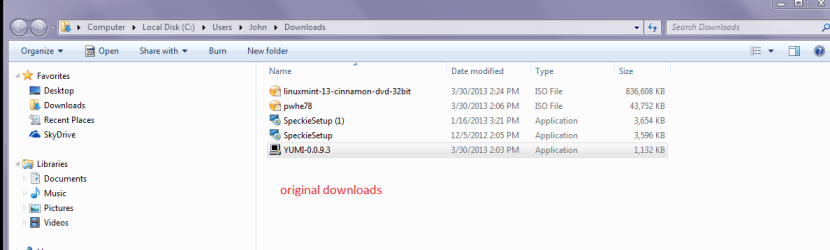
Download YUMI, Partition Wizard and LinuxMint13 from the links provided earlier.

Step 2
Insert your USB flash drive into the computer, and then run YUMI.

Step 3
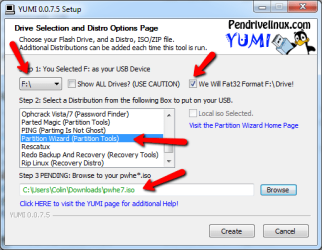
On the YUMI interface, do the following:

- select the drive letter corresponding to the USB flash drive
- place a tick in the Format Drive box (the USB flash will be formatted to FAT32)
- scroll down the distribution list and select Partition Wizard (Partition Tools)
- browse to locate and select the Partition Wizard ISO you downloaded earlier

The completed panel should look very similar to that shown below.m1.png
Step 4
Click the Create button to install Partition Wizard to the USB flash drive.

   Warning
Take note of the format warning message that is displayed - the entire USB flash drive will be formatted to the required FAT32 format, so double check to see that the correct USB device is selected.

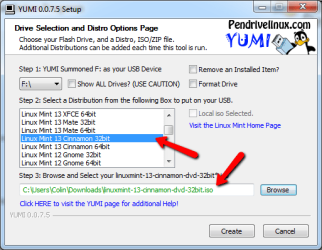
Once complete, you will be asked whether you wish to install another ISO/Distro. Click Yes, and then select the LinuxMint13 ISO as shown below. Clickm2.png
Click the Create button to write the install LinuxMint13 to the USB flash drive. Once complete, exit YUMI. For ease of reference, we will simply refer to this flash drive as the YUMI flash drive from here on in.

You have now completed Part A of the tutorial.


Part B - Manipulate the Windows 7 Partitions

Prior to installing LinuxMint13, you need to make changes to the existing Windows 7 partitions. Specifically, you need to perform these steps:

  1. Copy the Windows boot manager to the System C: partition
  2. Delete the 100MB System Reserved partition
  3. Resize the System partition (C: drive) into the unallocated space after deleting the System Reserved partition
  4. Create unallocated space for the LinuxMint13 installation by shrinking the Data partition (F: drive)
All this can be accomplished using EasyBCD, and the Partition Wizard installation on the USB flash drive.

If you are unfamiliar with Partition Wizard, then I recommend reading this tutorial before proceeding further:http://www.sevenforums.com/tutorials/93322-partition-wizard-use-bootable-cd.html
   Note
For the purposes of this tutorial, we will assume you have a reasonably common Windows 7 partition layout, as shown below, and comprising of:

  • Primary 100MB System Reserved partition, and

  • Primary System partition (C: drive), and

  • Logical Data partition (F: drive)
pw_start.png
   Tip
If your partition layout is different, and you aren't sure how to proceed, then reply to this tutorial seeking advice. Be sure to include a screen capture of your Windows 7 disk management screen that clearly shows your partition layout.


Step 1 - Copy boot manager to System C: partition
Install EasyBCD to your computer. Run EasyBCD and now follow the very simple steps explained in the short tutorial below, to copy the Windows 7 boot manager from the 100MB System Reserved partition to the System C: partition:http://www.sevenforums.com/tutorials/209885-bootmgr-move-c-easybcd.html
Once you have performed this step, close EasyBCD.

Check to ensure that the boot manager has been copied correctly by examining the partition layout in the Windows Disk Management screen. Your System C: partition status should now include the Boot option under the partition status, as shown in the example below.m3.png
Close the Disk Management screen when you have verified that the Boot status is correct.

Step 2 - Delete the 100MB System Reserved partition
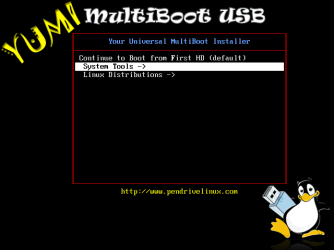
Insert the YUMI flash drive into your computer, and boot from it. Run Partition Wizard by selecting it from the System Tools menu, as shown below.yy1.png
yy2.png
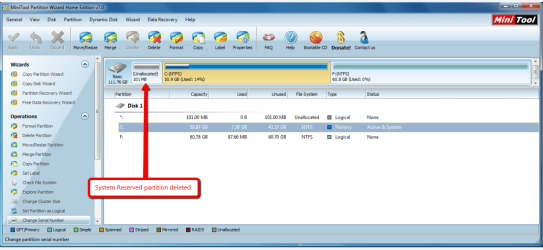
Once Partition Wizard has opened, delete the 100MB System Reserved Partition - you will now have 100MB unallocated space sitting to the left of your System partition, as shown below.pww2.png
Step 3 - Resize the System partition into the unallocated space
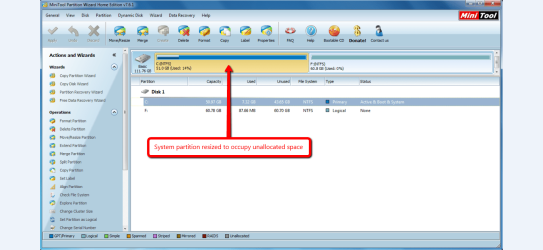
Stretch the System partition to the left, into the unallocated space created in step 2 above, so that you only have a System partition and Data partition as shown below.pww3.png
Step 4 - Create unallocated space for the LinuxMint13 installation
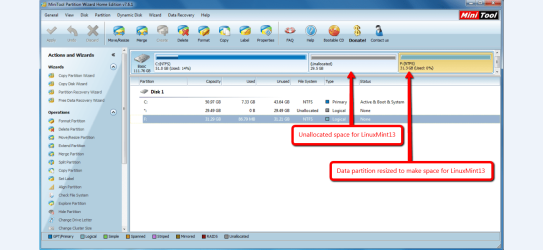
Shrink the Data partition to the right, thereby creating unallocated space between the System partition and Data partition, as shown below. This unallocated space is where LinuxMint13 will be installed too.pww4.png
   Tip
You can also shrink the System partition, or use combinations of resizing both the System partition and Data partition to create the unallocated space for the LinuxMint13 installation. LinuxMint13 requires a minimum of 8.6GB, but I usually assign more space for updates, data etc.

Reboot your system to complete the partition manipulation.

You have now completed Part B of the tutorial.


Part C - Install LinuxMint13

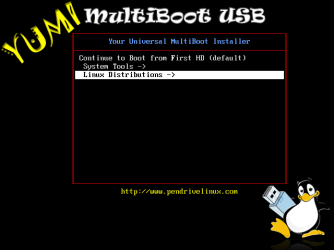
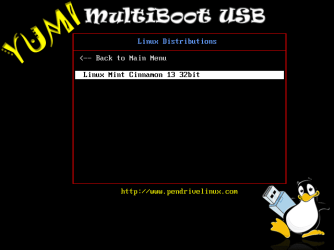
Insert the YUMI flash drive into your computer, and boot from it. Run the LinuxMint13 boot menu/installer by selecting it from from the Linux Distributions menu, as shown below.lx00.png
lx01.png
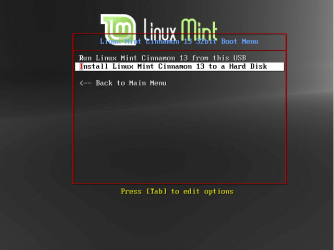
From the LinuxMint boot menu, choose to install to a hard disk, as shown below.lx02.png
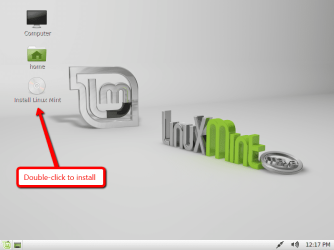
Once the LinuxMint13 desktop loads, select the Install Linux Mint option by double-clicking it, as shown below.lx03.png
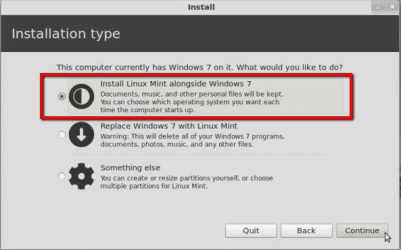
Follow the the prompts to select your language. When prompted to select your installation type, be sure to choose the option labelled Install Linux Mint alongside Windows 7, as shown below.lx1.png
LinuxMint13 will now be installed into the unallocated space created in PART B of the tutorial. Whilst installation is proceeding, follow the remainder of the prompt screens to specify your locality, keyboard layout and machine name and user account details.

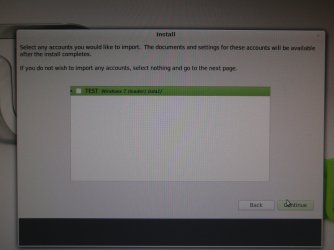
You will be prompted as to whether you wish to import any existing Windows 7 account details (contacts, favorites, bookmarks etc.) into the LinuxMint13 installation (as shown below) - highlight the listed Windows 7 option shown and and click Continue to do that, or simply click Continue to skip this step.PA280042.jpg
Once installation has been completed, you will be prompted to reboot your system as shown below.lx09.png
Once your system reboots, you will be presented with the Linux GRUB screen - don't panic, this is perfectly normal. PART D of this tutorial will show you how to easily customise your boot order.

You have now completed PART C of the tutorial.


Part D - Customise the Windows 7/LinuxMint13 boot order

   Note
The boot screen images in this part of the tutorial use Ubuntu as an example - this is simply for convenience for the tutorial. The boot screens for LinuxMint13 will look very similar, obviously with the word Ubuntu replaced by the word LinuxMint13.

EasyBCD allows you to easily customise the boot sequence so that the familiar Windows boot screen is the screen from which you select the operating system to boot.

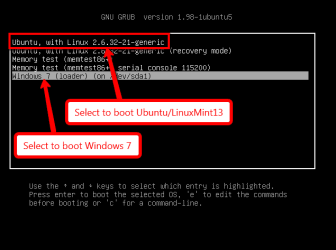
When you first boot your PC after installing LinuxMint13, you will be presented with the GRUB screen, as shown below.boot1.png
Select the Windows 7 option to boot in Windows as normal, and then run EasyBCD.

Now complete the following steps :

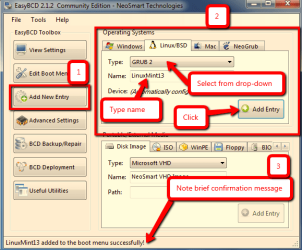
Step 1 - Add the LinuxMint13 boot entry
Replicate the steps shown in the image below to add the LinuxMint13 boot entry. Take note of the confirmation message that appears briefly at the bottom of the panel.ecb1.png
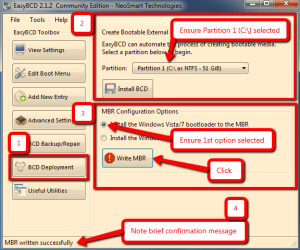
Step 2 - Add the Windows 7 boot entry
Replicate the steps shown in the image below to write the Windows 7 bootloader.Take note of the confirmation message that appears briefly at the bottom of the panel.ecb2.png
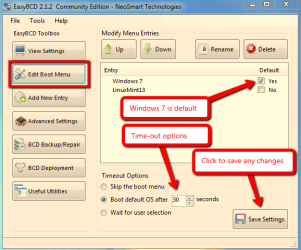
Step 3 - Review the Windows 7 / LinuxMint13 boot sequence
Review the default boot options, and make any changes if you wish.ecb3.png
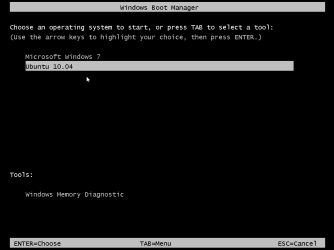
Close EasyBCD and reboot your computer. You will now see the Windows 7 boot screen with the Windows 7 and LinuxMint13 boot options (Ubuntu is shown in this example).boot2.png
If you select the Windows 7 option, your computer will boot into Windows 7 as normal. If you select the LinuxMint13 option, then the GRUB boot screen will appear, and from that you select the LinuxMint13 option to boot it, as shown below.boot1.png
You have now completed the entire tutorial.

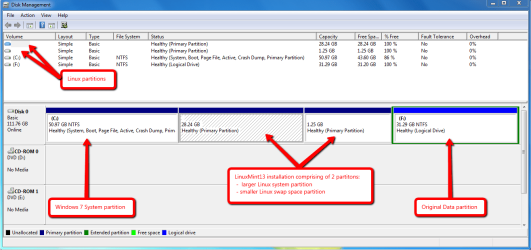
This is how the dual-boot installation look in Windows 7 Disk Manager - note the blank entries marked with arrows : Windows cannot read the format of Linux partitions.dm1.png
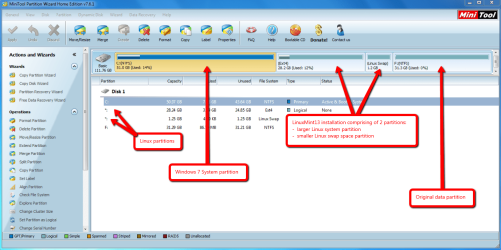
And this is how the dual-boot installation looks in Partition Wizard.pwx.png
   Tip
If you ever wish to remove the LinuxMint13 partitions, simple delete them using Partition Wizard - your Windows installation will be unaffected since the boot manager still resides on the first partition of the disk. Be sure to reset the boot entry using EasyBCD for aesthetics using Step 4 and Step 5 here.


Thats all there is to it : dual-booting Windows 7 and LinuxMint13 the easy way!

Regards,
Golden

 
Last edited:
I will continue to follow this thread with interest. I reluctantly sold my second PC, to a friend for her son to use. A bad move as it seriously inhibits my willingness to experiment.

I actually have Mint 14 installed on a spare hard drive, but even if i physically disconnect the Windows drives it still screws up. Doesn't make sense.

If you look on any of the Linux forums, they are full of people struggling with this, some claiming success. Popular distros like Ubuntu and Mint are working hard on the issue. A solution will come.

In the meantime, good luck John ICit2lol:)
 

My Computer My Computer

Computer Manufacturer/Model Number
The Monolith. 3.1
OS
Windows 7 Home Premium 64 bit
CPU
i7 [email protected]
Motherboard
Gigabyte Z77-D3H
Memory
2x4GB Corsair Vegeance DDR3
Graphics Card(s)
XFX GTX 260 Black Edition
Sound Card
none-through large stereo hi fi
Monitor(s) Displays
Croosover 27MDP LED IPS Dell 2408 WFP
Screen Resolution
2560x1440 1920x1200
Hard Drives
1x Samsung 840Pro 128GB SSD
1x Samsung Spinpoint F1 1TB
PSU
Corsair AX 850 Watt
Case
Cooler Master ACTS 840
Cooling
Be Quiet! Dark Rock Pro
Keyboard
Enermax Aurora
Mouse
Logitech Ballmouse
Internet Speed
20MBPS
I will continue to follow this thread with interest. I reluctantly sold my second PC, to a friend for her son to use. A bad move as it seriously inhibits my willingness to experiment.

I actually have Mint 14 installed on a spare hard drive, but even if i physically disconnect the Windows drives it still screws up. Doesn't make sense.

If you look on any of the Linux forums, they are full of people struggling with this, some claiming success. Popular distros like Ubuntu and Mint are working hard on the issue. A solution will come.

In the meantime, good luck John ICit2lol:)
Thanks John I ma going to give it one more try today.

On your little problem I did see a few articles that referred to a few glitches bugs call them what you will with that Mint 14 I can't quite remember where but I recollect something to do with a ?beta version?

Mate pity you didn't live nearer Chippenham cos I am over in April to visit family and have a heap of spares you could have had one from:)
 

My Computer My Computer

Computer type
PC/Desktop
Computer Manufacturer/Model Number
Own build (new) Desk1 / Asus ROG Win 7 / Desk2 1st build
OS
Desk1 7 Home Prem / Desk2 10 Pro / Main lap Asus ROG 10 Pro 2 laptop Toshiba 7 Pro Asus P2520 7 & 10
CPU
Desk1 i5 3750K / Laptop i7 GTX 860M / Desk2 i5 2500
Motherboard
Desk1 Asus P877-V / Desk2 Gigabyte H67 UD3H / Laptop ?
Memory
Desk1 8GB (1866) / Desk2 16GB (1333) / Laptop 8Gb DDR3
Graphics Card(s)
Desk 1& 2NVidia GTX 650 & Laptops on board Intel
Sound Card
Desk 1 & 2 -XONAR DG Realtek High Def audio Laptop
Monitor(s) Displays
Desk 1 Benq HD 2450 / Desk2 Philips 24" / Laptop 17.5"
Screen Resolution
1920x1080 D1 & D2 & Laptop 1
Hard Drives
Desk1 Samsung 120GB 830 SSD
Asus ROG 256GB 850 Pro SSD
Desk2 Samsung 840 256 SSD
Toshiba 120GB EVO
PSU
Desk 1 Corsair HX 1050/ Laptop ? / Desk 2 Corsair HX 650
Case
Desk 1 Cooler HAF XM ? Toshiba laptop / Desk2 Coolermaster
Cooling
Fans on all Desk1 -2 Desk2 - all Coolermasters 5 Laptop ?
Keyboard
Desk 1 MS Sidewinder X6 Desk 2 MS Sidewinder X 4
Mouse
Desk 1&2 - Gigabyte MS 900 gamer - laptop - Logitec wireless
Internet Speed
ADSL2+
Other Info
One other Desktop (tester) and spare Toshba laptop both with SSD's
Running Kaspersky 2016 ISS on all machines config'd identically
Logitec audio stereo systems on each machine (x3)
Canon MG5250MFC
Router/modem TP-Link running WPA2SK
Well Golden I am either terribly thick, doing something terribly wrong or my machine is not going to let me do this.

I downloaded Yumi the the Partition Wizard ISO then the Linux 13 ISO got a USB stick into the machine and started Yumi clicked on the stick to put those two items there browsed to my downloads and clicked on the PW and the Linux downloads but the Create stays greyed out.

I have "sent" the PW ISO to the stick but the Linux I don't know what to do because it did not download to Downloads so I am downloading it to the stick direct right now.

Is this going to work or not??

I am a rather confused by it all and I am only at the beginning. :confused:
 

My Computer My Computer

Computer type
PC/Desktop
Computer Manufacturer/Model Number
Own build (new) Desk1 / Asus ROG Win 7 / Desk2 1st build
OS
Desk1 7 Home Prem / Desk2 10 Pro / Main lap Asus ROG 10 Pro 2 laptop Toshiba 7 Pro Asus P2520 7 & 10
CPU
Desk1 i5 3750K / Laptop i7 GTX 860M / Desk2 i5 2500
Motherboard
Desk1 Asus P877-V / Desk2 Gigabyte H67 UD3H / Laptop ?
Memory
Desk1 8GB (1866) / Desk2 16GB (1333) / Laptop 8Gb DDR3
Graphics Card(s)
Desk 1& 2NVidia GTX 650 & Laptops on board Intel
Sound Card
Desk 1 & 2 -XONAR DG Realtek High Def audio Laptop
Monitor(s) Displays
Desk 1 Benq HD 2450 / Desk2 Philips 24" / Laptop 17.5"
Screen Resolution
1920x1080 D1 & D2 & Laptop 1
Hard Drives
Desk1 Samsung 120GB 830 SSD
Asus ROG 256GB 850 Pro SSD
Desk2 Samsung 840 256 SSD
Toshiba 120GB EVO
PSU
Desk 1 Corsair HX 1050/ Laptop ? / Desk 2 Corsair HX 650
Case
Desk 1 Cooler HAF XM ? Toshiba laptop / Desk2 Coolermaster
Cooling
Fans on all Desk1 -2 Desk2 - all Coolermasters 5 Laptop ?
Keyboard
Desk 1 MS Sidewinder X6 Desk 2 MS Sidewinder X 4
Mouse
Desk 1&2 - Gigabyte MS 900 gamer - laptop - Logitec wireless
Internet Speed
ADSL2+
Other Info
One other Desktop (tester) and spare Toshba laptop both with SSD's
Running Kaspersky 2016 ISS on all machines config'd identically
Logitec audio stereo systems on each machine (x3)
Canon MG5250MFC
Router/modem TP-Link running WPA2SK
Download the ISO's to your download folder like any other file as usual. Once its downloaded, start YUMI and then chose which item you want to install, and browse to the correct ISO, then CREATE.

Check different locations for the downloaded Linux ISO - if you have downloaded it, it must be saved somewhere.
 

My Computer My Computer

Computer type
PC/Desktop
Computer Manufacturer/Model Number
Golden Mk. I.4
OS
Windows 10 Pro x64 ; Xubuntu x64
CPU
Intel i7 860 @ 2.80 GHz O/C'ed to 4.0GHz
Motherboard
Gigabyte P55A-UD3R Rev.1. Award BIOS F13
Memory
16GB Corsair Vengance DDR3 @ 661 MHz Dual Channel (9-9-9-24)
Graphics Card(s)
EVGA NVidia GTX 560 1024MB
Sound Card
Realtek Integrated
Monitor(s) Displays
Dual Samsung SyncMaster 2494HS
Screen Resolution
1920*1080 and 1920*1080
Hard Drives
1*Samsung 840 EVO 120GB SSD;
1*OCZ Vertex 2 60GB SSD;
2*Samsung F3 SpinPoint 1TB in RAID0;
1*Samsung F1 SpinPoint 1TB;
2*Western Digital 1TB External USB 3.0
1*Western Digital 500GB External USB 3.0
1*Seagate 500GB External USB 2.0
PSU
Thermaltake ToughPower QFan 750W
Case
Thermaltake Element S VK60001W2Z
Cooling
Corsair H60 Water Cooling, 2*230mm and 2*80mm case fans
Keyboard
Logitech G110
Mouse
Logitech MX518
Yep Golden I did save them to my Downloads folder and tried that Yumi but come the create it greyed out .

I'll try it again though:) .
 

My Computer My Computer

Computer type
PC/Desktop
Computer Manufacturer/Model Number
Own build (new) Desk1 / Asus ROG Win 7 / Desk2 1st build
OS
Desk1 7 Home Prem / Desk2 10 Pro / Main lap Asus ROG 10 Pro 2 laptop Toshiba 7 Pro Asus P2520 7 & 10
CPU
Desk1 i5 3750K / Laptop i7 GTX 860M / Desk2 i5 2500
Motherboard
Desk1 Asus P877-V / Desk2 Gigabyte H67 UD3H / Laptop ?
Memory
Desk1 8GB (1866) / Desk2 16GB (1333) / Laptop 8Gb DDR3
Graphics Card(s)
Desk 1& 2NVidia GTX 650 & Laptops on board Intel
Sound Card
Desk 1 & 2 -XONAR DG Realtek High Def audio Laptop
Monitor(s) Displays
Desk 1 Benq HD 2450 / Desk2 Philips 24" / Laptop 17.5"
Screen Resolution
1920x1080 D1 & D2 & Laptop 1
Hard Drives
Desk1 Samsung 120GB 830 SSD
Asus ROG 256GB 850 Pro SSD
Desk2 Samsung 840 256 SSD
Toshiba 120GB EVO
PSU
Desk 1 Corsair HX 1050/ Laptop ? / Desk 2 Corsair HX 650
Case
Desk 1 Cooler HAF XM ? Toshiba laptop / Desk2 Coolermaster
Cooling
Fans on all Desk1 -2 Desk2 - all Coolermasters 5 Laptop ?
Keyboard
Desk 1 MS Sidewinder X6 Desk 2 MS Sidewinder X 4
Mouse
Desk 1&2 - Gigabyte MS 900 gamer - laptop - Logitec wireless
Internet Speed
ADSL2+
Other Info
One other Desktop (tester) and spare Toshba laptop both with SSD's
Running Kaspersky 2016 ISS on all machines config'd identically
Logitec audio stereo systems on each machine (x3)
Canon MG5250MFC
Router/modem TP-Link running WPA2SK
Please post a picture of the YUMI screen - the greyed out Create option tells me YUMI isn't ready to write yet. Are you formatting the USB thumb drive to FAT32?
 

My Computer My Computer

Computer type
PC/Desktop
Computer Manufacturer/Model Number
Golden Mk. I.4
OS
Windows 10 Pro x64 ; Xubuntu x64
CPU
Intel i7 860 @ 2.80 GHz O/C'ed to 4.0GHz
Motherboard
Gigabyte P55A-UD3R Rev.1. Award BIOS F13
Memory
16GB Corsair Vengance DDR3 @ 661 MHz Dual Channel (9-9-9-24)
Graphics Card(s)
EVGA NVidia GTX 560 1024MB
Sound Card
Realtek Integrated
Monitor(s) Displays
Dual Samsung SyncMaster 2494HS
Screen Resolution
1920*1080 and 1920*1080
Hard Drives
1*Samsung 840 EVO 120GB SSD;
1*OCZ Vertex 2 60GB SSD;
2*Samsung F3 SpinPoint 1TB in RAID0;
1*Samsung F1 SpinPoint 1TB;
2*Western Digital 1TB External USB 3.0
1*Western Digital 500GB External USB 3.0
1*Seagate 500GB External USB 2.0
PSU
Thermaltake ToughPower QFan 750W
Case
Thermaltake Element S VK60001W2Z
Cooling
Corsair H60 Water Cooling, 2*230mm and 2*80mm case fans
Keyboard
Logitech G110
Mouse
Logitech MX518
Yes Golden sorry late reply I don't know why but after a few tries it has finally written the PW and Mint to the USB at least it said it did - that download was listed as a DVD ISO.

The final tries are in the pics.

Am currently preparing a drive for the dual boot as I want to keep the other 7 drive separate.
 

Attachments

  • DUAL1.PNG
    DUAL1.PNG
    22.5 KB · Views: 164
  • BOOTUSB.PNG
    BOOTUSB.PNG
    13.1 KB · Views: 178

My Computer My Computer

Computer type
PC/Desktop
Computer Manufacturer/Model Number
Own build (new) Desk1 / Asus ROG Win 7 / Desk2 1st build
OS
Desk1 7 Home Prem / Desk2 10 Pro / Main lap Asus ROG 10 Pro 2 laptop Toshiba 7 Pro Asus P2520 7 & 10
CPU
Desk1 i5 3750K / Laptop i7 GTX 860M / Desk2 i5 2500
Motherboard
Desk1 Asus P877-V / Desk2 Gigabyte H67 UD3H / Laptop ?
Memory
Desk1 8GB (1866) / Desk2 16GB (1333) / Laptop 8Gb DDR3
Graphics Card(s)
Desk 1& 2NVidia GTX 650 & Laptops on board Intel
Sound Card
Desk 1 & 2 -XONAR DG Realtek High Def audio Laptop
Monitor(s) Displays
Desk 1 Benq HD 2450 / Desk2 Philips 24" / Laptop 17.5"
Screen Resolution
1920x1080 D1 & D2 & Laptop 1
Hard Drives
Desk1 Samsung 120GB 830 SSD
Asus ROG 256GB 850 Pro SSD
Desk2 Samsung 840 256 SSD
Toshiba 120GB EVO
PSU
Desk 1 Corsair HX 1050/ Laptop ? / Desk 2 Corsair HX 650
Case
Desk 1 Cooler HAF XM ? Toshiba laptop / Desk2 Coolermaster
Cooling
Fans on all Desk1 -2 Desk2 - all Coolermasters 5 Laptop ?
Keyboard
Desk 1 MS Sidewinder X6 Desk 2 MS Sidewinder X 4
Mouse
Desk 1&2 - Gigabyte MS 900 gamer - laptop - Logitec wireless
Internet Speed
ADSL2+
Other Info
One other Desktop (tester) and spare Toshba laptop both with SSD's
Running Kaspersky 2016 ISS on all machines config'd identically
Logitec audio stereo systems on each machine (x3)
Canon MG5250MFC
Router/modem TP-Link running WPA2SK
That sounds promising - check inside the multiboot folder. What do you see?
 

My Computer My Computer

Computer type
PC/Desktop
Computer Manufacturer/Model Number
Golden Mk. I.4
OS
Windows 10 Pro x64 ; Xubuntu x64
CPU
Intel i7 860 @ 2.80 GHz O/C'ed to 4.0GHz
Motherboard
Gigabyte P55A-UD3R Rev.1. Award BIOS F13
Memory
16GB Corsair Vengance DDR3 @ 661 MHz Dual Channel (9-9-9-24)
Graphics Card(s)
EVGA NVidia GTX 560 1024MB
Sound Card
Realtek Integrated
Monitor(s) Displays
Dual Samsung SyncMaster 2494HS
Screen Resolution
1920*1080 and 1920*1080
Hard Drives
1*Samsung 840 EVO 120GB SSD;
1*OCZ Vertex 2 60GB SSD;
2*Samsung F3 SpinPoint 1TB in RAID0;
1*Samsung F1 SpinPoint 1TB;
2*Western Digital 1TB External USB 3.0
1*Western Digital 500GB External USB 3.0
1*Seagate 500GB External USB 2.0
PSU
Thermaltake ToughPower QFan 750W
Case
Thermaltake Element S VK60001W2Z
Cooling
Corsair H60 Water Cooling, 2*230mm and 2*80mm case fans
Keyboard
Logitech G110
Mouse
Logitech MX518
Sorry late reply Golden this is what is in that folder. Now I might have a slight problem with the machine a I cannot find in the BIOS where I can make it boot from a USB.

There are only three options optical, HDD or Floppy. Now under removable devices where I though I would find USB for booting from there is only the Floppy listed. But I will try booting this machine (an older XP machine that is really doing well with 7) with the stick in and see. If not the I'll go to my other tester (DDR2 and quad core) and clone the SSD to a 1TB drive and boot that machine with the stick as it is obviously a much more recently made machine than the other one (DDR1 RAM and single core).
 

My Computer My Computer

Computer type
PC/Desktop
Computer Manufacturer/Model Number
Own build (new) Desk1 / Asus ROG Win 7 / Desk2 1st build
OS
Desk1 7 Home Prem / Desk2 10 Pro / Main lap Asus ROG 10 Pro 2 laptop Toshiba 7 Pro Asus P2520 7 & 10
CPU
Desk1 i5 3750K / Laptop i7 GTX 860M / Desk2 i5 2500
Motherboard
Desk1 Asus P877-V / Desk2 Gigabyte H67 UD3H / Laptop ?
Memory
Desk1 8GB (1866) / Desk2 16GB (1333) / Laptop 8Gb DDR3
Graphics Card(s)
Desk 1& 2NVidia GTX 650 & Laptops on board Intel
Sound Card
Desk 1 & 2 -XONAR DG Realtek High Def audio Laptop
Monitor(s) Displays
Desk 1 Benq HD 2450 / Desk2 Philips 24" / Laptop 17.5"
Screen Resolution
1920x1080 D1 & D2 & Laptop 1
Hard Drives
Desk1 Samsung 120GB 830 SSD
Asus ROG 256GB 850 Pro SSD
Desk2 Samsung 840 256 SSD
Toshiba 120GB EVO
PSU
Desk 1 Corsair HX 1050/ Laptop ? / Desk 2 Corsair HX 650
Case
Desk 1 Cooler HAF XM ? Toshiba laptop / Desk2 Coolermaster
Cooling
Fans on all Desk1 -2 Desk2 - all Coolermasters 5 Laptop ?
Keyboard
Desk 1 MS Sidewinder X6 Desk 2 MS Sidewinder X 4
Mouse
Desk 1&2 - Gigabyte MS 900 gamer - laptop - Logitec wireless
Internet Speed
ADSL2+
Other Info
One other Desktop (tester) and spare Toshba laptop both with SSD's
Running Kaspersky 2016 ISS on all machines config'd identically
Logitec audio stereo systems on each machine (x3)
Canon MG5250MFC
Router/modem TP-Link running WPA2SK
Oops -
 

Attachments

  • ISO.PNG
    ISO.PNG
    11.1 KB · Views: 179

My Computer My Computer

Computer type
PC/Desktop
Computer Manufacturer/Model Number
Own build (new) Desk1 / Asus ROG Win 7 / Desk2 1st build
OS
Desk1 7 Home Prem / Desk2 10 Pro / Main lap Asus ROG 10 Pro 2 laptop Toshiba 7 Pro Asus P2520 7 & 10
CPU
Desk1 i5 3750K / Laptop i7 GTX 860M / Desk2 i5 2500
Motherboard
Desk1 Asus P877-V / Desk2 Gigabyte H67 UD3H / Laptop ?
Memory
Desk1 8GB (1866) / Desk2 16GB (1333) / Laptop 8Gb DDR3
Graphics Card(s)
Desk 1& 2NVidia GTX 650 & Laptops on board Intel
Sound Card
Desk 1 & 2 -XONAR DG Realtek High Def audio Laptop
Monitor(s) Displays
Desk 1 Benq HD 2450 / Desk2 Philips 24" / Laptop 17.5"
Screen Resolution
1920x1080 D1 & D2 & Laptop 1
Hard Drives
Desk1 Samsung 120GB 830 SSD
Asus ROG 256GB 850 Pro SSD
Desk2 Samsung 840 256 SSD
Toshiba 120GB EVO
PSU
Desk 1 Corsair HX 1050/ Laptop ? / Desk 2 Corsair HX 650
Case
Desk 1 Cooler HAF XM ? Toshiba laptop / Desk2 Coolermaster
Cooling
Fans on all Desk1 -2 Desk2 - all Coolermasters 5 Laptop ?
Keyboard
Desk 1 MS Sidewinder X6 Desk 2 MS Sidewinder X 4
Mouse
Desk 1&2 - Gigabyte MS 900 gamer - laptop - Logitec wireless
Internet Speed
ADSL2+
Other Info
One other Desktop (tester) and spare Toshba laptop both with SSD's
Running Kaspersky 2016 ISS on all machines config'd identically
Logitec audio stereo systems on each machine (x3)
Canon MG5250MFC
Router/modem TP-Link running WPA2SK
Tried the easybcd method.

Not working for me.

Unable to boot linux mint that way.

I may get around to doing it manually.
 

My Computers My Computers

System One System Two

  • Computer type
    PC/Desktop
    OS
    7 X64
    CPU
    i5 8400
    Motherboard
    gigabyte b365m ds3h
    Memory
    2x8gb 3200mhz
    Hard Drives
    various
    PSU
    pure power 11 400w cm
    Case
    Coolermaster
    Cooling
    cryorig m9i
  • Computer type
    PC/Desktop
    OS
    7x64
    CPU
    g5400
    Motherboard
    ga b365m ds3h
    Memory
    8gb ddr4 2400
    PSU
    xfx pro 450w
Please let us know what works for you Si. Do you think this is a new issue with EasyBCD for Linux?
 
The second partition is active on my setup - that may be the issue with easybcd method. Tried setting it like that - still no go.

Can't remember exactly what I did manually before - think I copied grldr onto linux partition using paragon.
 

My Computers My Computers

System One System Two

  • Computer type
    PC/Desktop
    OS
    7 X64
    CPU
    i5 8400
    Motherboard
    gigabyte b365m ds3h
    Memory
    2x8gb 3200mhz
    Hard Drives
    various
    PSU
    pure power 11 400w cm
    Case
    Coolermaster
    Cooling
    cryorig m9i
  • Computer type
    PC/Desktop
    OS
    7x64
    CPU
    g5400
    Motherboard
    ga b365m ds3h
    Memory
    8gb ddr4 2400
    PSU
    xfx pro 450w
Mmm. Thats odd : last night I actually re-did the entire exercise following every step using EasyBCD 2.2 (the latest update) and had a triple boot with W7, PepperMint3 and LinuxMint14. Am going to add Zorin to the mix for a quad-boot this evening.....

Still works exactly as I wrote it up.....

Are you doing soemthing different from the tutorial Simon?
 

My Computer My Computer

Computer type
PC/Desktop
Computer Manufacturer/Model Number
Golden Mk. I.4
OS
Windows 10 Pro x64 ; Xubuntu x64
CPU
Intel i7 860 @ 2.80 GHz O/C'ed to 4.0GHz
Motherboard
Gigabyte P55A-UD3R Rev.1. Award BIOS F13
Memory
16GB Corsair Vengance DDR3 @ 661 MHz Dual Channel (9-9-9-24)
Graphics Card(s)
EVGA NVidia GTX 560 1024MB
Sound Card
Realtek Integrated
Monitor(s) Displays
Dual Samsung SyncMaster 2494HS
Screen Resolution
1920*1080 and 1920*1080
Hard Drives
1*Samsung 840 EVO 120GB SSD;
1*OCZ Vertex 2 60GB SSD;
2*Samsung F3 SpinPoint 1TB in RAID0;
1*Samsung F1 SpinPoint 1TB;
2*Western Digital 1TB External USB 3.0
1*Western Digital 500GB External USB 3.0
1*Seagate 500GB External USB 2.0
PSU
Thermaltake ToughPower QFan 750W
Case
Thermaltake Element S VK60001W2Z
Cooling
Corsair H60 Water Cooling, 2*230mm and 2*80mm case fans
Keyboard
Logitech G110
Mouse
Logitech MX518
Active partition is partition 2 on my system.

I remember last time I installed linux bootloader to the Linux partition ( partition 7 on my system ). If you let it install alongside, it will use the first partition.

Just did that - now easybcd works fine picking it up.
 

My Computers My Computers

System One System Two

  • Computer type
    PC/Desktop
    OS
    7 X64
    CPU
    i5 8400
    Motherboard
    gigabyte b365m ds3h
    Memory
    2x8gb 3200mhz
    Hard Drives
    various
    PSU
    pure power 11 400w cm
    Case
    Coolermaster
    Cooling
    cryorig m9i
  • Computer type
    PC/Desktop
    OS
    7x64
    CPU
    g5400
    Motherboard
    ga b365m ds3h
    Memory
    8gb ddr4 2400
    PSU
    xfx pro 450w

My Computers My Computers

System One System Two

  • Computer type
    PC/Desktop
    OS
    7 X64
    CPU
    i5 8400
    Motherboard
    gigabyte b365m ds3h
    Memory
    2x8gb 3200mhz
    Hard Drives
    various
    PSU
    pure power 11 400w cm
    Case
    Coolermaster
    Cooling
    cryorig m9i
  • Computer type
    PC/Desktop
    OS
    7x64
    CPU
    g5400
    Motherboard
    ga b365m ds3h
    Memory
    8gb ddr4 2400
    PSU
    xfx pro 450w
EasyBCD is key

On Nov3, 2014 I can confirm this is still the best tutorial on the subject of creating dual boot Ubuntu and Windows7 - there is a lot of unnecessary complex stuff on the internet. Tip: consider renaming the title / add the tag for this thread to "Ubuntu" since "LinuxMint13" (now 17) is limiting the audience.
For me being pretty knowledgeable on installing both Ubuntu and Windows systems, it was more a matter of 'how do I get the choice which OS to boot"?

And, practically the only steps were:
  1. Partition the complete drive with gparted from an ubuntu livecd, doesnt matter which distro / version
  2. Install ubuntu (actually I did Zorin, pretty nice) - you know how. Using partition 1-3 (root/swap/home). Writes boot loader to the MBR
  3. Install Windows7 on partition 4 - you know how. Overwrites the MBR, no more Zorin option to boot.
  4. In Windows, download EeasyBCD and run it.
  5. As in this tutorial, add a menu boot option and select Grub2.
  6. Exit and reboot. Done, fine.
Rethinking my partitioning scheme (10/5/30G for root/swap/home and 340 for Windows and all other data), I might have better chosen 60 Windows and 280 for Data, which can be mounted as /media/data of course in Ubuntu.
Well, actually, I can still do that. Windows partition resizing on NTFS is actually safe and quick.
 

My Computer My Computer

Computer type
PC/Desktop
Computer Manufacturer/Model Number
Custom
OS
Windows 8.1 Professional
CPU
AMD PhenomII
Motherboard
MSI
Memory
4GB
Graphics Card(s)
Radeon
Hard Drives
60Gb SSD, 3 Samsung spinpoint 1TB
Antivirus
Avast
Browser
IE11, Firefox14
32 bit / 64 bit ?

Great tutorial Golden - what I've been looking for.

I have a 64 bit Lenovo desktop with OEM preinstalled win7sp1.

Why choose the 32 bit lenox iso ?

Thanks,
Lester
 

My Computer My Computer

Computer type
PC/Desktop
Computer Manufacturer/Model Number
Lenovo M58
OS
Windows 7 SP 1 OEM preinstall 64 bit
Isnt 32bit something from the past? I think it was cold feet for some years but those are gone.
 

My Computer My Computer

Computer type
PC/Desktop
Computer Manufacturer/Model Number
Custom
OS
Windows 8.1 Professional
CPU
AMD PhenomII
Motherboard
MSI
Memory
4GB
Graphics Card(s)
Radeon
Hard Drives
60Gb SSD, 3 Samsung spinpoint 1TB
Antivirus
Avast
Browser
IE11, Firefox14
The tutorial looks great to me. Sure is simpler than years ago on XP and Mint13.
Two questions:
1. What is the reason for having to delete System_drv (other than saving a bit of space)?
Isn't that partition required by Windows 7 by Microsoft? Or by OEM?
2. I already have bootmgr on the C: drive and the byte count is identical to what's in the system_drv (as displayed in gparted via live Mint). So do I still have to do the easyBCD job? Actually I'm confused, because gparted says system_drv is a boot drive, yet windows diskmgt says C is a boot drive.

In the attached image - I deleted Q partition, made Acronis(v11) image of it long ago.
 

Attachments

  • diskmgmt.jpg
    diskmgmt.jpg
    122.1 KB · Views: 96

My Computer My Computer

Computer type
Laptop
Computer Manufacturer/Model Number
Lenovo thinkpad 430s
OS
Win 7 Pro 64-bit pro, win10 pro 1903, linux mint 18.3
Memory
12g
Graphics Card(s)
Nvidia
Sound Card
Realtek
Hard Drives
Western digital spinner
Cooling
Efficient builtin fans, stands on airy lego-like structure
Mouse
Logitec wireless
Browser
SeaMonkey current buid on 7 a, Opera v12 on win7, edge on 10
Other Info
Win7sp1 pro, win10-1903 pro, linux mint 18.3 triple boot
Back
Top